 ENEnglish
 LTLietuviškai
 DEDeutsch
 FRFrançais
 RUРусский
 ESEspañol
 PLPolski
 ITItaliano
 UKУкраїнська
 CSČeština
 PTPortuguês
 JA日本語
 LVLatviešu valoda
 ETEesti
 HUMagyar
 IDBahasa Indonesia
 TRTürkçe
 HIहिन्दी
 ELΕλληνικά
 ARالعربية
 THไทย
 VITiếng Việt
 RORomână
 MSBahasa Melayu
 BNবাংলা
#Article structure
How to lay out an article so both a reader and a search engine can follow it. We cover the answer near the top, headings that describe rather than tease, and sections that can be read on their own. You will find when a table beats three paragraphs, when a list is lazy, and how long a section should run before it needs a subheading. We also cover the shapes that suit different intents, because a how-to and a comparison do not want the same skeleton. The aim is a structure you can reuse without every article reading the same.
 4 Kas 2026 · 9 dk okuma
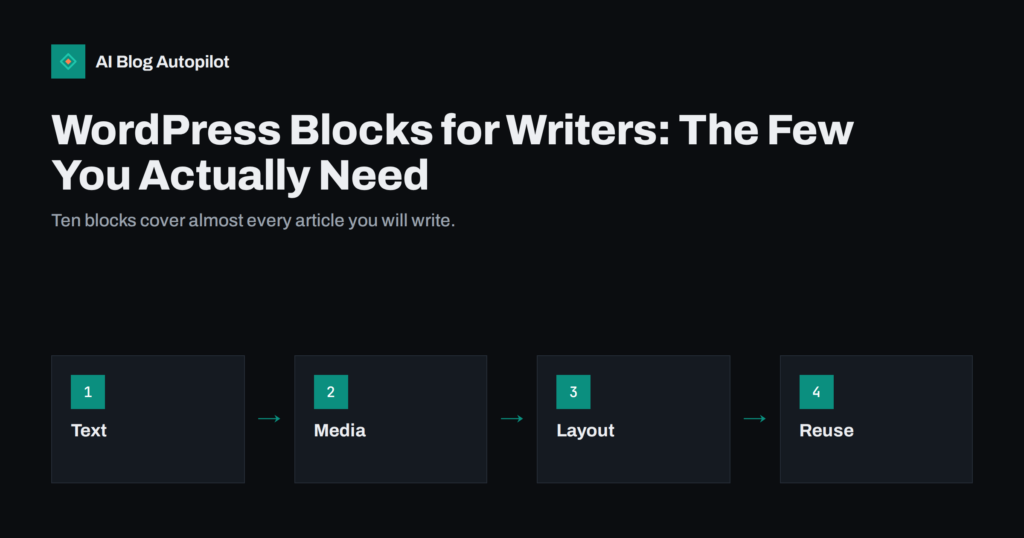
WordPress Blocks for Writers: The Few You Actually Need
The WordPress block editor offers dozens of blocks, but most articles need only a handful. Learn the essential blocks, how to use them well…
 3 Kas 2026 · 9 dk okuma
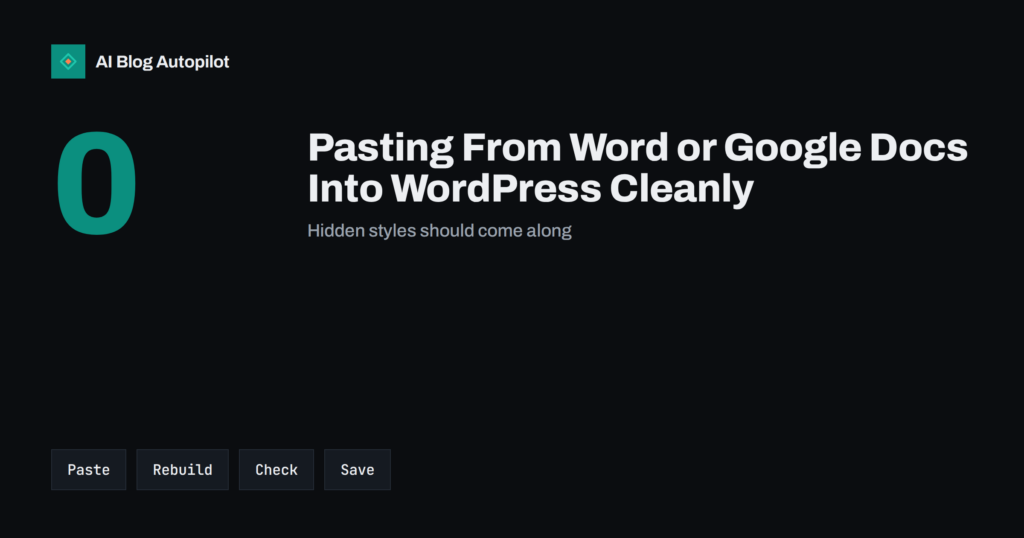
Pasting From Word or Google Docs Into WordPress Cleanly
Pasting from Word or Google Docs can bring hidden styles, odd spacing and broken links into WordPress. Learn a clean routine that keeps posts…
 31 Eki 2026 · 9 dk okuma
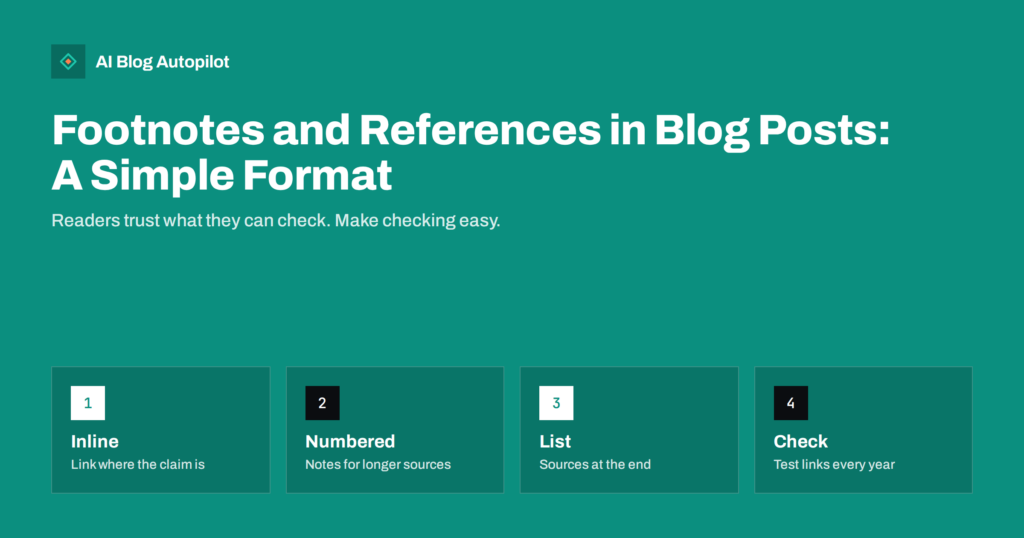
Footnotes and References in Blog Posts: A Simple Format
How to cite sources in a blog post without cluttering it: inline links, numbered notes, a sources list, and what to do when a…
 29 Eki 2026 · 8 dk okuma
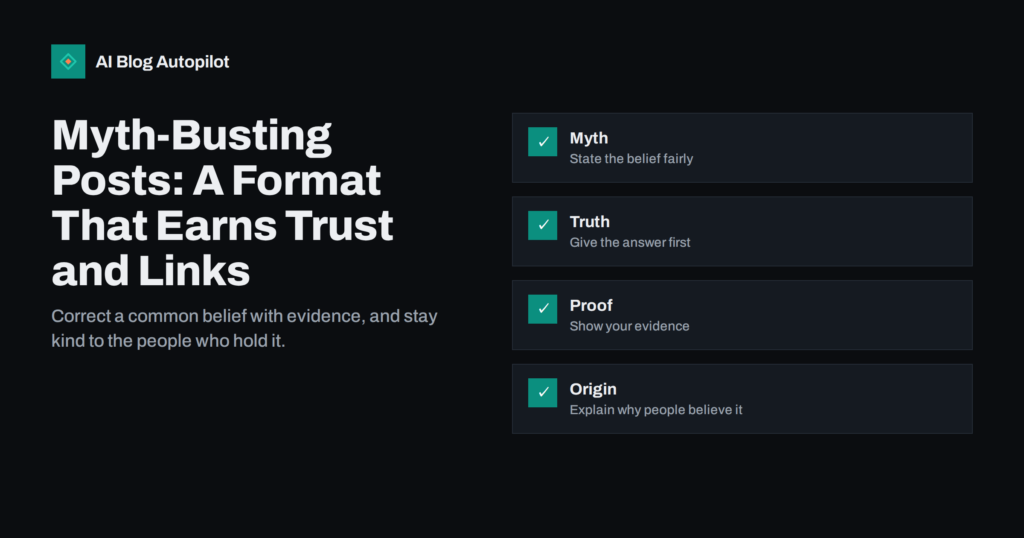
Myth-Busting Posts: A Format That Earns Trust and Links
How to write myth-busting posts for a business blog: choose real myths, state them fairly, give evidence, explain where the myth came from and…
 29 Eki 2026 · 8 dk okuma
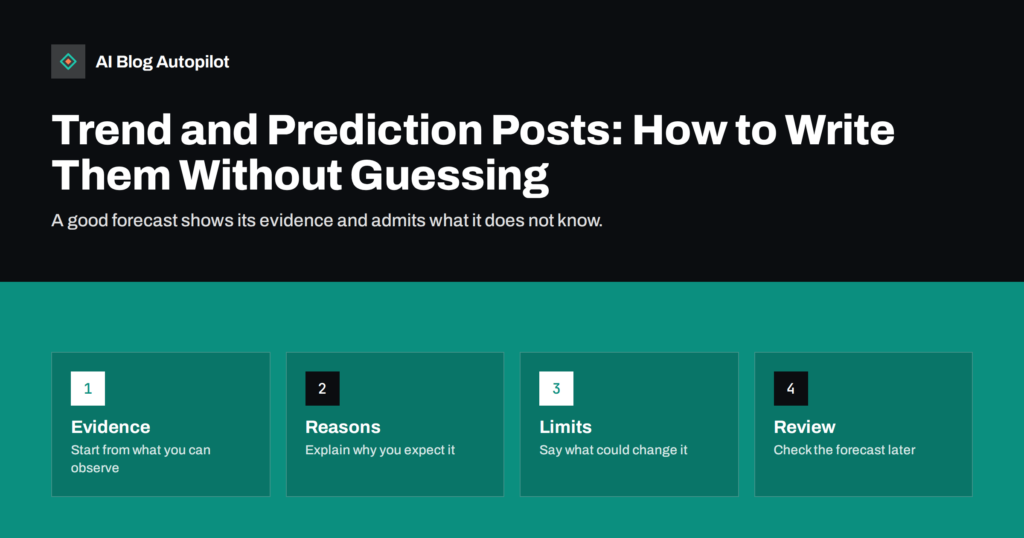
Trend and Prediction Posts: How to Write Them Without Guessing
How a business blog can write credible trend and prediction posts: start from your own evidence, separate fact from opinion, give reasons and review…
 28 Eki 2026 · 9 dk okuma
Writing for the Follow-Up Questions Readers Ask AI
People rarely stop at one question in an AI chat. How to plan posts around the next questions: map the journey, answer in layers,…
 28 Eki 2026 · 8 dk okuma
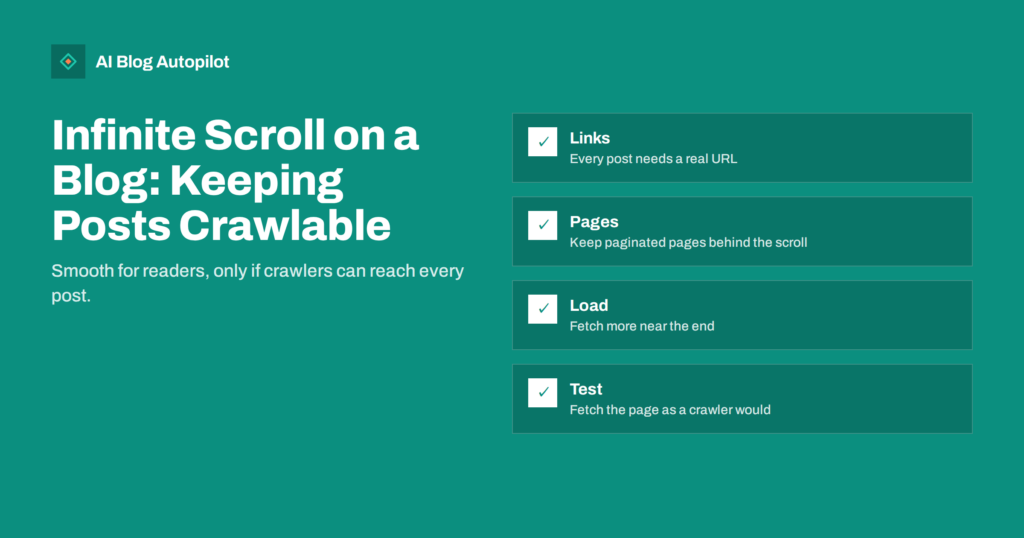
Infinite Scroll on a Blog: Keeping Posts Crawlable
How infinite scroll affects blog SEO and how to keep every post crawlable: paginated URLs behind the scroll, real links, loading states and testing.
 28 Eki 2026 · 9 dk okuma
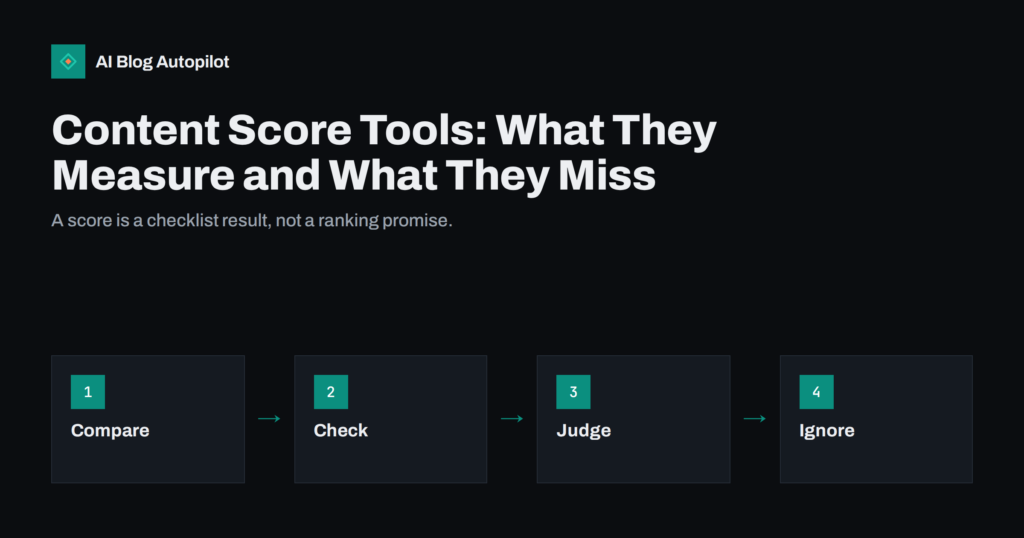
Content Score Tools: What They Measure and What They Miss
What content scoring tools do, which signals they can and cannot measure, how to use a score as a checklist and why chasing 100…
 25 Eki 2026 · 8 dk okuma
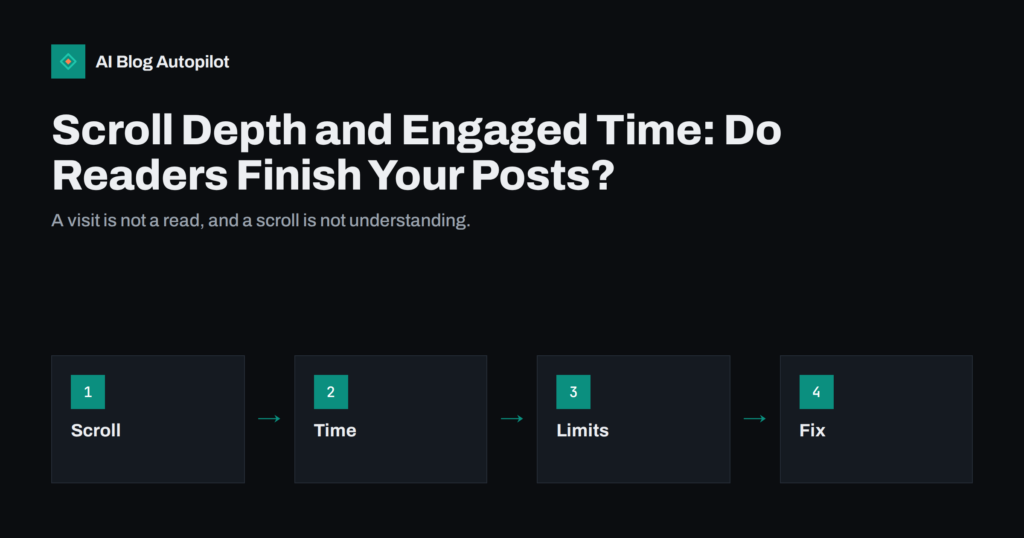
Scroll Depth and Engaged Time: Do Readers Finish Your Posts?
How to tell whether readers finish your posts: scroll depth, engaged time and engaged sessions in GA4, their limits and what to change when…
 21 Eki 2026 · 9 dk okuma
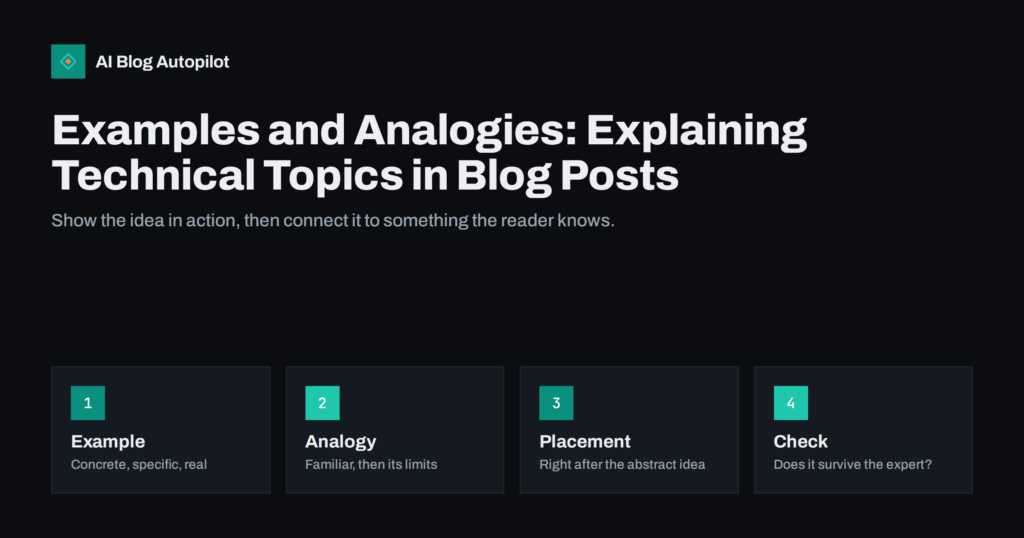
Examples and Analogies: Explaining Technical Topics in Blog Posts
A good example shows the idea in action and a good analogy connects it to something familiar. How to choose both, where to place…
 21 Eki 2026 · 8 dk okuma
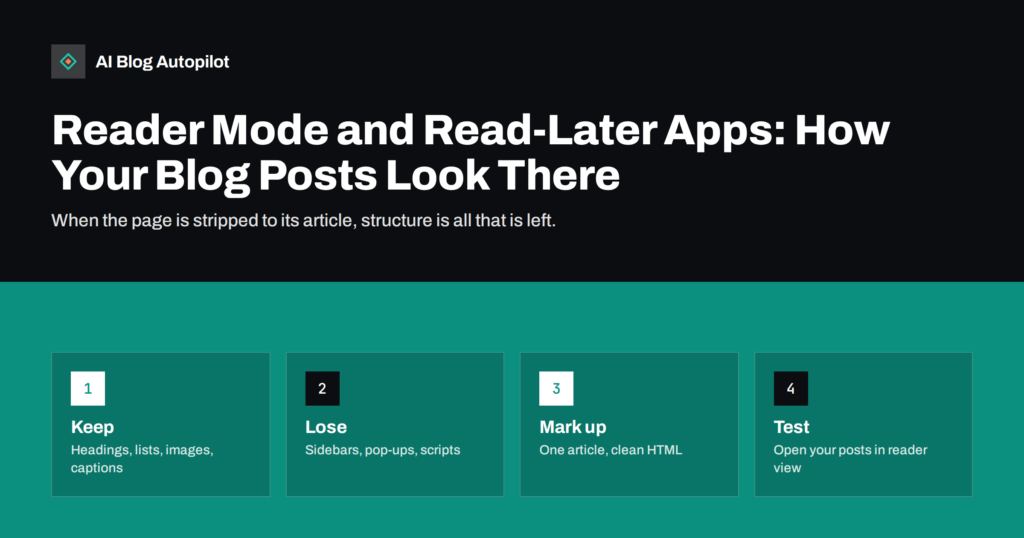
Reader Mode and Read-Later Apps: How Your Blog Posts Look There
Browser reader modes and read-later apps strip your page to its article. What they keep, what they drop and how to mark up posts…
 20 Eki 2026 · 8 dk okuma
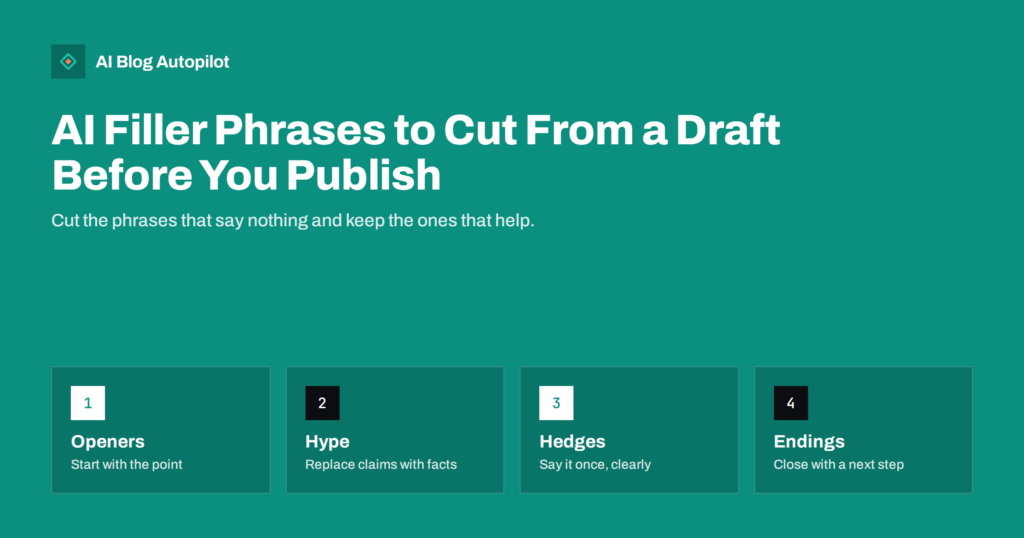
AI Filler Phrases to Cut From a Draft Before You Publish
Generic openers, empty transitions and vague hype make a draft sound automated. Learn which filler phrases to cut and what to put in their…