 ENEnglish
 LTLietuviškai
 DEDeutsch
 FRFrançais
 RUРусский
 ESEspañol
 PLPolski
 ITItaliano
 UKУкраїнська
 CSČeština
 PTPortuguês
 JA日本語
JA日本語 LVLatviešu valoda
 ETEesti
 HUMagyar
 IDBahasa Indonesia
 TRTürkçe
 HIहिन्दी
 ELΕλληνικά
 ARالعربية
 THไทย
THไทย VITiếng Việt
 RORomână
 MSBahasa Melayu
 BNবাংলা
#Article structure
How to lay out an article so both a reader and a search engine can follow it. We cover the answer near the top, headings that describe rather than tease, and sections that can be read on their own. You will find when a table beats three paragraphs, when a list is lazy, and how long a section should run before it needs a subheading. We also cover the shapes that suit different intents, because a how-to and a comparison do not want the same skeleton. The aim is a structure you can reuse without every article reading the same.
 1 de out. de 2026 · 8 min de leitura
Over-Optimisation: When SEO Tweaks Make an Article Worse
Too much SEO can hurt an article: repeated keywords, forced headings, link overload. How to spot over-optimisation and fix it without losing what works.
 1 de out. de 2026 · 8 min de leitura
Updating Old Posts So AI Answers Can Use Them
Older articles often bury their answers. A practical retrofit checklist for making existing blog posts clearer and easier for AI answers and search to…
 1 de out. de 2026 · 9 min de leitura
How AI Search Picks Which Pages to Cite as Sources
AI answers cite a handful of pages out of thousands. What is publicly known about how sources are chosen, and what a blog can…
 30 de set. de 2026 · 8 min de leitura
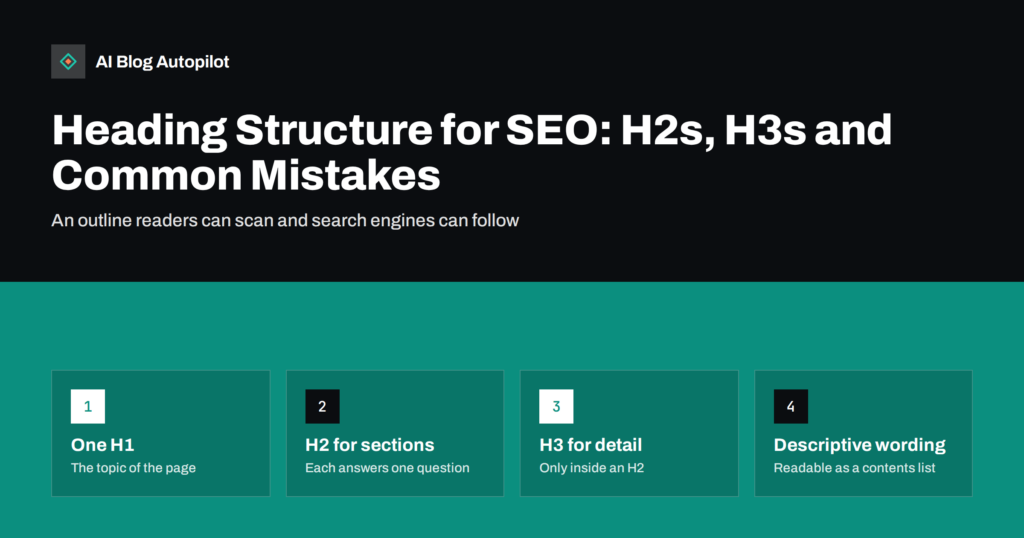
Heading Structure for SEO: H2s, H3s and Common Mistakes
How to structure H1, H2 and H3 headings in a blog post so readers can scan it, screen readers can navigate it and search…
 30 de set. de 2026 · 8 min de leitura
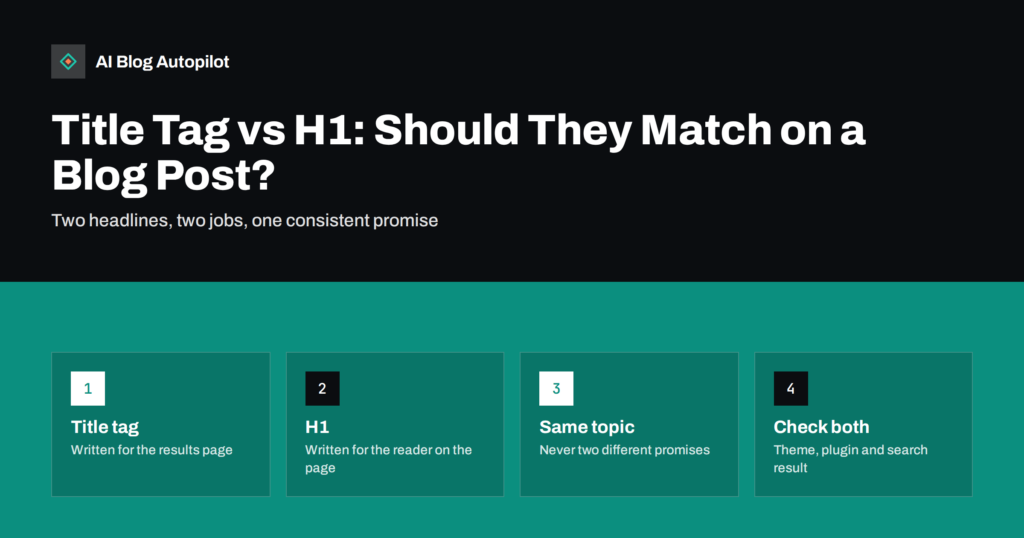
Title Tag vs H1: Should They Match on a Blog Post?
The title tag and the H1 do different jobs. When they should match, when they should differ, and how to write both so search…
 30 de set. de 2026 · 9 min de leitura
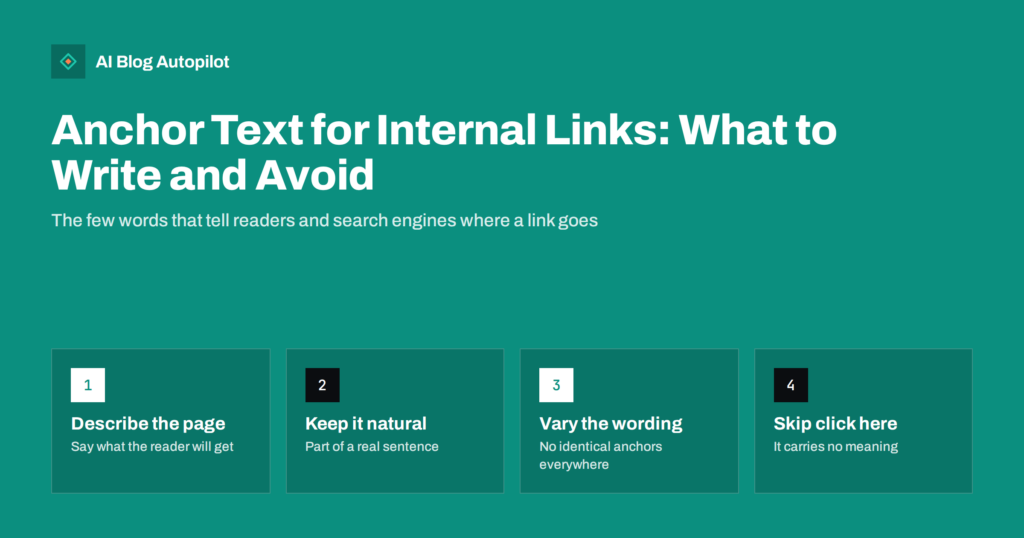
Anchor Text for Internal Links: What to Write and Avoid
How to write anchor text for internal links on a blog: descriptive, varied and honest. Examples, the mistakes to avoid, and a quick way…
 30 de set. de 2026 · 9 min de leitura
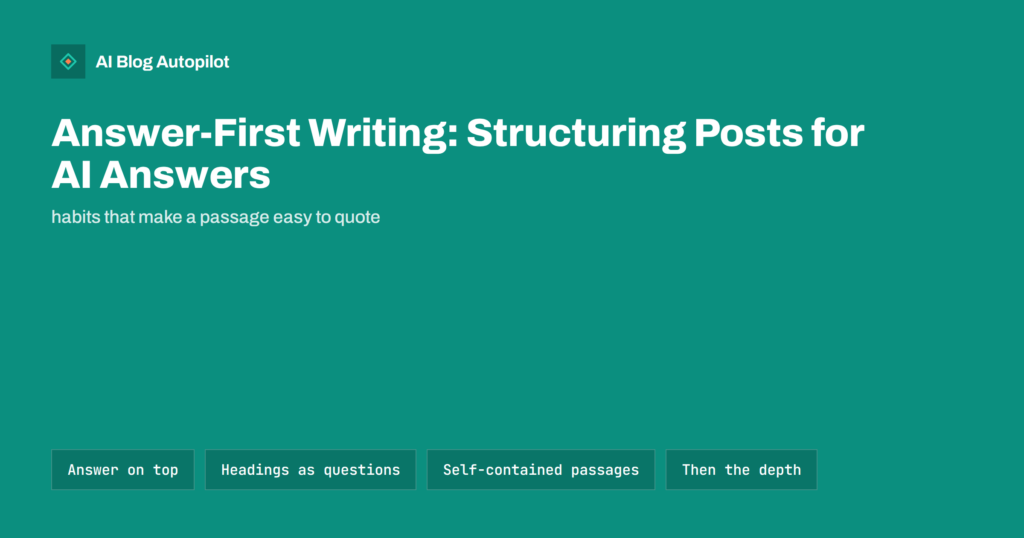
Answer-First Writing: Structuring Posts for AI Answers
Answer-first writing puts the direct answer at the top of a post and each section. How to do it well, why AI answers favour…
 29 de set. de 2026 · 9 min de leitura
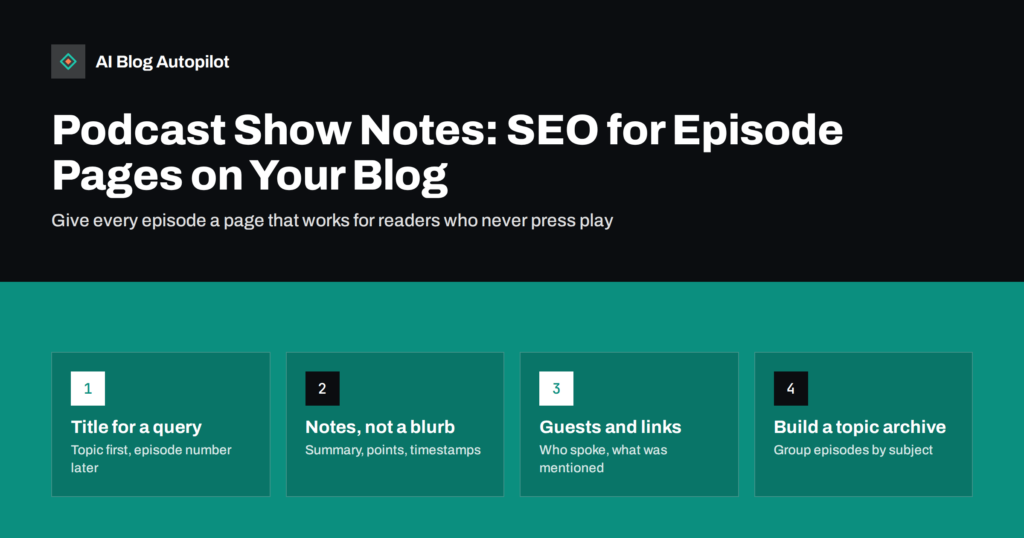
Podcast Show Notes: SEO for Episode Pages on Your Blog
How to turn podcast episodes into blog pages that search engines can find: episode titles, written show notes, timestamps, guest details, links and markup.
 29 de set. de 2026 · 9 min de leitura
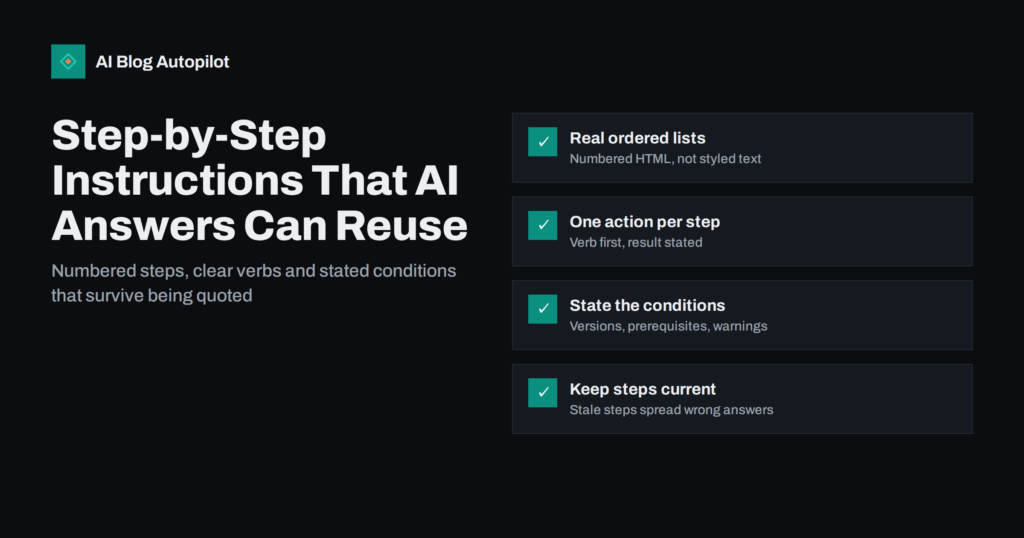
Step-by-Step Instructions That AI Answers Can Reuse
How to write numbered instructions that readers can follow and AI answer engines can summarise accurately: structure, wording, prerequisites and markup.
 29 de set. de 2026 · 9 min de leitura
Key Takeaways Boxes: Do Summaries Help AI Answers?
What a key takeaways box does for readers and AI answer engines, when a summary helps, when it adds nothing, and how to write…
 27 de set. de 2026 · 8 min de leitura
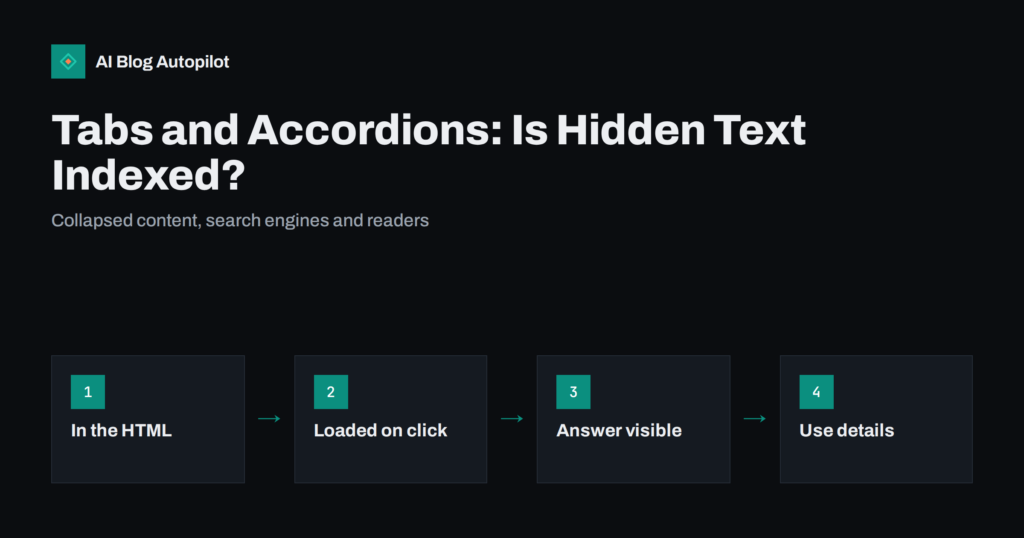
Content in Tabs and Accordions: Does Search Index It?
Text hidden in tabs, accordions and read-more toggles is generally indexed if it is in the HTML. When hiding helps, when it hurts, and…
 27 de set. de 2026 · 8 min de leitura
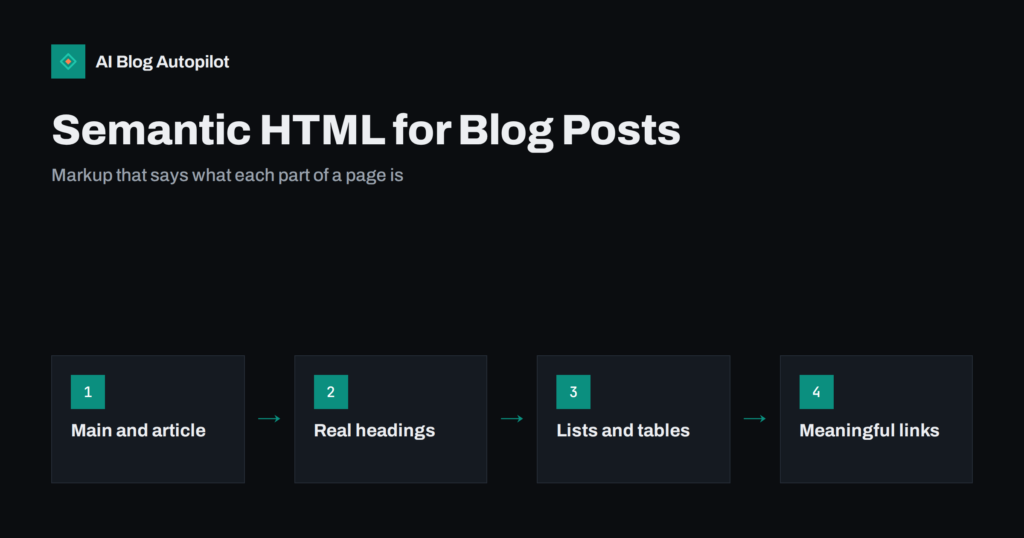
Semantic HTML for Blog Posts: Markup That Helps Search
Semantic HTML tells browsers, screen readers and search engines what each part of a post is. The elements that matter for blogs and the…