 ENEnglish
 LTLietuviškai
 DEDeutsch
 FRFrançais
 RUРусский
 ESEspañol
 PLPolski
 ITItaliano
 UKУкраїнська
 CSČeština
 PTPortuguês
 JA日本語
JA日本語 LVLatviešu valoda
 ETEesti
 HUMagyar
 IDBahasa Indonesia
 TRTürkçe
 HIहिन्दी
 ELΕλληνικά
 ARالعربية
 THไทย
THไทย VITiếng Việt
 RORomână
 MSBahasa Melayu
 BNবাংলা
#Search intent
Reading what someone actually wants from a query before writing for it. We cover the four broad intents, how to tell them apart from the results page rather than from a tool, and what each one expects a page to contain. You will find why a buying query and a learning query need different articles even when the words overlap. We also cover the mismatch that explains most pages with impressions and no clicks. Everything here can be checked in ten minutes with a browser.
 Oct 1, 2026 · 9 min read
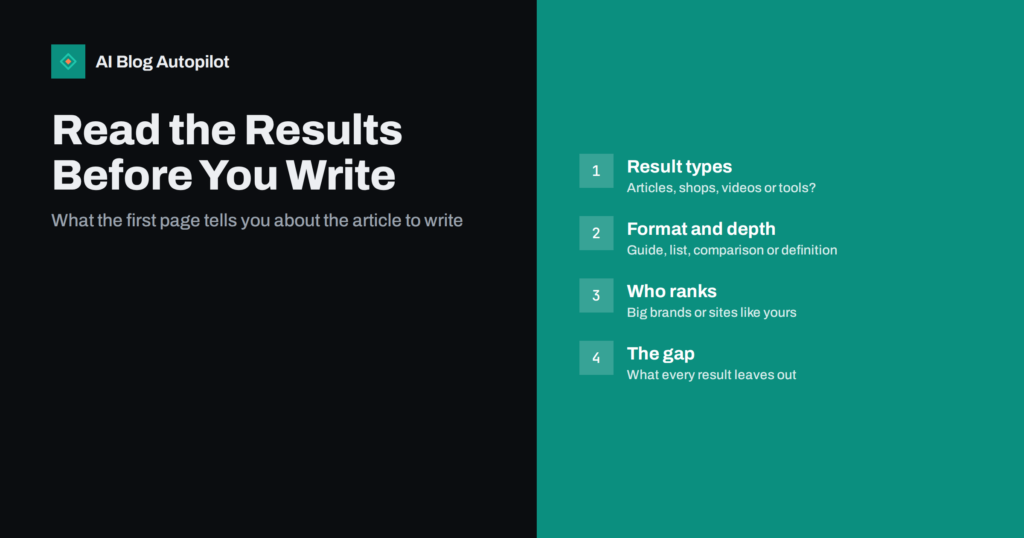
Reading the Search Results Before You Write an Article
Ten minutes on the results page tells you what format, depth and angle an article needs to rank. A practical method for reading search…
 Oct 1, 2026 · 9 min read
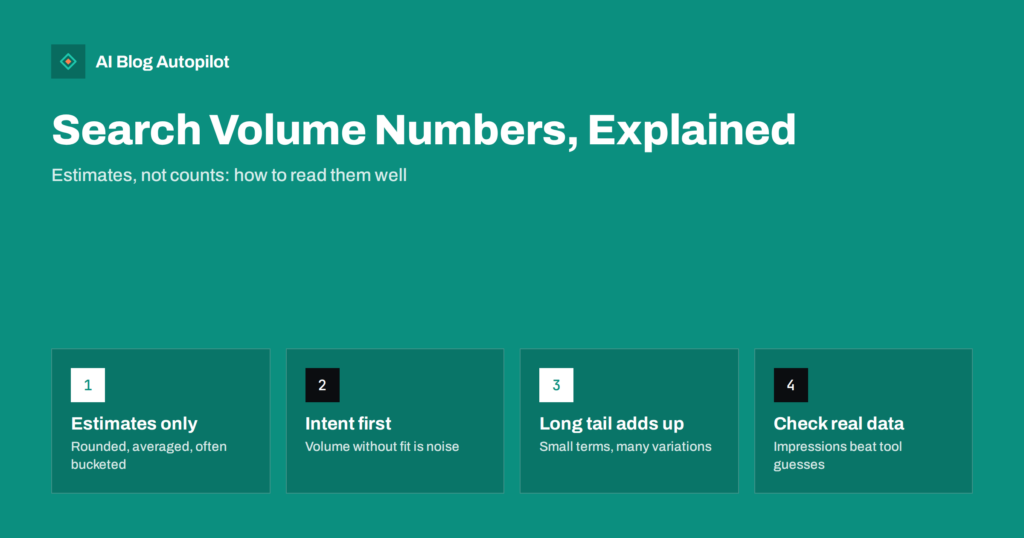
Search Volume Numbers: Why They Mislead and How to Use Them
Search volume figures are estimates, rounded and averaged. What they really measure, why they mislead small blogs, and how to use them to pick…
 Sep 29, 2026 · 8 min read
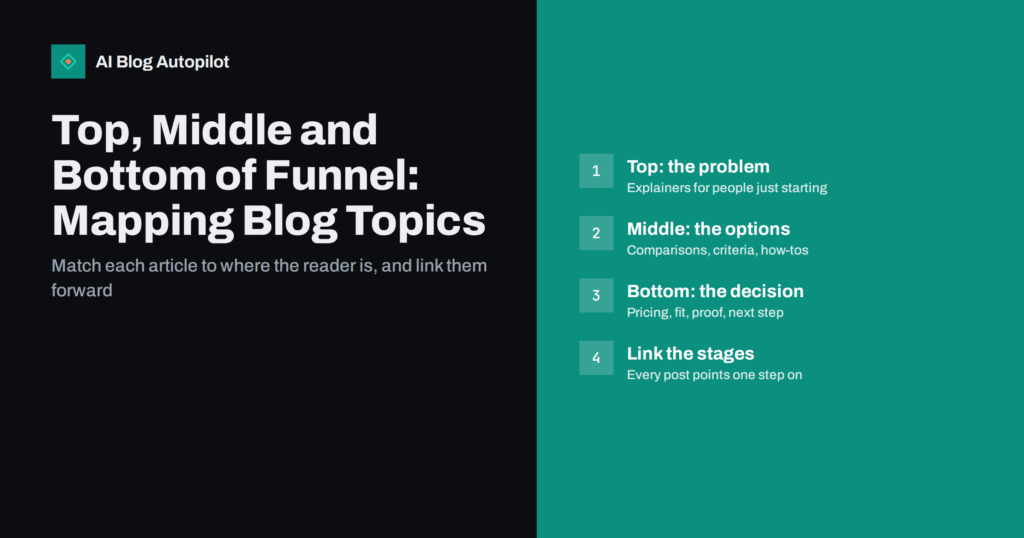
Top, Middle and Bottom of Funnel: Mapping Blog Topics
How to map blog topics to the top, middle and bottom of the funnel, what each stage needs from an article, and how to…
 Sep 29, 2026 · 8 min read
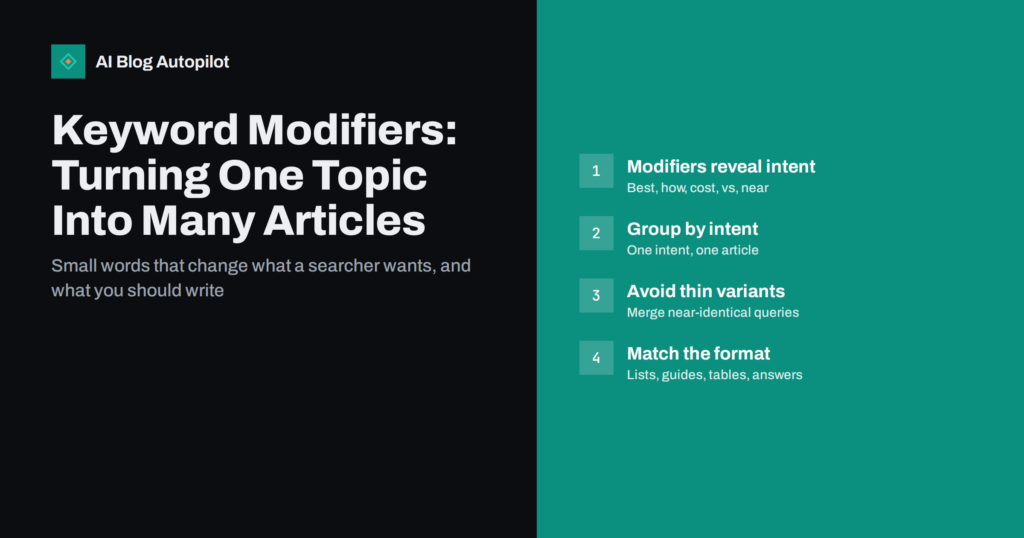
Keyword Modifiers: Turning One Topic Into Many Articles
How words like best, how to, cost, vs and for beginners change search intent, and how to use modifiers to plan distinct articles without…
 Sep 28, 2026 · 8 min read
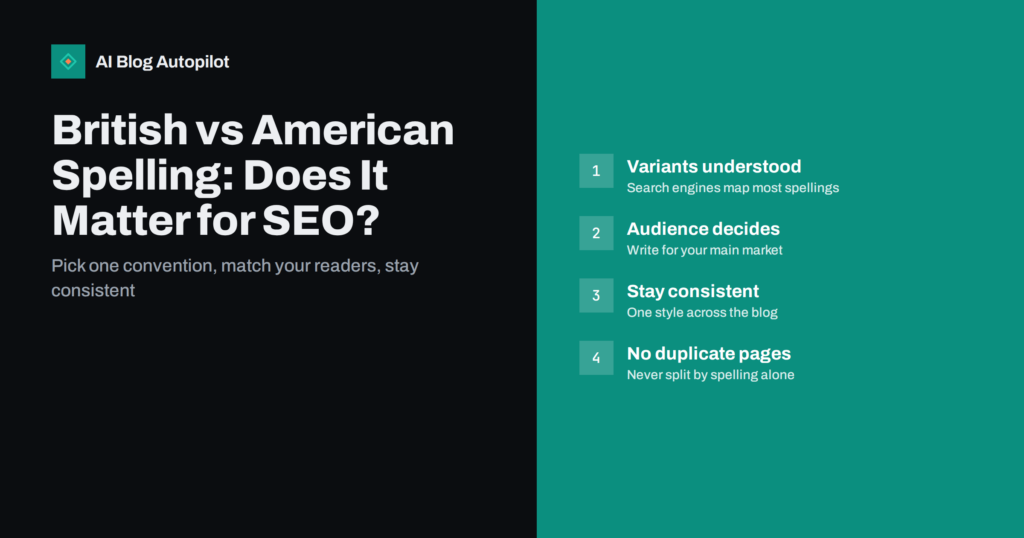
British vs American Spelling: Does It Matter for SEO?
Colour or color, optimise or optimize? Search engines treat most spelling variants as the same word. When the choice matters and how to pick…
 Sep 27, 2026 · 8 min read
Conversational Queries: Writing for How People Ask AI
People ask AI assistants long, specific questions with context. How conversational queries differ from keywords and how to write posts that answer them well.
 Sep 26, 2026 · 8 min read
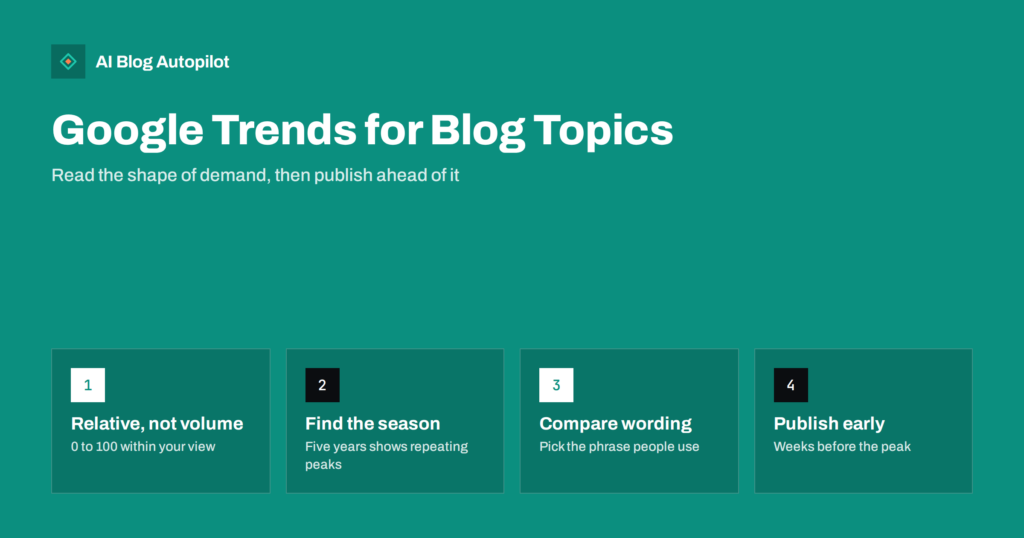
Using Google Trends to Choose and Time Blog Topics
Google Trends shows how interest in a topic rises, falls and repeats. How to read its relative scale, spot seasonal peaks and time blog…
 Sep 26, 2026 · 9 min read
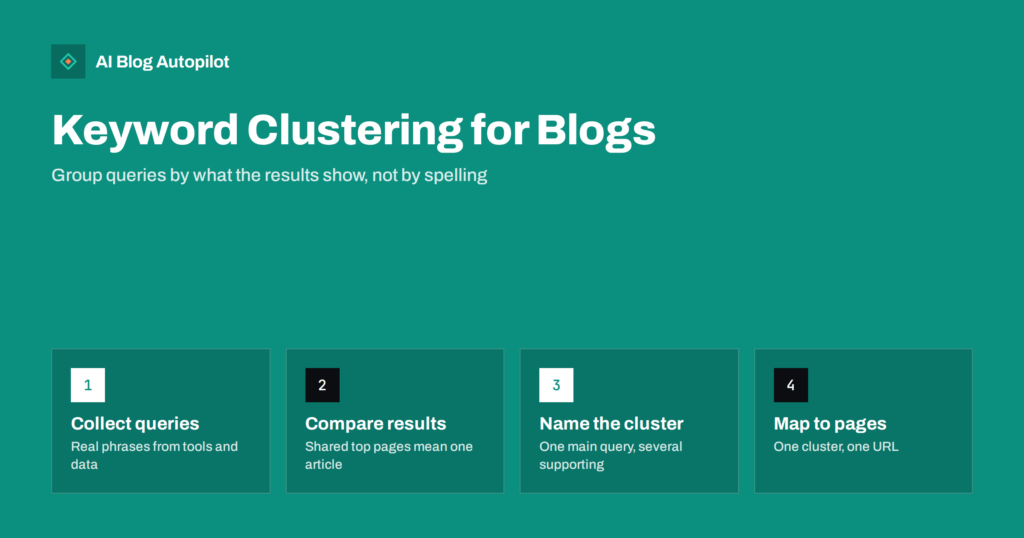
Keyword Clustering: Grouping Search Queries Into Articles
Keyword clustering groups search queries that one article can answer. How to cluster by search results, avoid thin duplicate posts and plan a leaner…
 Sep 18, 2026 · 6 min read
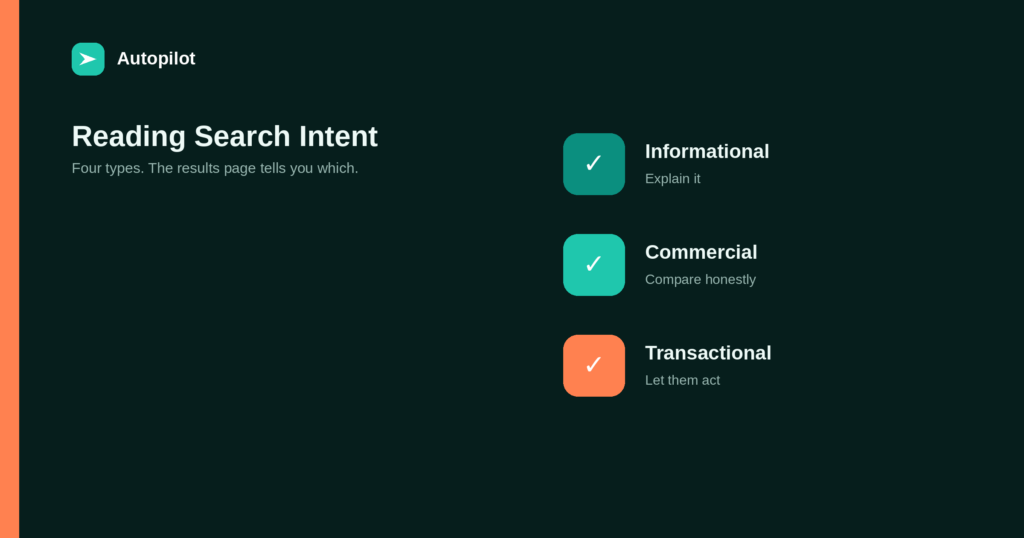
Search Intent: The Four Types and What Each Needs
Most pages that get impressions and no clicks have an intent mismatch. How to read intent from the results page in ten minutes, and…
 Sep 17, 2026 · 6 min read
Long-Tail Keywords: Why a New Blog Should Start There
A new site cannot win broad phrases for years. Specific questions are winnable now, convert better, and add up faster than one impossible target…
 Aug 10, 2026 · 6 min read
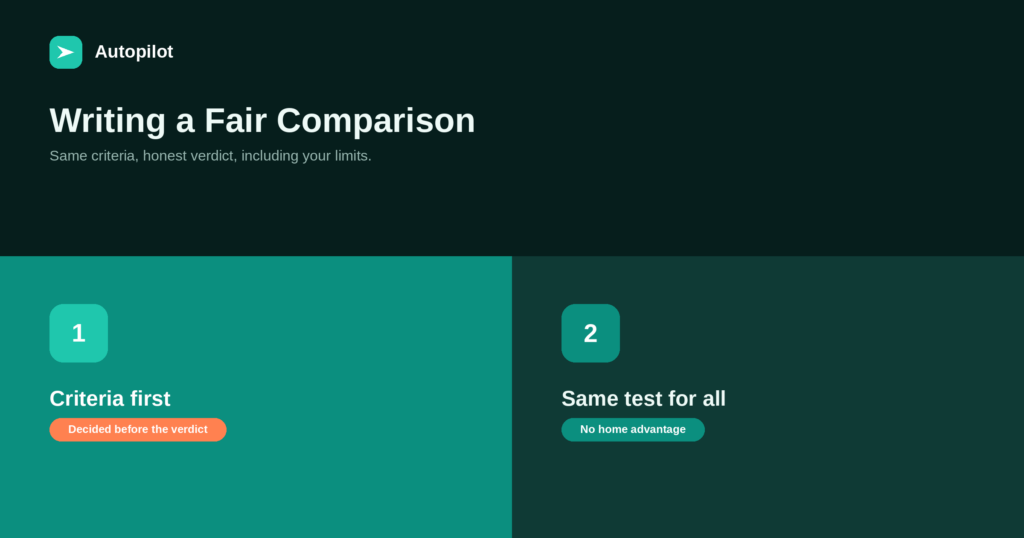
How to Write a Fair Comparison Article
Comparison articles serve people close to a decision, and many are thinly disguised adverts. How to compare fairly, what to include, and how to…
 Aug 8, 2026 · 6 min read
Landing Page or Blog Post: Which Does a Query Need?
Some searches want an article that explains; others want a page that lets them act. How to tell which, why mixing them fails, and…