 ENEnglish
 LTLietuviškai
 DEDeutsch
 FRFrançais
 RUРусский
 ESEspañol
 PLPolski
 ITItaliano
 UKУкраїнська
 CSČeština
 PTPortuguês
 JA日本語
JA日本語 LVLatviešu valoda
 ETEesti
 HUMagyar
 IDBahasa Indonesia
 TRTürkçe
 HIहिन्दी
 ELΕλληνικά
 ARالعربية
 THไทย
THไทย VITiếng Việt
 RORomână
 MSBahasa Melayu
 BNবাংলা
#Article structure
How to lay out an article so both a reader and a search engine can follow it. We cover the answer near the top, headings that describe rather than tease, and sections that can be read on their own. You will find when a table beats three paragraphs, when a list is lazy, and how long a section should run before it needs a subheading. We also cover the shapes that suit different intents, because a how-to and a comparison do not want the same skeleton. The aim is a structure you can reuse without every article reading the same.
 Sep 27, 2026 · 8 min read
Conversational Queries: Writing for How People Ask AI
People ask AI assistants long, specific questions with context. How conversational queries differ from keywords and how to write posts that answer them well.
 Sep 27, 2026 · 9 min read
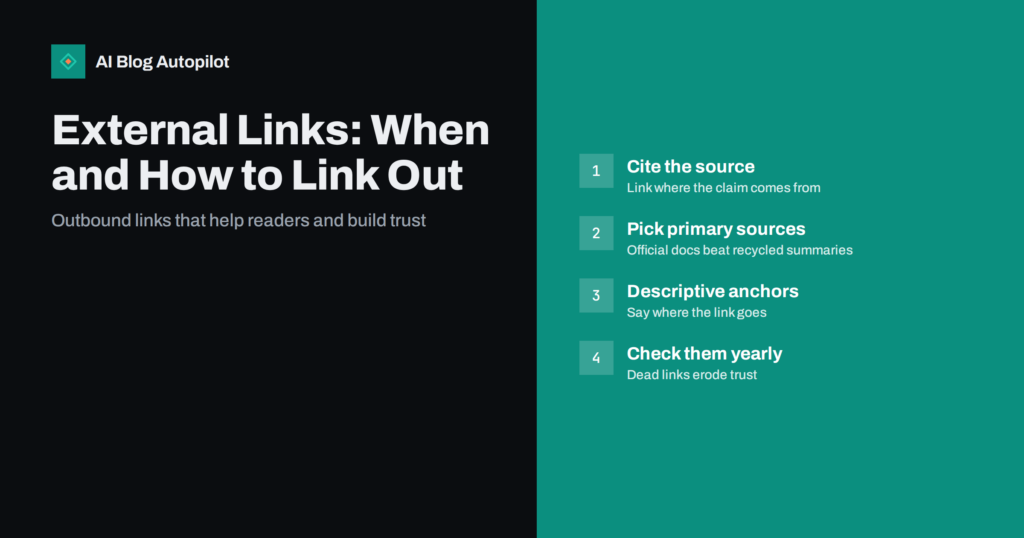
External Links in Blog Posts: When and How to Link Out
Linking to other websites does not leak your rankings. When outbound links help readers and trust, how to choose sources, and which attributes to…
 Sep 26, 2026 · 8 min read
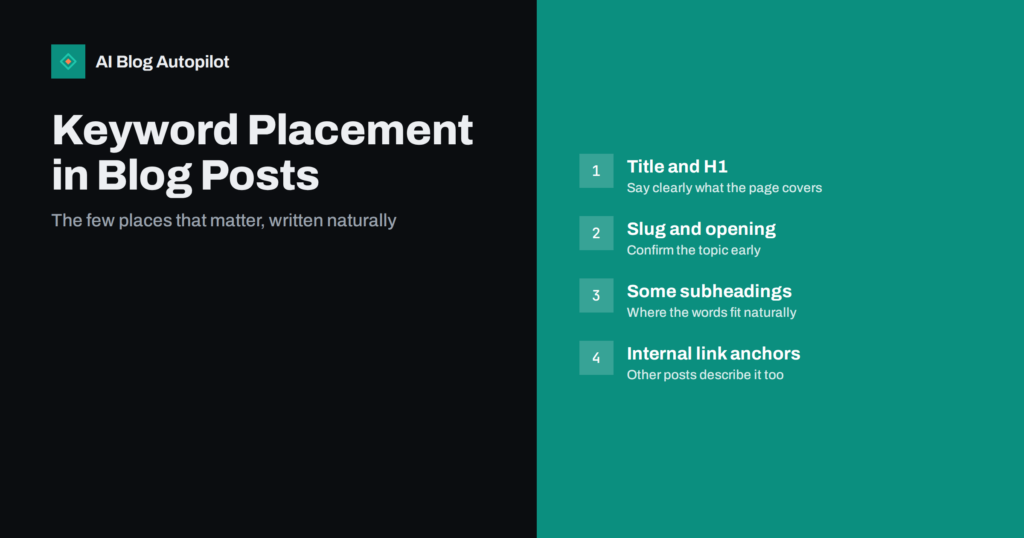
Keyword Placement: Where the Main Phrase Belongs in a Post
Where to use an article's main search phrase: title, H1, slug, opening, headings and links, and where not to force it. A practical guide…
 Sep 26, 2026 · 9 min read
Writing Clear Definitions That AI Answers Can Quote
A good definition names the term, its category and what makes it different. How to write short definitions that readers and AI answers can…
 Sep 24, 2026 · 5 min read
Reading a Blog on a Phone: What to Fix First
Most blog visits happen on a phone, and search engines index the mobile version. The seven problems that make a post hard to read…
 Sep 15, 2026 · 6 min read
When a Table Beats Three Paragraphs
Tables, numbered lists, bullets and prose each do something the others cannot. Here is how to pick, and the common mistake of bulleting an…
 Sep 15, 2026 · 6 min read
Writing Introductions That Don’t Waste the Reader’s Time
The first hundred words decide whether the rest gets read. Here is what belongs in them, what to delete on sight, and a template…
 Sep 14, 2026 · 6 min read
Blog Post Structure That Works for Readers and Search
A structure that suits both a skimming reader and a search engine: the answer first, headings that describe, sections that stand alone, and one…
 Aug 31, 2026 · 6 min read
The Pre-Publication Checklist for Every Article
One checklist, run on every article before it goes live: claims, answer, structure, originality, metadata, links, images, FAQ and markup, and the phone test.
 Aug 28, 2026 · 6 min read
Tables of Contents for Long Articles
A table of contents helps readers of long articles find the part they need. When to add one, how to build it from headings,…
 Aug 28, 2026 · 6 min read
Blog Design That Helps People Read
Design either helps reading or gets in its way. Text size, width, spacing, contrast, headings and what surrounds the article, and designs that make…
 Aug 26, 2026 · 6 min read
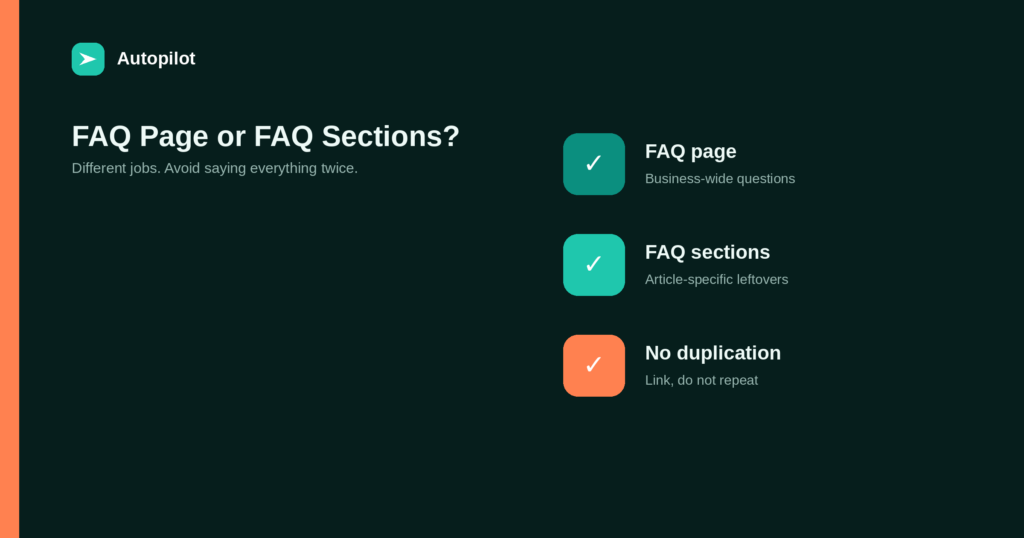
A Separate FAQ Page or FAQs in Every Article?
A standalone FAQ page and FAQ sections in articles do different jobs. When each makes sense, how to avoid duplication between them, and how…