 ENEnglish
 LTLietuviškai
 DEDeutsch
 FRFrançais
 RUРусский
 ESEspañol
 PLPolski
 ITItaliano
 UKУкраїнська
 CSČeština
 PTPortuguês
 JA日本語
 LVLatviešu valoda
 ETEesti
 HUMagyar
 IDBahasa Indonesia
 TRTürkçe
 HIहिन्दी
 ELΕλληνικά
 ARالعربية
 THไทย
 VITiếng Việt
 RORomână
 MSBahasa Melayu
 BNবাংলা
#Article structure
How to lay out an article so both a reader and a search engine can follow it. We cover the answer near the top, headings that describe rather than tease, and sections that can be read on their own. You will find when a table beats three paragraphs, when a list is lazy, and how long a section should run before it needs a subheading. We also cover the shapes that suit different intents, because a how-to and a comparison do not want the same skeleton. The aim is a structure you can reuse without every article reading the same.
 Oct 13, 2026 · 8 min read
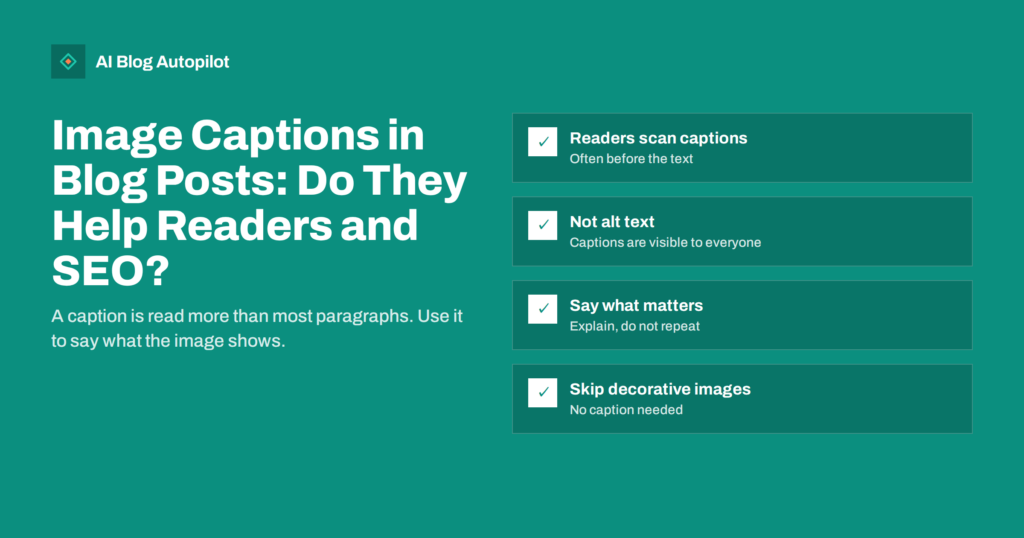
Image Captions in Blog Posts: Do They Help Readers and SEO?
When image captions help a blog post, how they differ from alt text, what a good caption says, how search engines use them and…
 Oct 12, 2026 · 8 min read
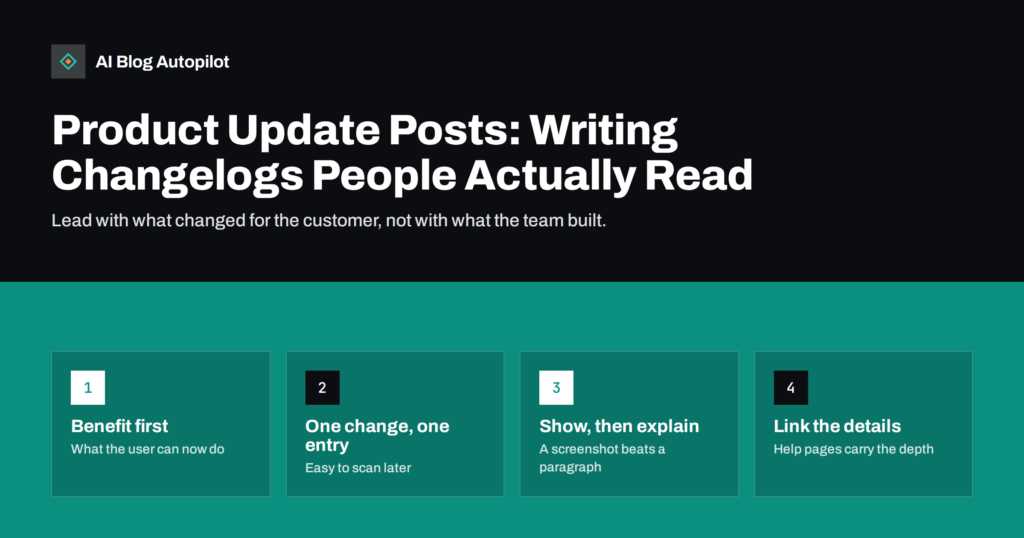
Product Update Posts: Writing Changelogs People Actually Read
How to write product update posts and changelogs that customers read: what to include, how to structure each entry, how often to publish and…
 Oct 12, 2026 · 8 min read
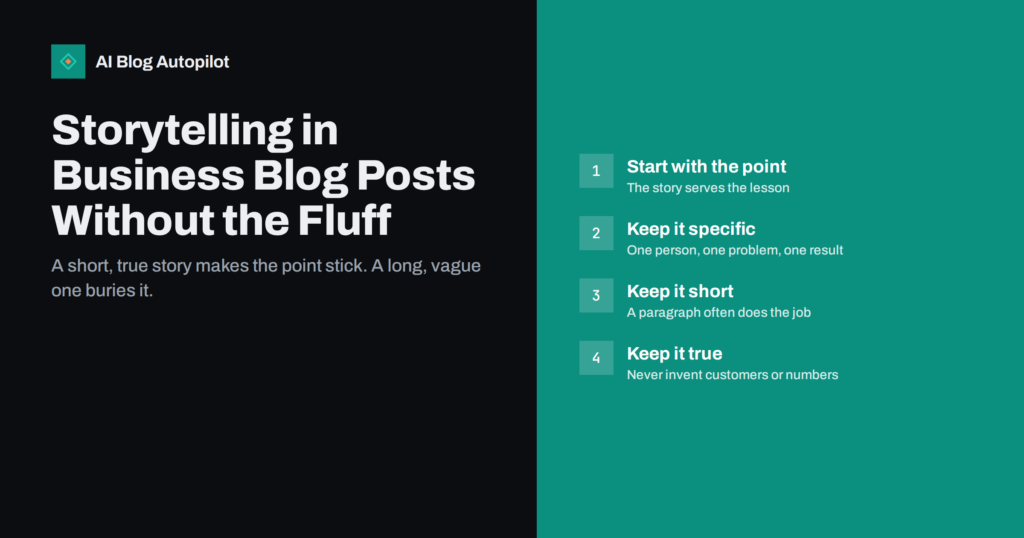
Storytelling in Business Blog Posts Without the Fluff
How to use short, true stories in business blog posts so readers remember the point: where a story belongs, how long it should be…
 Oct 11, 2026 · 9 min read
How to End a Blog Post: Conclusions That Lead Somewhere
How to write a blog post conclusion that sums up the key point, tells readers what to do next and links to the right…
 Oct 10, 2026 · 8 min read
Writing for Non-Native English Readers Without Dumbing Down
How to write blog posts that readers with English as a second language understand easily: plain words, clear sentences, fewer idioms, and structure that…
 Oct 9, 2026 · 9 min read
Code Snippets in Blog Posts: Formatting for Readers and Search
How to present code in blog posts so readers can copy it and search engines can read it: markup, highlighting, explanations, mobile layout and…
 Oct 7, 2026 · 8 min read
Heatmaps and Scroll Maps for Blog Posts: What They Reveal
What click maps, scroll maps and session recordings show about how people read your blog posts, how to set them up responsibly and which…
 Oct 2, 2026 · 8 min read
Testing a Draft for AI Answers Before You Publish It
A practical pre-publication test: check whether a draft answers its target questions in passages AI answers could quote, and fix the gaps before it…
 Oct 1, 2026 · 8 min read
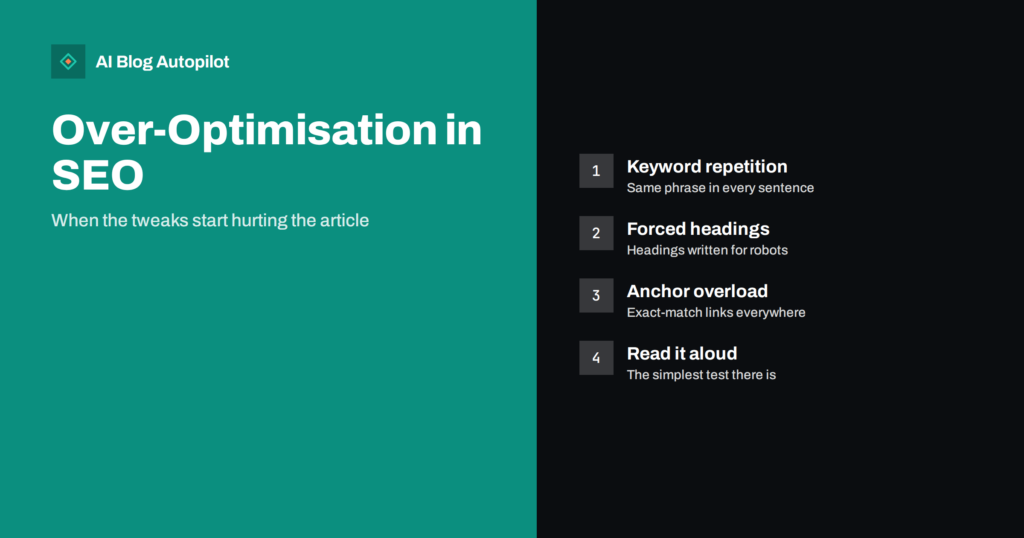
Over-Optimisation: When SEO Tweaks Make an Article Worse
Too much SEO can hurt an article: repeated keywords, forced headings, link overload. How to spot over-optimisation and fix it without losing what works.
 Oct 1, 2026 · 8 min read
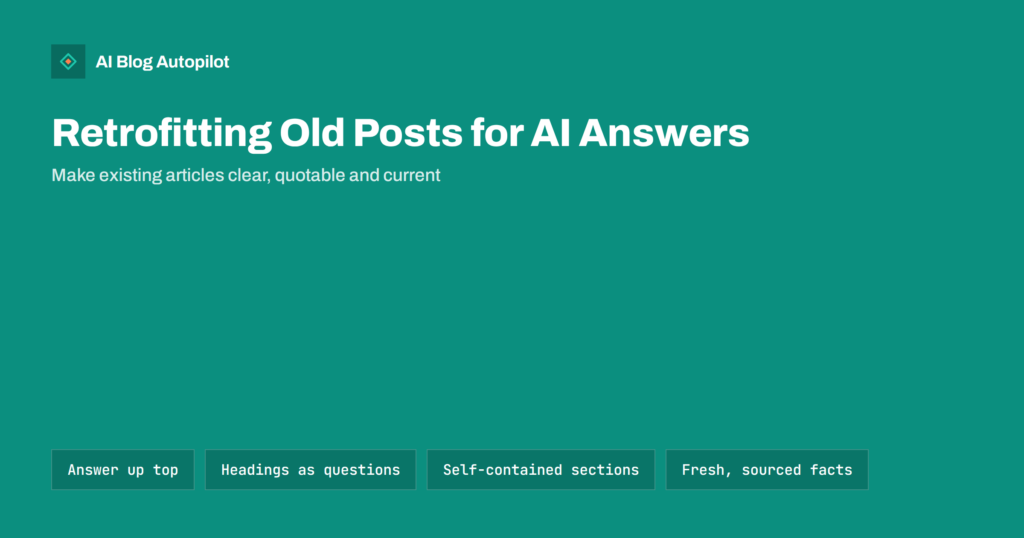
Updating Old Posts So AI Answers Can Use Them
Older articles often bury their answers. A practical retrofit checklist for making existing blog posts clearer and easier for AI answers and search to…
 Oct 1, 2026 · 9 min read
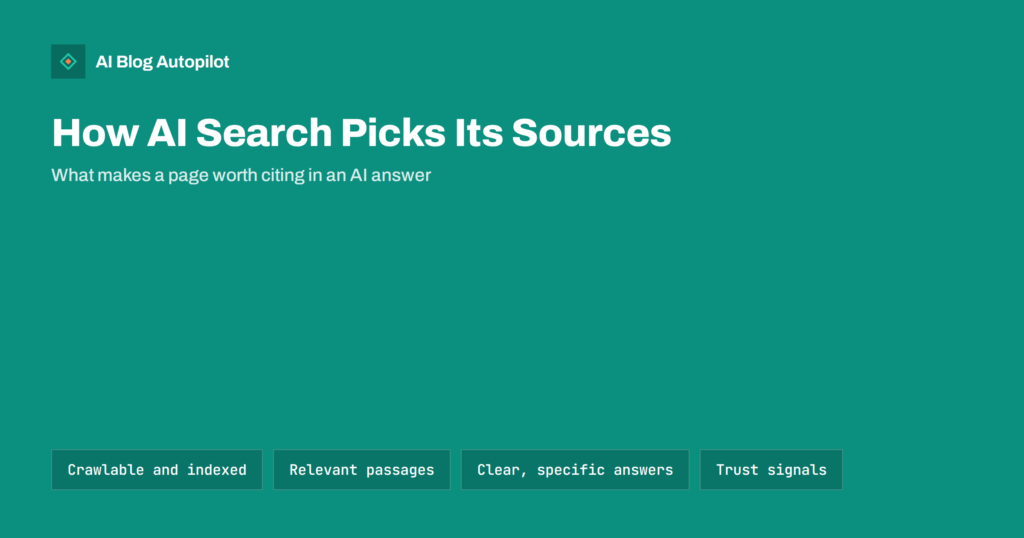
How AI Search Picks Which Pages to Cite as Sources
AI answers cite a handful of pages out of thousands. What is publicly known about how sources are chosen, and what a blog can…
 Sep 30, 2026 · 8 min read
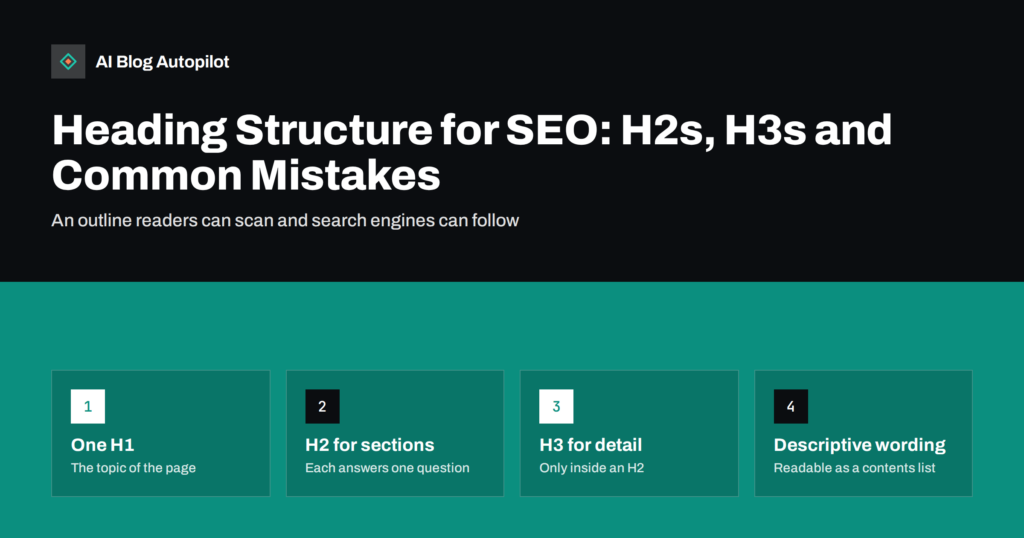
Heading Structure for SEO: H2s, H3s and Common Mistakes
How to structure H1, H2 and H3 headings in a blog post so readers can scan it, screen readers can navigate it and search…