 ENEnglish
 LTLietuviškai
 DEDeutsch
 FRFrançais
 RUРусский
 ESEspañol
 PLPolski
 ITItaliano
 UKУкраїнська
 CSČeština
 PTPortuguês
 JA日本語
 LVLatviešu valoda
 ETEesti
 HUMagyar
 IDBahasa Indonesia
 TRTürkçe
 HIहिन्दी
 ELΕλληνικά
 ARالعربية
 THไทย
 VITiếng Việt
 RORomână
 MSBahasa Melayu
 BNবাংলা
#Competitor analysis
Learning from what already ranks without copying it. We cover how to read the pages that hold a query, what they include and leave out, and where the gap is that a new page could fill. You will find how to tell a competitor that is genuinely good from one that is simply old and well linked. We also cover why imitating a ranking page produces a weaker version of it rather than a better one. The aim is finding the question the existing results answer badly.
 4 nov. 2026 · 8 min de citit
Keeping a Swipe File of Posts You Admire, and Using It Well
A swipe file is a folder of articles and posts you admire. Learn how to build one, what to note about each piece and…
 3 nov. 2026 · 9 min de citit
Competitors in AI Answers: Who Gets Named Instead of You
When AI assistants name your competitors and not you, there are reasons you can find and fix. Learn how to track who is named,…
 21 oct. 2026 · 8 min de citit
Mentioning Competitors by Name in Blog Posts: What Is Safe
Naming a competitor in an article is usually allowed, sometimes useful and occasionally risky. When to name them, how to stay factual and what…
 13 oct. 2026 · 8 min de citit
Broken Link Building: A Fair Way for a Blog to Earn Links
How broken link building works for a small blog: finding dead links on other sites, offering a useful replacement and writing outreach that is…
 1 oct. 2026 · 9 min de citit
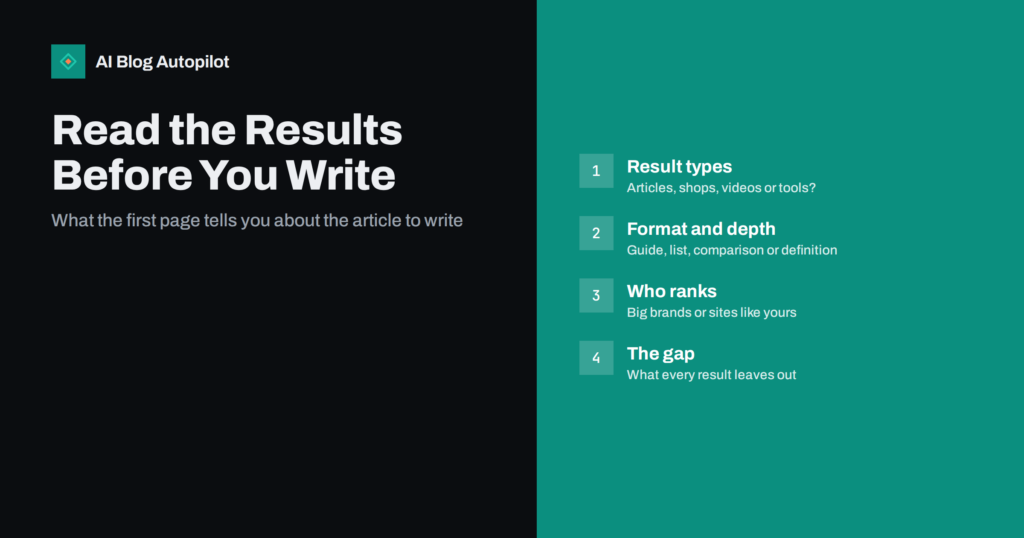
Reading the Search Results Before You Write an Article
Ten minutes on the results page tells you what format, depth and angle an article needs to rank. A practical method for reading search…
 30 sept. 2026 · 8 min de citit
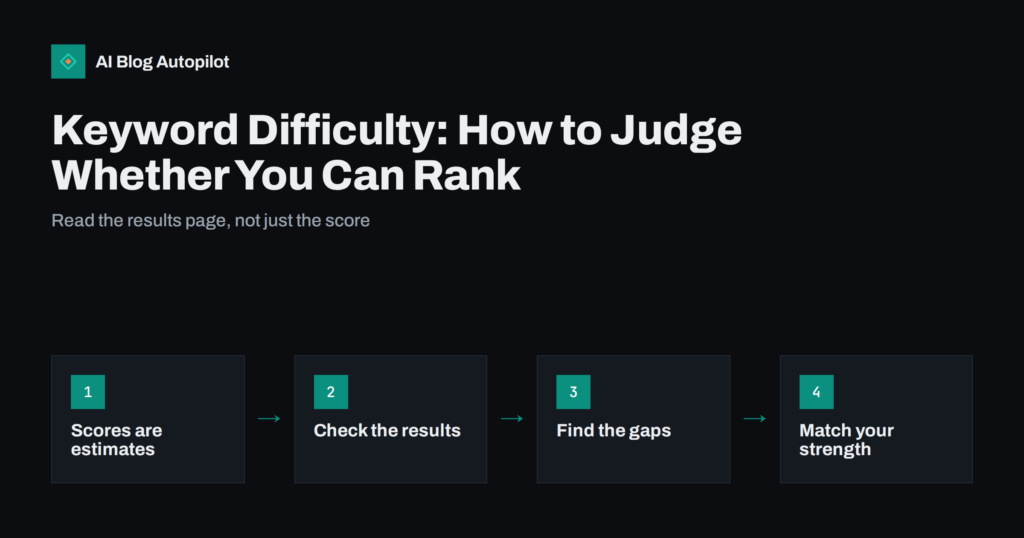
Keyword Difficulty: How to Judge Whether You Can Rank
What keyword difficulty scores measure, why tools disagree, and a practical way to judge from the results page itself whether a blog can realistically…
 28 sept. 2026 · 8 min de citit
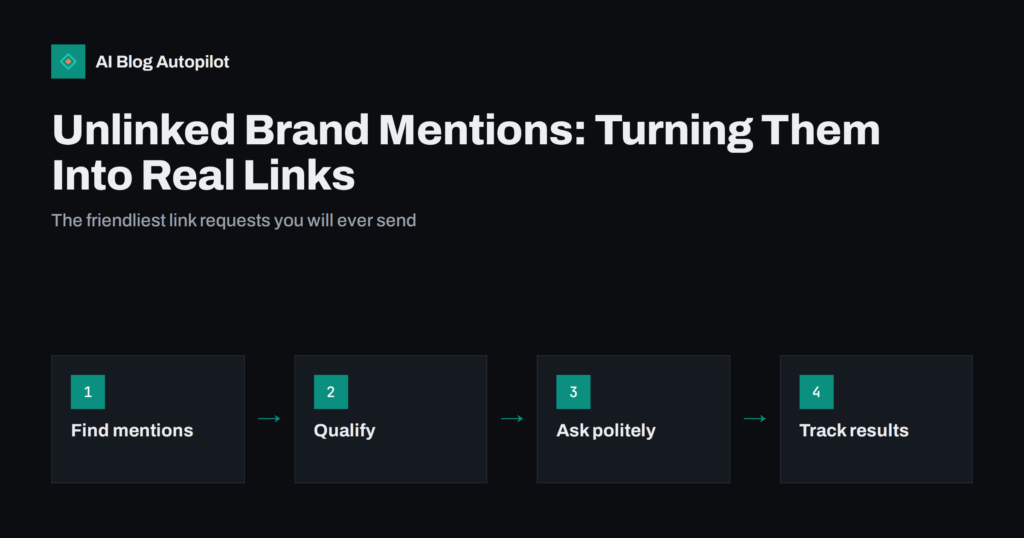
Unlinked Brand Mentions: Turning Them Into Real Links
Sites that already mention your business without linking are the easiest link opportunities there are. How to find them, when to ask and what…
 28 sept. 2026 · 9 min de citit
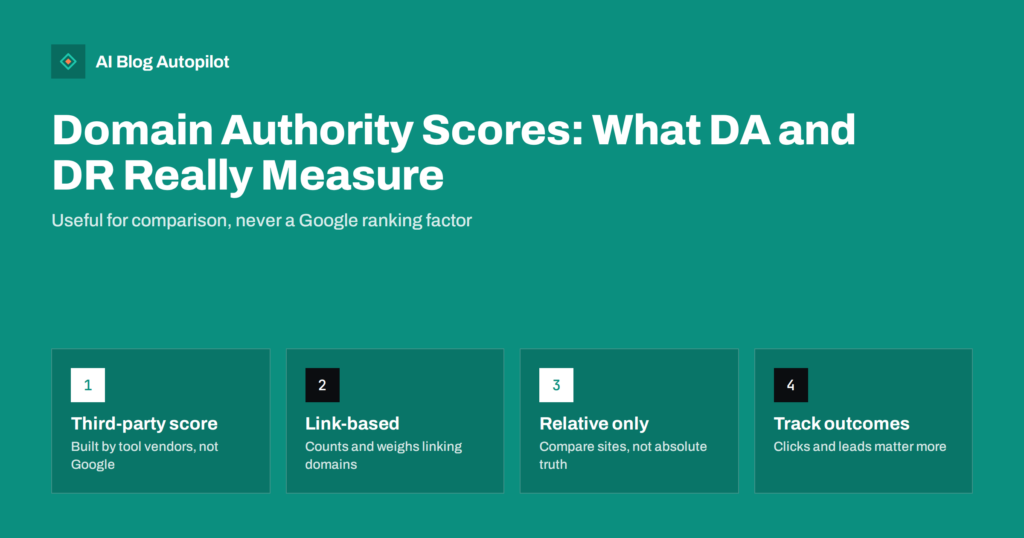
Domain Authority Scores: What DA and DR Really Measure
Domain Authority and Domain Rating are third-party link scores, not Google metrics. What they measure, where they mislead, and how a blog should use…
 27 sept. 2026 · 9 min de citit
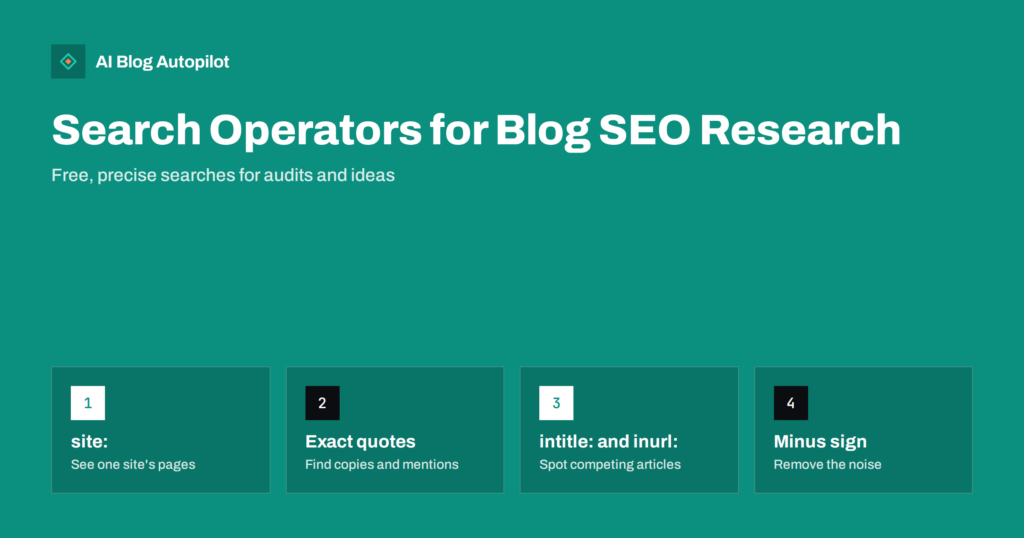
Google Search Operators for SEO Research on a Blog
site:, intitle:, quotes and other search operators turn Google into a free research tool. Practical searches for audits, topic research and competitor checks.
 19 sept. 2026 · 6 min de citit
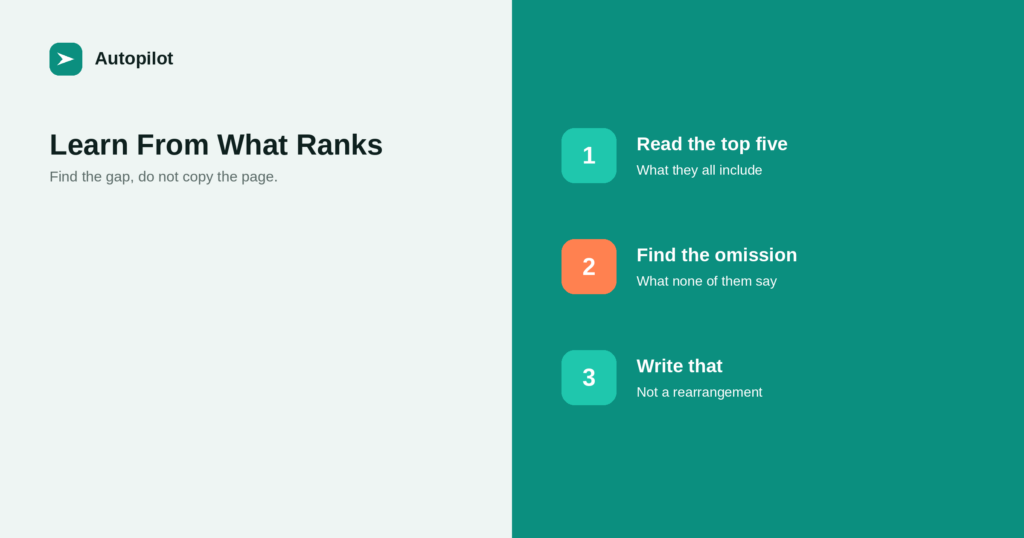
Competitor Content Analysis Without Copying Anyone
How to read the pages that already rank for a query, find what they leave out, and write something better rather than a slightly…
 18 sept. 2026 · 6 min de citit
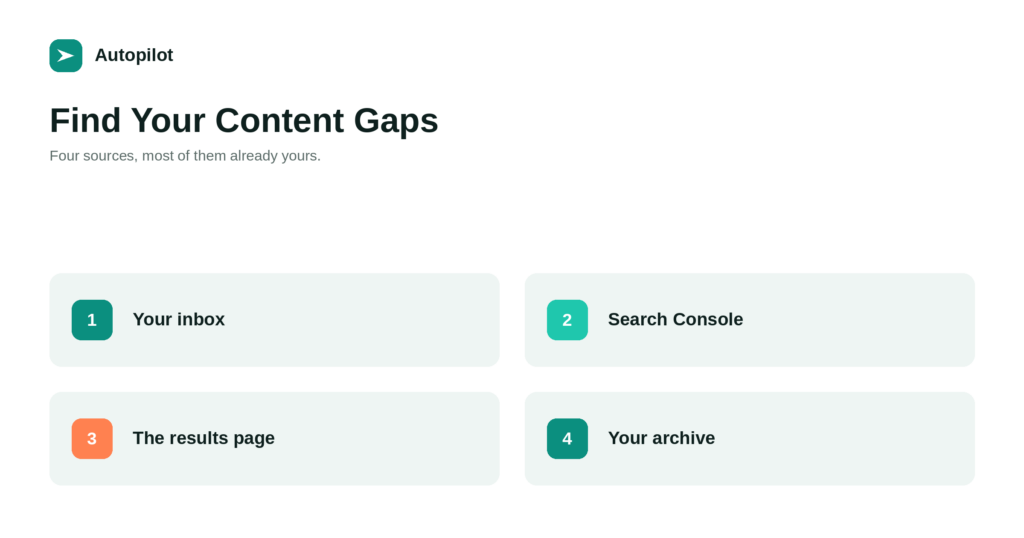
How to Find the Content Gaps Your Blog Has
Four places to find questions your blog has not answered yet: your own inbox, Search Console, the results page, and your archive read with…
 10 aug. 2026 · 6 min de citit
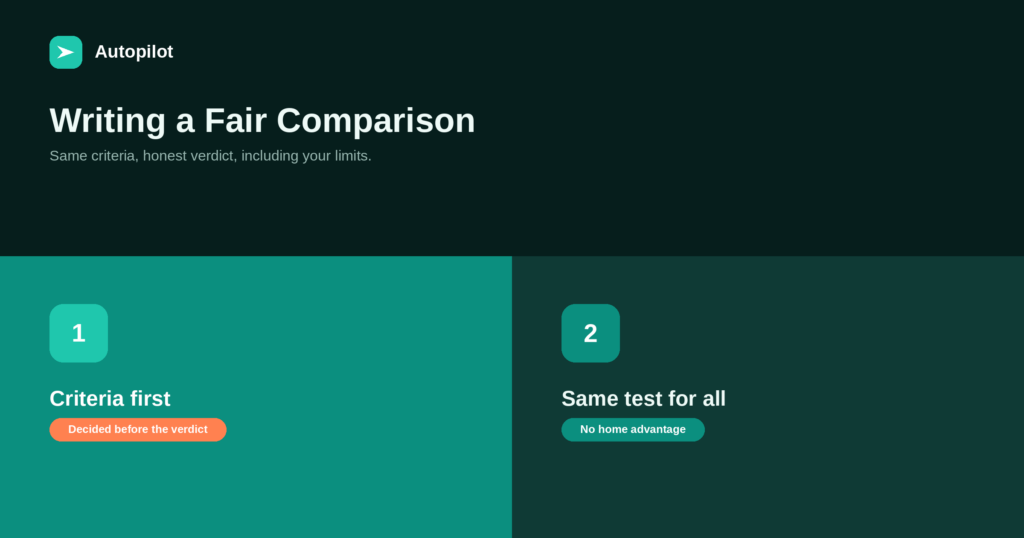
How to Write a Fair Comparison Article
Comparison articles serve people close to a decision, and many are thinly disguised adverts. How to compare fairly, what to include, and how to…