ENEnglish
 LTLietuviškai
 DEDeutsch
 FRFrançais
 RUРусский
 ESEspañol
 PLPolski
 ITItaliano
 UKУкраїнська
 CSČeština
 PTPortuguês
 JA日本語
 LVLatviešu valoda
 ETEesti
 HUMagyar
 IDBahasa Indonesia
 TRTürkçe
 HIहिन्दी
 ELΕλληνικά
 ARالعربية
 THไทย
 VITiếng Việt
 RORomână
 MSBahasa Melayu
 BNবাংলা
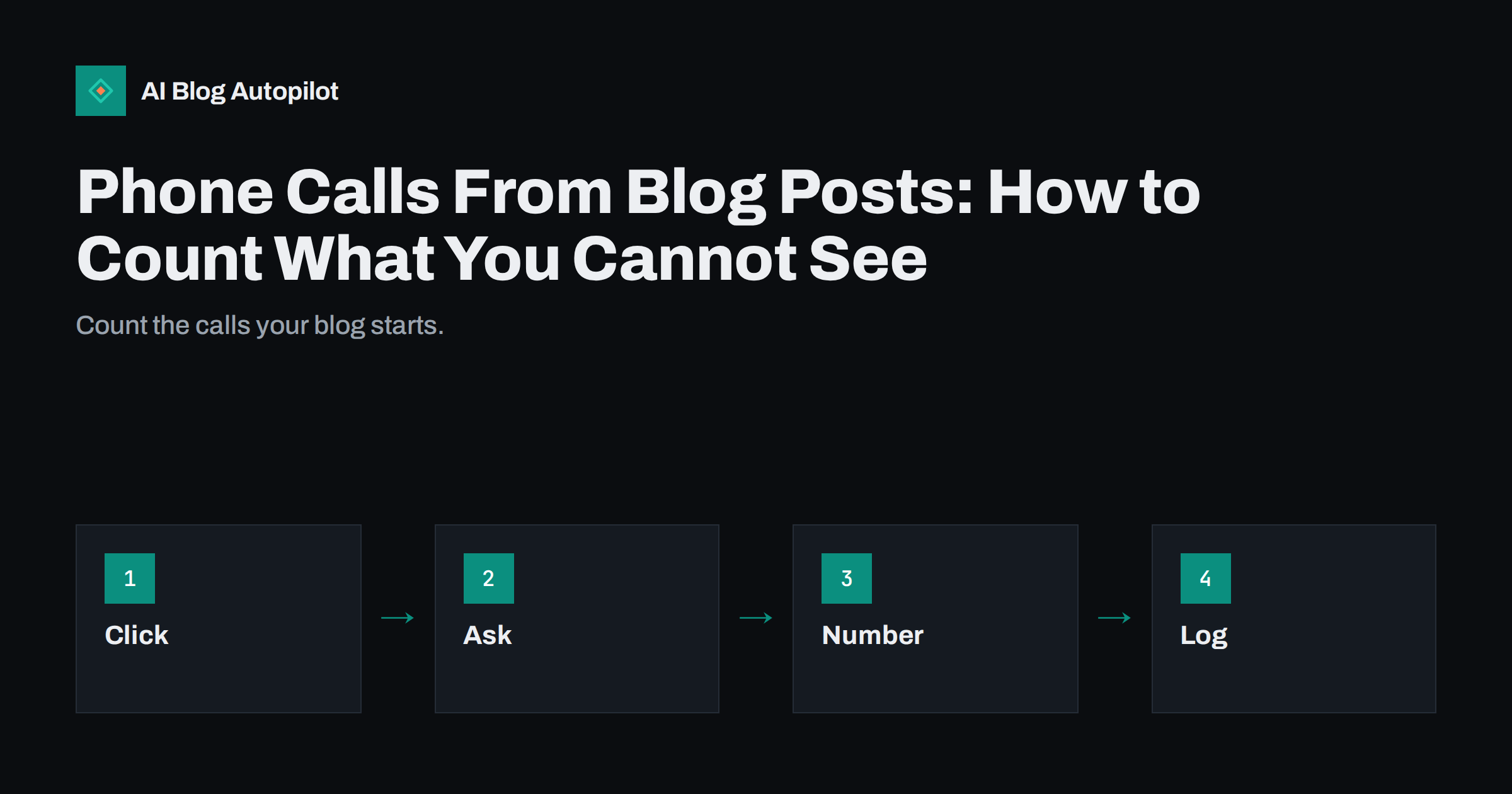
Short answer: to count phone calls that start on a blog article, track taps on the phone number with an analytics event, ask every caller how they found you, and keep a simple log. Use a separate tracking number only if the cost and privacy rules suit you. No method is perfect, but together they show whether articles bring calls.
For many local and service businesses the phone is the main way customers make contact. A reader finishes an article, picks up the phone and calls, and nothing in the website reports shows it. The blog then looks like it brings nothing, when in fact it fills the diary.
This guide explains practical ways to measure calls from articles without complicated software. It suits plumbers, clinics, solicitors, garages, schools, estate agents and any business where a conversation is the sale. The aim is an honest estimate, not a perfect number.
Why calls disappear from your reports
Analytics tools measure what happens on a page. A call happens off the page, on a different device or at a different time. The reader may read an article on a laptop at work, then call from a mobile phone at lunch, or write down the number and call the next day. The tool sees a visit, not the call.
That gap leads to a common mistake: judging the blog by form submissions alone. If your customers prefer to call, the form count will be low even when the blog works well. Decisions made on that number could lead you to cut the content that brings the best customers.
The first step is to accept that you will measure part of the picture and combine several imperfect signals. Taps, answers from callers and changes in call volume together tell a story that is good enough to guide decisions.
Track taps on the phone number
On a mobile phone, a phone number can be a link that starts a call when tapped. Mark that link as an event in your analytics tool, so you can count taps and see which article page they came from. Most analytics tools allow an event on a click of a telephone link without special code, and a tag manager can also do it.
A tap is not a completed call. The reader may cancel, or the call may not connect. Still, it is a strong sign of interest, and the count by article shows which pages inspire action. Compare taps with visits to find articles that convert well, and improve those that do not.
Place the number where a reader needs it: after the part of the article that answers the main question, and in a clear button near the top on mobile screens. The guide to calls to action that fit a blog post explains how to word and place them without being pushy.
Ask every caller one question
The simplest method is the most reliable: ask. Train whoever answers the phone to ask, naturally, how the caller found you, and to write down the answer. Phrase it as interest, not a survey: may I ask how you heard about us? Many callers will say they read something on your website, and some will name the article.
Keep the list of answers short and consistent, for example search engine, recommendation, social network, article on our blog, advert and other. A consistent list makes totals easy to read. Record the answer in the same place every time, whether a notebook, a shared sheet or your booking system.
Be aware of the limits. People forget or simplify, and some say a search engine when they read a post. Treat the numbers as a guide. Over a few months, patterns appear, such as a rise in callers who mention a certain topic after you publish about it.
If several people answer the phone, make sure they all use the same approach. One person who records the source and another who does not will give you lopsided data. A short written script, only a few lines, and a shared sheet are enough. Review it after a month and remove anything callers find awkward.
Use a separate number with care
Call tracking services give each source its own phone number, so a call to a particular number is credited to a source. This can work well for advertising, but for a blog it needs care. A number that differs from the one on your business profile and directories may confuse readers and search engines, which compare business details across the web.
If you try one, show it only on the blog or on a defined set of pages, keep your main number visible in your business listings and use the same business name and address throughout. Check the cost, the privacy notice and the rules in your country about recording calls, which often require telling the caller.
For many small businesses, tap tracking and asking callers give enough information without the added complexity. Consider a tracking number only if call volume is high and you need fine detail.
Compare call volume with publishing dates
A simple, powerful check is to look at call volume over time. Mark your publishing dates on a calendar, and look at weekly calls over several months. If you publish a guide about a service and calls about that service rise a few weeks later, that is a useful clue, even if you cannot prove a single call came from the article.
Be careful about other causes: seasons, adverts, holidays and word of mouth all change call volume. Annotate your reports with events, as the guide to annotating your analytics explains, so that you can separate them from your content.
Look at the topics callers ask about as well. If the questions on the phone match your articles, the blog is working. If callers ask the same basic questions repeatedly, you have found the next article to write.
Make calling easy on the page
Measurement is only useful if the page invites action. Check that your phone number is clear on mobile, easy to tap and shown with opening hours. If your phone is not answered all day, say when callers will reach someone, and offer another contact method for other times.
Make the surrounding page match the reader’s need. An article about an urgent problem, such as a leak or a lost key, should show the number high on the page. An article about planning a project can offer a callback form as well as a number, since readers may prefer to be contacted at a time that suits them.
Keep the number consistent everywhere. The same number in the header, on contact pages, in structured data and on your business profile helps readers and search engines trust the details. The article on contact and trust pages lists what these pages should include.
Turn the data into decisions
Once a month, gather your numbers: taps by page, caller answers and call volume. Put them in a small table with your articles listed down the side. Look for pages with many visits and few taps, which may need a clearer next step, and pages with few visits and many taps, which deserve more promotion.
Use the answers to plan content. If callers repeatedly mention a topic, write more about it. If they ask the same question at the start of every call, put the answer into an article and link it from the contact page. This reduces the time spent repeating the same explanation and shows callers you are well prepared.
Share the results with the person who answers the phone. They hear what customers say before anyone else, and their feedback often improves the articles. A short conversation each month between writer and phone handler is worth more than many reports.
Remember the callers who never mention the blog. Some read three articles, compare you with two competitors and call without saying so. The best sign that content is working is often indirect: callers who arrive informed, ask better questions and need less time to decide. Note this in your log as a separate observation, even if it does not fit a column.
Write down your assumptions too, such as that a tap counts as interest and that a stated source is roughly right. When you review the results, you will know how much weight each number deserves and which assumption to test next.
Finally, keep your expectations realistic. A blog rarely produces a flood of calls overnight. It builds trust, and the calls follow as articles gather readers. Measure over quarters, not days, and compare the same months year on year where you can.
Respect privacy and consent
Whatever method you use, collect only what you need and tell people what you do. If you record calls, say so at the start and follow the law where you operate. If you note details about callers, store them securely and keep them only as long as necessary. The guide to privacy and analytics on a business blog explains the principles.
When you ask callers how they found you, make it optional. A caller in a hurry or in distress should not be questioned. Their call is more important than your statistics, and a good business knows that.
Review your notes now and then, and delete information that no longer serves a purpose. Clean records are easier to work with and safer to hold.
How AI Blog Autopilot helps
AI Blog Autopilot writes and publishes articles on your chosen topics, so there is a steady supply of pages to measure. Add your phone number and next step to your pages, then use the methods above to see which topics bring calls. See the pricing page for plans.
Related reading
- Calls to Action That Fit the Article They Sit In
- Getting More Enquiries From the Readers You Already Have
- Blog Strategy for a Local Business
The bottom line
Count taps, ask callers, compare call volume with publishing dates and treat the result as a guide, while respecting the privacy of the people who call.
GYIK
Can analytics show phone calls from my blog?
Not directly. You can count taps on the number as an event, but the call itself happens off the page.
What is the simplest way to know if articles bring calls?
Ask each caller how they found you and record the answer in a consistent list.
Do I need a call tracking number?
Usually not for a small business. Tap tracking and asking callers give enough, and a second number can confuse listings.
Is it legal to record calls?
Rules differ by country and often require telling the caller. Check local law before recording.
How should I use the results?
Improve pages with many visits and few taps, promote pages with few visits and many taps, and write more on topics callers mention.