ENEnglish
 LTLietuviškai
 DEDeutsch
 FRFrançais
 RUРусский
 ESEspañol
 PLPolski
 ITItaliano
 UKУкраїнська
 CSČeština
 PTPortuguês
 JA日本語
 LVLatviešu valoda
 ETEesti
 HUMagyar
 IDBahasa Indonesia
 TRTürkçe
 HIहिन्दी
 ELΕλληνικά
 ARالعربية
 THไทย
 VITiếng Việt
 RORomână
 MSBahasa Melayu
 BNবাংলা
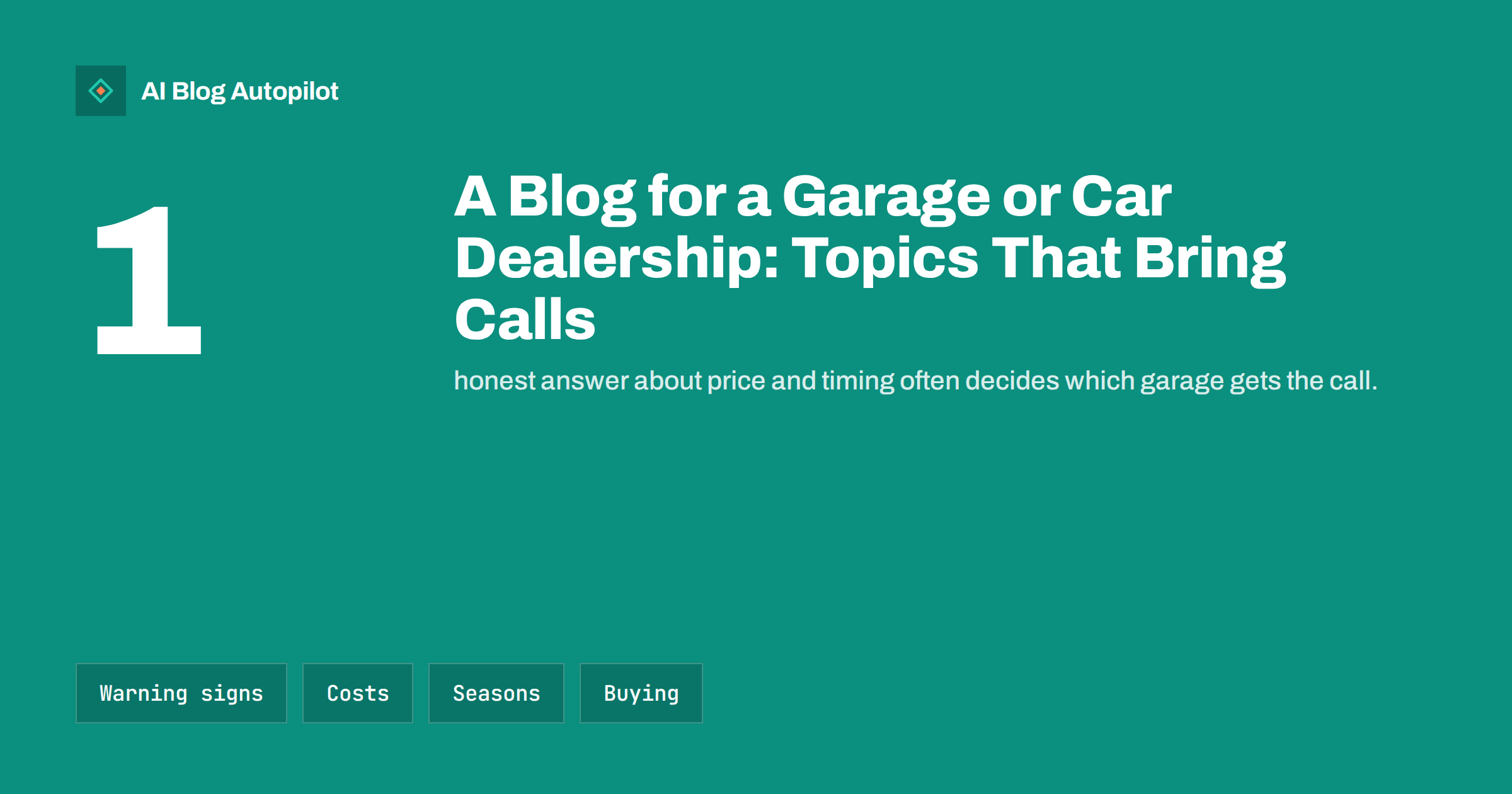
Short answer: a garage or car dealership blog should answer what drivers ask when something goes wrong or when they are about to buy. Strong topics are explanations of warning lights and noises, honest price ranges for common jobs, seasonal checks, what a service includes and fair buying advice. Each article should name the services you offer, the area you cover and how to book, because most customers choose a business within a short drive. Avoid diagnosing a specific car from a distance and avoid fixed prices you cannot guarantee.
A driver with a dashboard light, a strange sound or an expired inspection date usually starts with a search, then calls the first business that seems trustworthy and nearby. Trust is what separates a garage that gets the call from one that does not. A blog is a way to show knowledge and honesty before the customer ever speaks to you. This article describes what to publish and how to keep it useful.
Explain warning signs and symptoms
People search for what they notice: a grinding noise when braking, a light that has appeared on the dashboard, a car that pulls to one side, a smell from the engine bay. Write an article for each common symptom that explains the usual causes in plain language, how serious it tends to be, whether it is safe to keep driving and what a technician will check. Be careful not to diagnose a particular vehicle. A good structure is “what it often means”, “what you can safely check yourself” and “when to book a visit”.
Be clear about safety. If a symptom can be dangerous, such as brake problems or smoke, say so plainly and tell readers to stop driving and seek help. That kind of honesty builds the trust that brings customers back. The article on writing a how-to article helps with the step-by-step parts.
Add a short “what to tell us when you call” box to symptom articles: when the noise happens, at what speed, whether a light is on, what has changed recently. This helps the customer describe the problem, helps your staff prepare and signals professionalism. It also keeps the article practical rather than theoretical, and it turns the page into a tool people save or share with a family member who is dealing with the same car.
Write honestly about cost
Price is the question behind many searches, and most garages avoid it. You do not need to publish a price list to help. Explain the range for common jobs, what makes the price higher or lower (car model, parts quality, labour time, hidden damage found during the job) and what is included in a basic and a full service. Say how you quote and whether you contact the customer before extra work is done. That clarity reassures people who fear being overcharged. Our guide to writing honest cost articles shows how to give useful ranges without false precision.
If you publish figures, date them and update them when parts or labour costs change. A stale price quoted in an old article can create disputes.
Consider adding a plain explanation of what happens when a repair turns out to need more than expected. Say that you will stop and call the customer before any extra work, explain what you found and give a revised estimate. Customers worry far more about surprises than about the base price. Describe how you show worn parts, whether you offer a written estimate and how you handle guarantees on both parts and labour. A page like this answers the fear behind many searches and costs nothing but a little honesty.
Seasonal and routine maintenance
Driving needs follow the calendar. Winter brings battery, tyre and visibility checks, summer brings cooling and air conditioning, and every year brings inspection or roadworthiness deadlines. Publish these pieces several weeks before the season so they are indexed when searches rise, and link each to the relevant service page. The article on planning seasonal content explains how to set a yearly calendar so you are not writing in a panic when the first frost arrives.
Evergreen explainers fit between the seasonal ones: how often to service a car, what each service level covers, how to read a tyre sidewall, what a warranty does and does not cover.
Convert each seasonal guide into a simple checklist that a driver can follow before visiting, such as checking tyre tread, lights, washer fluid and wipers, with a clear note on what should be left to a professional. Offer a printable or shareable version and invite readers to book if they find a problem. Keep safety first: if the checks show something that affects braking or steering, tell the reader not to drive until it has been inspected. Practical checklists get saved and shared, which brings new visitors without extra effort.
Buying advice for a dealership
A dealer’s readers want help choosing, not pressure. Compare body types, fuel and powertrain options, running costs and the questions to ask when viewing a used car. Explain financing in general terms, how part exchange works and what a vehicle history check shows. Keep comparisons fair, say when a cheaper model suits a buyer better and avoid claims you cannot document. Link each guide to the relevant stock page. Our article on writing a fair comparison gives a structure for this.
Stock listings change daily, so avoid putting specific vehicles in article text. Link to the live inventory instead and keep the article focused on advice.
Add a page that explains how you inspect and prepare used cars, what a standard check covers, what you do with the history of each vehicle and what kind of warranty applies. Buyers fear hidden faults, and a clear description of your process reduces that fear. Include a list of questions buyers should ask any seller, including you; a business confident in its standards loses nothing by helping customers ask good questions. Update the page when your process or the legal framework changes.
Local pages and proof
Customers want a business they can reach. Publish clear pages for your address, opening hours, directions, how to book, whether you offer courtesy cars or collection, and which makes you work on. Mention the areas you serve in natural language. Show proof that is real: accreditations, manufacturer approvals, years in business, and reviews you have permission to quote. Our guide to blog strategy for a local business covers how articles and local pages support each other, and reusing posts on a business profile shows how to share them where local searches begin.
Photographs of the workshop, the equipment and the people at work show that the business is real and well run. Explain how you keep customers informed during a repair, whether you return old parts on request and what guarantee you give on work, but only state a guarantee that is written down and honoured. Customers worried about being treated unfairly look for exactly these signals. If you have apprentices or specialists, introduce them; a named technician is easier to trust than a faceless garage.
Turn readers into bookings
Every article needs a next step that fits the moment. A symptom article might say “book a diagnostic check”; a cost article might say “request a quote”; a seasonal article might say “book your winter check”. Make the booking form short, and say how quickly you reply. Only mention offers that are real. The article on turning customer questions into topics is a useful habit here: every time a customer asks something at the counter or on the phone, note it and write the answer once, properly.
Mistakes to avoid
- Diagnosing from a distance, which can mislead and create liability.
- Quoting fixed prices for jobs that depend on the car.
- Ignoring safety, or making dangerous symptoms sound minor.
- Listing individual cars in articles that will outlive them.
- Copying manufacturer text, which is thin and often duplicated elsewhere.
New technology and the questions it creates
Electric and hybrid cars have brought a wave of new searches: how servicing differs, how long a battery lasts, what home charging involves, whether a particular repair is safe to carry out and what happens in winter. If your workshop handles these vehicles, a few careful guides will stand out, because many garages have not yet written them. If you do not work on them, say so honestly and explain what you do offer. Readers value a business that knows its limits.
Be cautious with claims. Range, charging time and battery life depend on the model, the use and the weather, so describe them as examples and not promises. Link to official sources where figures matter, and update the pages as the technology and local rules change. Use plain language to explain terms such as kilowatt-hours or regenerative braking, and add a short glossary for readers who are new to the subject.
How AI Blog Autopilot helps
AI Blog Autopilot writes full SEO articles for your WordPress blog from the topics, keywords, audience and tone you set, with FAQ sections, tags and SEO meta included, and it shares each one to your social networks. For a workshop that is busy under the bonnet all day, it can keep the blog moving with symptom guides, seasonal checks and buying advice. Approval mode lets you read each article before it goes live, so you can correct a detail, remove a price or add a note about your own process. See the pricing page for plans.
Related reading
- Blog Strategy for a Local Business
- Writing Honest Articles About What Things Cost
- Planning Seasonal Content Without Scrambling Every Year
- Turning Customer Questions Into Useful Blog Topics
The bottom line
A garage or dealership blog wins calls by being honest and specific. Explain warning signs and keep safety first, give real price ranges and what affects them, publish seasonal and routine guidance ahead of demand, offer fair buying advice and make local details easy to find. Each article then does the work a good service adviser does at the counter, before the customer has picked up the phone.
GYIK
What should a garage blog write about?
Warning signs and symptoms, honest cost ranges, what each service includes, seasonal checks and practical local information such as hours, location and how to book.
Should a garage publish prices online?
You can publish ranges and explain what changes the price without committing to fixed figures. Date any numbers and update them when costs change.
Is it safe to explain car faults in a blog?
Yes, if you describe common causes in general terms, stress safety and avoid diagnosing a particular vehicle. Tell readers when to stop driving and seek help.
Can a car dealership blog list its stock in articles?
It is better to link to the live inventory. Articles last longer than individual cars, so keep them focused on advice.
How do I know which topics to cover?
Note the questions customers ask on the phone and at the counter, then write a clear answer to each. Those are the searches your future customers are making.