 ENEnglish
 LTLietuviškai
 DEDeutsch
 FRFrançais
 RUРусский
 ESEspañol
 PLPolski
 ITItaliano
 UKУкраїнська
 CSČeština
 PTPortuguês
 JA日本語
JA日本語 LVLatviešu valoda
 ETEesti
 HUMagyar
 IDBahasa Indonesia
 TRTürkçe
 HIहिन्दी
 ELΕλληνικά
 ARالعربية
 THไทย
THไทย VITiếng Việt
 RORomână
 MSBahasa Melayu
 BNবাংলা
#Multilingual content
Publishing in more than one language without doubling the work or halving the quality. We cover the difference between translating an English article and writing natively in the target language, and why the second usually reads better. You will find practical notes on hreflang, canonical URLs and keeping one language’s schedule from depending on another’s. We also look at how to choose which markets are worth the effort rather than switching everything on at once. AI Blog Autopilot writes in 25 languages, and the advice here applies whether or not you use it.
 28 Eyl 2026 · 8 dk okuma
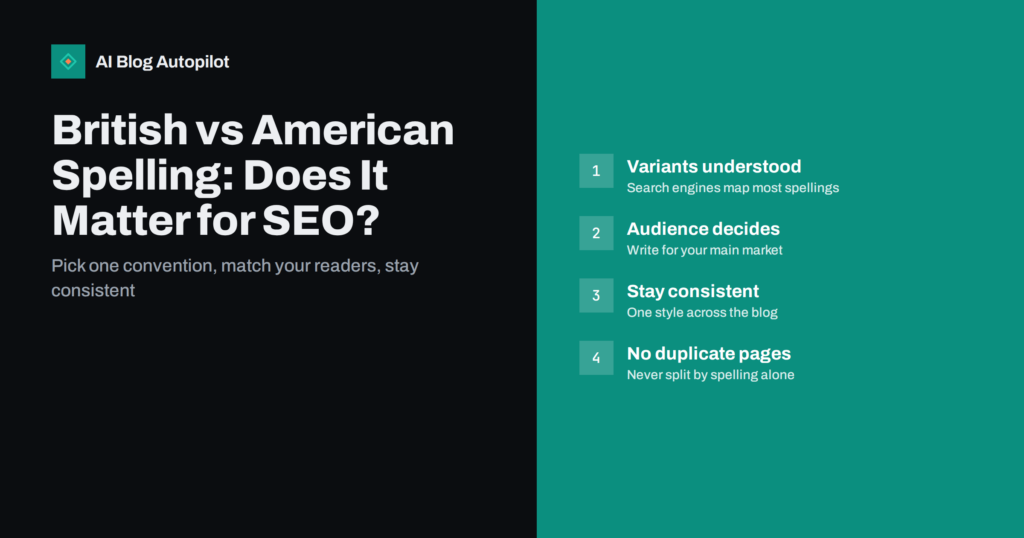
British vs American Spelling: Does It Matter for SEO?
Colour or color, optimise or optimize? Search engines treat most spelling variants as the same word. When the choice matters and how to pick…
 28 Eyl 2026 · 8 dk okuma
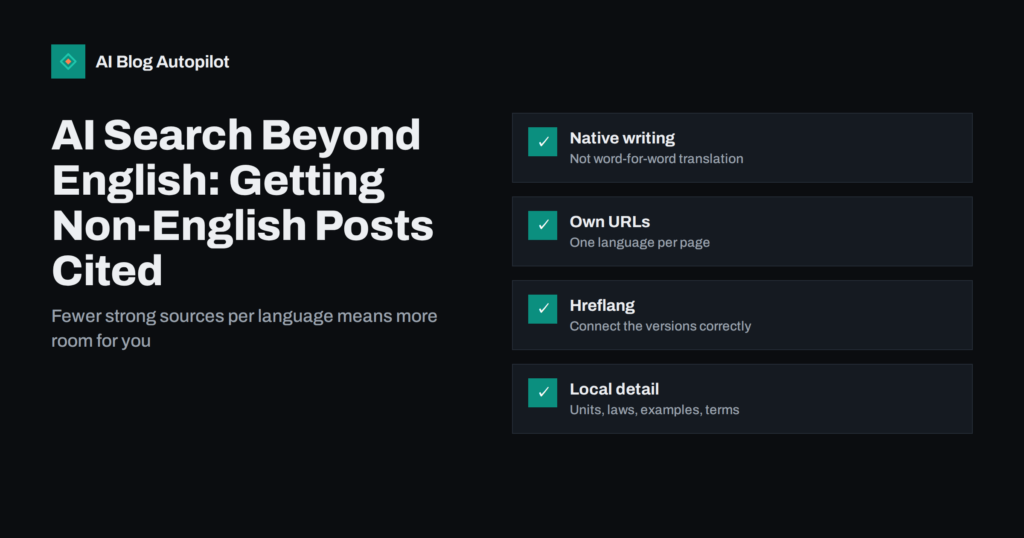
AI Search Beyond English: Getting Non-English Posts Cited
AI answers are shown in many languages, and each language has fewer good sources to cite. How to make non-English blog posts easy for…
 4 Eyl 2026 · 6 dk okuma
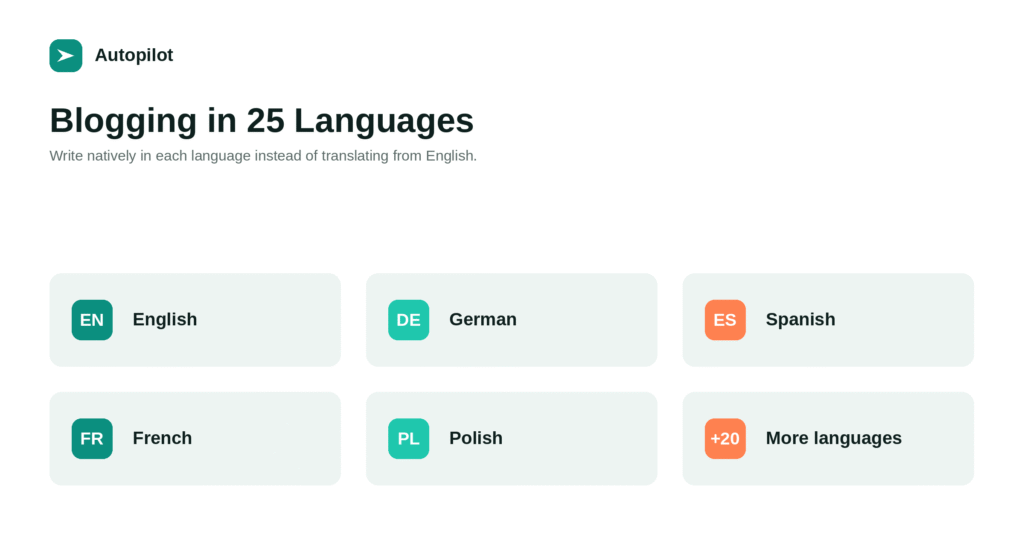
Blogging in 25 Languages: How to Reach International Readers with AI
How to publish a blog in several languages without doubling the work: writing natively instead of translating, choosing markets, and getting hreflang right.
 15 Ağu 2026 · 6 dk okuma
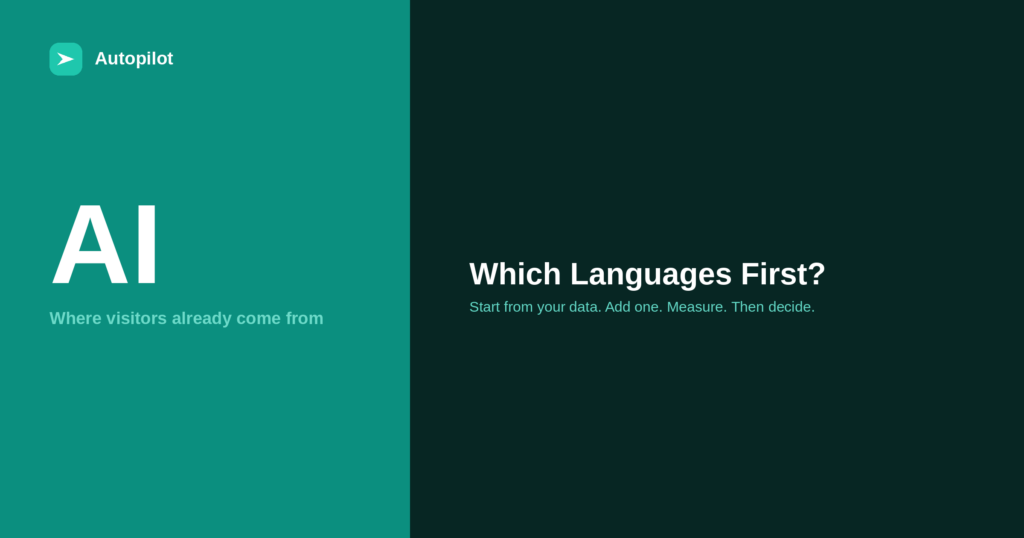
Choosing Which Languages to Publish In
Adding a language is a commitment, not a switch. How to choose markets from your own data, test one language before adding more, and…
 15 Ağu 2026 · 6 dk okuma
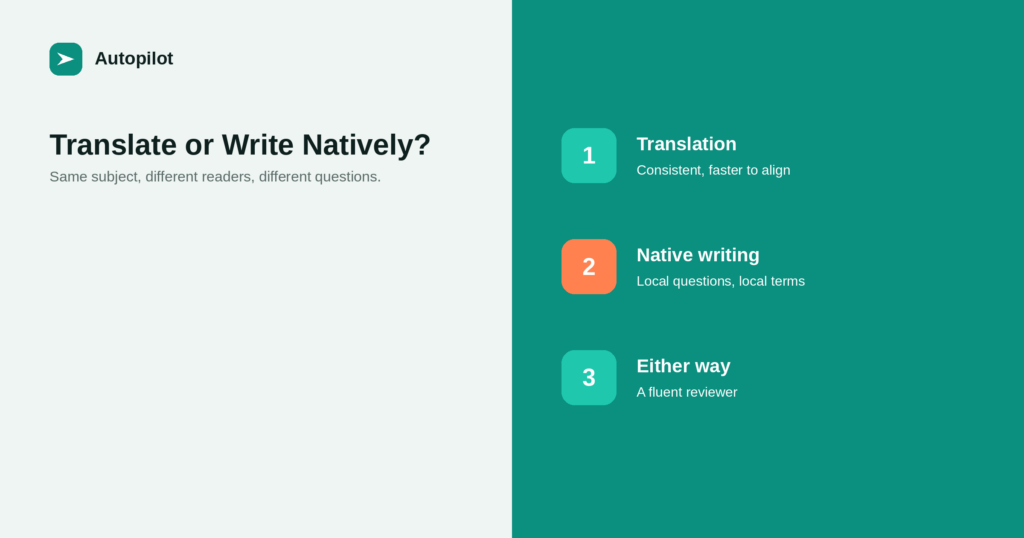
Translating Articles or Writing Natively in Each Language
A translated article answers the questions English readers asked. A natively written one answers the questions local readers ask. When each approach makes sense.
 14 Ağu 2026 · 6 dk okuma
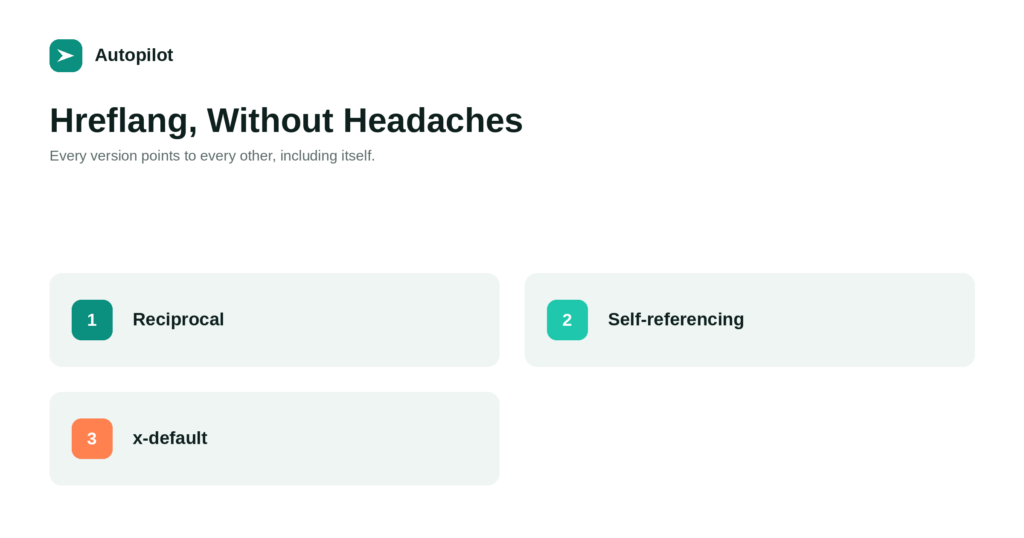
Hreflang for a Multilingual Blog, Without the Headaches
Hreflang tells search engines which language version of a page to show to whom. How it works, the rules that break it most often,…