ENEnglish
 LTLietuviškai
 DEDeutsch
 FRFrançais
 RUРусский
 ESEspañol
 PLPolski
 ITItaliano
 UKУкраїнська
 CSČeština
 PTPortuguês
 JA日本語
 LVLatviešu valoda
 ETEesti
 HUMagyar
 IDBahasa Indonesia
 TRTürkçe
 HIहिन्दी
 ELΕλληνικά
 ARالعربية
 THไทย
 VITiếng Việt
 RORomână
 MSBahasa Melayu
 BNবাংলা
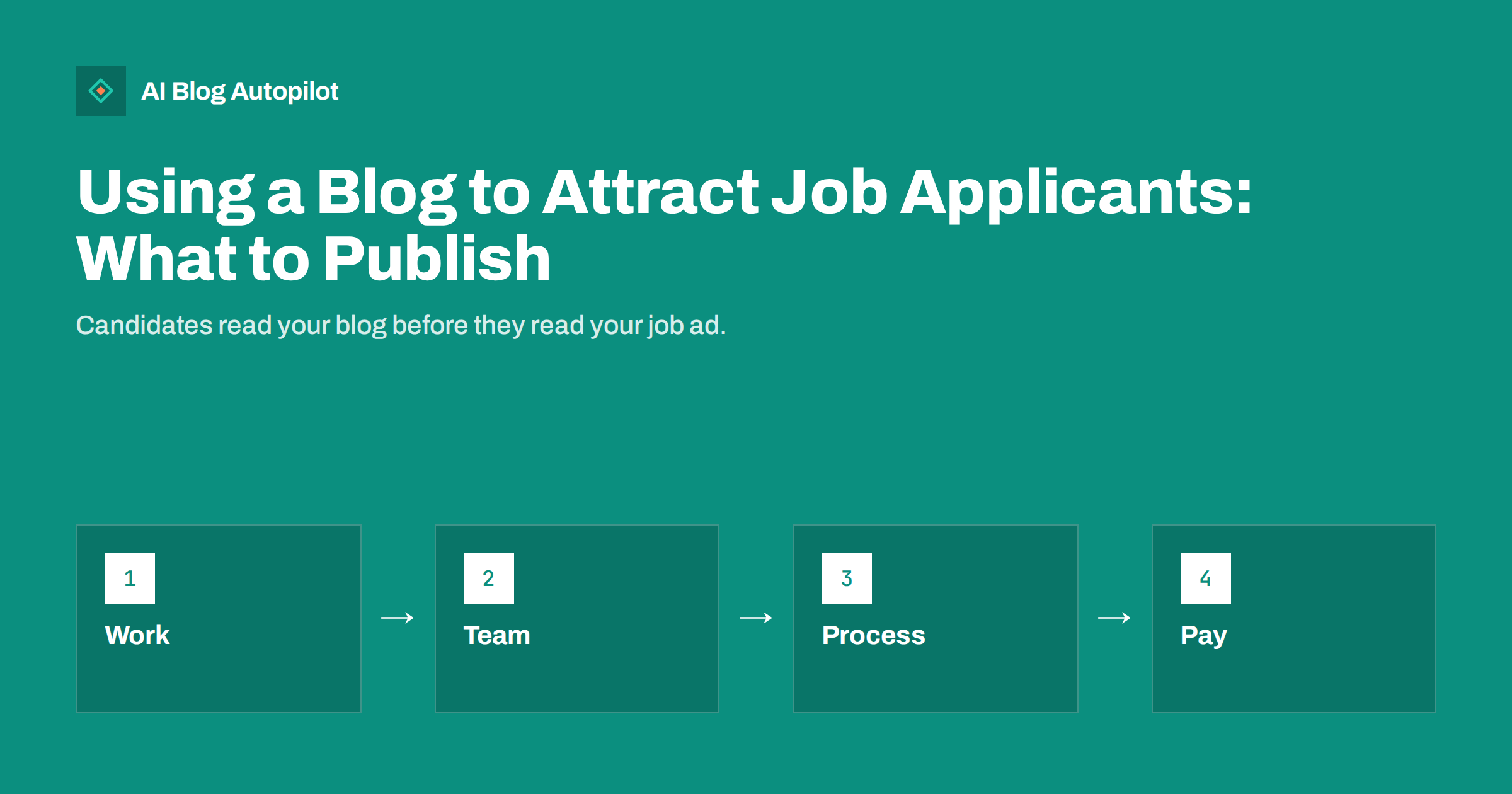
Short answer: a blog can help you attract applicants by showing what working at your company is actually like. Publish honest posts about the work, the team, how you make decisions, how your hiring process runs and what new starters can expect in the first months. Support them with clear job pages that state the role, location, working pattern and, where possible, the pay range. Candidates trust specifics, so avoid empty phrases about being a family or a fast-paced environment, and promise only what you will deliver.
Before applying, most candidates search for the company. They look for its website, social profiles, reviews and any writing that shows what the people there care about. A small business with no visible answers loses good applicants to those that explain themselves. A blog is a low-cost way to give those answers in your own words, and it works alongside the content that already attracts customers.
Know who you want to reach
Start with the roles you hire most often, and think about the people who fill them. A workshop looking for an apprentice has different readers from a software firm seeking a senior developer. Ask recent hires what they searched for, what worried them and what convinced them to apply. Write those questions down: Is the work remote or on site? Is there training? What does a normal week look like? How quickly will I get a reply? The same habit of turning real questions into topics appears in our guide to turning customer questions into topics, and it works as well for candidates as for customers.
Different candidates need different content. A school leaver wants to know whether training is provided and how pay develops. An experienced specialist wants to see the quality of the work and the people. Someone returning to work wants to know how flexible the arrangements really are. Write for one group at a time and mark each page so the right candidates can find it. A single page that tries to speak to everybody usually persuades nobody.
Show what the work is really like
The strongest recruiting posts are about the job, not about the company’s values. Describe a typical project from start to finish, the tools people use, the problems they solve and how success is judged. Include the unglamorous parts, such as early starts, on-call duty or repetitive tasks, because candidates who know the truth stay longer. Use behind-the-scenes posts, with real photos and names where people agree. Honest descriptions will put off some applicants, and that is a benefit: you want fewer unsuitable applications, not more.
Consider a regular feature such as a day in the life, written by the employee rather than by the marketing team. Give them a simple outline: when the day starts, what the first task is, who they speak to, what the hardest part is and what they enjoy most. Keep the edit light so their own words remain. A series of four or five such posts, covering different roles, gives candidates a realistic picture of the range of work, and it is easy to extend as the team grows.
Introduce the team
Candidates want to know who they would work with. Short profiles or interviews with current employees, written with their consent and approval, are effective: how they joined, what they work on, what they learned and what they like about the place. Let people speak in their own words and avoid scripted praise. Our guide to interviewing experts for your articles offers a simple method. Also encourage staff to share the posts in their own networks, with the approach we describe in getting your team to share blog posts, because a message from a colleague is more convincing than one from a company page.
Include the managers, not only the newest staff. Candidates want to know who they will report to, how that person works and what they expect. A short profile of a team leader that describes their approach to feedback, training and workload is more informative than any list of company values. Ask the leader to say what makes someone successful in the team and what kind of person finds it difficult, so that candidates can decide honestly whether it suits them.
Explain how you hire
Uncertainty about the process discourages applicants. Publish a plain description of how hiring works: where to apply, what documents you need, how many interview stages there are, what each involves, how long decisions take and how you give feedback. If you use a practical task, say how long it takes and whether it is paid. Describe how new starters are welcomed and what the first week and the first three months look like. This kind of clear process page also reduces the time you spend answering the same emails.
Add a short list of common questions and plain answers: whether you accept applications without a cover letter, whether you consider career changers, whether you hold places for apprentices, whether you reply to every applicant and how long you keep applications on file. Explaining how you handle personal data in the process is also expected, and a link to your privacy information should be close to the application form. Clear answers save time for both sides.
Write job pages that stand on their own
Each open role should have its own page with a clear title, a short summary, responsibilities, requirements that are genuinely required, location and working pattern, salary or pay range where you can share it, benefits you actually provide, and how to apply. Keep it factual and avoid inflated requirements. Pay transparency is expected in more places and is rewarded by candidates; where you cannot publish a figure, explain how pay is decided. Check what the law in your country requires for job advertisements, including equal opportunity wording and any rules about pay disclosure. This article is general information, not legal advice. Our guide to writing honestly about cost offers the same approach to numbers.
Include a short description of a typical week and of the first ninety days, so a candidate can picture themselves in the role. List the real tools and the real constraints. Say who the person will report to and who they will work with. If the role is remote or hybrid, say how often people meet and where. If you sponsor training or qualifications, explain what is covered. Remove requirements that are really preferences, since long lists put off capable applicants who feel they do not fit every line. Keep old job pages online with a note that the role is filled, rather than deleting them, so links do not break.
Keep the tone honest
Recruitment language easily slips into cliché: passionate, dynamic, rockstar, family. Readers see through it. Describe what you do and how you work in concrete terms, and match the voice of the rest of the blog. Our article on brand voice guidelines helps keep it consistent. Do not make promises about career progression, flexibility or culture that you cannot keep, and do not copy another company’s wording. Check claims against reality, perhaps by asking current staff to read the draft.
Distribute and measure
Link your careers page from the footer and the about page, and share new recruiting posts where your candidates spend time. For many roles that includes professional networks, as discussed in founder profile or company page, and industry communities or schools. Track simple measures: visits to job pages, applications started and completed, the source of each applicant and the quality of those hired. If you receive many applications that miss the basics, your posts or job pages are probably unclear. Ask new hires what they read before applying, and write more of that.
Keep the recruiting section tidy. Remove filled vacancies, update contact details, and check that every link and form works, ideally by applying to your own test role once in a while and seeing what a candidate sees. Read the confirmation message, the speed of the first response and the instructions for the next step. A good recruiting blog is wasted if the application process behind it feels careless, and candidates remember the experience, whether or not they are hired.
What new starters experience
A post about the first weeks tells candidates what to expect and tells you whether your onboarding is as good as you think. Describe the first day in plain terms: who greets them, what equipment is ready, who they meet, what they do first. Explain how training works, how feedback is given and when the first review takes place. Ask a recent starter to describe what surprised them, and use their words, with their approval.
Be honest about the difficult parts. If the first month is intense, say so. If people learn mainly by doing, say that. Applicants who know the reality are more likely to stay, and those who withdraw at this stage have saved both sides time. Update the post every year, because an outdated description of onboarding quickly damages trust.
Finally, remember that your blog is read by people who will never apply but who form an opinion about you as an employer, including customers and suppliers. The way you describe your people and your hiring says something about the whole business, so write each recruiting page with the same care as a sales page.
How AI Blog Autopilot helps
AI Blog Autopilot writes full SEO articles for your WordPress blog from the topics, keywords, audience and tone you set, with FAQ sections, tags and SEO meta included, and it shares each one to your social networks. It keeps the main blog active while you write the personal parts yourself, such as team profiles and job pages, because those depend on your real people. Approval mode lets you read each article before it goes live. See the pricing page for plans.
Related reading
- The About Page a Business Blog Needs
- Getting Your Team to Share Blog Posts on Their Profiles
- Storytelling in Business Blog Posts Without the Fluff
- How to Write Brand Voice Guidelines an AI Can Follow
The bottom line
Candidates want the truth about the job. Publish honest posts about the work and the team, explain how you hire, write job pages with real details, keep the tone plain and measure where good applicants come from. A small company that explains itself clearly gets fewer unsuitable applications and more of the people it hopes to meet.
SSS
Can a small company use its blog for recruiting?
Yes. Honest posts about the work, the team and the hiring process help candidates decide to apply and filter out poor matches.
Should I publish salary information?
Where you can, yes. Candidates value it, and some countries require it. If you cannot publish a figure, explain how pay is decided.
Do I need a separate careers page?
It helps. A page that lists open roles, explains the process and links to job pages is easier for candidates and for search engines to find.
How do I avoid empty employer-brand language?
Describe specific tasks, tools, schedules and decisions. Ask current staff to read drafts and remove anything they would not say themselves.
Is this legal advice?
No. Rules for job advertising, equal opportunity and pay disclosure vary by country, so check your local requirements.