 ENEnglish
 LTLietuviškai
 DEDeutsch
 FRFrançais
 RUРусский
 ESEspañol
 PLPolski
 ITItaliano
 UKУкраїнська
 CSČeština
 PTPortuguês
 JA日本語
JA日本語 LVLatviešu valoda
 ETEesti
 HUMagyar
 IDBahasa Indonesia
 TRTürkçe
 HIहिन्दी
 ELΕλληνικά
 ARالعربية
 THไทย
THไทย VITiếng Việt
 RORomână
 MSBahasa Melayu
 BNবাংলা
#Article structure
How to lay out an article so both a reader and a search engine can follow it. We cover the answer near the top, headings that describe rather than tease, and sections that can be read on their own. You will find when a table beats three paragraphs, when a list is lazy, and how long a section should run before it needs a subheading. We also cover the shapes that suit different intents, because a how-to and a comparison do not want the same skeleton. The aim is a structure you can reuse without every article reading the same.
 25 ส.ค. 2026 · อ่าน 6 นาที
Writing for Decision-Makers Who Skim
Managers read in minutes, on phones, between meetings. How to put the decision first, quantify what you can, show trade-offs, and make the article…
 23 ส.ค. 2026 · อ่าน 6 นาที
Screenshots, Diagrams and Charts in Blog Articles
Images inside an article should explain something words cannot. When to use a screenshot, a diagram or a chart, how to make each clear,…
 16 ส.ค. 2026 · อ่าน 6 นาที
Readability: Writing So People Finish the Article
Readable writing is not simplified writing. Short sentences where they help, plain words, one idea per paragraph, and structure that lets a skimmer find…
 11 ส.ค. 2026 · อ่าน 6 นาที
Writing for Featured Snippets Without Chasing Them
Featured snippets quote a short passage that answers a query directly. How to write passages that qualify, which formats suit which questions, and what…
 10 ส.ค. 2026 · อ่าน 6 นาที
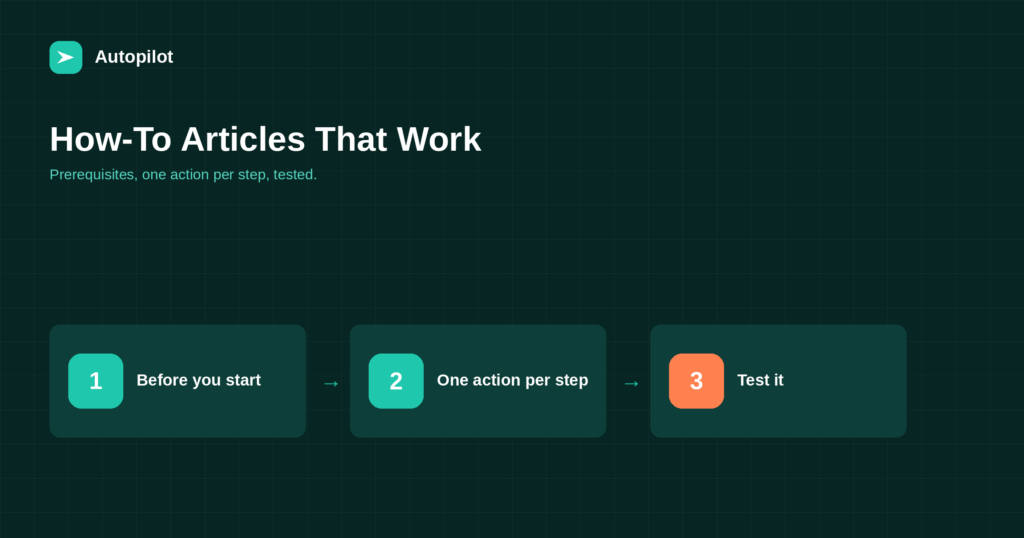
How to Write a How-To Article People Can Actually Follow
A how-to article succeeds when a reader finishes the task. What to state before the steps, how to write each step, where to warn,…
 7 ส.ค. 2026 · อ่าน 6 นาที
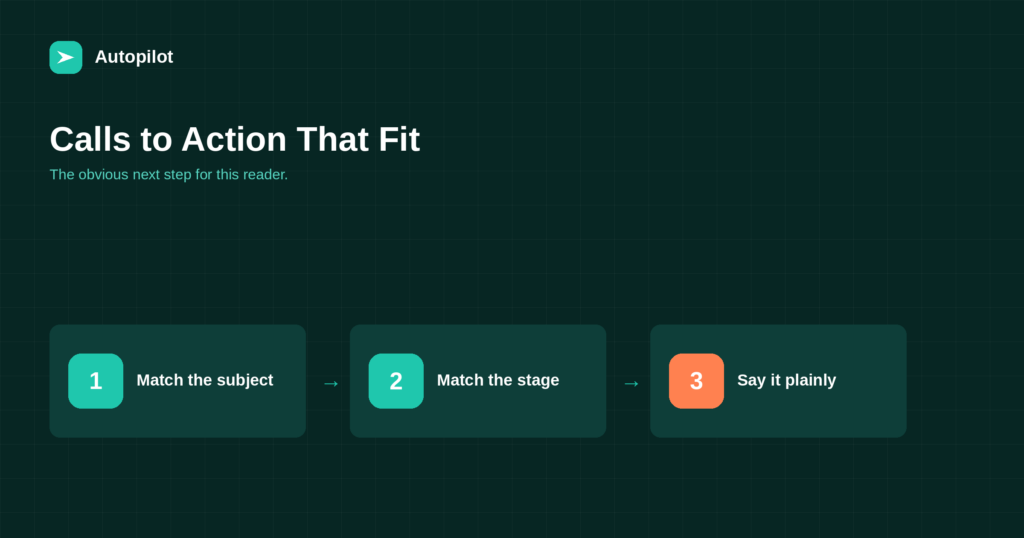
Calls to Action That Fit the Article They Sit In
A call to action should be the obvious next step for someone who just read that article. How to match the offer to subject…