 ENEnglish
 LTLietuviškai
 DEDeutsch
 FRFrançais
 RUРусский
 ESEspañol
 PLPolski
 ITItaliano
 UKУкраїнська
 CSČeština
 PTPortuguês
 JA日本語
 LVLatviešu valoda
 ETEesti
 HUMagyar
 IDBahasa Indonesia
 TRTürkçe
 HIहिन्दी
 ELΕλληνικά
 ARالعربية
 THไทย
 VITiếng Việt
 RORomână
 MSBahasa Melayu
 BNবাংলা
#Keyword research
Choosing topics worth writing, starting from questions rather than from a tool export. We cover how to read search intent, when a keyword is a whole article and when it is one paragraph, and how to tell a phrase you can rank for from one you cannot. You will find practical ways to build a topic list from customer questions, support tickets and Search Console. We also explain why difficulty scores are estimates rather than verdicts. The aim is a list you can publish against for months.
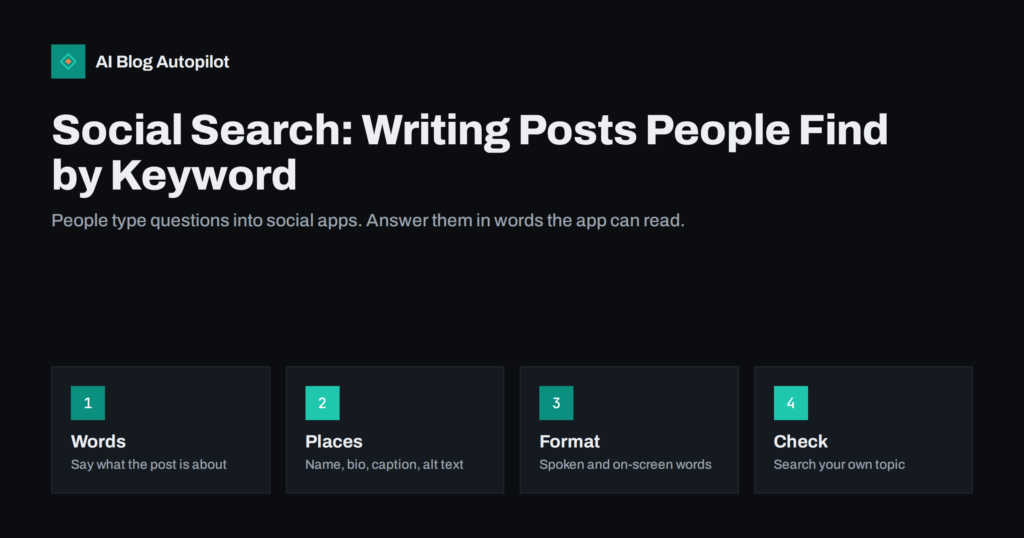 Oct 31, 2026 · 8 min read
Social Search: Writing Posts People Find by Keyword
Many people now search inside social networks as in a search engine. How to use keywords in captions, names, alt text and videos so…
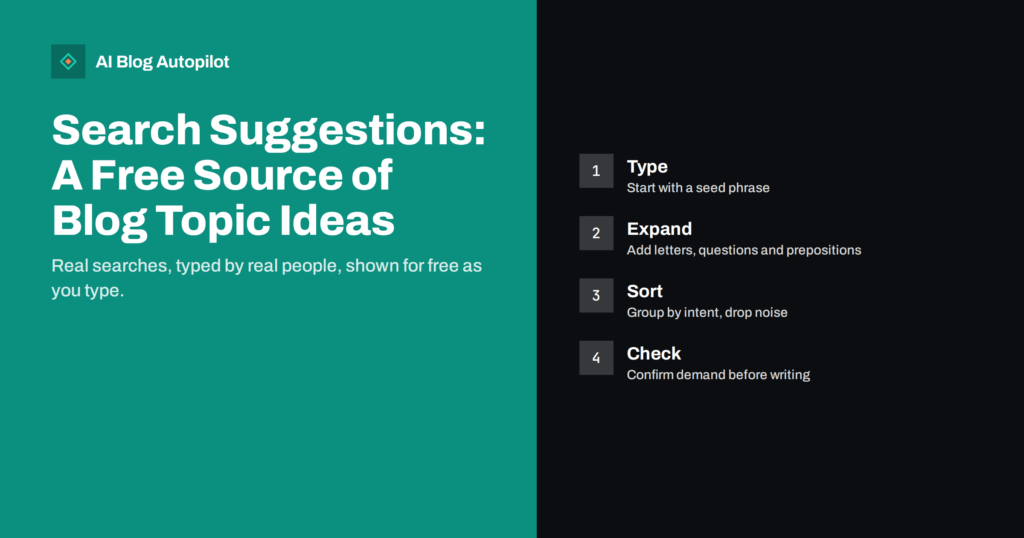 Oct 28, 2026 · 9 min read
Search Suggestions: A Free Source of Blog Topic Ideas
How to use search suggestions and related searches to find blog topics: the method, how to read the patterns, what to filter out and…
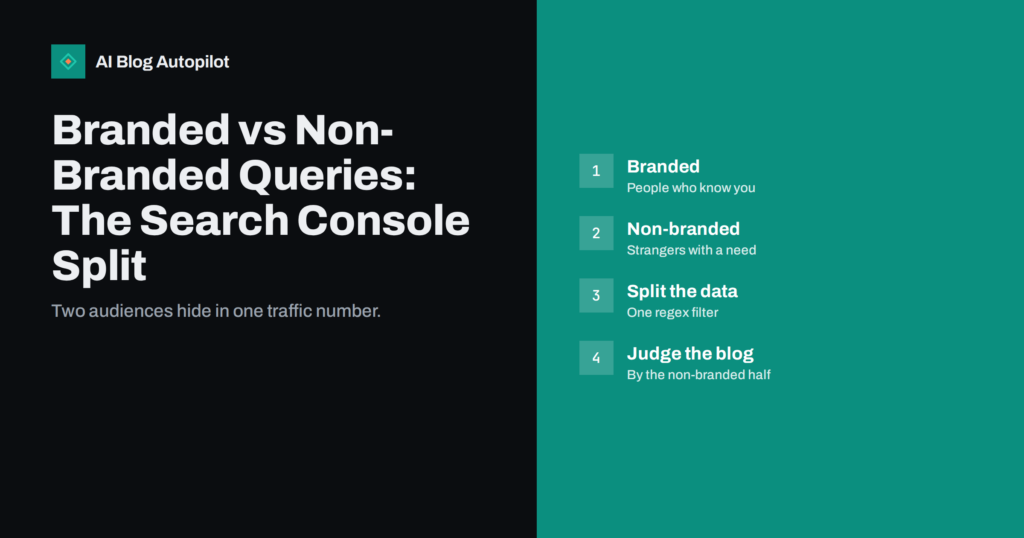 Oct 18, 2026 · 9 min read
Branded vs Non-Branded Queries: The Search Console Split
Branded searches come from people who know you, non-branded ones from strangers. Split them in Search Console and judge your blog by the half…
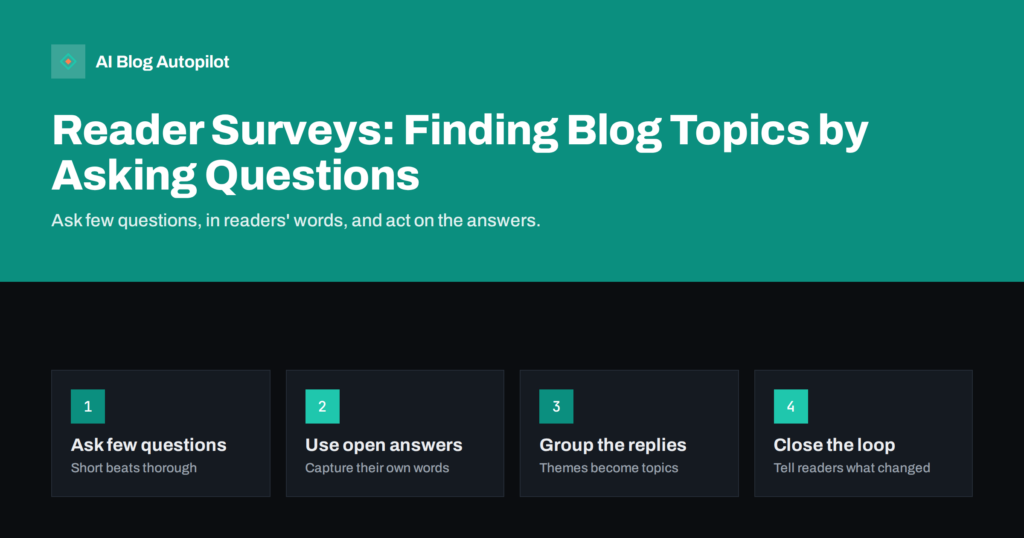 Oct 17, 2026 · 8 min read
Reader Surveys: Finding Blog Topics by Asking Questions
A short reader survey can reveal the topics your blog is missing. How to ask the right questions, reach respondents, read answers and turn…
 Oct 1, 2026 · 8 min read
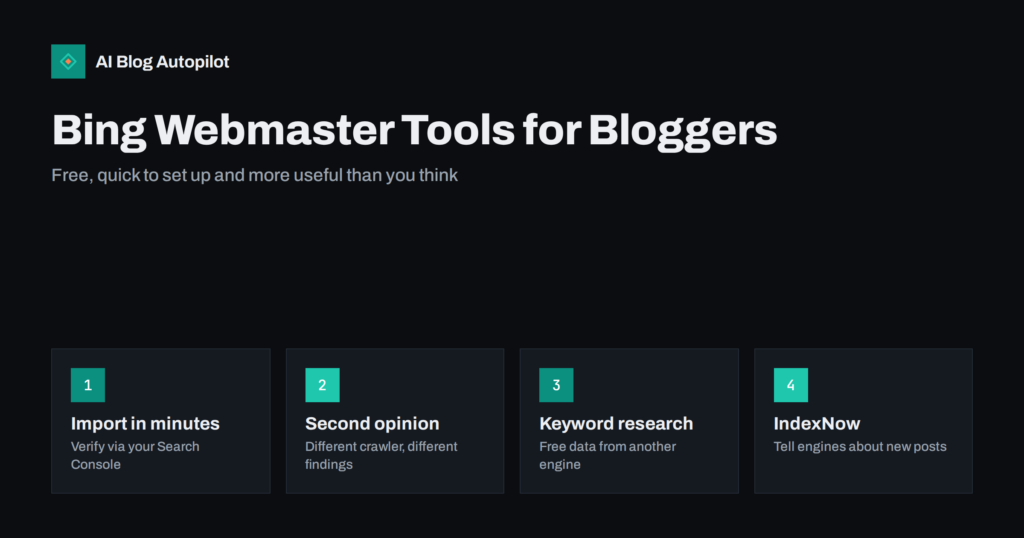
Bing Webmaster Tools for Bloggers: Is It Worth Setting Up?
Bing Webmaster Tools is free and takes minutes to set up with a Search Console import. What it offers bloggers, which reports to use,…
 Oct 1, 2026 · 8 min read
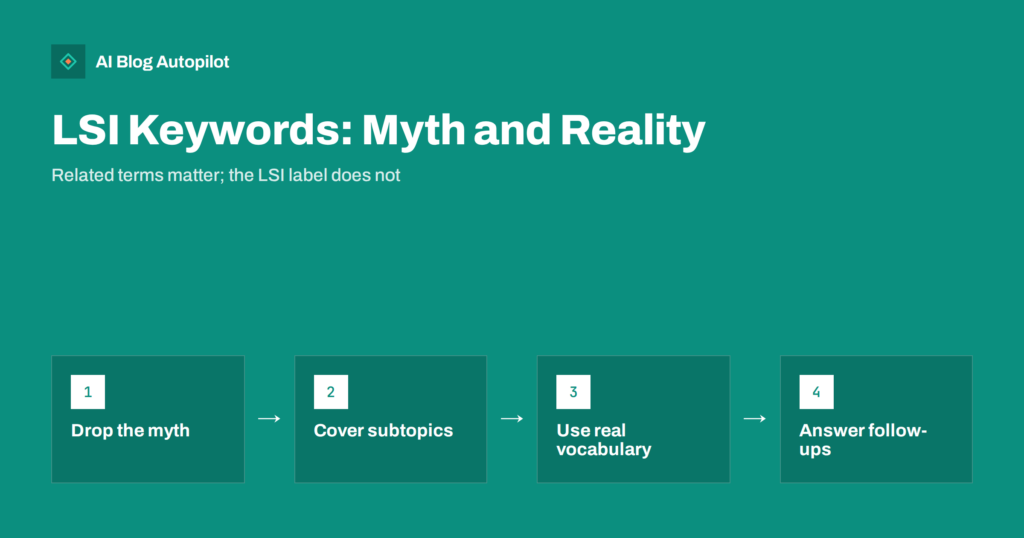
LSI Keywords and Related Terms: What Actually Matters
LSI keywords are a persistent SEO myth, but related terms still matter. What search engines actually use, and how to cover a topic's language…
 Oct 1, 2026 · 8 min read
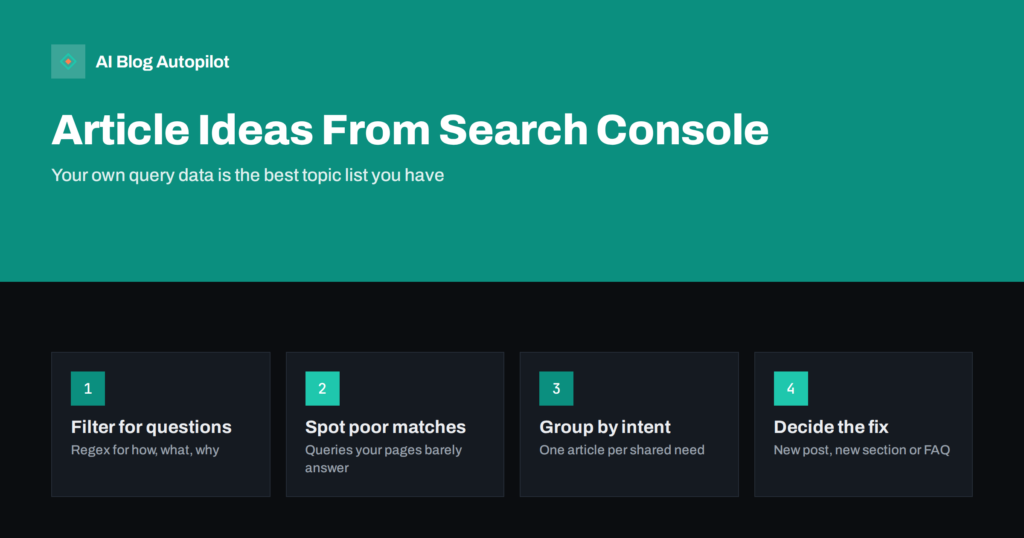
Finding Article Ideas in Search Console Query Data
Search Console shows the questions people already find you for. How to mine query data for new article ideas, FAQ entries and sections worth…
 Oct 1, 2026 · 9 min read
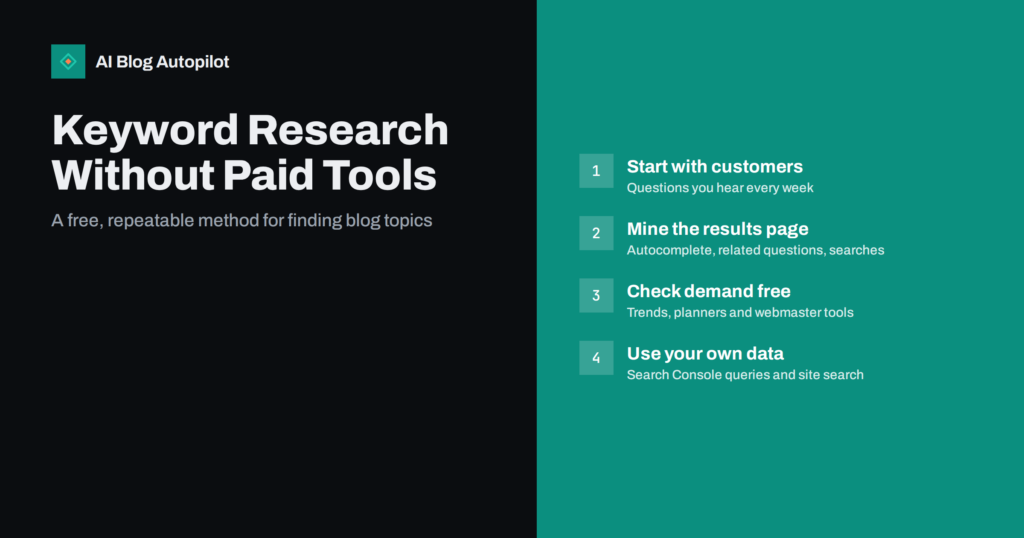
Keyword Research Without Paid Tools: A Practical Method
You can find good blog topics without a paid SEO tool. A step-by-step method using autocomplete, related questions, Search Console, trends and your customers.
 Oct 1, 2026 · 9 min read
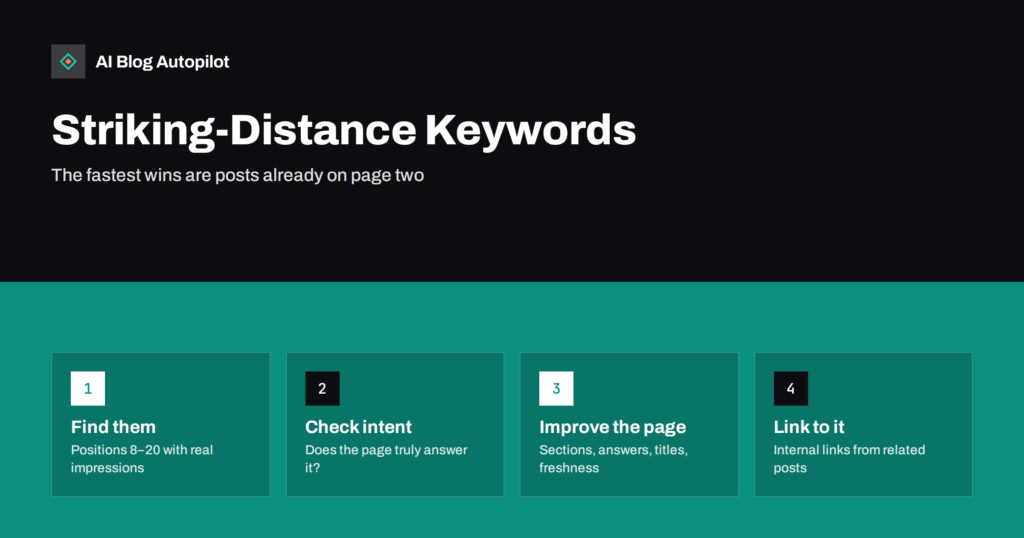
Striking-Distance Keywords: Moving Page-Two Posts Up
Striking-distance keywords are queries where a post already ranks around positions 8 to 20. How to find them in Search Console and improve the…
 Oct 1, 2026 · 9 min read
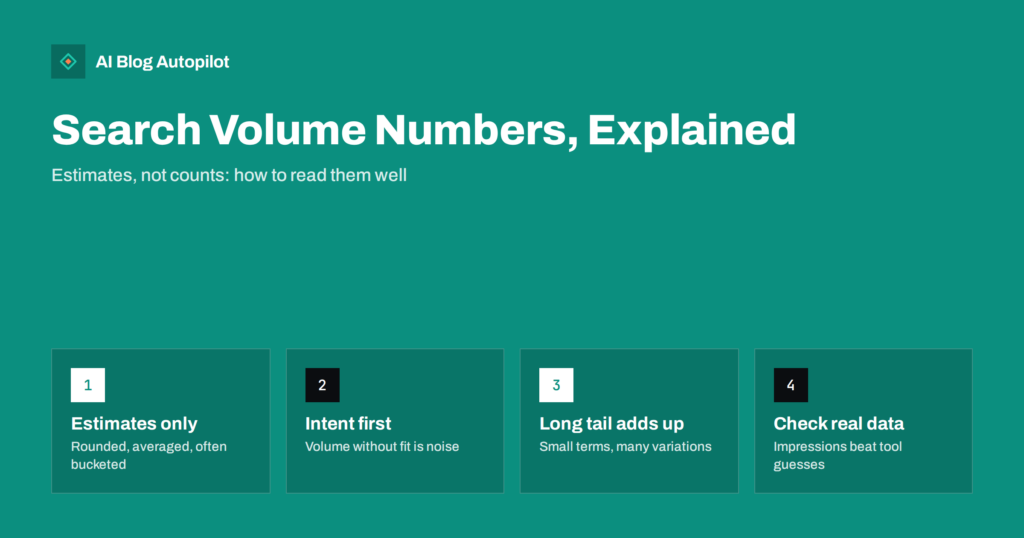
Search Volume Numbers: Why They Mislead and How to Use Them
Search volume figures are estimates, rounded and averaged. What they really measure, why they mislead small blogs, and how to use them to pick…
 Sep 30, 2026 · 8 min read
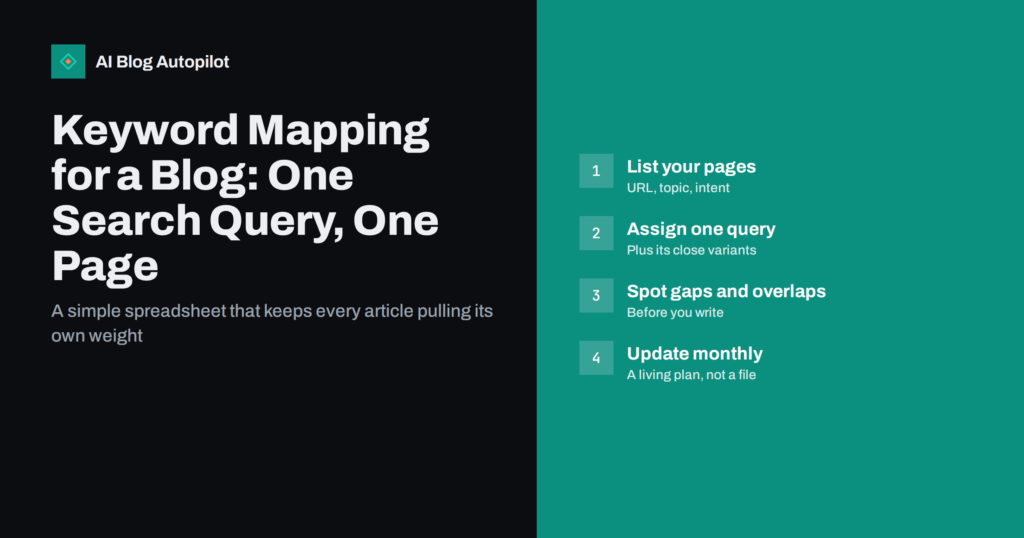
Keyword Mapping for a Blog: One Search Query, One Page
A keyword map assigns each important search query to one page on your site. How to build one in a spreadsheet, keep it current…
 Sep 30, 2026 · 8 min read
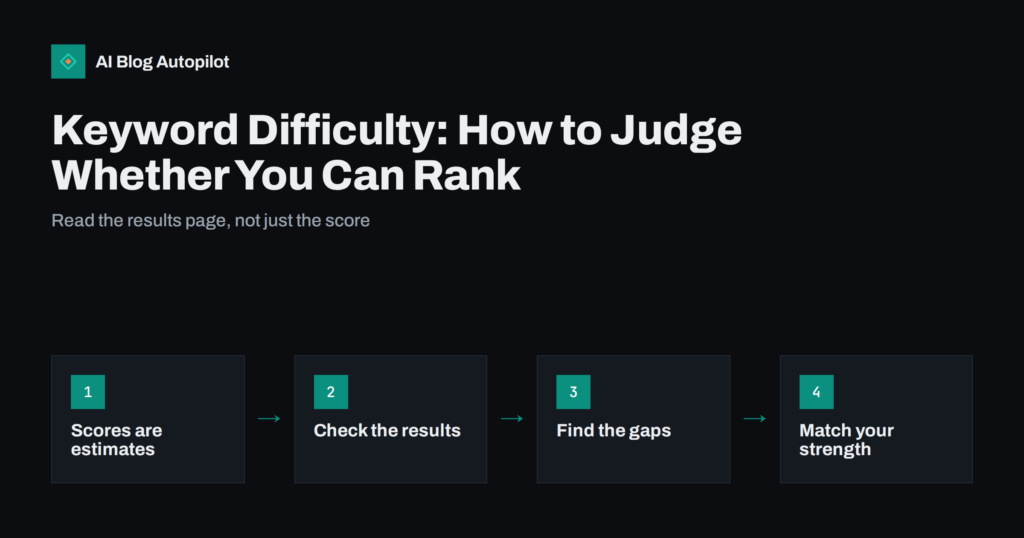
Keyword Difficulty: How to Judge Whether You Can Rank
What keyword difficulty scores measure, why tools disagree, and a practical way to judge from the results page itself whether a blog can realistically…