 ENEnglish
 LTLietuviškai
 DEDeutsch
 FRFrançais
 RUРусский
 ESEspañol
 PLPolski
 ITItaliano
 UKУкраїнська
 CSČeština
 PTPortuguês
 JA日本語
JA日本語 LVLatviešu valoda
 ETEesti
 HUMagyar
 IDBahasa Indonesia
 TRTürkçe
 HIहिन्दी
 ELΕλληνικά
 ARالعربية
 THไทย
THไทย VITiếng Việt
 RORomână
 MSBahasa Melayu
 BNবাংলা
SEO e marketing de conteúdo
Practical guides on writing articles that rank: search intent, article length, structure, internal links and steady publishing. Everything we learn while AI writes thousands of long-form articles for real websites.
 29 de set. de 2026 · 8 min de leitura
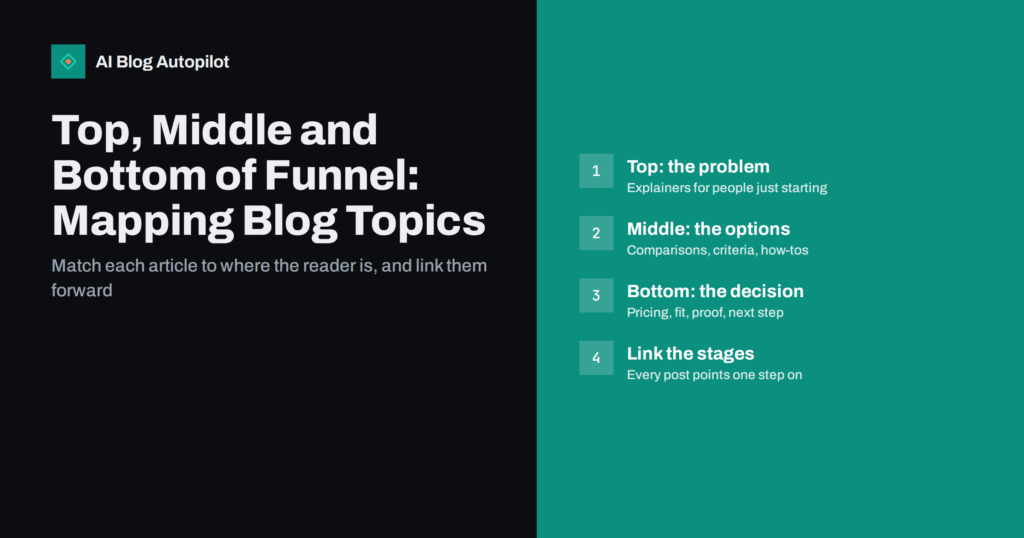
Top, Middle and Bottom of Funnel: Mapping Blog Topics
How to map blog topics to the top, middle and bottom of the funnel, what each stage needs from an article, and how to…
 29 de set. de 2026 · 8 min de leitura
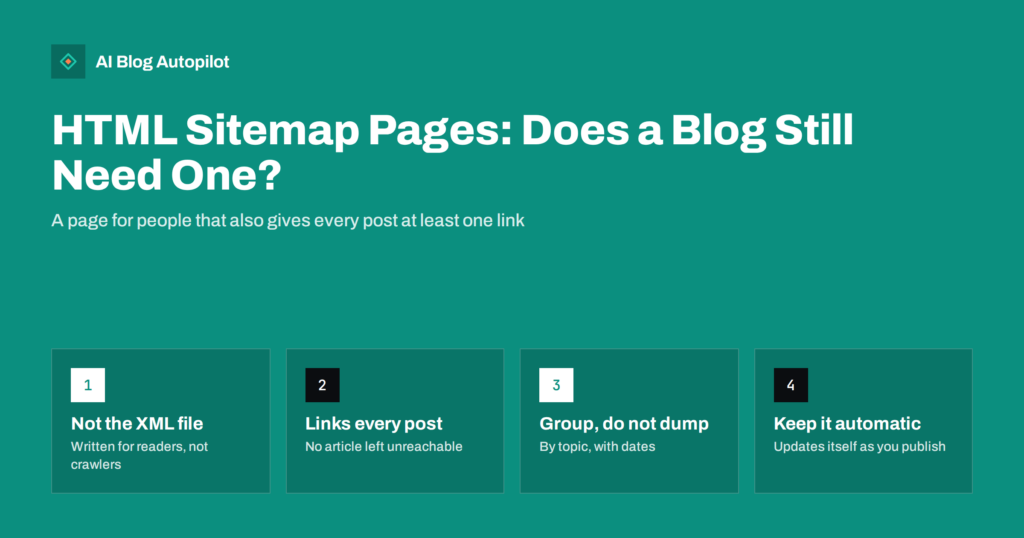
HTML Sitemap Pages: Does a Blog Still Need One?
What an HTML sitemap page does that an XML sitemap does not, when a blog benefits from one, and how to build one that…
 29 de set. de 2026 · 8 min de leitura
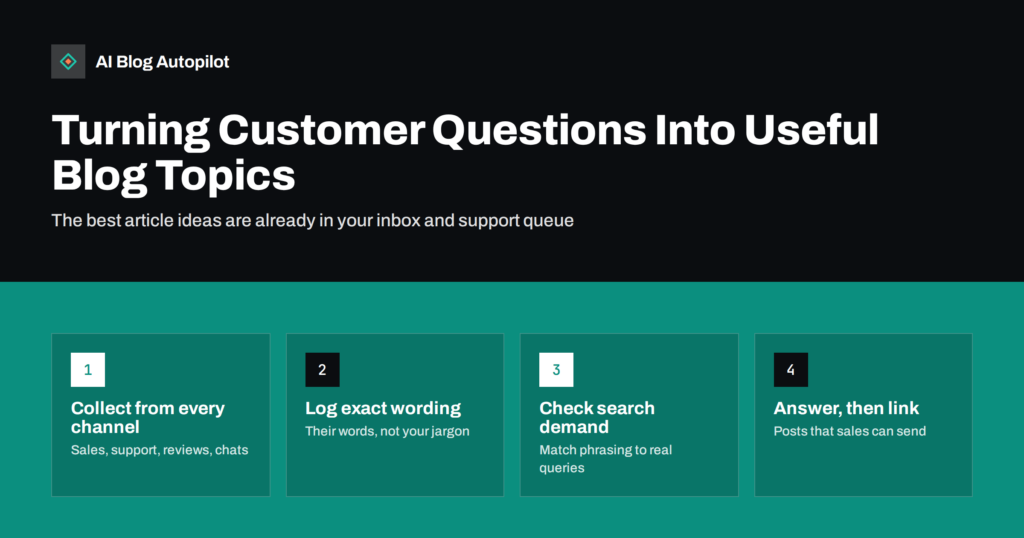
Turning Customer Questions Into Useful Blog Topics
How to collect the questions customers ask in sales calls, support tickets and reviews, and turn them into blog topics that match real search…
 29 de set. de 2026 · 8 min de leitura
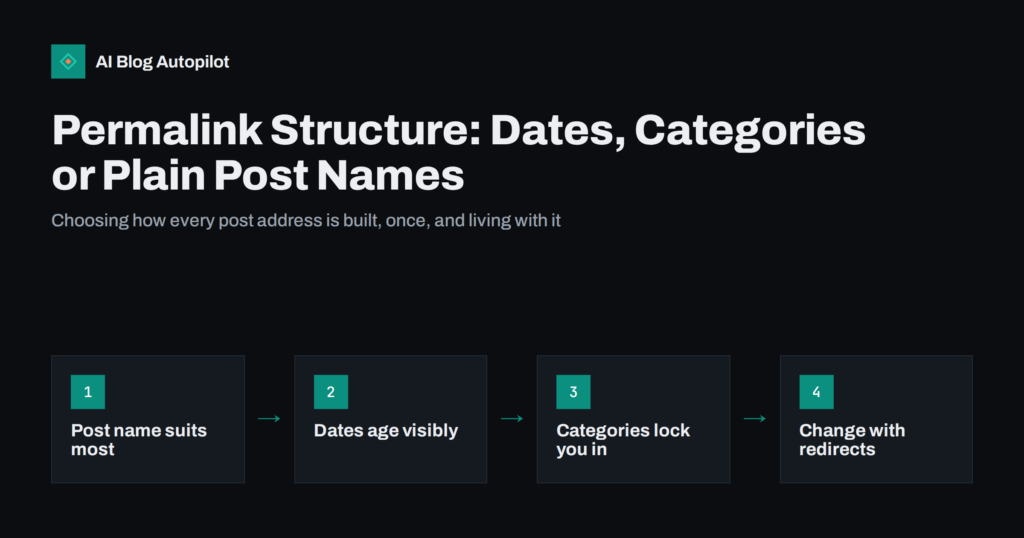
Permalink Structure: Dates, Categories or Plain Post Names
Which permalink structure suits a blog: post name, dates, categories or IDs. The trade-offs of each, and how to change structure later without losing…
 29 de set. de 2026 · 8 min de leitura
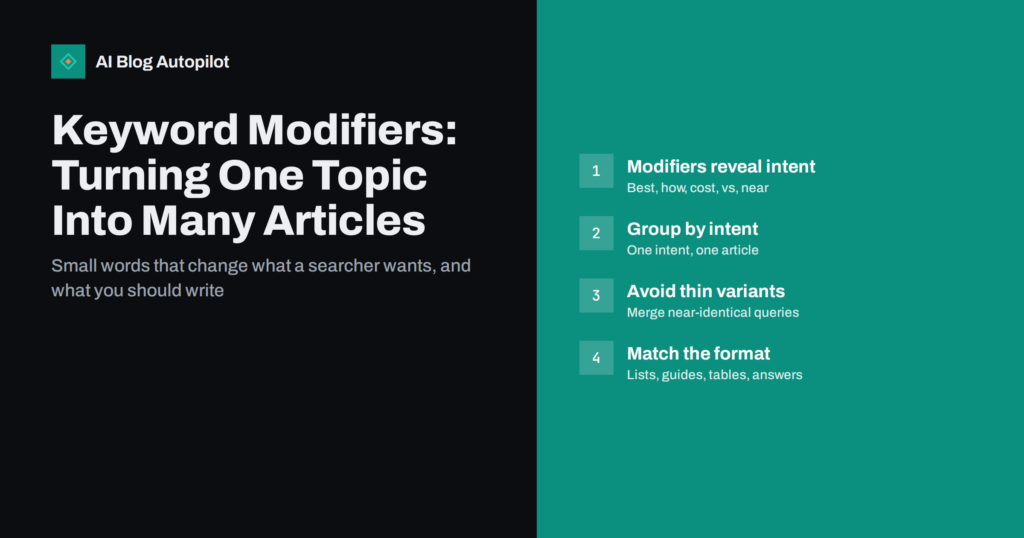
Keyword Modifiers: Turning One Topic Into Many Articles
How words like best, how to, cost, vs and for beginners change search intent, and how to use modifiers to plan distinct articles without…
 29 de set. de 2026 · 10 min de leitura
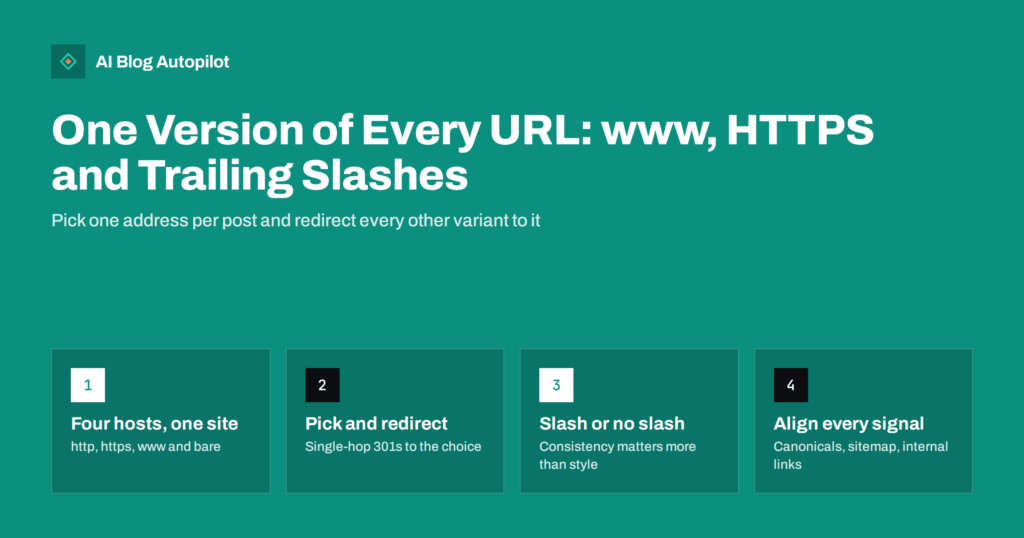
One Version of Every URL: www, HTTPS and Trailing Slashes
Why a blog should answer at exactly one address per post, how www, HTTPS and trailing slash variants split signals, and how to consolidate…
 28 de set. de 2026 · 8 min de leitura
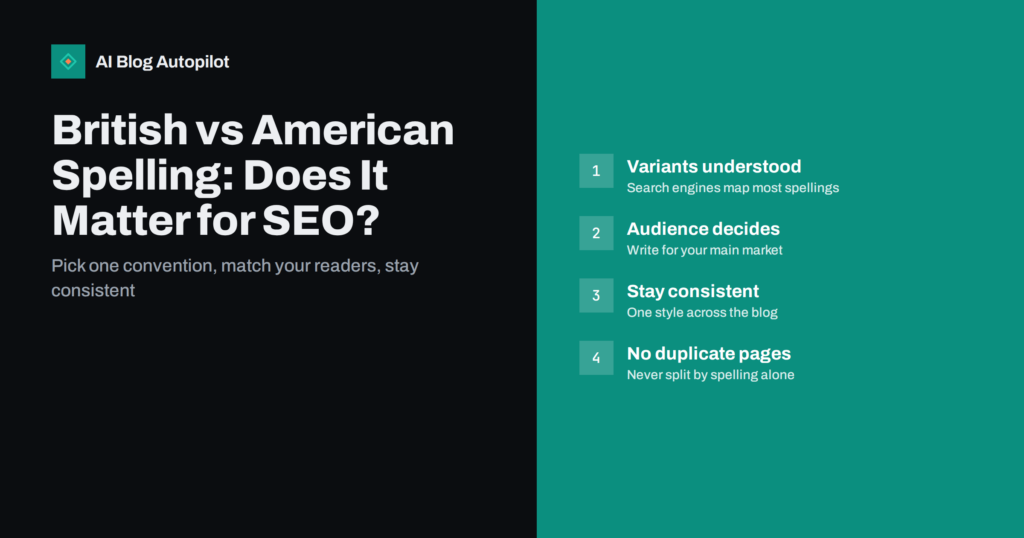
British vs American Spelling: Does It Matter for SEO?
Colour or color, optimise or optimize? Search engines treat most spelling variants as the same word. When the choice matters and how to pick…
 28 de set. de 2026 · 8 min de leitura
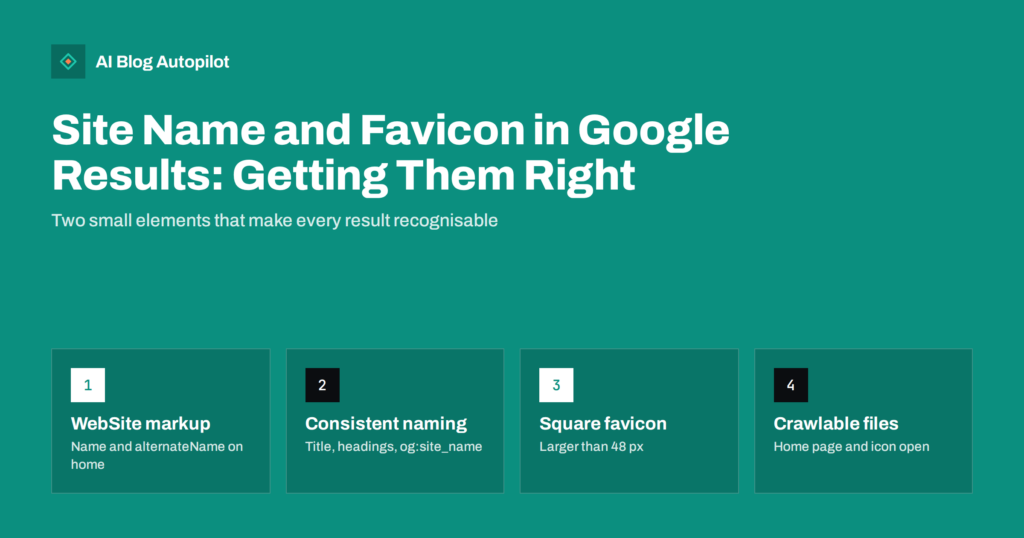
Site Name and Favicon in Google Results: Getting Them Right
Google shows a site name and favicon beside every result. How it chooses them, how to state your preference, and how to fix a…
 28 de set. de 2026 · 8 min de leitura
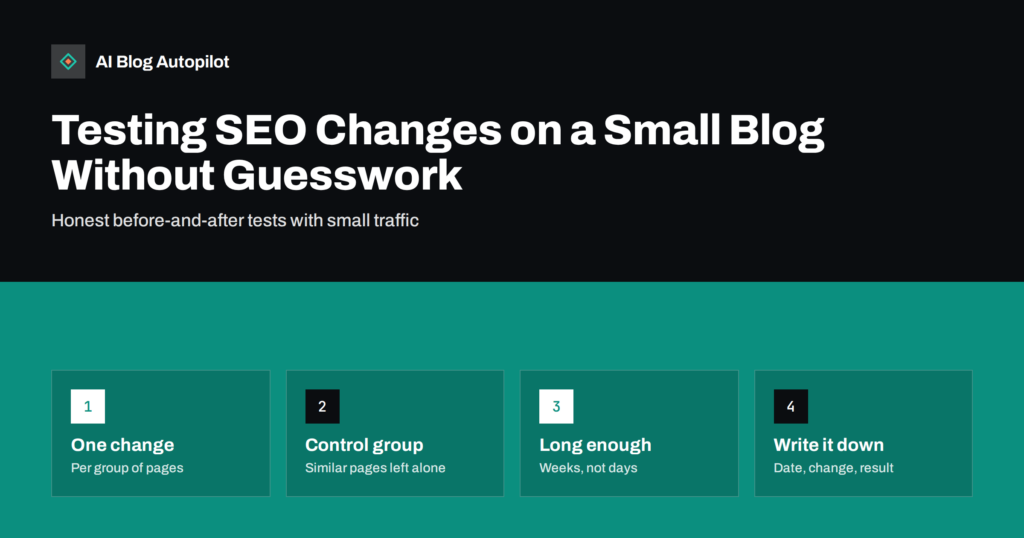
Testing SEO Changes on a Small Blog Without Guesswork
Small blogs rarely have enough traffic for proper split tests, but they can still test SEO changes honestly. A simple method, what to measure…
 28 de set. de 2026 · 8 min de leitura
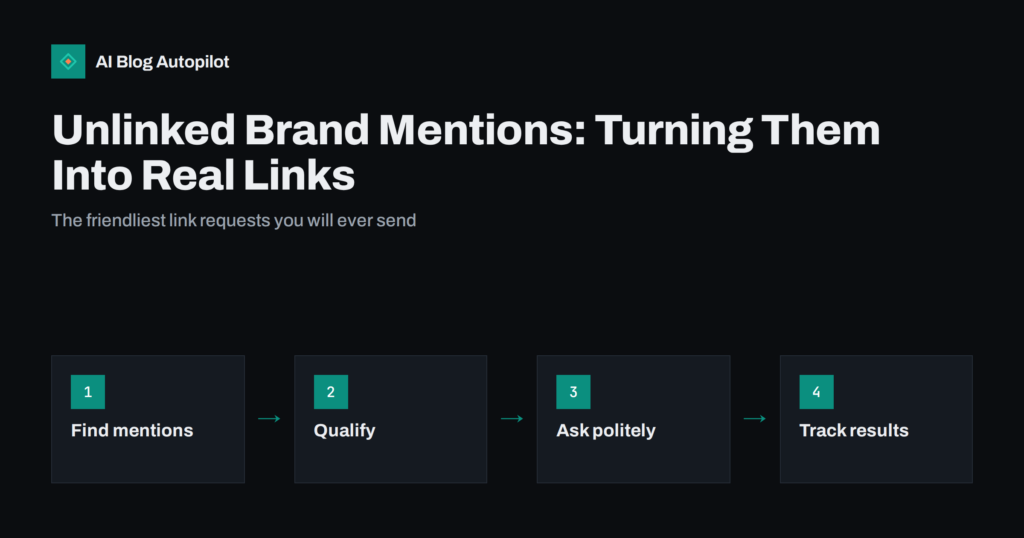
Unlinked Brand Mentions: Turning Them Into Real Links
Sites that already mention your business without linking are the easiest link opportunities there are. How to find them, when to ask and what…
 28 de set. de 2026 · 8 min de leitura
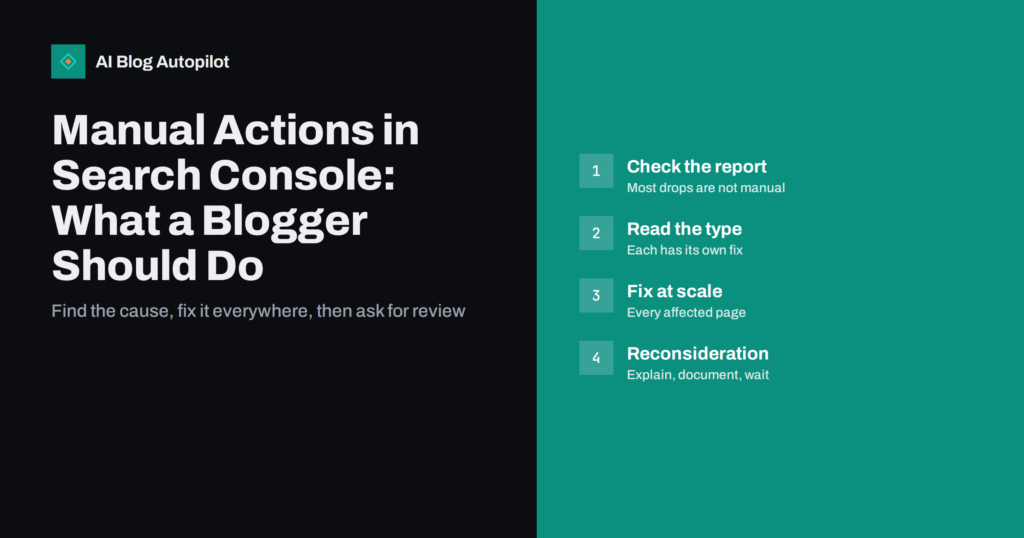
Manual Actions in Search Console: What a Blogger Should Do
A manual action means a human reviewer found a spam policy problem on your site. How to read the report, fix the cause and…
 28 de set. de 2026 · 8 min de leitura
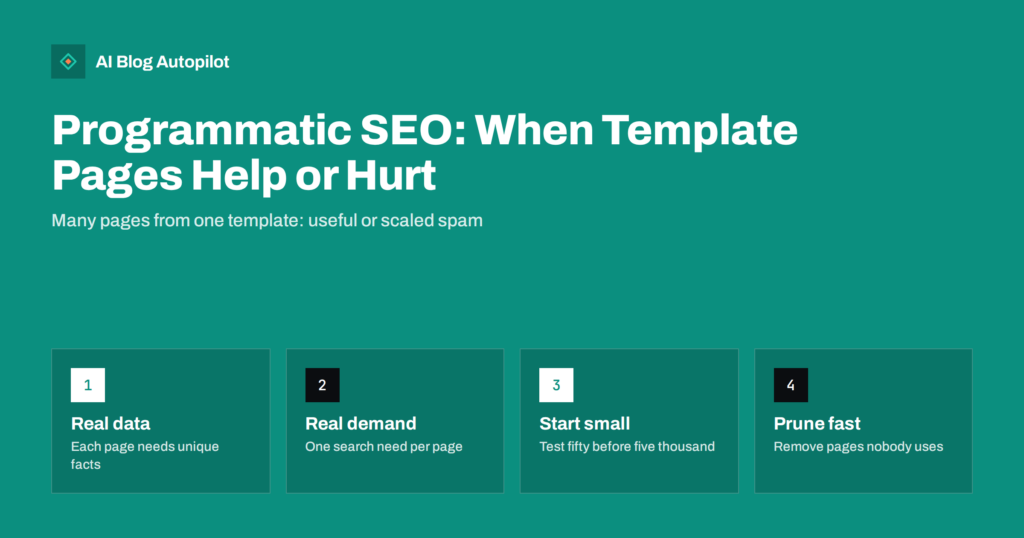
Programmatic SEO: When Template Pages Help or Hurt
Programmatic SEO creates many pages from one template and a dataset. When it serves real searches, when it becomes scaled spam, and how small…