 ENEnglish
 LTLietuviškai
 DEDeutsch
 FRFrançais
 RUРусский
 ESEspañol
 PLPolski
 ITItaliano
 UKУкраїнська
 CSČeština
 PTPortuguês
 JA日本語
JA日本語 LVLatviešu valoda
 ETEesti
 HUMagyar
 IDBahasa Indonesia
 TRTürkçe
 HIहिन्दी
 ELΕλληνικά
 ARالعربية
 THไทย
THไทย VITiếng Việt
 RORomână
 MSBahasa Melayu
 BNবাংলা
SEO e marketing de conteúdo
Practical guides on writing articles that rank: search intent, article length, structure, internal links and steady publishing. Everything we learn while AI writes thousands of long-form articles for real websites.
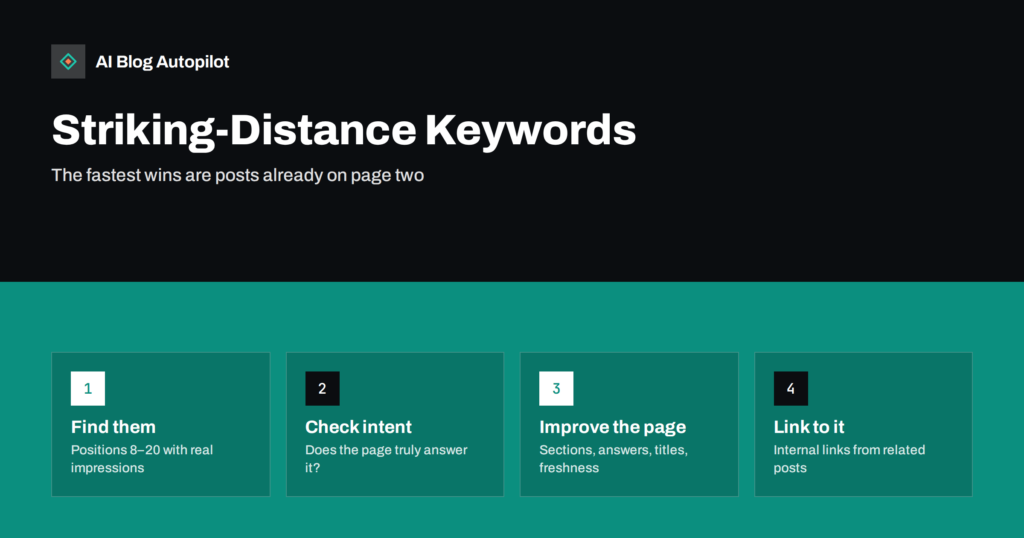 1 de out. de 2026 · 9 min de leitura
Striking-Distance Keywords: Moving Page-Two Posts Up
Striking-distance keywords are queries where a post already ranks around positions 8 to 20. How to find them in Search Console and improve the…
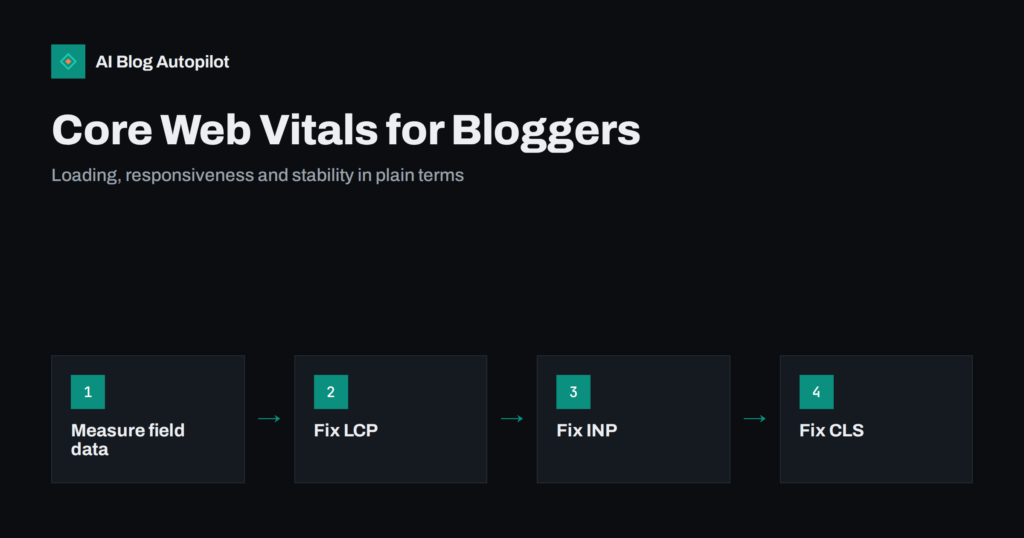 1 de out. de 2026 · 8 min de leitura
Core Web Vitals for Bloggers: LCP, INP and CLS Explained
Core Web Vitals measure loading, responsiveness and layout stability. What LCP, INP and CLS mean for a blog, the usual causes of poor scores,…
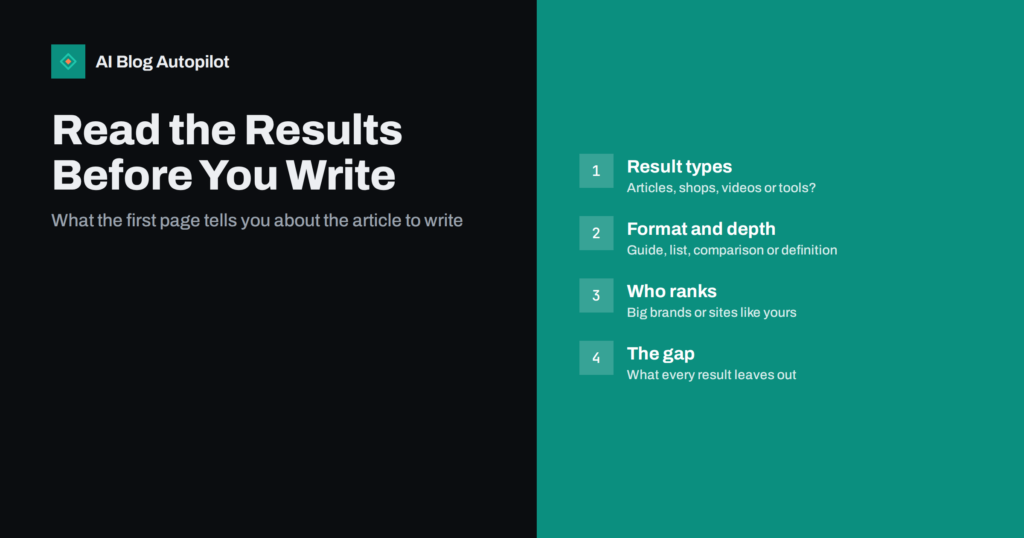 1 de out. de 2026 · 9 min de leitura
Reading the Search Results Before You Write an Article
Ten minutes on the results page tells you what format, depth and angle an article needs to rank. A practical method for reading search…
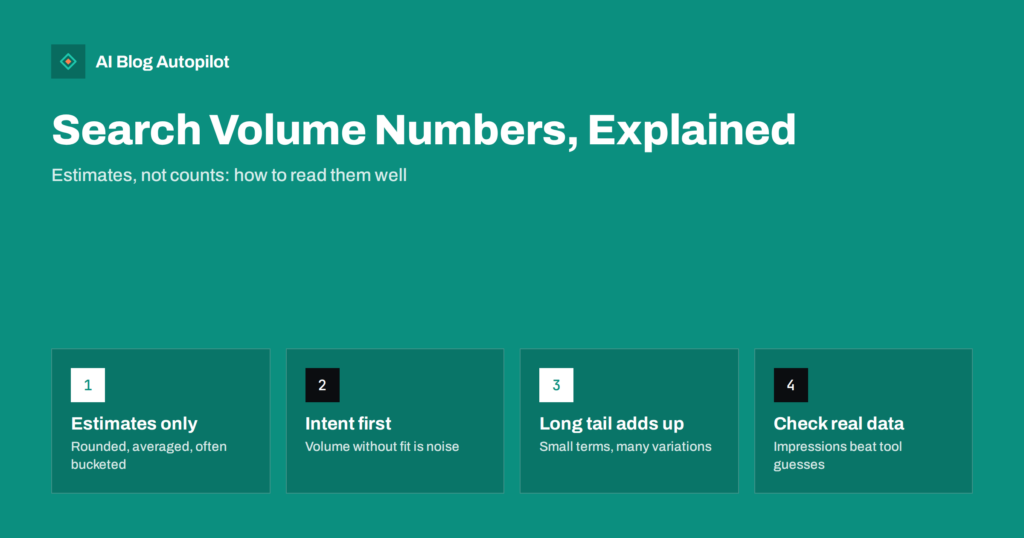 1 de out. de 2026 · 9 min de leitura
Search Volume Numbers: Why They Mislead and How to Use Them
Search volume figures are estimates, rounded and averaged. What they really measure, why they mislead small blogs, and how to use them to pick…
 30 de set. de 2026 · 8 min de leitura
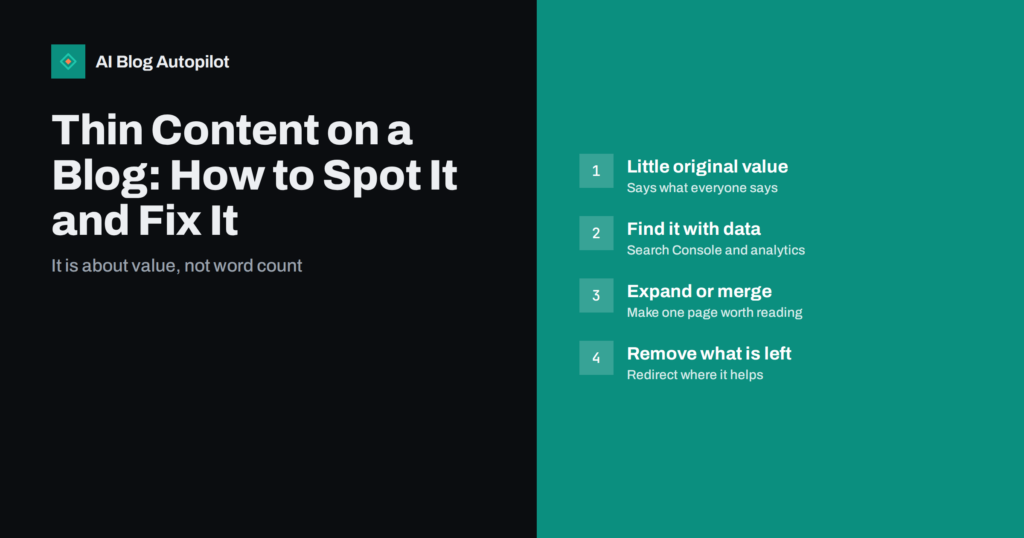
Thin Content on a Blog: How to Spot It and Fix It
Thin content is not about word count. What makes a blog post thin, how to find weak posts with free data, and when to…
 30 de set. de 2026 · 8 min de leitura
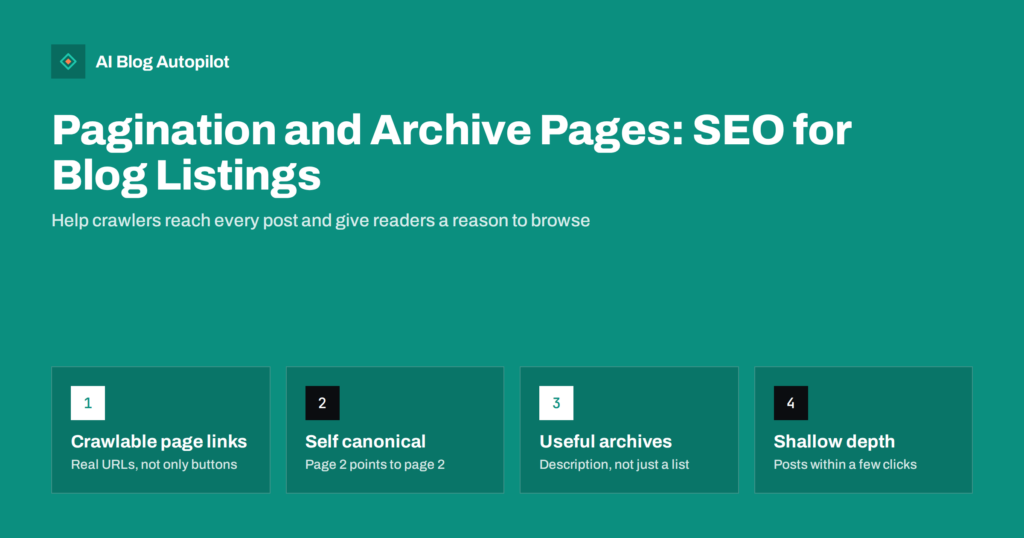
Pagination and Archive Pages: SEO for Blog Listings
How blog archives, category pages and pagination affect crawling and indexing, what to do with page 2 and beyond, and how to make listing…
 30 de set. de 2026 · 8 min de leitura
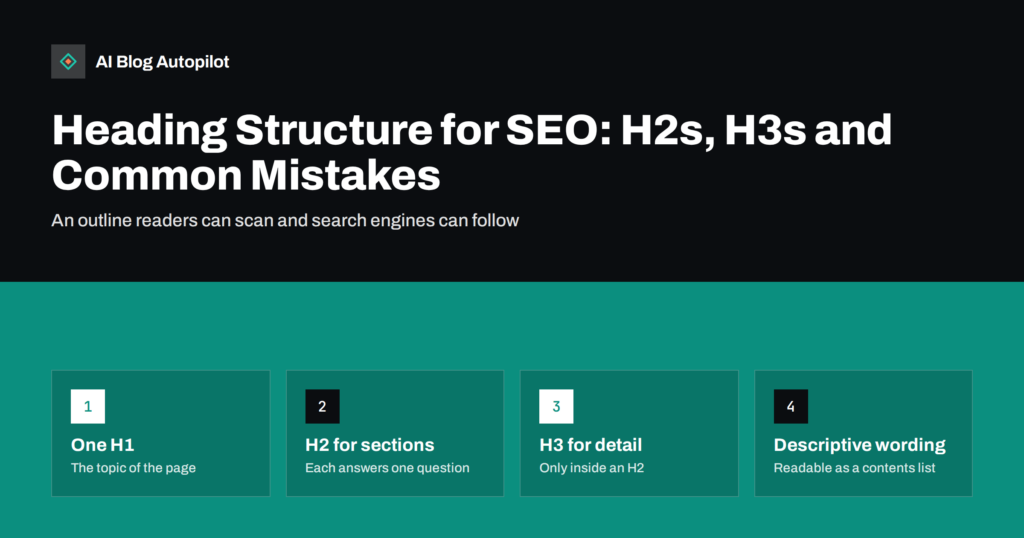
Heading Structure for SEO: H2s, H3s and Common Mistakes
How to structure H1, H2 and H3 headings in a blog post so readers can scan it, screen readers can navigate it and search…
 30 de set. de 2026 · 8 min de leitura
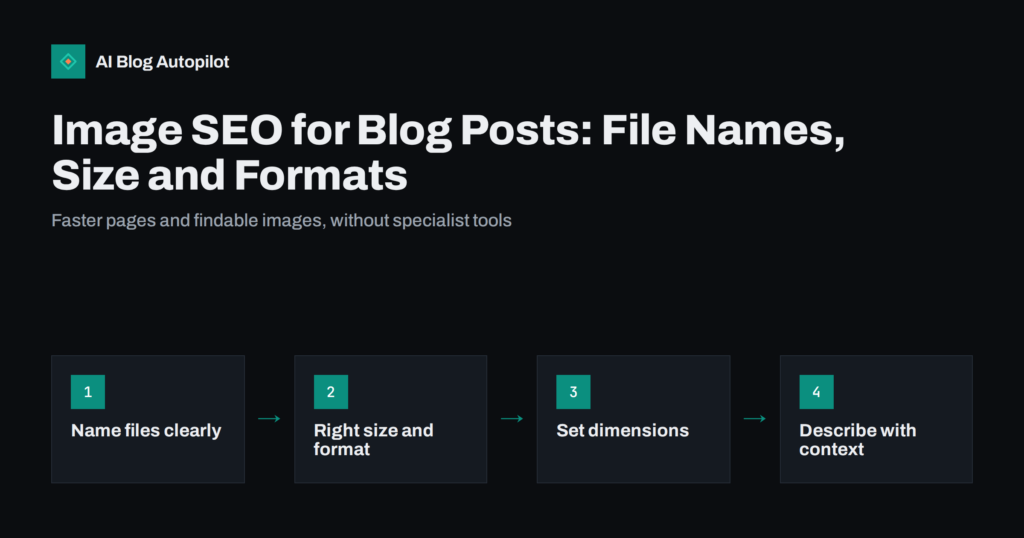
Image SEO for Blog Posts: File Names, Size and Formats
Image SEO for bloggers: descriptive file names, the right format and size, lazy loading, dimensions and captions, so images help pages load fast and…
 30 de set. de 2026 · 8 min de leitura
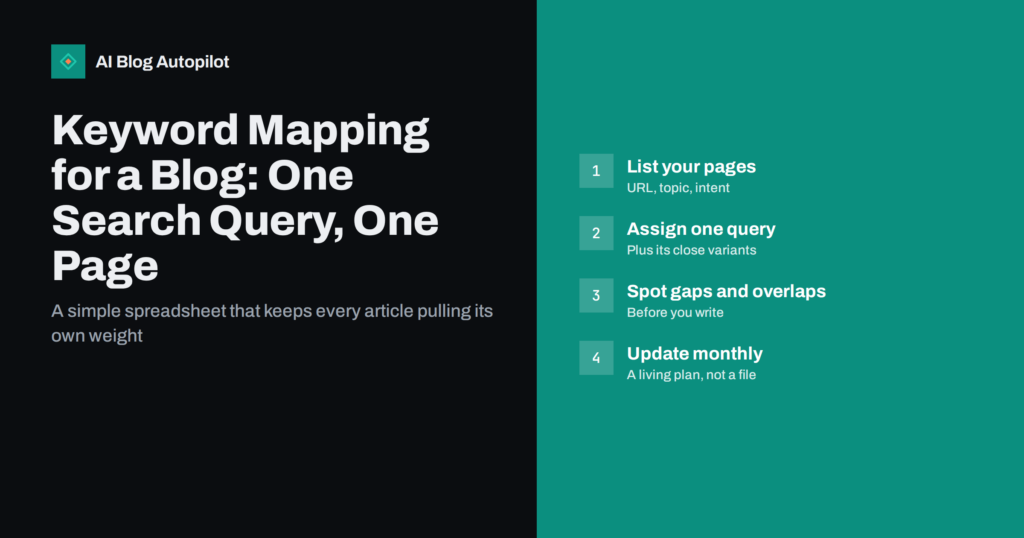
Keyword Mapping for a Blog: One Search Query, One Page
A keyword map assigns each important search query to one page on your site. How to build one in a spreadsheet, keep it current…
 30 de set. de 2026 · 8 min de leitura
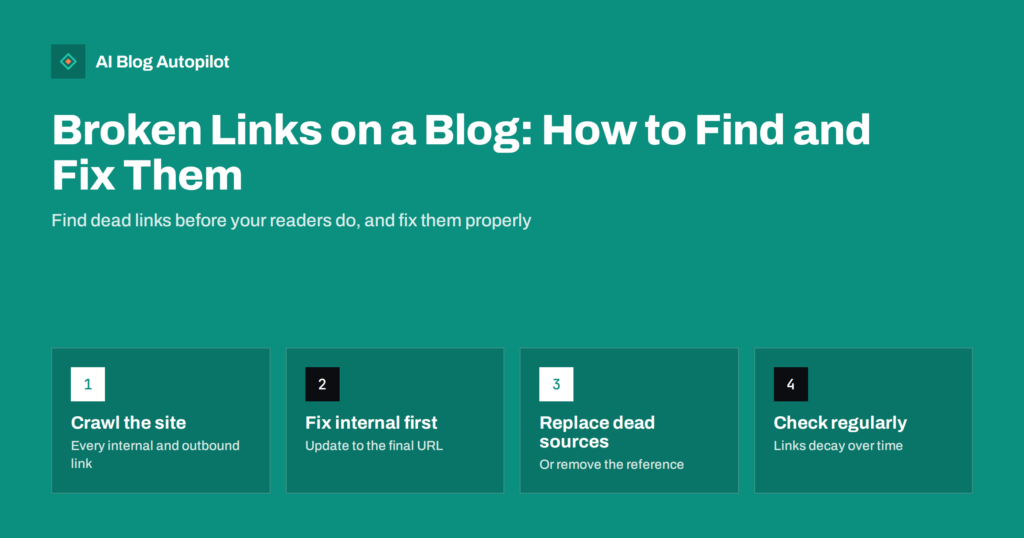
Broken Links on a Blog: How to Find and Fix Them
How broken internal and external links appear on a blog, the free ways to find them, and how to decide between updating, redirecting or…
 30 de set. de 2026 · 8 min de leitura
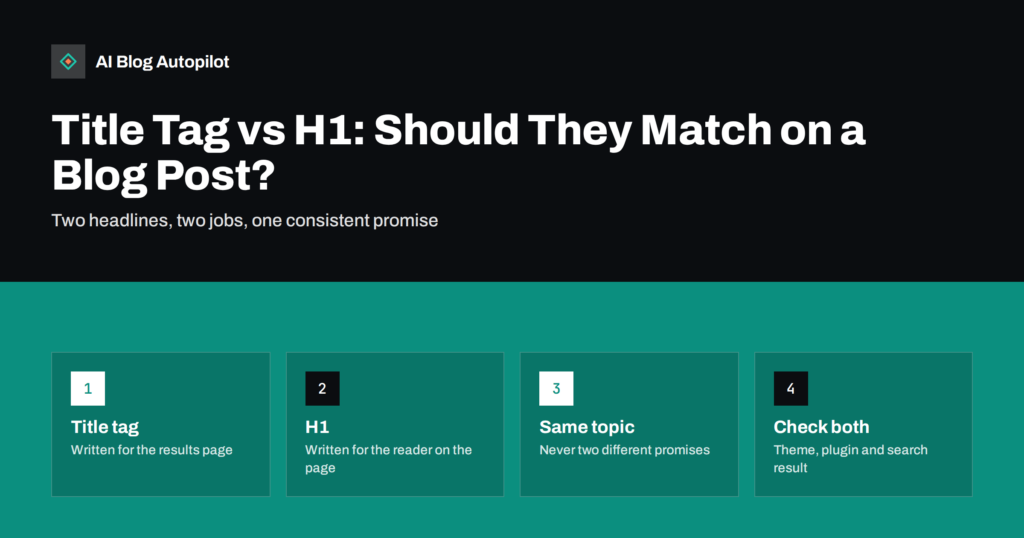
Title Tag vs H1: Should They Match on a Blog Post?
The title tag and the H1 do different jobs. When they should match, when they should differ, and how to write both so search…
 30 de set. de 2026 · 8 min de leitura
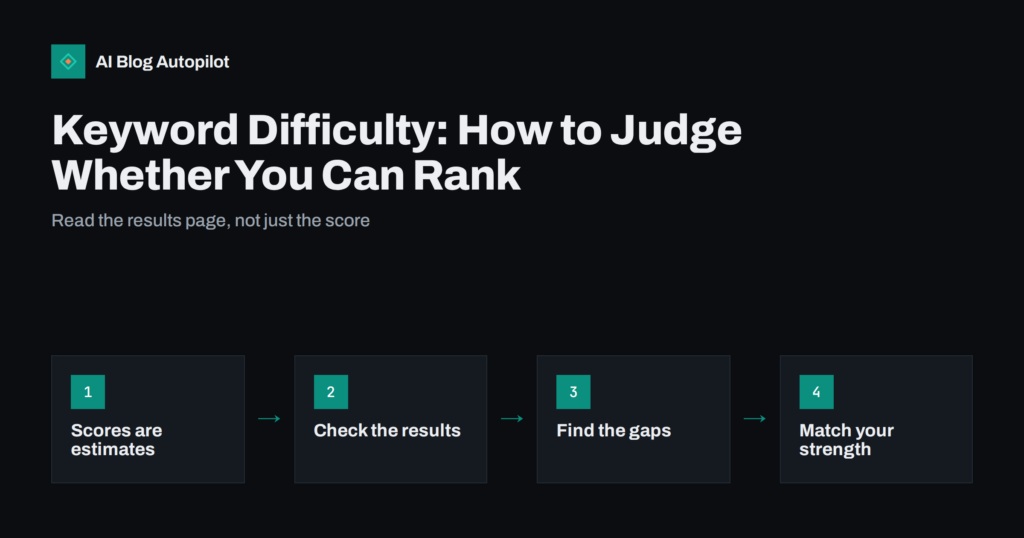
Keyword Difficulty: How to Judge Whether You Can Rank
What keyword difficulty scores measure, why tools disagree, and a practical way to judge from the results page itself whether a blog can realistically…