 ENEnglish
 LTLietuviškai
 DEDeutsch
 FRFrançais
 RUРусский
 ESEspañol
 PLPolski
 ITItaliano
 UKУкраїнська
 CSČeština
 PTPortuguês
 JA日本語
JA日本語 LVLatviešu valoda
 ETEesti
 HUMagyar
 IDBahasa Indonesia
 TRTürkçe
 HIहिन्दी
 ELΕλληνικά
 ARالعربية
 THไทย
THไทย VITiếng Việt
 RORomână
 MSBahasa Melayu
 BNবাংলা
SEO e marketing de conteúdo
Practical guides on writing articles that rank: search intent, article length, structure, internal links and steady publishing. Everything we learn while AI writes thousands of long-form articles for real websites.
 14 de set. de 2026 · 6 min de leitura
How to Write a Headline People Actually Click
What to put first, how long a title runs before it gets cut, why a specific noun beats an adjective, and when the search…
 14 de set. de 2026 · 6 min de leitura
Blog Post Structure That Works for Readers and Search
A structure that suits both a skimming reader and a search engine: the answer first, headings that describe, sections that stand alone, and one…
 13 de set. de 2026 · 6 min de leitura
Bylines and Author Bios: Who Signs an Automated Post
Who should be named as the author of a post produced with automation, what belongs in the bio, and why an invented persona with…
 13 de set. de 2026 · 6 min de leitura
E-E-A-T on a Blog That Publishes Automatically
Experience, expertise, authoritativeness and trust are not a score you can set. Here is what a blog publishing on a schedule can genuinely do…
 12 de set. de 2026 · 6 min de leitura
Do AI Content Detectors Work? What They Actually Measure
AI detectors do not identify how text was written. They score how predictable it is, which is why clear human writing gets flagged and…
 12 de set. de 2026 · 6 min de leitura
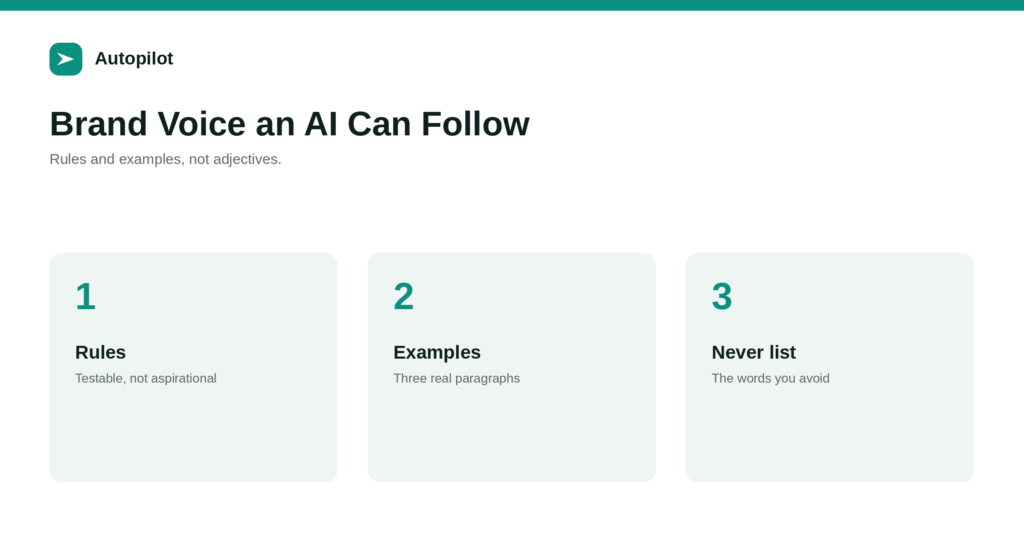
How to Write Brand Voice Guidelines an AI Can Follow
Most brand voice documents are adjectives nobody can act on. Here is how to write one in a page, using rules and examples that…
 11 de set. de 2026 · 6 min de leitura
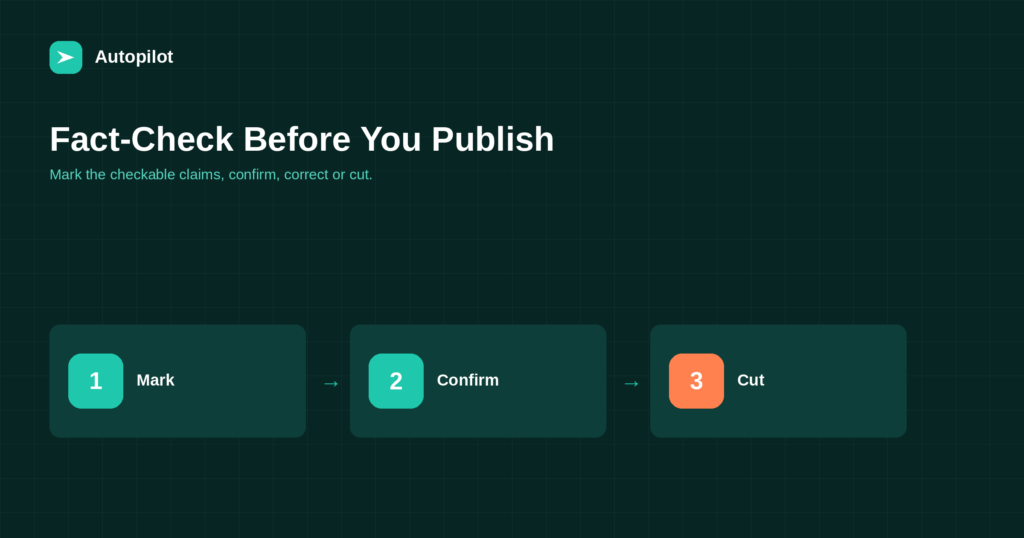
How to Fact-Check Content Before You Publish
A fast way to check claims before publishing: which statements need a source, where to look, and why an unverifiable number should be cut…
 11 de set. de 2026 · 7 min de leitura
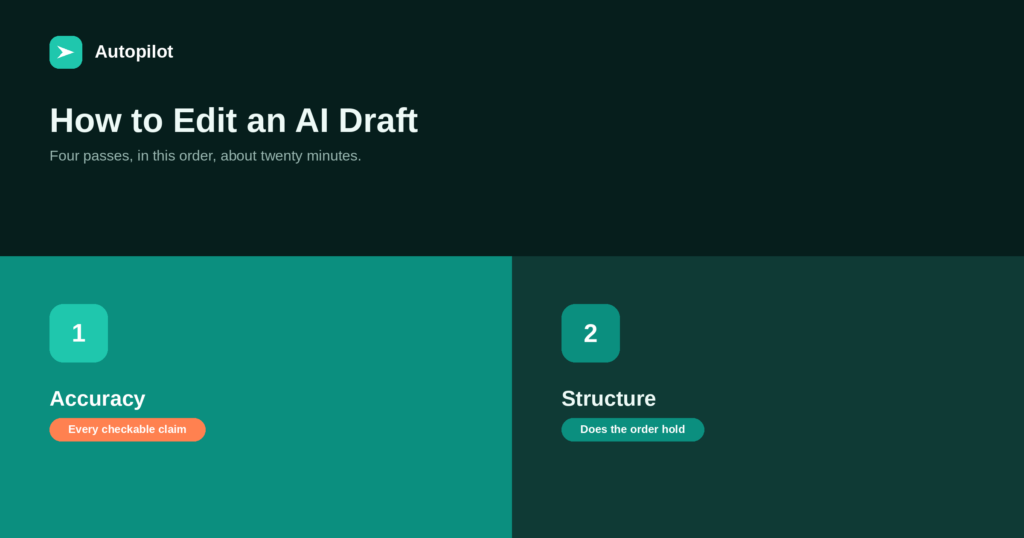
How to Edit an AI Draft: The Four Passes That Matter
Editing a machine-written draft well takes about twenty minutes if you do it in the right order: accuracy, then structure, then cuts, then the…
 10 de set. de 2026 · 6 min de leitura
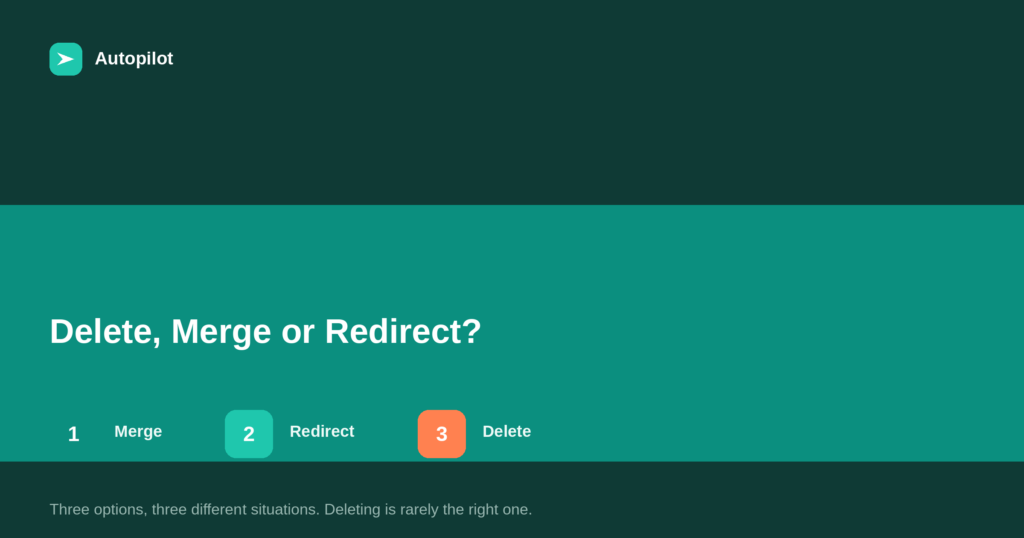
Content Pruning: When to Delete, Merge or Redirect a Blog Post
How to decide what to delete, merge or redirect when a blog outgrows what it can maintain, and how to do it without throwing…
 10 de set. de 2026 · 6 min de leitura
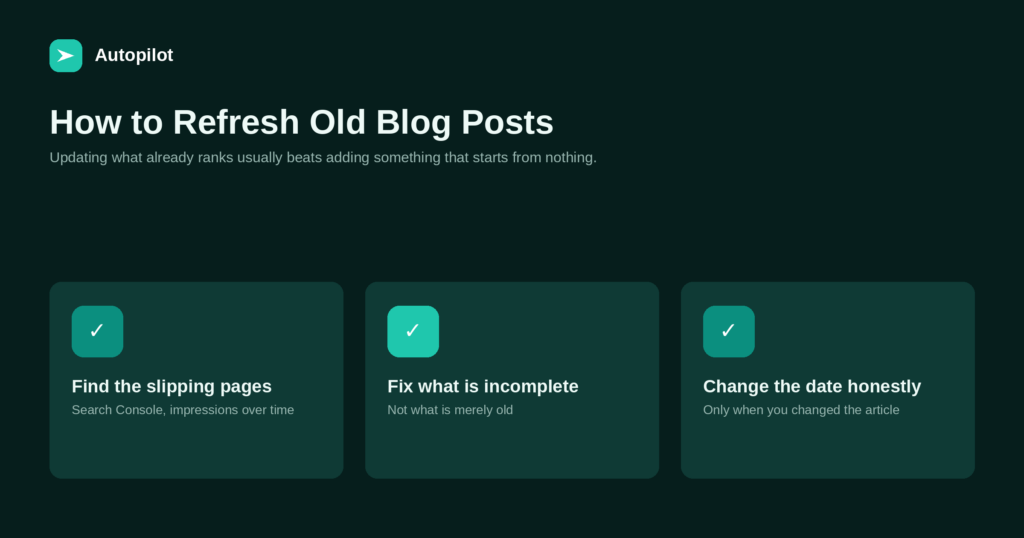
How to Refresh Old Blog Posts (and When It Beats Writing New Ones)
How to find blog posts worth updating, what actually needs changing, and why a date bump with no edit is worse for trust than…
 9 de set. de 2026 · 6 min de leitura
Editorial Review: Draft, Approve or Full Auto?
How to decide what gets reviewed before publishing: the three settings most teams move between, which topics can run unattended, and which never should.
 9 de set. de 2026 · 6 min de leitura
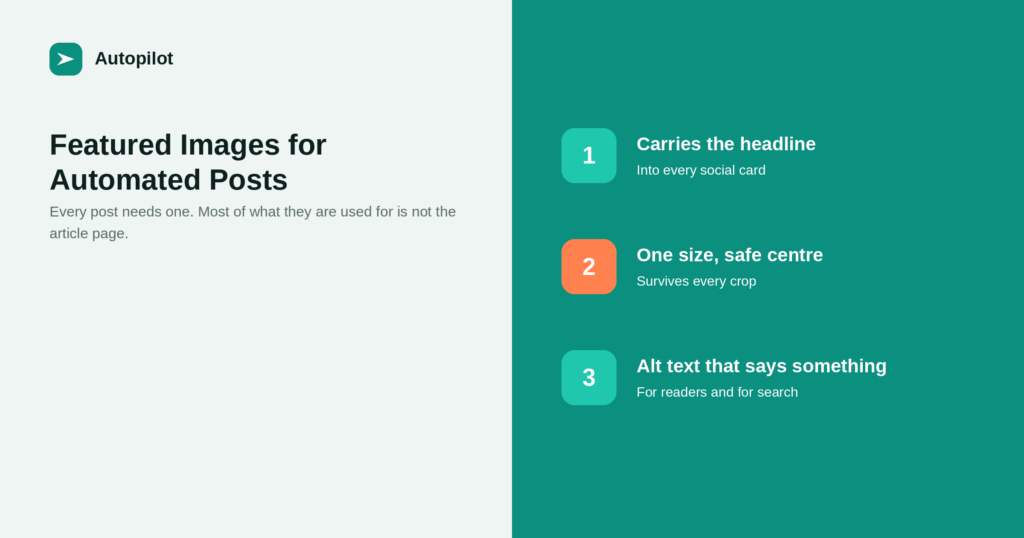
Featured Images for Automated Posts: What Works and What to Avoid
What a featured image is actually for, what size to produce, why alt text matters, and the kinds of images that make an automated…