 ENEnglish
 LTLietuviškai
 DEDeutsch
 FRFrançais
 RUРусский
 ESEspañol
 PLPolski
 ITItaliano
 UKУкраїнська
 CSČeština
 PTPortuguês
 JA日本語
 LVLatviešu valoda
 ETEesti
 HUMagyar
 IDBahasa Indonesia
 TRTürkçe
 HIहिन्दी
 ELΕλληνικά
 ARالعربية
 THไทย
 VITiếng Việt
 RORomână
 MSBahasa Melayu
 BNবাংলা
#Brand voice
Writing down how your brand sounds so that anyone, or anything, can match it. We cover the parts of a voice guide that change output — sentence length, vocabulary, what you never say — and the parts that are decoration. You will find why three real examples beat a page of adjectives, and how to describe tone in instructions rather than feelings. We also cover keeping the guide short enough that people use it. The same document works for a freelancer and for a tool.
 2026-10-14 · Skaitymo laikas: 8 min.
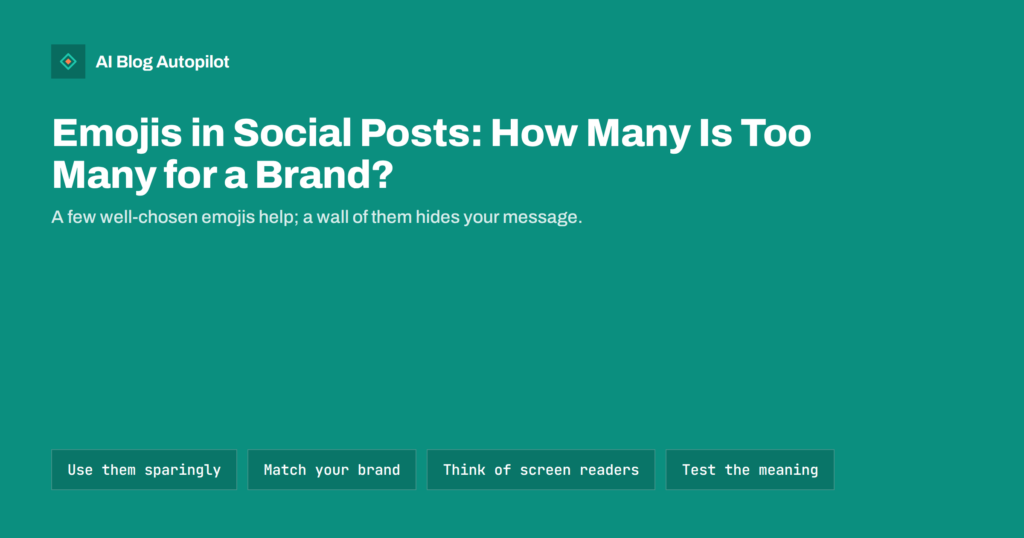
Emojis in Social Posts: How Many Is Too Many for a Brand?
How a business can use emojis in social posts: where they help, how many is enough, what to avoid, accessibility concerns and keeping a…
 2026-10-12 · Skaitymo laikas: 8 min.
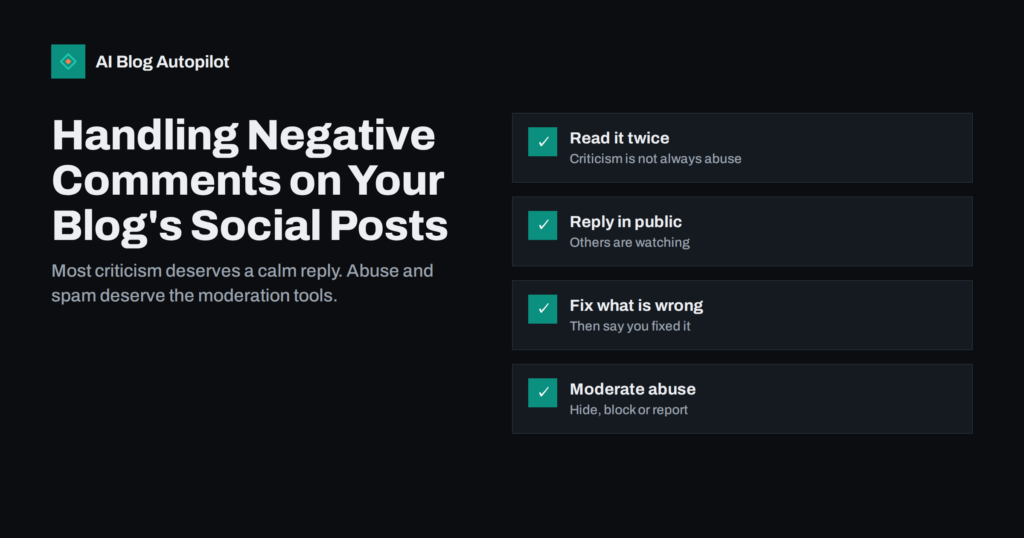
Handling Negative Comments on Your Blog’s Social Posts
How to respond to negative comments, criticism and trolls under social posts sharing your blog articles: when to reply, hide or delete, and what…
 2026-10-12 · Skaitymo laikas: 8 min.
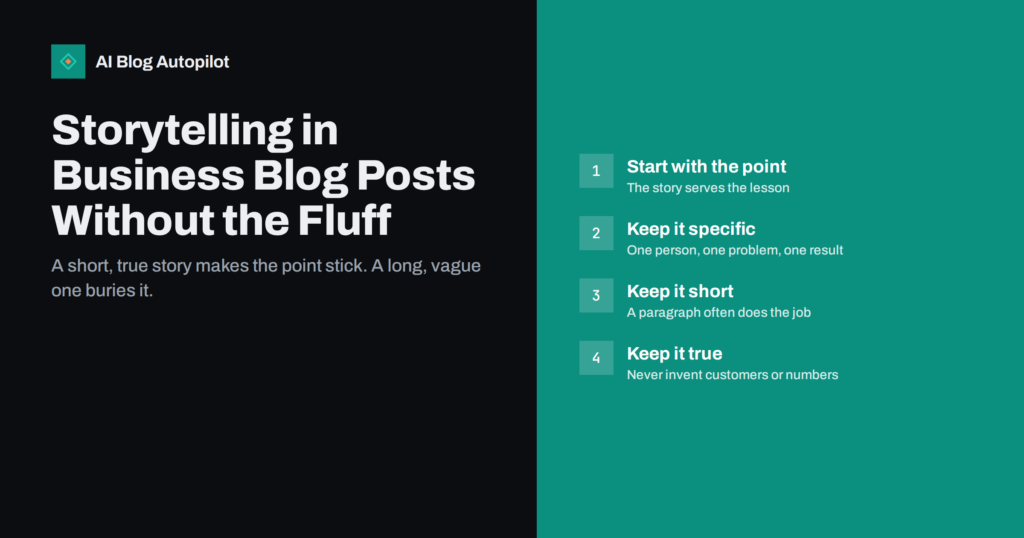
Storytelling in Business Blog Posts Without the Fluff
How to use short, true stories in business blog posts so readers remember the point: where a story belongs, how long it should be…
 2026-09-12 · Skaitymo laikas: 6 min.
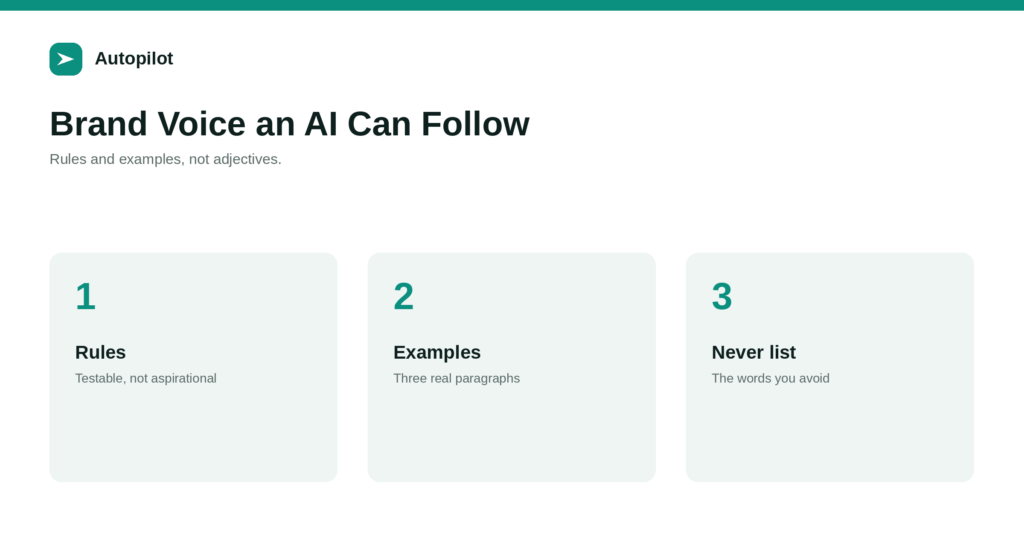
How to Write Brand Voice Guidelines an AI Can Follow
Most brand voice documents are adjectives nobody can act on. Here is how to write one in a page, using rules and examples that…
 2026-08-29 · Skaitymo laikas: 6 min.
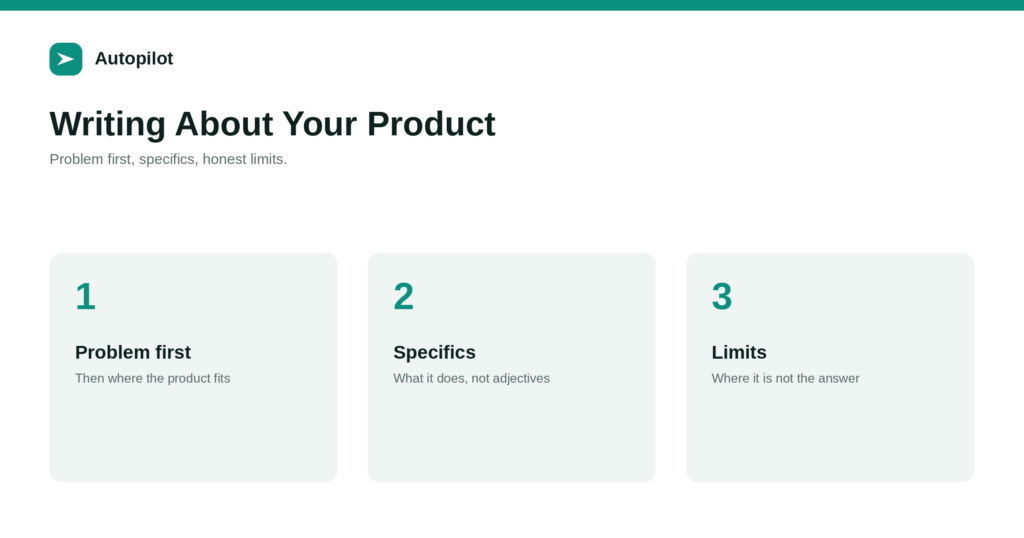
Writing About Your Own Product Without Sounding Like an Advert
Readers expect a business blog to mention its product. How to do it usefully: problem first, specifics over superlatives, honest limits, links instead of…
 2026-08-29 · Skaitymo laikas: 6 min.
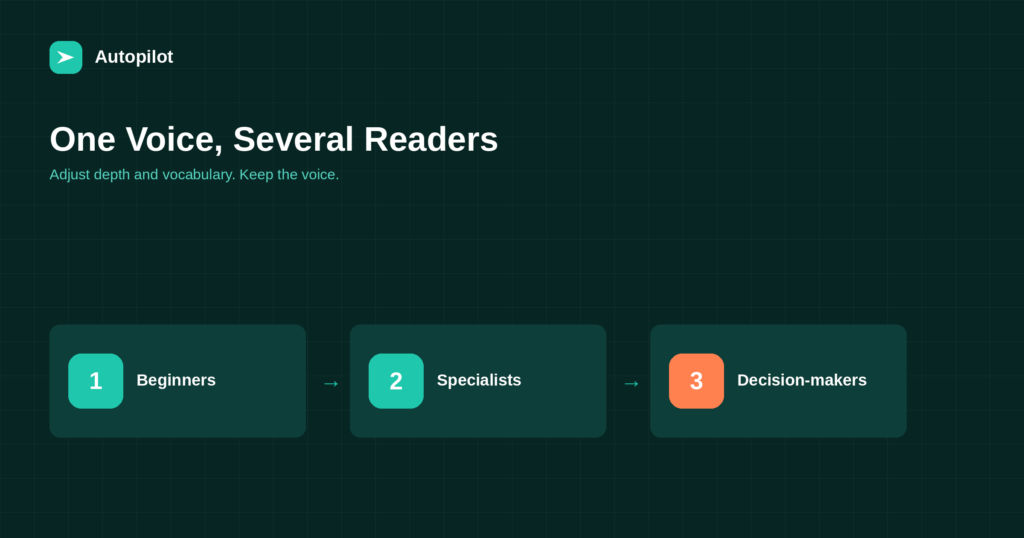
Adjusting Tone for Different Readers Without Losing Your Voice
One brand voice, several readers. How to adjust formality, depth and vocabulary for beginners, specialists and decision-makers while sounding like one business.
 2026-08-15 · Skaitymo laikas: 6 min.
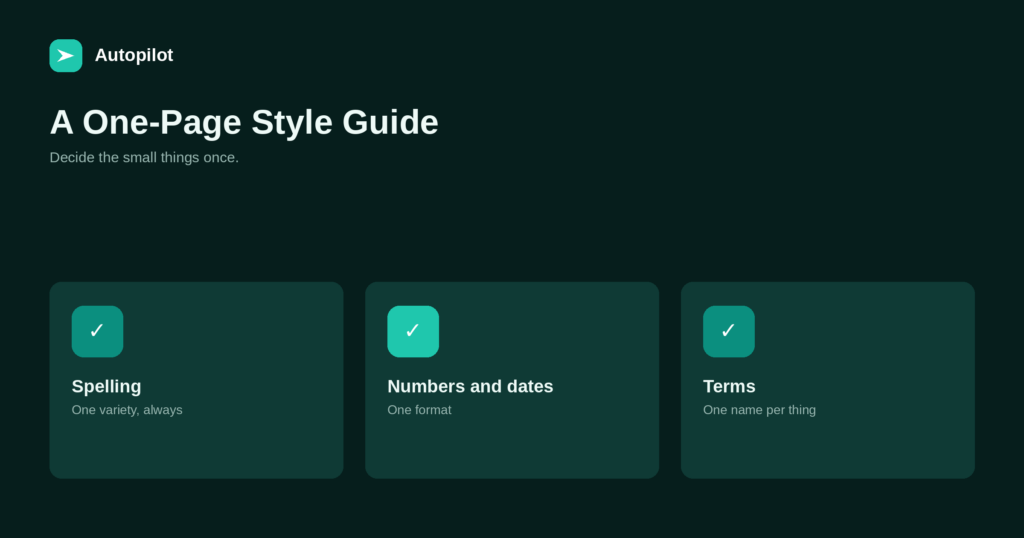
An Editorial Style Guide in One Page
A style guide settles the small decisions once: spelling, numbers, capitals, dates, terms. A one-page version that writers and tools will actually follow.