ENEnglish
 LTLietuviškai
 DEDeutsch
 FRFrançais
 RUРусский
 ESEspañol
 PLPolski
 ITItaliano
 UKУкраїнська
 CSČeština
 PTPortuguês
 JA日本語
 LVLatviešu valoda
 ETEesti
 HUMagyar
 IDBahasa Indonesia
 TRTürkçe
 HIहिन्दी
 ELΕλληνικά
 ARالعربية
 THไทย
 VITiếng Việt
 RORomână
 MSBahasa Melayu
 BNবাংলা
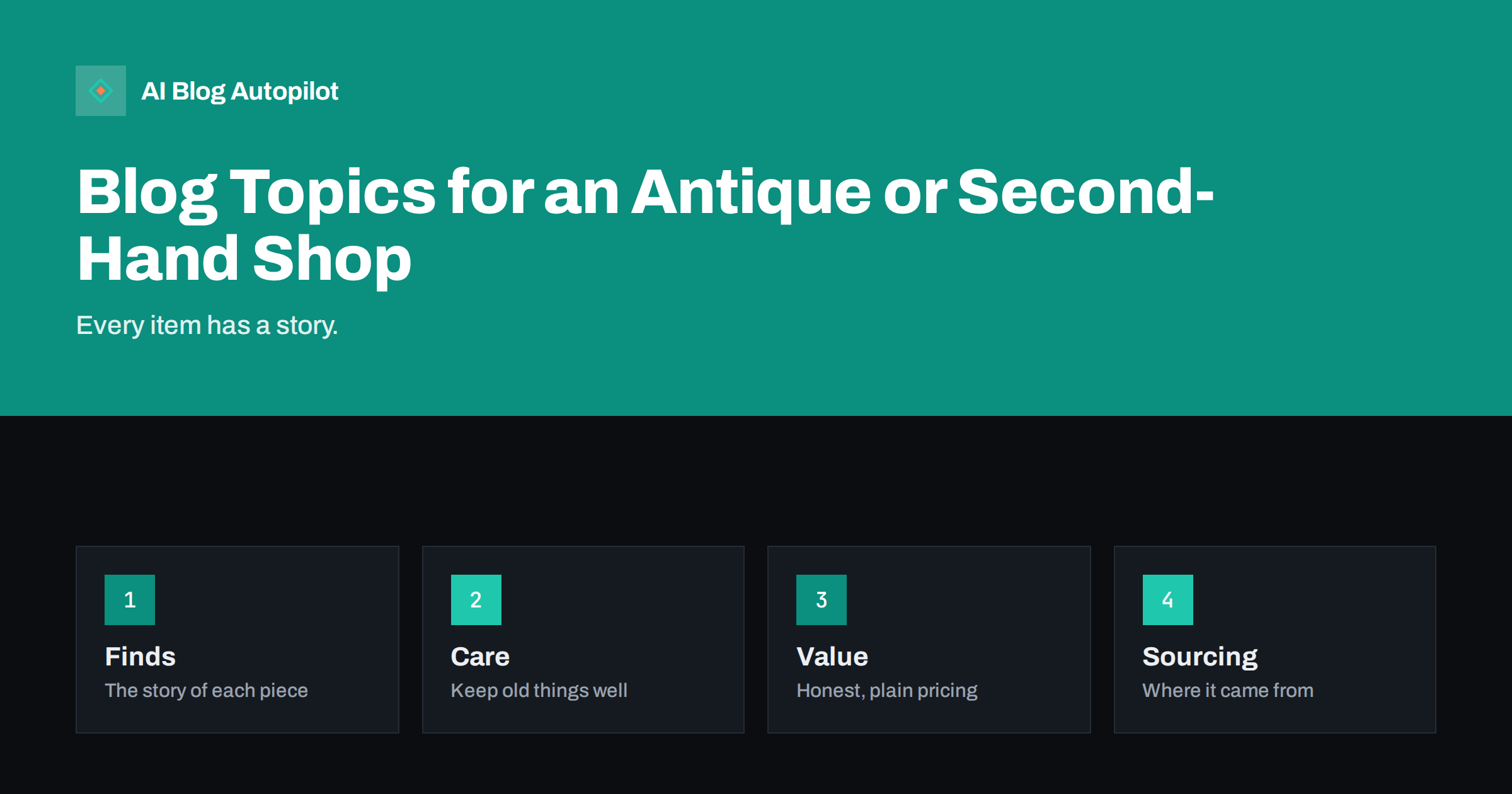
Short answer: an antique or second-hand shop blog works best when it tells the story of individual finds, explains how to care for and value old things, shows how stock is sourced and restored, and gives honest buying advice. Because every item is unique, write pages that stay useful after the piece is sold.
Second-hand and antique shops have an unusual advantage: nothing in the shop is a copy of what the competition sells. The same unusual lamp, chair or ceramic jug is not listed in a hundred other stores. That uniqueness is hard to turn into traffic, however, because each item sells once and its page disappears.
This guide suggests topics that capture the knowledge, stories and trust of a good dealer. It covers finds, care, valuation, sourcing, restoration and the practical side of buying and selling, with ideas for pages that keep working long after the item has gone.
Tell the story of a find
Each piece has a history, and customers love to read it. Write about where an item came from, what it was used for, how you identified the maker and what makes it unusual. A short article on a single chair, clock or poster, with several photographs, can attract collectors searching for that exact model or maker.
Include measurements, materials, marks and condition honestly. Describe flaws as clearly as strengths: a chip, a repair, a replaced part. Serious buyers value honesty, and it protects you from returns and disputes. Photograph the underside, the labels and any marks, since these are the details collectors look for.
When the item sells, do not delete the page. Mark it as sold, keep the story and link to similar pieces in stock. The page continues to bring visitors who search for the maker or style, and it proves your experience. The advice on handling expired content explains what to do with pages that outlive their purpose.
Guides to caring for old things
People who buy old things want to look after them. Write practical guides on cleaning silver, caring for old wood, protecting leather, storing textiles, handling glass and ceramics and keeping paper and prints away from light. Explain what to do and what to avoid, because well-meant cleaning can destroy value.
Give plain warnings. Say that some pieces should not be polished, that water can harm certain veneers and that glue repairs are best left to a specialist. A page that helps readers avoid a costly mistake is the kind that gets shared and linked.
Describe simple tools and products you trust and why, and be honest about when to stop and ask a restorer. These guides are evergreen, and they bring in buyers who have inherited something and do not yet know what to do with it.
Describe how condition grades work in your shop, for example mint, good, fair and worn, with a sentence on what each means. A consistent scale across all descriptions helps buyers compare and gives you something to point to if a disagreement arises later.
Explaining value and pricing
The question you hear most is “what is it worth?” Write a careful article on what affects value: age, maker, condition, rarity, provenance, demand and fashion. Explain that old does not always mean valuable, and that a repaired or altered piece may be worth less than a plain original.
Describe how you price your own stock in general terms, and the difference between a retail price, an insurance value and what a dealer might offer to buy. Readers are often confused by this gap, and an honest explanation prevents disappointment. If you offer valuations, say what they include and what they cost.
Be clear that a blog cannot value a particular item. Invite readers to bring or send photographs where appropriate, and explain what information you need. The guide to writing honest articles about what things cost helps with wording.
How you source stock
Customers wonder where the goods come from. Explain your sources: house clearances, auctions, estate sales, private sellers, dealers and fairs. Describe how you decide what to buy and how you check an item’s origin. A page about sourcing builds trust and may attract people who want to sell.
Say how you handle questions of ownership and legality. Mention the checks you make, how you treat items that might be restricted or culturally sensitive and how you deal with items that cannot be traced. You need not give every detail, but showing that you take care of ethics reassures serious buyers.
Write a page for sellers: what you buy, how you value it, how payment works and what happens to items you do not take. A clear process draws better offers and saves time for everyone. Local searches for clearance and valuation services are common, so mention the areas you cover.
Include a section about provenance and paperwork. Explain what receipts, labels, letters and photographs can add to the story of an item, and how you record them when you buy. A piece with a documented history is easier to sell and more interesting to read about, and teaching customers to keep such records helps them later.
Describe how you date things. Readers enjoy seeing the clues you use: construction methods, screws, hallmarks, typefaces and wear patterns. A short article on how to tell a handmade joint from a machine-made one gives your expertise a face and rewards curious visitors.
Restoration and repair stories
Before-and-after stories are some of the best content a second-hand shop can produce. Show a worn table at arrival, the steps taken to restore it and the finished piece. Explain what was kept, what was replaced and why. Readers enjoy the craft, and buyers see that the work is done with respect for the original.
Be open about what restoration does to value. Some collectors prefer original condition with signs of age, while others want a piece that is ready to use. Explain how you decide and let customers choose where possible.
Short videos work well here. A minute of a craftsperson at work, with a short written summary and captions, can hold readers longer than text alone. See video in blog posts for how to embed and describe it.
Offer a guide to bargaining and buying fairly. Explain whether prices are negotiable, what is reasonable to ask and how you treat people who buy several items. Clear expectations make visits more relaxed for nervous buyers and reduce awkward moments at the counter.
Write about the difference between antique, vintage, retro and second-hand. Many shoppers use these words loosely, and a plain-language explanation of age categories, with examples, helps them search better and understand your listings.
Buying advice and trends
Write guides for people who are new to a category: how to start a collection of vintage glass, what to look for in mid-century furniture, how to recognise reproductions and which marks matter. Give readers a way to judge quality, and they will return when they are ready to buy.
Cover trends carefully. Interest in certain periods and styles rises and falls, and a page on what is popular now can attract seasonal traffic. Date it clearly and update it, as an old trend page can look foolish. The article on trend and prediction posts explains how to write them without overpromising.
Include sustainability. Buying second-hand reuses goods and avoids new production, and many customers care about this. Make claims only that you can support and avoid vague green language.
Seasonal content works well in a shop of this kind. Write about Christmas decorations, summer garden finds, back-to-school furniture or wedding props from past decades, and publish early enough for people to plan. Link each seasonal page to the shop’s categories, and update it every year instead of creating a new one with a new address.
Consider a regular “new in” post that shows recent arrivals, with a short comment on each. Keep the format steady so that regular visitors know what to expect. After a few weeks, move older ones into an archive so that the page does not grow without limit.
Practical pages every shop needs
Customers need to know how to buy. State opening hours, location, parking, accepted payments, delivery and collection, packaging for fragile pieces and your returns policy for items sold as seen. For online sales, explain how you describe condition and how you handle damage in transit.
Add a page on special orders and searches: how people can ask you to find a particular item, how you charge and how long it can take. This turns a blog reader into a long-term customer. Keep local details accurate on your business profile, as covered in the guide to Google Business Profile updates.
Selling online and in person
Many second-hand shops sell in the shop, on a marketplace and on their own site. Explain on your blog how each works, and be clear that unique items can only be sold once. If someone reserves an item, say how long you hold it and how to pay. If you ship, explain how you pack fragile and valuable pieces and what happens if a parcel is damaged.
Take care with descriptions that appear in several places. If the same item is listed on a marketplace and on your site, make sure that condition, measurements and price match, and remove the listing everywhere at once when it sells. Nothing damages trust like selling an item twice.
Finally, invite readers to join a mailing list or follow your social accounts for new arrivals. In a business with one-off stock, regular updates are the natural way to bring people back, and your blog gives them a reason to subscribe.
How AI Blog Autopilot helps
AI Blog Autopilot plans articles around real search questions and shares each one to your social networks, which suits a shop with little time to write. Look at the plans, and test the three free articles on your own topics.
Related reading
The bottom line
Tell the story of each find, teach care and value honestly, show how you source and restore, and keep sold pages alive so they keep bringing in collectors.
DUK
What should an antique shop blog write about?
Stories of individual finds, care guides, honest value explanations, sourcing, restoration and buying advice for beginners.
What should I do with the page of an item that has sold?
Keep it, mark it as sold and link to similar pieces. It still attracts people searching for that maker or style.
Can a blog tell readers what their item is worth?
Not reliably. Explain what affects value and invite readers to send details or photographs for a proper valuation.
Should I show flaws in item descriptions?
Yes. Honest descriptions build trust with serious buyers and reduce returns and disputes.
How often should a small shop publish?
Regularly enough to stay consistent. A steady schedule of useful pages beats occasional bursts.