ENEnglish
 LTLietuviškai
 DEDeutsch
 FRFrançais
 RUРусский
 ESEspañol
 PLPolski
 ITItaliano
 UKУкраїнська
 CSČeština
 PTPortuguês
 JA日本語
 LVLatviešu valoda
 ETEesti
 HUMagyar
 IDBahasa Indonesia
 TRTürkçe
 HIहिन्दी
 ELΕλληνικά
 ARالعربية
 THไทย
 VITiếng Việt
 RORomână
 MSBahasa Melayu
 BNবাংলা
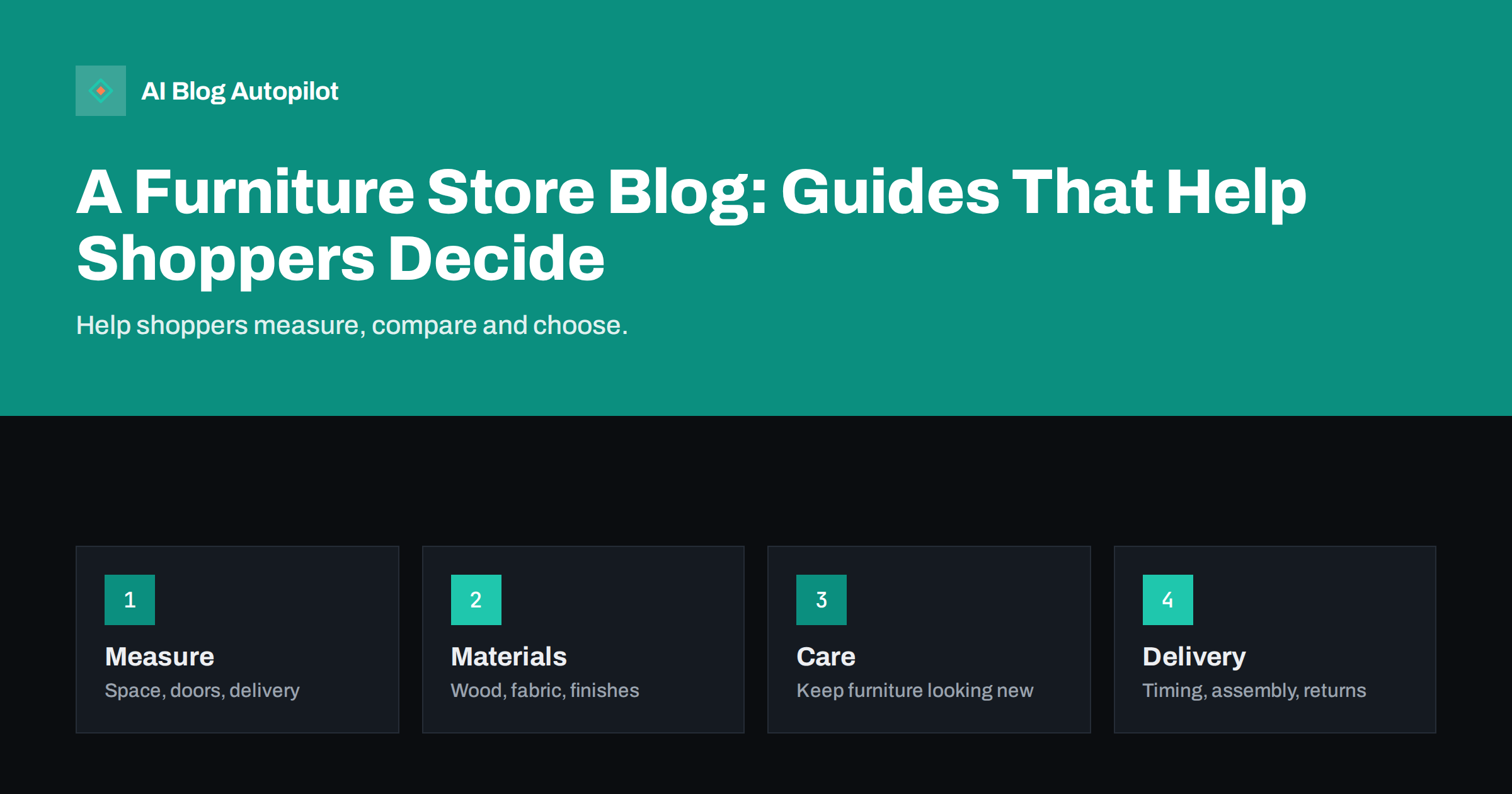
Short answer: a furniture store should blog about the worries that delay a purchase: how to measure a room and a doorway, which size and style fit, what materials and finishes last, how to care for them, how delivery and assembly work, what returns look like and how to compare similar items. Use your own photographs and measurements, be clear about prices and lead times, and make it easy to visit, call or order.
Furniture is a considered purchase. It is large, expensive and hard to return, and it has to fit a room, a household and a taste. People search for guidance for weeks before they buy, and many leave without choosing because a detail is unclear: will it go through the door, how does the fabric wear, how long will delivery take. A store that answers these questions in plain words removes the barriers one by one.
This guide lists topic groups for a showroom, an online shop or a mix of both, explains how to use photographs and measurements responsibly and shows how to write about price, quality and delivery without exaggeration.
Start with measuring and fitting a room
The most useful pages are practical. Explain how to measure a living room, a bedroom, a dining space and a hallway; how much space to leave for walking and for opening doors; and how to mark furniture outlines on the floor with tape before buying. Add simple diagrams, with text descriptions for readers who cannot see them.
Write a separate page on delivery access: measuring doors, stairs, lifts and corners, and what to do if a large piece will not fit. Describe options such as removable legs, modular pieces, flat-pack versions or a different route into the building. This is a topic readers do not realise they need until it is too late, and a clear guide builds trust.
Give size guidance for typical needs: how big a table is needed for four, six or eight people, what size of sofa fits a small room, how deep a wardrobe should be and how much space a desk needs. Use ranges and explain the reasons, and tell readers that personal preference and room shape matter more than any rule.
Write about how furniture is built. Joints, frames, springs, drawer runners, hinges and finishes decide how long a piece lasts, and most buyers do not know what to look for. A short guide to checking a chair, a drawer or a sofa frame in the showroom, with photographs, helps shoppers feel confident and makes your own staff look knowledgeable.
Explain materials, finishes and quality
Buyers want to know what they are paying for. Write plain explanations of solid wood, veneer, engineered boards, metal, glass, leather, fabric and foam. Describe how each looks, feels and ages, how it responds to sun, heat, moisture and use, and which types suit homes with children, pets or heavy use.
Be careful with quality claims. Say what you know from your suppliers and testing, and avoid unverified words such as indestructible, lifetime or the best. If you quote standards or test results, name them and link to the source. If you do not know a detail, such as the exact origin of a timber, say that you will check rather than guessing.
Write comparison pages that help readers choose between two options, such as a fabric and a leather sofa, or an oak and a pine table. Describe the strengths and weaknesses of each, and say when the cheaper option is perfectly sensible. The structure in how to write a product comparison keeps these pages balanced.
Add a page on caring for furniture in homes with children and pets. Explain which fabrics and finishes cope better with spills and scratches, how to protect surfaces and what to do after an accident. Be realistic: no material is immune to wear, and honest advice about trade-offs helps readers choose something they will not regret.
Teach care, cleaning and repair
Care pages bring steady traffic and satisfied customers. Explain how to clean and protect each material, how often to do it and what to avoid, in general terms and with a note to follow the manufacturer’s label. Cover common accidents: a water ring on a table, a stain on a fabric, a scratch on a leather seat, a loose joint on a chair.
Say when it is better to call a professional. A deep clean of an upholstered sofa or the repair of a veneered surface may be a job for an expert, and a page that admits this is more credible than one that promises a home remedy for everything. Do not recommend products you have not tried, and do not publish dangerous mixing instructions.
Offer seasonal reminders, such as moving furniture away from radiators in winter or protecting wood from strong sun in summer. A short, helpful series like this keeps customers in touch with the shop long after they have bought.
Write about warranty in plain words. State what is covered, for how long, what is excluded and how to make a claim, using exactly the terms in your policy. Many readers have been disappointed by guarantees with small print, and a page that explains the limits openly makes your promise more believable. Include contact details and what documents the customer should keep.
Describe how you handle special orders: fabric samples, custom sizes, colour matches and made-to-measure items. Explain what can be changed, what cannot be returned and how long approval takes. Clear information here prevents the most frustrating kind of dispute.
Be clear about delivery, assembly and returns
Customers worry about what happens after payment. Describe how delivery works: how lead times are given, how a slot is arranged, what the crew does, whether old furniture can be collected and what happens if nobody is home. If items are made to order, explain how long production takes and why.
Explain assembly honestly. Say which items arrive built and which need assembly, how long it takes, which tools are needed and whether you offer an assembly service and what it costs. A video or a downloadable instruction sheet helps. For online sales, state the return rules in plain language and match them exactly to your policy and the law where you sell.
Describe what you do when something arrives damaged. A page on how to check a delivery, what to photograph and how to report a problem reduces conflict and shows confidence in your service. The guide on writing honest articles about what things cost covers the same principle for charges such as delivery and assembly.
Show style, rooms and inspiration with real photos
Furniture is visual, and your own images are the best asset. Photograph pieces in real rooms and from several angles, show the size next to a person or a familiar object and include close-ups of materials and joints. Write alt text that describes the piece and the setting. The guide to image SEO for blog posts explains how to name files and size them for fast loading.
Write inspiration pages built around real needs rather than trends: furnishing a first flat, a small home office, a nursery, a guest room, a shared student house or a rented home where you cannot drill into walls. List what to buy first and what can wait, and give rough budget ranges only if you can keep them accurate.
Partner with designers where it makes sense. The ideas in a blog for an architect or interior designer overlap with some of these topics, and a short interview or joint guide can serve both audiences. Always credit people and ask for permission before using photographs of customers’ homes.
Add a page on financing and payment if you offer it, with the real conditions: deposits, interest, fees and what happens if a payment is missed. Do not use phrases that hide costs, and follow the advertising rules where you sell. Readers will compare your wording with other shops, and clarity wins over cleverness.
Write honestly about price, offers and sustainability
Explain why items cost what they cost: materials, construction, finish, design, delivery and warranty. Show a few pairs of similar items at different prices and say what the difference buys. Readers do not need to be told to spend more; they need to understand the trade-off.
Handle offers with care. Show the real price, the dates of a sale and any conditions, and avoid inflated original prices. If prices change, a short note like those described in price change announcements keeps customers informed and avoids confusion.
Sustainability is a growing concern, but claims need evidence. If you sell second-hand or repaired furniture, describe how it is checked and what condition grades mean. If you use certified timber or recycled materials, name the scheme, show the proof and avoid sweeping words such as green or eco-friendly without detail. The guide to using evidence in marketing content helps keep such statements honest.
Connect the blog to the shop and the showroom
Every guide should lead somewhere. Link to the relevant category, the size chart or the booking page for a showroom visit, and mention opening hours, address and parking. If you have more than one location, make sure each one has its own details. Add a way to ask a question by phone, email or chat, and answer promptly.
Use the questions your staff hear every day to plan new pages, and track which articles bring visitors who later buy or book. The advice in blog strategy for an online shop explains how to connect content and products without turning each post into an advertisement.
How AI Blog Autopilot helps
AI Blog Autopilot can write and publish articles on your chosen topics, with FAQ sections, tags and SEO meta, and share them to your social networks. Give it your product range and your delivery terms, and check sizes, materials, prices and return rules before each article goes live. See the pricing page for plans and monthly credits.
Related reading
- Blog Strategy for an Online Shop
- A Fashion Boutique or Clothing Brand Blog: What to Publish
- Blog Strategy for a Local Business
The bottom line
Help shoppers measure, compare and care, use your own photographs, explain delivery and returns plainly and make visiting or ordering easy.
FAQ
What should a furniture store blog about first?
Start with how to measure a room and doorways, how to choose sizes and materials and how delivery and returns work.
Should I publish prices in guides?
Use ranges with a date, or link to the product pages, since prices change. Explain what makes one item cost more than another.
How do I write about quality honestly?
Describe materials and construction, name any standards and tests and avoid unverified words such as indestructible.
Can I show customers’ homes?
Only with written permission. Prefer your own showroom and staged photographs.
How often should care guides be updated?
When products or finishes change, and at least once a year, keeping the manufacturer’s instructions as the first source.