ENEnglish
 LTLietuviškai
 DEDeutsch
 FRFrançais
 RUРусский
 ESEspañol
 PLPolski
 ITItaliano
 UKУкраїнська
 CSČeština
 PTPortuguês
 JA日本語
 LVLatviešu valoda
 ETEesti
 HUMagyar
 IDBahasa Indonesia
 TRTürkçe
 HIहिन्दी
 ELΕλληνικά
 ARالعربية
 THไทย
 VITiếng Việt
 RORomână
 MSBahasa Melayu
 BNবাংলা
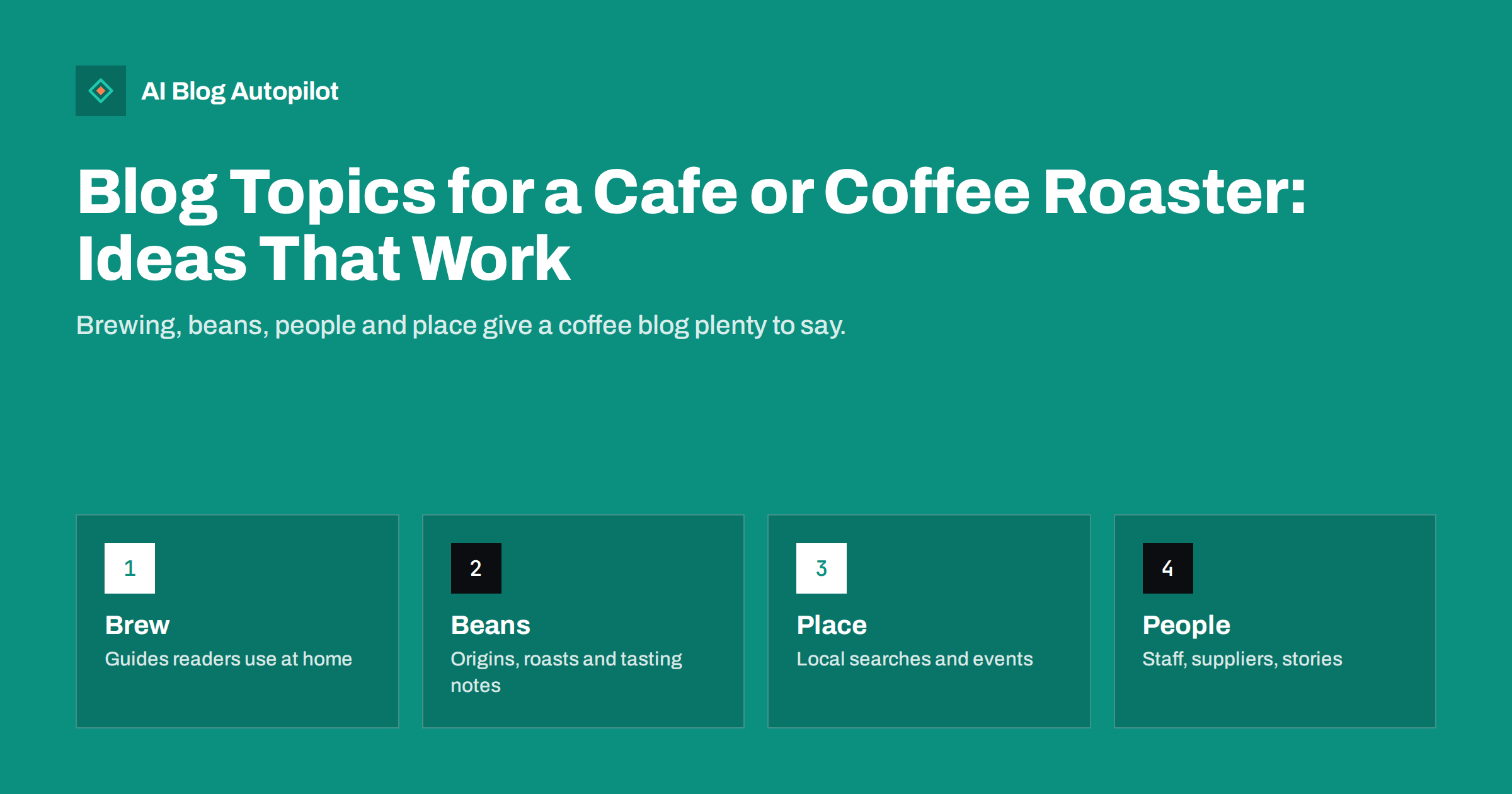
Short answer: a cafe or coffee roaster has four rich areas for blog posts: how to brew and choose coffee at home, the story and character of the beans, the local place and events around the business, and the people and suppliers behind it. Write for the questions that customers ask at the counter, add local detail that big brands cannot copy and publish steadily instead of in bursts.
Coffee is a topic that people enjoy learning about, and a cafe has daily contact with the questions that readers type into a search box. A small business cannot out-publish a national brand, but it can be more specific, more local and more personal. This guide offers topic ideas, shows how to choose among them and suggests a simple calendar that a busy team can keep.
Brewing guides that answer real questions
The most useful posts for many readers are practical. People buy beans and then want to know how to make a good cup at home. Write short guides for each method you sell equipment or advice for: filter, French press, moka pot, espresso machine, pour-over and cold brew. Cover the grind, the ratio, the water, the time and the common mistakes.
Use the words customers use. “Why does my coffee taste bitter?” and “How fine should I grind for a moka pot?” are clearer than technical headings. Answer in the first paragraph, then explain the reasons and give a quick fix. Our guide to how to write a how-to article describes a structure that works for this kind of post.
Add photographs that you have taken yourself: the grind size on a spoon, the cup, the setup on your counter. They are more convincing than stock images and are easy to take during a normal day. Keep any numbers, such as ratios and times, as ranges and describe them as starting points that the reader can adjust to taste.
Beans, origins and roasting
If you roast, you have material that few competitors can match. Write about each coffee you sell: where it comes from, how it was processed, what roast you chose and why, and what to expect in the cup. Be honest about what you know and about what you were told by a supplier. Do not invent awards or scores, and describe tasting notes as impressions and not as facts.
Explain terms that confuse customers: single origin and blend, washed and natural, light and dark roast, arabica and robusta, what “specialty” means and how a roast date differs from a best-before date. A glossary page of these terms can be linked from every post. See glossary pages and definitions for how to build one.
Seasonal arrivals give you a natural calendar. A new harvest, a limited batch or a change of supplier is a good reason for a post, a social update and a newsletter. Where a product page exists, link to it from the post, so that interested readers can buy at once, using the approach in ecommerce blog strategy.
Storage, equipment and buying advice
Readers ask how to store beans, how long they stay fresh, whether to freeze them, how to clean a machine and which grinder to buy. These questions bring steady search traffic over the years, since the answers do not change quickly. Write each one clearly, with your own experience, and update it when something changes.
Comparison posts help buyers decide: filter versus espresso for a beginner, a hand grinder versus an electric one, capsules versus beans. Be fair, state who each option suits and say when you do not sell the item. A candid recommendation builds more trust than a sales pitch, as discussed in how to write a product comparison.
If you sell subscriptions or gift boxes, explain how they work, what is included and how to pause or cancel. Clear information of this kind reduces questions to staff and reassures new customers. Check every detail against your live shop before publishing.
Local posts for a cafe
A cafe is a local business, and many searches are local: coffee near a station, a quiet place to work, a dog-friendly cafe, breakfast on a weekend. Your blog can answer these in a way a map listing cannot. Describe what your cafe is like, what is on the menu, what hours you keep and how to find you, and keep this information consistent with your listings.
Write about the neighbourhood. A guide to a walk that ends at your door, a list of nearby places worth visiting or a post about a local market where you buy supplies gives readers a reason to visit and gives search engines local context. Mention only places you can speak about honestly. Our guide to local business blog strategy explains how to organise this kind of content.
Events deserve posts too: tastings, workshops, live music, a quiz evening or a new seasonal menu. Publish the details early, keep the page after the event with photographs and a short summary, and link to the next one. See event announcement posts for the format.
The menu, the people and the supplier stories
Customers like to know who makes the coffee and the cake. Introduce the team in short posts: how they came to the trade, what they like to drink, their favourite tip for home brewing. Ask for permission, keep it friendly and avoid private details. Our guide to meet the team posts gives a simple template.
Write about your suppliers: the farm, the importer, the baker, the dairy or the local producer. Be accurate about what you know. Behind-the-scenes posts, such as how you taste each batch before it is sold, show care and expertise without any claim that must be proved. See behind-the-scenes posts for more ideas.
Menu changes are a source of short, regular content. A new drink, a seasonal recipe or a vegan option can be explained in a few paragraphs with a photograph. Be clear about allergens and ingredients, and point customers to the staff or the printed menu for the latest information, since details can change at short notice.
Sustainability, ethics and sensitive claims
Customers often ask about fair pay, certification, packaging and the environment. If you have a policy, explain it plainly and say what you do and what you do not do. Avoid vague words such as “green” or “ethical” unless you can say what they mean in your practice. A claim should be something you can show with a document, a supplier statement or a clear description of the method.
Do not make health claims about coffee. Statements about benefits or risks belong to qualified sources, and a cafe blog gains nothing from repeating headlines. If a customer asks about caffeine or pregnancy, you can say what is generally advised and suggest speaking to a doctor, without giving advice yourself.
Handle prices and offers with care, and keep them accurate. If a post mentions a price, date it, or link to the page that holds the live price. Our guide on evidence for marketing claims explains how to support what you say.
Using photographs and short video well
Coffee is visual, and a good photograph does more than a paragraph of description. Take pictures in natural light near a window, show the process as well as the finished cup and keep the background simple. Write a clear alternative text for each image that describes what it shows, which helps readers who use screen readers and gives search engines context. See the image alt text guide for how to write it.
Short videos of pouring, grinding or roasting work well on social networks and can be embedded in the post, as long as the page still makes sense without them. Include a few lines of text that summarise the steps. Readers who are at work or on a bus may not play the sound, and search engines read the text and not the video.
Ask staff and regular customers before you publish pictures in which they appear, and keep a record of what they agreed. A friendly sign at the counter that explains when you take photographs is a courtesy that avoids awkward moments.
Building a simple monthly calendar
A small team does best with a steady rhythm. Four posts a month is plenty: one brewing guide, one about beans or a supplier, one local or event post and one about the people or the menu. Add a seasonal post when a holiday or a harvest arrives. Our guide to seasonal content planning shows how to plan ahead.
Reuse each post. A brewing guide becomes a short video for social media, a printed card at the counter and a newsletter item. A photograph from an event becomes a post on your social networks. Spend your effort on one good piece and get three uses from it, using the ideas in the content repurposing guide.
Review what works every quarter. Look at which posts bring visits, which lead to orders or bookings and which questions customers still ask at the counter. Write more of what helps and drop what does not. Keep a list of customer questions near the till, and turn the best into posts.
How AI Blog Autopilot helps
AI Blog Autopilot writes full SEO articles for your WordPress blog from the topics, keywords, audience and tone you set, with FAQ sections, tags and SEO meta included, and shares each article to your social networks. Give it topics such as brewing methods, origins and local guides, and use approval mode if you want to read each article and add your own photographs and details first. See the pricing page for plans.
Related reading
- Blog Strategy for a Local Business
- Blog Topics for a Farm Shop or Bakery
- Blogging for Restaurants and Hotels
The bottom line
Write practical brewing help, honest stories about beans and suppliers, local and event posts and a few pieces about your people. Keep claims accurate, publish steadily and let your counter conversations guide the next topic.
FAQ
How often should a cafe blog?
Four posts a month is enough for most small cafes, as long as they are useful and kept up for the long term.
What should a coffee roaster write about first?
Brewing guides and a page for each coffee you sell, because these answer the questions that customers already ask.
Can a cafe blog help local search?
Yes. Posts about the neighbourhood, events and menu give local context, and they should match your business listings.
Should I write about the health effects of coffee?
Avoid making health claims. Point readers to qualified sources, and keep your posts to brewing, beans and your business.
How do I find topics when I run out of ideas?
Note the questions customers ask at the counter and in messages, and turn the most frequent ones into posts.