ENEnglish
 LTLietuviškai
 DEDeutsch
 FRFrançais
 RUРусский
 ESEspañol
 PLPolski
 ITItaliano
 UKУкраїнська
 CSČeština
 PTPortuguês
 JA日本語
 LVLatviešu valoda
 ETEesti
 HUMagyar
 IDBahasa Indonesia
 TRTürkçe
 HIहिन्दी
 ELΕλληνικά
 ARالعربية
 THไทย
 VITiếng Việt
 RORomână
 MSBahasa Melayu
 BNবাংলা
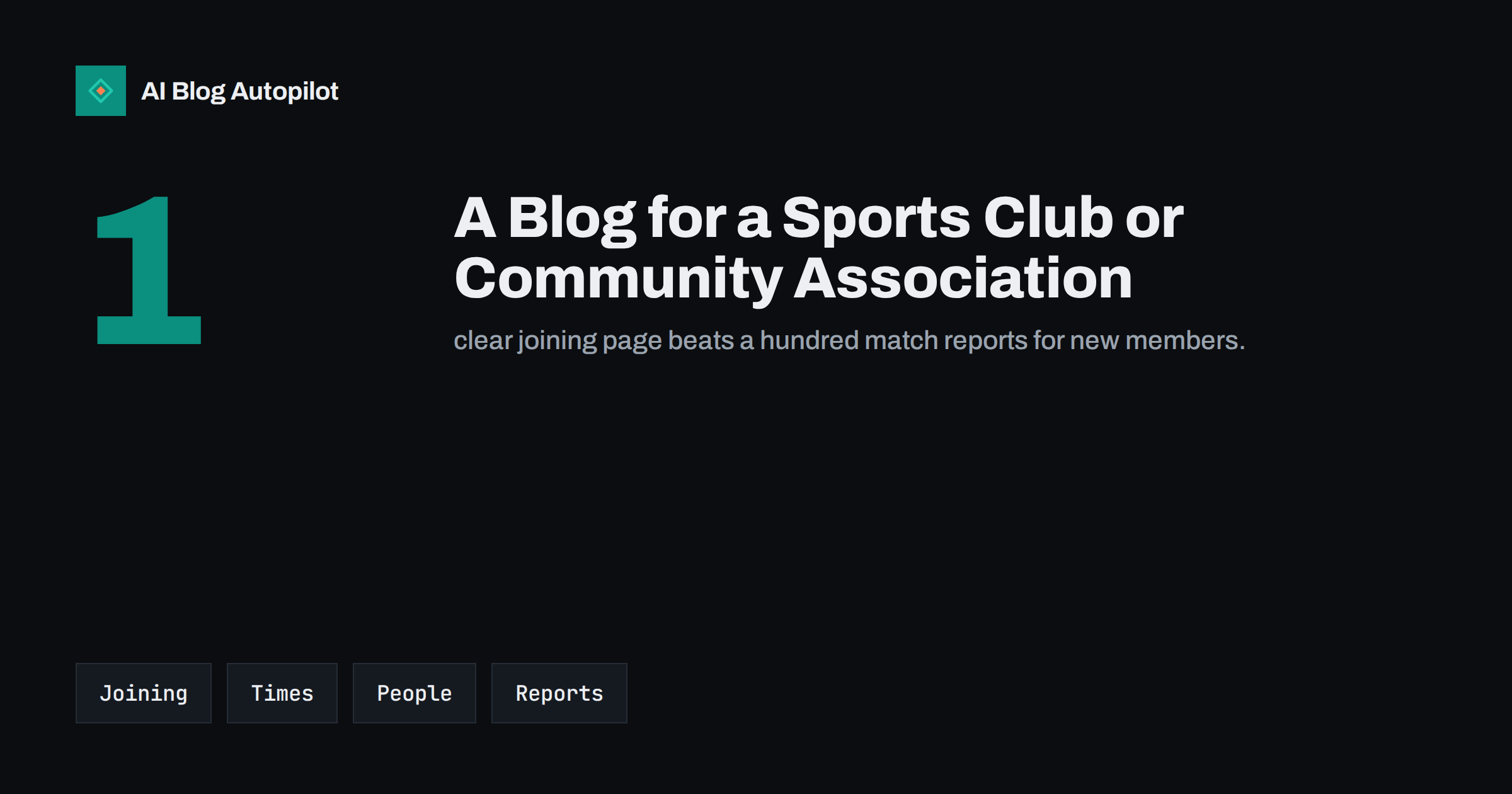
Short answer: a club or association blog should serve three groups: people who might join, current members and parents, and local supporters or sponsors. Start with a clear joining page, keep the times and venues current, publish short match or event reports that respect privacy, and explain who runs the group and how safeguarding works. Everything else is a bonus.
Most clubs run on volunteers, so the website is often a collection of old notices, a calendar nobody updates and a photo gallery from three seasons ago. A blog can fix that if it is treated as a small, useful library rather than a diary. New families search for “junior football near me” or “choir that welcomes beginners”, and the club that answers those questions clearly gets the enquiry.
Begin with the page for newcomers
The most valuable page on a club website explains how to start. Say who the club is for, what level of experience is needed, what a first session looks like, what to wear or bring, what it costs and how to book a trial. If you have waiting lists, age limits or seasonal intakes, say so plainly. A person who cannot find these answers in two minutes will try another club.
Write the page in everyday language and avoid internal jargon, such as team names that only members understand. Add the address and a map link, public transport and parking notes, and a contact form or phone number that is checked by a real person. Review the page every season, because a promise of a “next intake in September” that is still online in March damages trust. For advice on structure, see our guide to writing a how-to article, which fits this kind of page well.
Answer the questions that worry newcomers most. Will I be the oldest or the weakest person there? Do I need to bring my own equipment? Can my child come with a friend? Is there a changing room, and is the venue accessible by wheelchair? A short list of honest answers under the main page reduces anxiety, and it also gives search engines the natural language that people type into a search box. If the club has a policy on trial sessions, mention how many are free and what happens afterwards.
Keep times, places and fixtures in one reliable spot
Members and parents ask the same questions every week: where is training, when does it start, is it cancelled because of the weather. Put the regular schedule on a single page and update it in one place only. If a calendar tool is used, make sure the dates also appear as text on the page, so that people and search engines can read them.
For one-off changes, a short post is better than a message in a chat group that disappears. Title it clearly, for example “Training moved to the sports hall on Thursday”, and remove or update it when the change is over. Old notices left online are a common reason for confusion, and our article on expired content on blogs explains how to retire pages without leaving visitors in a dead end.
Write reports that people enjoy and that stay safe
Match reports, concert recaps and event summaries are the natural content of a club, and members enjoy reading them. Keep them short, kind and factual: the result, one or two moments worth remembering and thanks to the volunteers. Add a clear date and the name of the event so that the article is useful later, and avoid long lists of scores that nobody will read.
Privacy matters, especially with children. Do not publish full names, photographs or other personal details of young people without the permission of their parents, and follow your organisation’s safeguarding and data protection rules. Where a photograph is used, add a plain description in the alt text and a caption that does not reveal more than you intend. Our guide to image captions in blog posts offers practical ideas, and our article on privacy and analytics explains what to consider when you measure visits.
Think about seasons of life as well as seasons of the year. Parents of young children search in late summer, students search in autumn and people returning to a hobby often search in January. A short reminder post just before each of these moments, with a link to the joining page, costs little and reaches the people who are ready to act. Add the date of the next open session, and take the post down or update it when the date has passed.
Show the people who run the club
Parents and new members want to know who is in charge. A page about the coaches, leaders and volunteers, with their roles, relevant qualifications and a short friendly introduction, builds trust. Say who is responsible for safeguarding and how to contact them, and describe the code of conduct in a few sentences. Do not claim qualifications or approvals that cannot be shown, and keep the page current when people change.
Volunteer profiles work well too. A short interview with a long-serving member, a new coach or the person who washes the kit every week shows the human side of the group and encourages others to help. Ask for permission, check the text with the person and keep the tone warm. Our guide to storytelling in business blog posts contains ideas that apply equally to community groups.
Explain fees, funding and sponsors honestly
Money is one of the first questions and one of the last that clubs answer clearly. Explain what the membership fee covers, whether there are extra costs for kit, travel or competitions, and what help is available for families who find the cost difficult, if your club offers it. Do not promise discounts or bursaries that are not formally agreed. If sponsors support the club, thank them in a short post and label any promotional content clearly, as discussed in our article on nofollow, sponsored and user-generated links.
A page on how the club is funded, and how donations are used, makes supporters more willing to give. Keep the numbers accurate and up to date, and publish them only when your committee has approved them.
Use the blog to recruit volunteers and committee members
Many clubs struggle to find people to run them. A short post that describes a specific role, the time it takes, the skills needed and the person to contact will bring better answers than a general call for help. Describe tasks in small pieces, such as helping at one tournament or keeping the website up to date for a season. Say what the volunteer will gain, whether it is experience, a reference or simply a place in a friendly team.
After the role is filled, update the post or retire it, and thank the person who stepped forward. Publicly appreciating volunteers costs nothing and encourages others to offer their time.
Share the results of the club, but share them with care. A post that says “we raised money for a local cause”, with the amount and the thanks, shows that the club matters to the community. A post that lists who lost a game and by how many points does not. When a season goes badly, write about what the team learned and what comes next, and keep the tone supportive. People join clubs for belonging, and the blog should show that belonging honestly.
Check whether it is working
You do not need complex analytics. Count the enquiries, trial sessions and sign-ups, and ask each newcomer how they found the club. Look at which pages are visited most and whether people reach the joining page. If many visitors read match reports but few reach the contact form, add a clear link and a short invitation to the end of each report. If few people find the site at all, check that the club name, address and training times appear on the page as text.
Review the site twice a year with the committee, perhaps before the new season and after it. Remove what is out of date, update the photographs and agree who is responsible for each page. A named person for each section prevents the quiet decay that affects so many volunteer websites, and it makes handover easier when committee members change.
Plan a simple yearly rhythm
A club year has a clear shape: the start of the season, trials and signing up, the main competitions or performances, the end-of-season celebration and the break. Sketch the year in advance and decide which posts belong to each stage, using the method in our guide to seasonal content planning. One article a fortnight in the busy months and one a month in quiet ones is plenty if each is useful.
Share the posts where your members already are, such as a social group or a newsletter, but keep the website as the main home so that newcomers and search engines can find the information. Our article on building a newsletter from your blog posts shows how to reuse the same material without extra work.
How AI Blog Autopilot helps
AI Blog Autopilot writes full SEO articles for your WordPress blog from the topics, keywords, audience and tone you set, with FAQ sections, tags and SEO meta included, and it shares each one to your social networks. For a club run by volunteers, it can keep guides for newcomers and seasonal notices appearing while the committee focuses on running the group. Approval mode lets you read each article before it goes live, which is useful for safeguarding wording, fees and dates. See the pricing page for plans.
Related reading
- A Blog Strategy for a Nonprofit
- Blog Strategy for a Local Business
- Planning Seasonal Content Without Scrambling Every Year
- Building a Newsletter From Your Blog Posts
The bottom line
A club blog is a service to newcomers, members and neighbours. Make joining easy to understand, keep the times and places reliable, write short and respectful reports, show who runs the group and keep every page current. A small, accurate site brings more members than a large, neglected one.
FAQ
What is the most important page on a club website?
The page for newcomers. It should explain who the club is for, what a first session is like, what it costs and how to book a trial.
How often should a volunteer-run club publish?
One post a fortnight in busy months and one a month in quiet ones is enough, provided each post is useful and accurate.
Can we publish photographs of children?
Only with the permission of their parents and in line with your safeguarding and data protection rules. Avoid full names in captions.
How should we handle cancelled sessions?
Publish a short, clearly titled notice, and remove or update it afterwards so that old notices do not confuse visitors.
Should match reports include every score?
No. Keep them short and readable with the result, a couple of highlights and thanks to volunteers, and put full tables elsewhere if members need them.