ENEnglish
 LTLietuviškai
 DEDeutsch
 FRFrançais
 RUРусский
 ESEspañol
 PLPolski
 ITItaliano
 UKУкраїнська
 CSČeština
 PTPortuguês
 JA日本語
 LVLatviešu valoda
 ETEesti
 HUMagyar
 IDBahasa Indonesia
 TRTürkçe
 HIहिन्दी
 ELΕλληνικά
 ARالعربية
 THไทย
 VITiếng Việt
 RORomână
 MSBahasa Melayu
 BNবাংলা
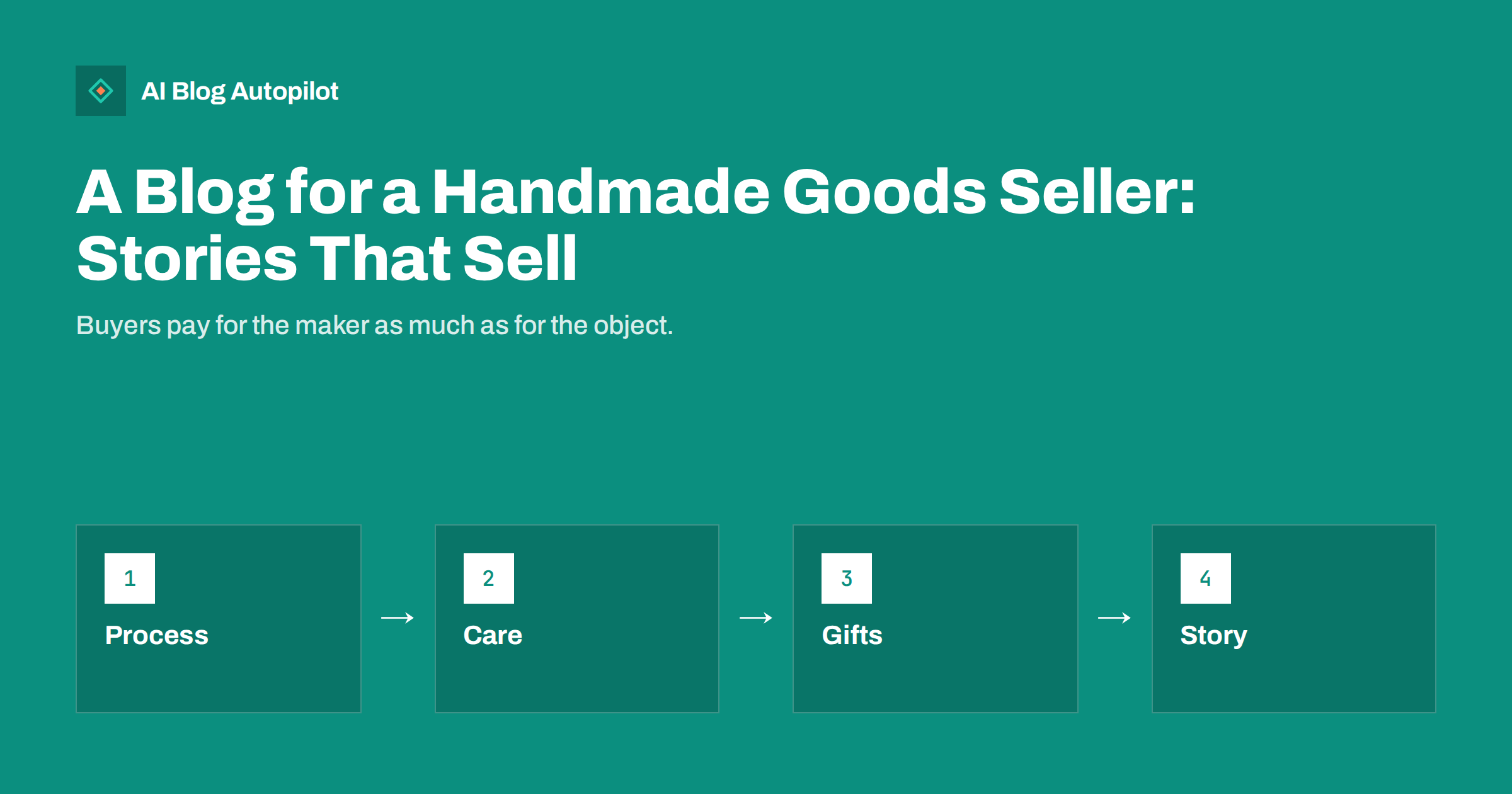
Short answer: a handmade goods seller should use a blog to do what a product listing cannot: show how things are made, explain how to care for them, help people choose gifts and tell the true story of the maker. Write for the buyer’s questions, tie each article to the products it concerns and avoid claims about materials, origins or sustainability that you cannot support.
Selling on a marketplace gives you traffic, but it also gives you rivals on the same page and little control over how you are presented. Your own site, with a blog, lets you build a direct relationship with buyers. People search for “hand-poured soy candle care”, “how to size a ring” or “gift for a gardener”, and a clear article on your site can meet them at that moment and lead them to something you made.
Show the making, not just the result
The main reason people buy handmade work is that a person made it. Explain the process in steps, with your own photographs: the raw materials, the tools, the stages that take time and the part where something can go wrong. A reader who understands why a glaze needs two firings or why a leather strap is stitched by hand is far more willing to accept a higher price than one who sees only a finished item.
Keep the explanation honest. If you use a mix of handmade and bought components, say so. If a part is made in a small batch, describe the batch size in general terms. Avoid words that imply a standard you cannot prove, such as “ethically made” or “zero waste”, unless you can say precisely what you mean and show the evidence. Our article on evidence for marketing claims explains how to support the statements you make.
Photographs should show the real workspace and the real hands. They do not need to be perfect, but they need to be clear and well lit, with captions that name the stage. Write alt text that describes the picture in plain words, and see our guide to image alt text for simple rules.
Write care guides that earn repeat buyers
A care guide is one of the most useful pages a maker can publish. Explain how to clean, store and repair each type of product: how to wash a linen tablecloth, how to trim a candle wick, how to polish silver or when to re-oil a wooden board. People search for these answers after they buy, and a helpful page brings them back to your site, where they may notice another product.
Give practical limits too. Say what the product should not be used for, for example a ceramic bowl that should not go in the microwave, and what to do if something breaks. Honest advice reduces returns and complaints. Link the guide from the product page and include a short version in the package, with the web address, so that the customer can find the full article later.
Update the guide when you change materials or methods. An old page that gives advice for a product you have redesigned can cause damage and disappointment.
Help people choose a gift
Many handmade purchases are gifts, and gift buyers rarely know exactly what they want. A guide such as “gifts for new homeowners” or “presents for a tea lover under a set budget” turns a vague search into a short list of your products. Organise the page by recipient, by occasion or by price range, and explain why each item suits the person it is for.
Be careful with prices and stock. If you mention a price range, check it each season, and remove items you no longer make. Add practical notes about delivery times, personalisation and the last order date before major holidays, as explained in our guide to seasonal content planning. A clear deadline is one of the most useful things a gift buyer can read.
Gift guides work best when they are kept for years and refreshed, not replaced. Keep the same address, update the contents and note the year in the text, following the advice in our article on refreshing old blog posts.
Answer sizing, shipping and custom order questions
Practical questions stop more sales than price. A buyer who cannot tell what size a ring will be, how long a custom order takes or what happens if a parcel is damaged will often leave. Write one page for each type of question: a sizing guide with measurements and a simple way to measure at home, a delivery page with times and costs for each area you serve, and an explanation of how commissions work, including how to ask, what you need to know and how a quote is given.
State only what you can keep. If delivery times vary at busy periods, say so, and update the page when they change. Describe your returns policy in plain words, and make it consistent with the product pages and any marketplace listings, because a mismatch creates disputes. Link these pages from the relevant product descriptions, so that the answer is one click away at the moment of doubt.
Tell the story of the maker
An about page and a few well-chosen stories do more for a small maker than any clever tagline. Explain how you began, what you make and why, who helps you and what you care about. Include specific details, such as the first piece you sold, a mistake that changed your method or the place where your materials come from. Readers remember details and forget slogans.
Stories about customers are valuable as well, provided that they have given permission. A short post about a wedding gift, a commission for a local café or a repair of an old family piece shows what your work does in people’s lives. Our article on storytelling in business blog posts explains how to write them without sounding like an advertisement.
Think about the order in which people read. A visitor who arrives from a search for a care guide may not be ready to buy, but a visitor who arrives from a gift guide often is. Place the strongest links where the intent is highest, and give the others a lighter touch. A short note at the end of a process article, saying that the piece shown is available in the shop and when the next batch will be ready, is enough. Avoid countdown timers, invented scarcity or claims of limited stock that are not true.
Connect articles to your shop pages
Every article should lead somewhere. At the end of a care guide, link to the product it concerns. In a gift guide, link each item. In a process article, mention the product that came from it. Use short, clear anchor text, such as the name of the product or collection, and avoid pushy phrases. Our guide on calls to action that fit the article shows how to keep the next step natural.
Think about the shop pages as well. Product descriptions should contain the information that the blog explains in more depth: size, weight, materials, care and delivery. If you find that the same questions keep arriving by message, add the answer to the product page and write a longer article on the blog. Our article on blog strategy for an online shop covers the wider picture.
Look at the numbers now and then, but keep them simple. Note which articles bring visitors, which product pages those visitors open next and which questions customers still send by message. If a care guide is popular, write a second one for a related product. If a gift guide brings visits but few orders, check that the items are in stock, the prices are right and the delivery information is easy to find. One small improvement each month adds up over a year.
Keep a rhythm that fits a maker’s week
Makers are busiest when orders arrive, which is exactly when the blog is most likely to be forgotten. Choose a small, regular rhythm, such as one article a fortnight, and prepare several in quiet weeks. Use a simple list of topics drawn from customer messages, as described in our guide to turning customer questions into topics, and photograph the work as you go so that you always have pictures to use.
Reuse each article. A care guide can become a leaflet, a process article can become a short video, and a gift guide can become an email to your subscribers. Our article on repurposing an article shows how to turn one piece into several formats without writing everything again.
Respect copyright, honesty and your customers
Handmade businesses depend on original work, so protect it and respect that of others. Use only photographs that you took or have the right to use, name the source of any quotation and avoid copying descriptions from other sellers. If you publish patterns, tutorials or templates, say clearly how others may use them. Our guide to copyright and AI images covers the questions that arise when pictures are generated or edited by software.
Be careful with reviews and testimonials. Show only real ones, with permission, and do not edit them to change their meaning. If you accept sponsored posts or gifts of materials, label them clearly. Honesty protects the trust that is the whole reason a customer chooses a maker.
How AI Blog Autopilot helps
AI Blog Autopilot writes full SEO articles for your WordPress blog from the topics, keywords, audience and tone you set, with FAQ sections, tags and SEO meta included, and it shares each one to your social networks. For a maker who would rather be at the bench, that keeps care guides, gift ideas and process stories appearing at a steady pace. Approval mode lets you read each article first, so that every detail about materials and methods matches your real work. See the pricing page for plans.
Related reading
- Blog Strategy for an Online Shop
- Storytelling in Business Blog Posts
- How to Refresh Old Blog Posts
- Repurposing an Article: One Piece, Several Formats
The bottom line
A handmade seller has a story that mass producers cannot copy. Show the process, explain the care, help gift buyers choose, tell the truth about materials and link every article to the products it concerns. Keep the work original, the claims honest and the pages current.
FAQ
What should a maker write about first?
Start with care guides and a gift guide, because they answer questions buyers already have and link naturally to products.
How often should a small maker publish?
One useful article a fortnight is enough. Prepare a few in quiet weeks so that busy weeks do not stop the blog.
Can I describe my products as sustainable or ethical?
Only if you can say exactly what you mean and show evidence. Vague claims are risky and can mislead buyers.
Do I need professional photographs?
No. Clear, well-lit pictures of your real workspace and products, with plain captions and alt text, are enough and often more convincing.
Should I keep gift guides or replace them every year?
Keep the same address and refresh the contents each season, so that the page keeps its history and links.