ENEnglish
 LTLietuviškai
 DEDeutsch
 FRFrançais
 RUРусский
 ESEspañol
 PLPolski
 ITItaliano
 UKУкраїнська
 CSČeština
 PTPortuguês
 JA日本語
JA日本語 LVLatviešu valoda
 ETEesti
 HUMagyar
 IDBahasa Indonesia
 TRTürkçe
 HIहिन्दी
 ELΕλληνικά
 ARالعربية
 THไทย
THไทย VITiếng Việt
 RORomână
 MSBahasa Melayu
 BNবাংলা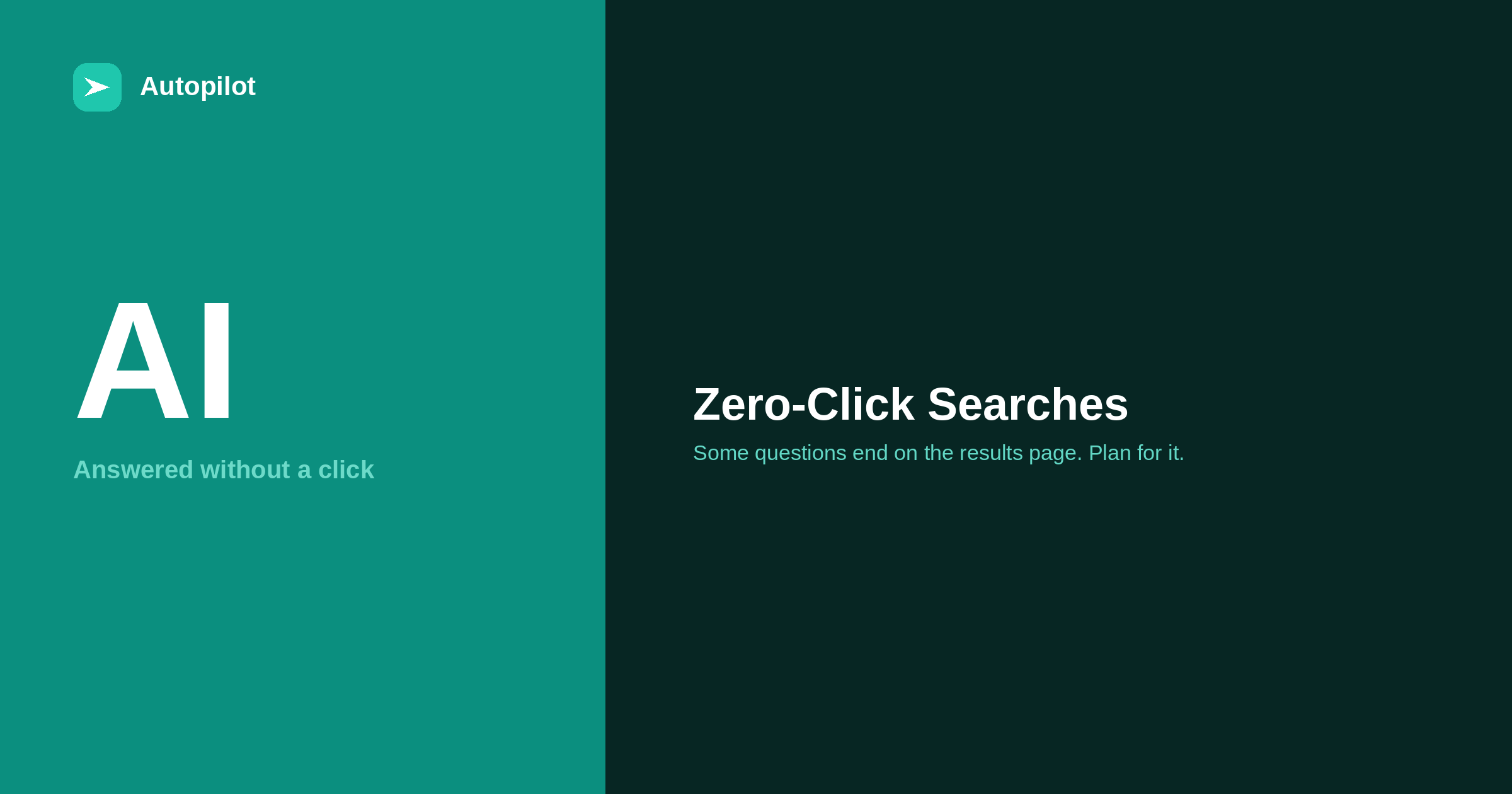
Short answer: a zero-click search is one where the person gets what they need on the results page — from a snippet, an AI-generated answer, a knowledge panel or a map — without visiting a site. It is most common for simple facts, definitions, conversions and quick local lookups. It is much less common for questions that need explanation, comparison, a process or a decision. For a business blog, that argues for focusing on the second kind, making sure your brand is visible when answers are shown, and measuring impressions and outcomes rather than clicks alone.
A growing share of searches end without a click. The results page answers the question directly, through snippets, panels, maps and increasingly AI-generated summaries, and the searcher moves on.
For a business blog this is worth understanding clearly, because it changes which articles earn visits and how to judge whether content is working — but it does not make content pointless.
Which searches end without a click
Zero-click behaviour is concentrated in particular kinds of query.
| Query type | Likely to end on the results page? |
|---|---|
| A simple fact, date or number | Very likely |
| A definition | Likely |
| A conversion or calculation | Very likely |
| A quick local lookup: hours, phone, directions | Likely |
| How to do a multi-step task | Less likely |
| Choosing between options | Less likely |
| Understanding a nuanced subject | Unlikely |
The pattern is intuitive: the more a question needs explanation, context or judgement, the more likely the searcher is to click through.
What this means for topic choice
Articles whose whole value is a single fact are the most exposed. If the answer to a question fits in one sentence, the results page can supply it.
Articles that explain a process, help someone decide, or offer experience and a point of view still earn visits, because the results page cannot contain them. That is also where a business can demonstrate expertise — the kind of article described in adding something original.
This does not mean abandoning simple questions. It means answering them as part of a fuller article rather than as the whole article.
Visibility without clicks still counts
When your page supplies the snippet or is cited in an AI answer, your name appears at the top of the results, even if the searcher does not click. That builds recognition, and a searcher who sees your name repeatedly is more likely to choose you later.
That effect is hard to measure precisely, and it should not be overstated. But it is real, and it is a reason to keep answering clearly even when the click rate on a given query is low.
Measuring in a zero-click world
If clicks are the only measure, zero-click searches look like losses. A fuller picture uses several measures.
- Impressions in Search Console, which show visibility regardless of clicks.
- Branded searches over time, which rise when people remember you.
- Enquiries and outcomes, the measure that matters most.
- Direct visits and newsletter sign-ups.
measuring whether a blog is working covers building a measurement setup around outcomes rather than traffic alone.
Writing so the click is worth it
Give the short answer clearly at the top — hiding it does not force clicks and makes the page less likely to be used as a source. Then make the rest of the article clearly more valuable than the short answer: the reasoning, the process, the trade-offs, the examples.
A searcher who sees a good short answer from your page and wants more is exactly the reader you want. The structure in how to structure an article does this naturally.
Channels you own
Zero-click trends are a reminder that search visibility is controlled by someone else. Channels you own — a newsletter list, direct relationships, a community — are less exposed.
Using articles to grow a newsletter, as in a newsletter built from your articles, turns one-off visitors into an audience you can reach directly, whatever happens to search.
Local businesses
For local businesses, many searches end on the map or business profile: people call, get directions or check opening hours without visiting the website. That is a good outcome, not a loss.
Make sure the profile is complete and accurate, and measure calls and direction requests alongside website visits — a blog for a local business covers this.
Reworking fact-only articles
If your blog has articles whose entire value is one fact or definition, consider what to do with them rather than waiting for their traffic to fade.
Some can be expanded into genuinely fuller articles: the fact plus how to use it, when it changes, what people get wrong. Some can be merged into a broader article where the fact becomes one section. Some can become entries on a glossary page. A few may simply be left as they are, since they cost nothing to keep.
The aim is that each page offers something the results page cannot, which is the only reliable protection against losing its visitors to a summary.
A note on reporting
If you report content results to a manager or client, explain the zero-click effect before it appears as a drop in clicks. A chart showing stable impressions alongside falling clicks tells a different story from falling clicks alone.
Keeping perspective
Zero-click searches do not make business blogging obsolete. They shift value towards content that explains, helps decide and shows expertise, and away from content that merely states facts available anywhere.
Nobody can predict exactly how search results will look in a few years. Writing useful, specific articles and building an audience you own are sensible responses whatever the direction.
Related reading
If this was useful, these cover the questions that usually come next.
- AI answers in search and traffic — the newest cause of zero-click results
- Writing for featured snippets — one mechanism behind it
- Measuring whether a blog is working — measuring beyond clicks
The bottom line
Zero-click searches are concentrated in simple facts, definitions and quick lookups. Focus articles on processes, decisions and experience, answer clearly at the top anyway, and treat visibility in answers as having value. Measure impressions, branded searches and outcomes, not only clicks, and build channels you own.
FAQ
What is a zero-click search?
A search where the person gets what they need on the results page, through a snippet, AI answer, panel or map, without visiting a website.
Do zero-click searches hurt business blogs?
They reduce clicks for simple factual questions. Articles that explain processes, help people decide or offer experience are much less affected.
Should I hide the answer to force a click?
No. It frustrates readers and makes the page less likely to be used as a source. Give the short answer and make the full article clearly worth reading.
How should I measure content if clicks fall?
Track impressions, branded searches, direct visits, newsletter sign-ups and enquiries alongside clicks.
Is appearing in an answer without a click worth anything?
It builds recognition, which can influence later choices. The effect is hard to measure precisely and should not be overstated.
What kind of content still earns clicks?
Content that needs explanation, context or judgement: how-to processes, comparisons, decisions and articles based on experience.