ENEnglish
 LTLietuviškai
 DEDeutsch
 FRFrançais
 RUРусский
 ESEspañol
 PLPolski
 ITItaliano
 UKУкраїнська
 CSČeština
 PTPortuguês
 JA日本語
 LVLatviešu valoda
 ETEesti
 HUMagyar
 IDBahasa Indonesia
 TRTürkçe
 HIहिन्दी
 ELΕλληνικά
 ARالعربية
 THไทย
 VITiếng Việt
 RORomână
 MSBahasa Melayu
 BNবাংলা
Short answer: a pharmacy or health shop blog works best when it explains the services you offer, helps people with common seasonal and everyday questions and guides them to the right professional when needed. Stay within what the law and your professional body allow, avoid diagnosing or promising cures, and have a pharmacist review every health statement.
Pharmacies are among the most trusted local businesses, and customers ask the team questions every day. A blog can extend that trusted advice to people who search at home in the evening, when the shop is closed and worry is greatest. It can also reduce repetitive questions at the counter.
This guide offers topic ideas for community pharmacies, health food shops, wellness stores and similar businesses. It covers content that serves readers and also explains how to handle the extra responsibility of writing about health.
Write also about how to use the pharmacy well. Explain how to ask for advice without an appointment, how to tell the pharmacist about all current medicines and allergies, how to ask for a private space and how to get a medicine explained in plain words. Readers who understand how the service works use it better and feel more confident.
If you offer delivery or an online ordering service, explain how it works step by step, including how long it takes, how medicines are protected on the way and what to do if a delivery is missed. Clear information reduces phone calls and builds trust in a service that customers may not have tried before.
Explain your services clearly
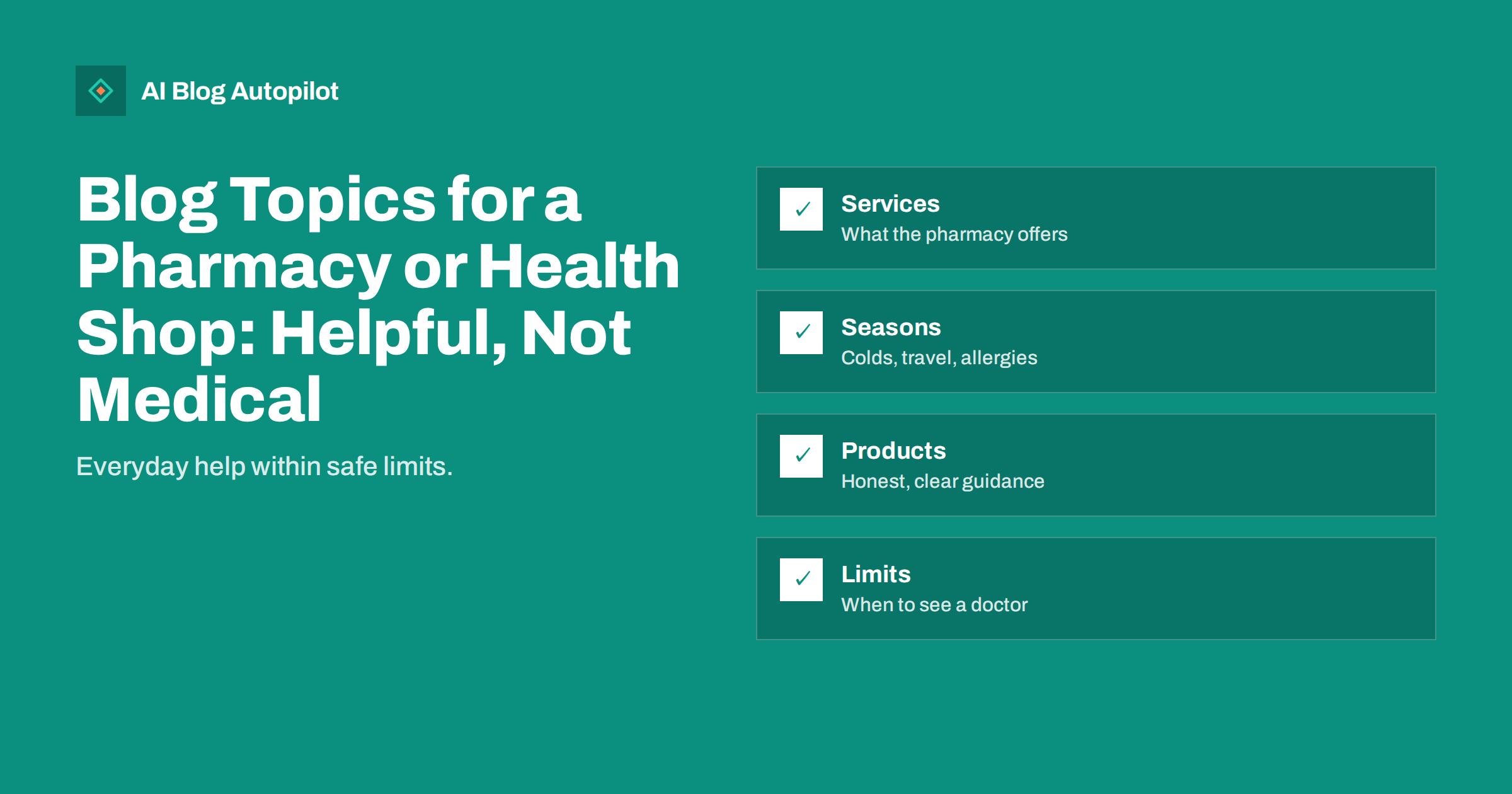
Many customers do not know what their pharmacy offers. Write a page for each service: prescription collection, repeat prescriptions, delivery, medicine reviews, vaccinations, blood pressure checks, minor ailment advice, health screening, travel health and any other service you provide. Describe who it is for, how to access it, what it costs, if anything, and how long it takes.
Give practical details: opening hours, a phone number, how to book, what to bring and how privacy is protected. Mention if there is a private consultation room, and how to ask for one. These details help nervous customers and can be the deciding factor in choosing you.
Keep the pages accurate and dated. Services and rules change, and a page that offers something you no longer provide causes frustration. The guide to blog strategy for a local business explains how to connect such pages to local searches.
Add topics for particular groups: parents of young children, people who work night shifts, runners, older people living alone, students and people travelling abroad. Each group has distinct questions, and a title that names them helps the right reader. Keep advice general, and invite personal questions at the shop, by phone or through your official channels.
Mention awareness days and campaigns from official health bodies, linking to their material. This helps readers find reliable information and shows that your pharmacy is part of the wider health system, not a lone seller.
Seasonal and everyday health topics
People look for help with predictable problems at predictable times: colds and flu in winter, hay fever in spring, sun protection in summer, travel health before holidays, back-to-school concerns in autumn. Write general guides ahead of each season on what readers can do, which symptoms are usually minor and when to ask for help.
Use cautious language and rely on recognised health authorities. Link to your national health service or public health body for details, and avoid contradicting official guidance. A short, clear guide that links to a reliable source is more valuable than a long one that repeats advice from memory.
Offer practical tips that do not involve medicines at all, such as rest, fluids, hygiene, sleep and checking the label of a product. Remind readers to ask a pharmacist before combining products, especially if they take other medicines or are pregnant, or if the patient is a child.
Write a guide to reading medicine labels and packaging: active ingredients, doses, warnings, expiry dates and storage instructions. This is educational, safe and valuable, and it helps readers avoid mistakes such as taking two products that contain the same ingredient. Present it as general information and invite questions at the counter.
Products: honest and careful
When you write about products, think about safety first. Explain what a type of product is for, how to read the label, the general rules for use and when to avoid it. Encourage readers to speak to a pharmacist for advice that fits their situation. Do not make claims that a product treats or cures a condition unless the licence and the rules allow it, and use the exact wording permitted.
For health foods, supplements and wellness products, be especially careful. Claims about benefits are tightly regulated in many countries, and a statement that sounds harmless may be forbidden. Check the rules for your region, quote evidence correctly and avoid anything that suggests a supplement replaces medical treatment.
Compare product types fairly: for example, the main kinds of pain relief or sun protection, and who each suits. Do not recommend one for everyone. The guide to writing on topics that affect health and money gives more advice on the extra care these subjects need.
Add a short list of questions readers can bring to the pharmacist, such as what is this for, how long should I take it, what should I avoid and what should I do if I miss a dose. Printable question lists help people who feel rushed or shy, and they turn an article into a better conversation at the counter.
Know when to say see a professional
Every health article should show when self-care is not enough. List the warning signs that mean a reader should contact a doctor or an emergency service, using wording from official sources. Put this information in a clear box or section, not buried in the last paragraph.
Be honest about what a pharmacy can and cannot do. A pharmacist can advise on many minor conditions and refer people on. They cannot diagnose serious illness from a description in an article. Say so, and invite readers to come in or call for personal advice.
Include a short disclaimer that the article is general information, but remember that it is not a substitute for care. The careful structure of the whole article does more to protect readers than a legal notice at the bottom. The guide to blog disclaimers and notices explains what they can and cannot do.
Seasonal safety is another source of topics: keeping medicines cool in summer heat, packing them for travel with the right documents, managing routines when clocks change or schedules are disrupted by holidays. These are practical points that many people never think about until they are in difficulty.
Medicines safety and everyday habits
Safety topics are valuable and low in risk. Write about storing medicines safely, especially away from children, disposing of old medicines through proper schemes, keeping a list of current medicines, reading labels, avoiding sharing prescriptions and the importance of finishing a course when told to. Keep the language plain and the steps short.
Write about the pharmacy experience: how to prepare for a medicine review, how to ask questions, how to manage repeat prescriptions and how to use a pill organiser. These pages help real people and show your team’s expertise.
Create guides for carers and for older relatives, such as how to help someone keep track of medicines. Use a respectful tone and clear headings, and offer printable lists. Always check that information matches current guidance.
Privacy, respect and sensitive subjects
Health subjects can be personal. Write respectfully about topics such as sexual health, mental health, long-term illness and ageing. Use clear, non-judgemental language, mention confidential services and make it easy to ask for a private conversation. Customers will remember a pharmacy that treated these subjects with dignity.
Never publish patient stories, photographs or details without explicit written consent, and generally avoid them. Remember that even indirect details can identify a person in a small community. Your professional duty of confidentiality applies online as well as at the counter.
Take care with comments and questions on the blog or social networks. Ask people not to share personal health details publicly, and move conversations to a private channel. Moderate carefully and remove posts that give medical advice that is wrong or unsafe.
Keep a log of which articles were reviewed, by whom and when, and which sources were used. If a regulator or a customer asks how a statement was checked, you will have an answer. A simple spreadsheet is enough, and the discipline of keeping it improves the quality of your writing.
When you find an error, correct it at once and note the change on the page. Health information that is quietly wrong damages trust more than an openly corrected mistake. Treat corrections as part of your duty of care.
Review process and sources
Set up a review process. Every health article should be read by a pharmacist or other qualified person before publication, with their name and the review date on the page. Plan to re-review articles at least once a year, and sooner when guidance changes.
List your sources at the end of the article, linking to official bodies. This helps readers, helps the reviewer and shows search engines that the content rests on reliable information. Avoid relying on commercial pages as sources for medical statements.
Check the advertising rules for pharmacies and health products in your country, which are often strict. If you are unsure whether a statement is allowed, ask your professional body or a regulatory adviser before publishing.
How AI Blog Autopilot helps
AI Blog Autopilot can write and publish articles on your chosen topics, with FAQ sections, tags and SEO meta, and you can switch on approval to read each article first. For health subjects, have a pharmacist review every article before it goes live. See the pricing page for plans.
Related reading
- Blog Topics for a Clinic
- Writing on Topics That Affect Health and Money
- Compliance Review for Blog Posts
The bottom line
Explain services, offer careful seasonal help, send readers to professionals when needed and have a pharmacist review every health statement.
FAQ
What should a pharmacy blog write about first?
The services you offer, seasonal guides based on official advice and medicine safety tips.
Can I recommend products?
Describe types of product and who they suit, avoid claims you cannot support and send readers to a pharmacist for personal advice.
Do I need a professional to review health articles?
Yes. A pharmacist or other qualified person should review each one and the date should be shown.
Can I share patient stories?
Generally no. Even with consent, be careful with details that could identify someone.
How often should health articles be updated?
Review them at least yearly and whenever official guidance changes.