ENEnglish
 LTLietuviškai
 DEDeutsch
 FRFrançais
 RUРусский
 ESEspañol
 PLPolski
 ITItaliano
 UKУкраїнська
 CSČeština
 PTPortuguês
 JA日本語
 LVLatviešu valoda
 ETEesti
 HUMagyar
 IDBahasa Indonesia
 TRTürkçe
 HIहिन्दी
 ELΕλληνικά
 ARالعربية
 THไทย
 VITiếng Việt
 RORomână
 MSBahasa Melayu
 BNবাংলা
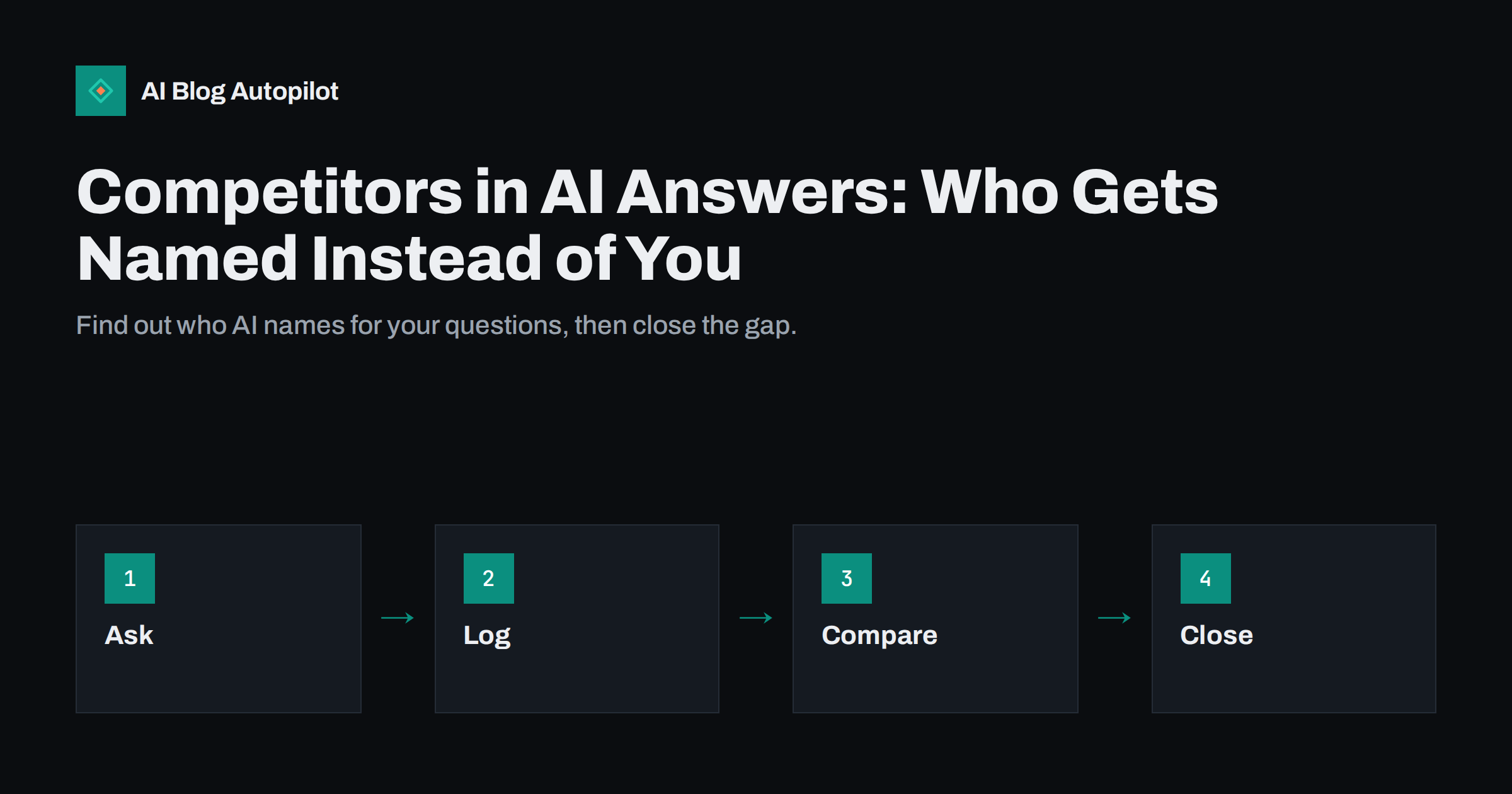
Short answer: to understand why competitors appear in AI answers instead of you, ask the same set of real customer questions on a regular schedule, record which businesses are named and which pages are cited, and compare those pages with yours. The gaps are usually clear: a missing page, a vague description, thin evidence or facts that differ between your pages. Fix those gaps with content that states plain facts, and repeat the test after a month.
When a potential customer asks an assistant for a recommendation, the answer often names only a few businesses. If your competitors are on the list and you are not, you lose a visit that you never knew existed. These visits do not show up as lost rankings in your usual reports, so many owners learn about the problem late.
This guide gives you a method that needs no special tools: a list of questions, a simple log and a monthly review. It does not promise that any business will be named, since answers change and depend on many factors outside your control. It does help you see where you stand and what to improve.
Why it is worth looking at competitors
The question “who is named instead of me” gives you more than a ranking. Each competitor that appears tells you something about what the system considers a good source. You can see which of their pages are cited, how those pages are written and what kind of evidence they offer.
It also shows you the real shape of your market. The businesses named by an assistant may not be the ones you consider your main rivals. A directory, a review site, a forum thread or a small specialist can take the place you expected to occupy. Knowing this helps you decide whether to compete with them or to appear on their pages.
The aim is not to copy anyone. The guide on competitor content analysis without copying anyone explains how to learn from other publishers while keeping your own voice and facts.
Build a list of real questions
Start with the questions your customers ask, in their own words. Take them from emails, calls, chat messages, reviews and the queries in your Search Console report. A good list has 20 to 40 questions that cover the main stages: general questions about the topic, comparisons between options, questions about price and questions that include a place name if you serve a local area.
Write each question the way a person would type or say it. “Which accountant in Leeds is good for small shops?” is closer to real use than “best accountant Leeds”. Add a few follow-up questions, since people often continue a conversation with a narrower request.
Group the questions by theme and give each a short label. This makes the log easier to read later and lets you see which themes you win and which you lose. The article on query fan-out in AI search shows how one question turns into several, which helps you add the follow-ups.
Test and record the answers
Ask each question in two or three different assistants, and use a fresh conversation each time so that earlier answers do not influence the next one. Do the test on the same day of the month, and keep the wording the same, so you can compare results over time.
For each answer, record the date, the assistant, the businesses named in order and the pages cited, if any. Add a column for whether you were named, and a column for the tone: neutral, positive or with a warning. A spreadsheet with one row per question and assistant is enough.
Remember that answers vary. The same question asked twice can give different lists, so look for patterns across the whole set and not for single results. If a competitor appears in most answers for a theme, that is a signal. If a name appears once, it is probably noise. The guide on checking whether AI assistants mention your blog describes a simple testing routine.
Read what the named pages say
When an answer cites a page, open it and read it as an editor. What does the page claim? Does it state facts clearly, such as services, areas, prices or years of experience? Is there a short definition at the top, a table of options or a list of questions and answers? How recent is it?
Look at the supporting signals around the page. Does the business have an about page, a contact page, author names, reviews or mentions on other sites? Assistants tend to prefer sources that are clear and consistent, and that other sources confirm. The article on why AI answers recommend some businesses covers these signals.
Note also the pages that are not from your competitors. If review platforms, forums or news sites supply the answers, it may be worth earning a presence there, with honest reviews and clear profiles, rather than only publishing on your own site.
Compare with your own pages
For every theme where you are missing, find the page on your site that should answer the question. Often there is no such page. Sometimes it exists but hides the answer in the fifth paragraph or uses vague wording. Sometimes two pages on your site give different facts, which makes you a risky source.
Make a short list of gaps with a type for each: missing page, weak answer, missing evidence, conflicting facts, no presence elsewhere. This list is your plan. It is better to fix five clear gaps than to write fifty general articles.
Check the basic facts too. Business name, address, opening hours, service areas and prices should be the same on your site and on your profiles. The guide on how AI search picks which pages to cite explains why clarity and consistency matter.
Local and niche competitors
For a local business, the competitors named in answers are often a handful of nearby firms, plus directories and review pages that list them. Test questions with your town or district name, and also with phrases such as “near me” or “open now”, which assistants handle differently. Record the place in your log, since an answer for one district may differ from an answer for the next.
The same applies to niche businesses that serve a narrow group of buyers. A specialist supplier of one product may be named because it has a detailed page that explains exactly that product, while a larger generalist is skipped. If you are the specialist, this is good news: depth on a narrow subject is something you can build. The guide on how a local business gets mentioned in AI answers covers the local side in detail.
Do not forget your own staff and partners. A freelancer, an agent or a reseller who works with you may have profiles and pages of their own that mention your brand in different words. Ask them to use your correct name and description, so that the picture an assistant builds is the same wherever it looks.
Fix the gaps with useful content
Write pages that answer the question first and explain afterwards. Start with a direct statement, then give detail, examples and limits. If a competitor wins on a topic where you are as good, you may simply need a better page. If they win because they offer something you do not, be honest about it, and do not claim a service you cannot provide.
Add evidence that is real and easy to verify: case descriptions with permission, dates, numbers from your own work, and clear author names. Avoid superlatives that you cannot support. Statements such as “the best” or “number one” without proof add nothing for readers or assistants.
Do not write attack pages about competitors. A fair comparison article can help readers choose, but a page that exists only to criticise looks weak and may cause legal trouble. Keep facts accurate, name competitors only when it helps the reader and avoid claims you cannot prove.
Watch for wrong or outdated statements
While you read the answers, check the facts about your own business. An assistant may repeat an old address, a closed service or a price that changed years ago. These errors often come from old pages on other sites, from directories that were never updated or from your own outdated content.
Make a list of every wrong statement, with the source if one is cited. Fix the source where you control it, update or remove old pages, and publish a clear current page that states the right facts. The article on what to do when AI answers get your business wrong describes the steps in order.
Do not argue with an assistant in the chat itself. Corrections made inside one conversation do not change the answers that other people receive. Improve the pages that the answers are built from, and test again in the next round.
Repeat and review
Run the same test every month for the first quarter, then every quarter. Compare each round with the last one: did you appear in more answers, were the facts correct, did new competitors appear? Note the changes you made between rounds, so you can link cause and effect, at least roughly.
Expect slow progress. Assistants update at different speeds, and some rely on stored knowledge that changes only now and then. Do not change strategy after one round. Look for a trend across several months, and keep fixing the gaps that your log reveals.
Share the log with whoever handles sales and customer service. They often know which competitors customers mention, and they can add questions you have not thought of. They can also tell you when a customer says that an assistant recommended someone else, which is the most direct feedback you can get.
How AI Blog Autopilot helps
AI Blog Autopilot writes articles that start with a short, direct answer and include FAQ sections, tags and SEO meta, which suits the kind of page assistants can quote. Use your gap list as the topic list, and see the pricing page for plans and monthly credits.
Related reading
- Checking Whether AI Assistants Mention Your Blog
- Query Fan-Out: Covering the Questions AI Search Asks Next
- Competitor Content Analysis Without Copying Anyone
The bottom line
Ask real questions on a schedule, log who is named and why, and compare their pages with yours. Fix the gaps with clear, honest content and repeat the test.
الأسئلة الشائعة
Can I make AI assistants name my business?
No one can guarantee it. You can make your pages clearer, more consistent and better supported, which improves the chances over time.
How many questions should I test?
A list of 20 to 40 real customer questions is enough for most small businesses. Keep the wording the same each round.
Why do answers differ between assistants?
Each one uses different sources and methods, and answers can change even between two tries of the same question. Look for patterns.
Should I write pages that criticise competitors?
No. Fair comparisons help readers, but attack pages look weak and can cause legal problems. Keep to accurate facts.
How often should I repeat the test?
Monthly for the first quarter, then quarterly. Compare each round with the previous one and note your changes.