ENEnglish
 LTLietuviškai
 DEDeutsch
 FRFrançais
 RUРусский
 ESEspañol
 PLPolski
 ITItaliano
 UKУкраїнська
 CSČeština
 PTPortuguês
 JA日本語
 LVLatviešu valoda
 ETEesti
 HUMagyar
 IDBahasa Indonesia
 TRTürkçe
 HIहिन्दी
 ELΕλληνικά
 ARالعربية
 THไทย
 VITiếng Việt
 RORomână
 MSBahasa Melayu
 BNবাংলা
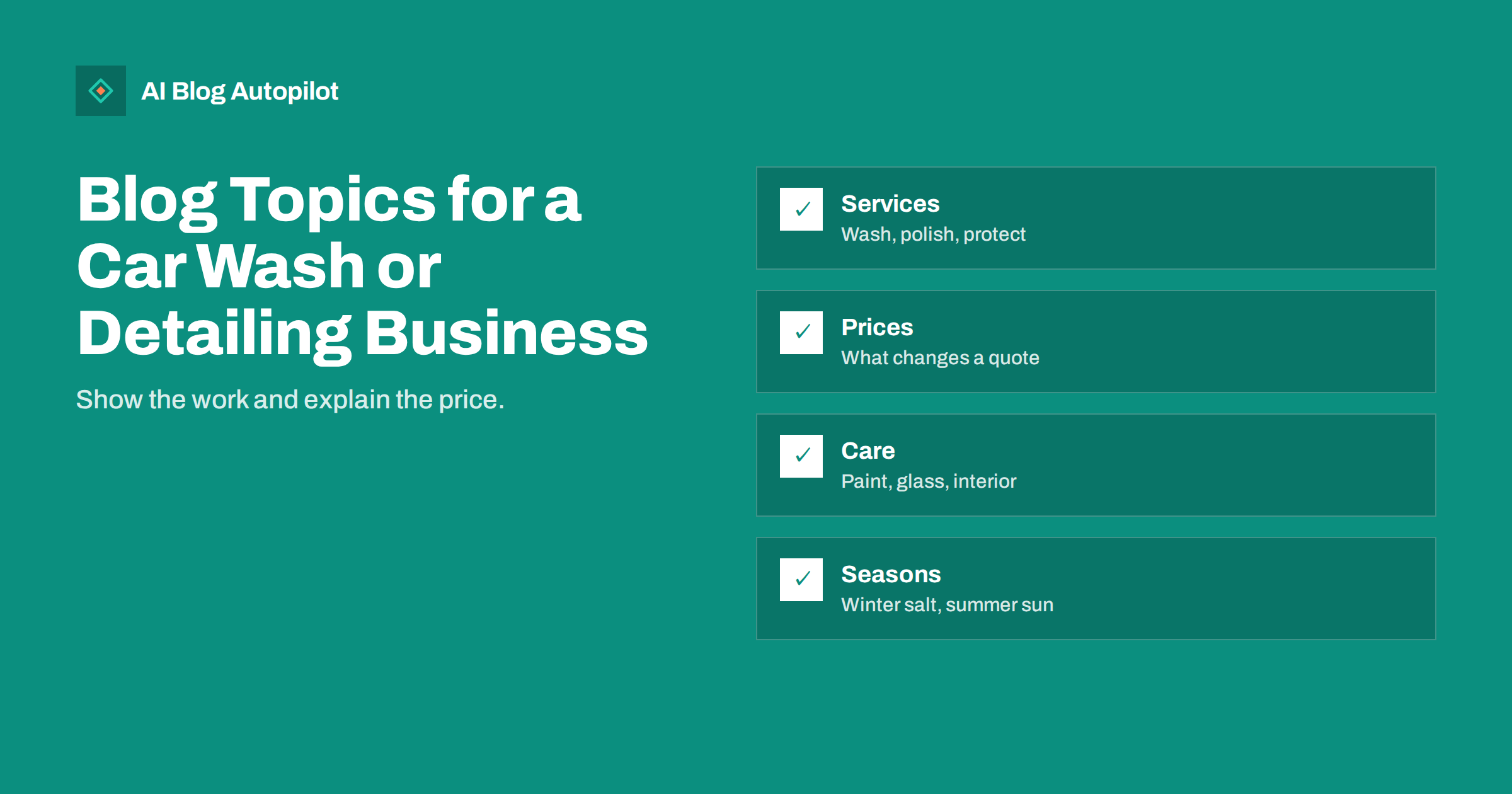
Short answer: a car wash or detailing business should blog about what customers want to know before they book: what each service includes, how long it takes, what it costs and why, how to care for paint, glass and interiors between visits and what to do in each season. Use real before and after photographs, honest price ranges and clear explanations of what a service can and cannot fix.
Car care is a field where customers are often unsure what they are paying for. The words wash, valet, detail, polish, wax, sealant and ceramic coating mean different things to different businesses, and prices vary widely. A blog that explains the options in plain language, without hype, makes it easier for owners to choose and helps you attract customers who value the work.
This guide lists topic groups for a hand car wash, an automatic wash, a mobile valeting service or a detailing studio, explains how to turn conversations on site into pages and describes how to keep claims honest and content current. It also covers local search, since most customers choose a business near home or work.
Write about preparing for a booking. Tell customers to remove personal items, child seats and rubbish, to note existing damage and to tell you about problem areas. Explain that you will inspect the car together at drop-off and record its condition. A calm checklist reduces misunderstandings and shows professionalism before any work begins.
Add a page on what cleaning cannot fix. Deep scratches, stone chips, faded paint, torn upholstery and old stains may only improve, not disappear. Say so clearly, and explain what other repairs exist. Customers value a business that sets expectations honestly before the work, not after.
Explain your services in plain words
Write one page for each main service and list exactly what is included: exterior wash, wheels and arches, interior vacuum, windows, dashboard, door shuts, polish, protection and so on. State how long it takes, what condition the car should be in and what is not included. Clear lists prevent disputes and let readers compare packages fairly.
Explain the difference between a wash, a valet and a detail. A short page that defines each term, with photographs, helps readers understand why prices differ. Say who each service suits: a weekly wash for a commuter, a deep clean before a sale, a paint correction for a cherished car.
Describe protection options honestly. Waxes, sealants and coatings last for different periods and need different care. Give realistic lifespans, say that they depend on weather, washing habits and storage and avoid claims that a coating makes paint permanent or scratch-proof. Customers appreciate honesty, and it protects you from complaints.
Add pages for vehicle types: small cars, large SUVs, vans, motorbikes, classic cars and electric vehicles. Explain any differences in price and method, such as care around charging ports or delicate paint. Readers search for their own vehicle, and a page that addresses it directly earns attention.
Be open about prices and what changes them
Price is the first question. Publish a range for each service and vehicle size, with the date it was checked, and explain what moves the price: size, condition, pet hair, heavy soiling, tar, sap, stains and extra time. Say how you quote for unusual jobs, and whether you check the car before confirming. The guide on writing honest articles about what things cost explains how to structure it.
Explain deposits, cancellations and late arrivals. If you take bookings, say how far ahead to book, what happens if the weather turns or a customer is late and how refunds work. Clear terms make for smoother days and fewer arguments.
Describe subscriptions or loyalty plans if you offer them. Say what is included, how often, how to pause and cancel and how fair-use limits work. Avoid vague promises of unlimited washes unless the terms are clearly stated, and follow the consumer rules of your country on recurring payments.
Show value without pressure. Explain what customers receive for a higher package, using examples, and say when a lower package is enough. Customers who feel that you advise them honestly return for years and recommend you to neighbours and colleagues.
Teach care between visits
Care guides are among the most shared content in this field. Explain how to wash a car safely at home, how to avoid swirl marks, how to dry without scratching, how to clean wheels and how to look after glass. Add a short list of products and tools, and warn against common mistakes such as washing in direct sun or using a dirty sponge.
Write about the interior: cleaning leather and fabric, removing smells, dealing with child seats and pet hair, caring for touchscreens and keeping the dashboard from fading. Many customers feel unsure about what is safe for each material, and a clear guide builds trust and shows your expertise.
Cover problems customers meet: bird droppings, tree sap, tar, water spots, brake dust, mould inside the car after rain and the smell after a spill. Explain what to do immediately, what to avoid and when to bring the car to a professional. Practical advice, given calmly, brings loyal readers.
Explain how often to wash and why. A few sentences on the effect of salt, dirt and sun on paint, with a simple schedule for different conditions, give readers a reason to book regular visits. The guide on planning seasonal content without scrambling every year shows how to time such pages.
Follow the seasons and the weather
Car care follows the year. In winter, write about salt, grit, frost and wet interiors, and why an underbody rinse matters. In spring, cover pollen, rain marks and a fresh start after winter. In summer, focus on sun, insects, heat inside the car and faded plastics. In autumn, explain leaves, damp and preparing for colder months.
Publish these pages before the need arises, and update them each year rather than creating new ones. This builds one strong page per season and avoids a long list of near duplicates. Add a note with the date of the last review at the top of each page.
Use local knowledge. Coastal salt, hard water, dusty roads, industrial fallout or heavy pollen each call for different advice. A local business can speak with more authority than a national brand, and readers recognise their own streets and conditions in your writing.
Plan around events: a bank holiday weekend, the start of the school year, the sale season for second-hand cars or a local motor show. A short guide with a booking link, timed a few weeks before, can fill your diary.
Share what you learn on the job. Notes on the most common mistakes owners make, the products that damage paint, the effect of automatic washes on older cars or the surprising places where dirt hides make interesting, original posts. They give readers and journalists something they cannot find on every other site.
Respect privacy. A car can reveal a great deal about its owner, so do not publish anything that identifies a person or a place without consent. Keep photographs of customers’ vehicles general, and ask before using them. Trust, once lost, is hard to regain in a local business.
Show the work and the people
Photographs sell the service. Show real before and after pictures taken in the same light and from the same angle, and add a few lines on what was done and how long it took. Do not retouch images or exaggerate, and avoid showing registration plates or personal items. Ask for permission before using a customer’s car in an article.
Introduce the team. Short profiles with experience, training and specialities, along with real photographs, show customers who will care for their car. Mention training in paint correction, coatings or interior cleaning, and any certifications you hold.
Describe the products and methods you use. Explain why you choose certain chemicals, how you protect the environment with water recycling or approved drainage and how you avoid damaging paint. Be accurate about environmental claims and avoid vague words such as eco-friendly unless you can explain what they mean.
Write about safety and insurance. Say that you are insured, what happens if a car is damaged and how to report concerns. A short, calm page helps customers feel comfortable handing over the keys of an expensive possession.
Test the whole path on a phone. Search for your service, open your page, find the price, check the hours and try to book. Every extra tap loses some customers. Fix what slows people down, and ask a friend who has never visited the site to do the same and tell you where they hesitate.
Be easy to find and to book
Most searches are local and often urgent. Create a page with your address, directions, opening hours, parking, payment options and a map, and keep it identical to your business profile. If you travel to customers, list the areas and typical times. Avoid copying one page for dozens of towns that you do not serve.
Make booking simple. Offer a phone number, a form and, if possible, an online calendar. Say how quickly you reply and what to prepare. For mobile services, say what you need on site, such as access to water and power, and what happens in rain.
Write a short page for businesses: fleets, taxi firms, dealers and hire companies. Explain regular schedules, invoicing, volume prices and quality checks. Business customers are valuable, and a page that shows that you understand their needs is a strong starting point. The guide on a blog for a garage or dealership offers related ideas.
Review the blog each season. Update prices, replace photographs, remove outdated offers and add the questions customers asked that month. Count bookings by page, ask new customers how they found you and write more of what works.
How AI Blog Autopilot helps
AI Blog Autopilot can write and publish articles on your chosen topics, with FAQ sections, tags and SEO meta, and share them to your social networks. Give it your services and your area, and have an experienced member of the team check every price, method and claim before each article goes live. See the pricing page for plans and monthly credits.
Related reading
- A Blog for a Garage or Car Dealership
- Blog Strategy for a Local Business
- Planning Seasonal Content Without Scrambling Every Year
The bottom line
Explain each service plainly, publish honest price ranges, teach care between visits, follow the seasons and make booking easy.
الأسئلة الشائعة
What should a car wash blog about first?
Start with what each service includes, how long it takes, price ranges and simple care tips between visits.
Should I publish prices?
Yes, as ranges with a date, and explain what changes the price, such as size, condition and extra time.
Can I claim that a coating lasts for years?
Give realistic lifespans, explain what they depend on and avoid claims such as permanent or scratch-proof.
Can I show customers’ cars in photos?
With permission, and without registration plates or personal items. Photos of your own demonstration cars are safer.
How do I handle seasonal topics?
Publish before each season and update the same pages every year, with the review date shown at the top.