ENEnglish
 LTLietuviškai
 DEDeutsch
 FRFrançais
 RUРусский
 ESEspañol
 PLPolski
 ITItaliano
 UKУкраїнська
 CSČeština
 PTPortuguês
 JA日本語
 LVLatviešu valoda
 ETEesti
 HUMagyar
 IDBahasa Indonesia
 TRTürkçe
 HIहिन्दी
 ELΕλληνικά
 ARالعربية
 THไทย
 VITiếng Việt
 RORomână
 MSBahasa Melayu
 BNবাংলা
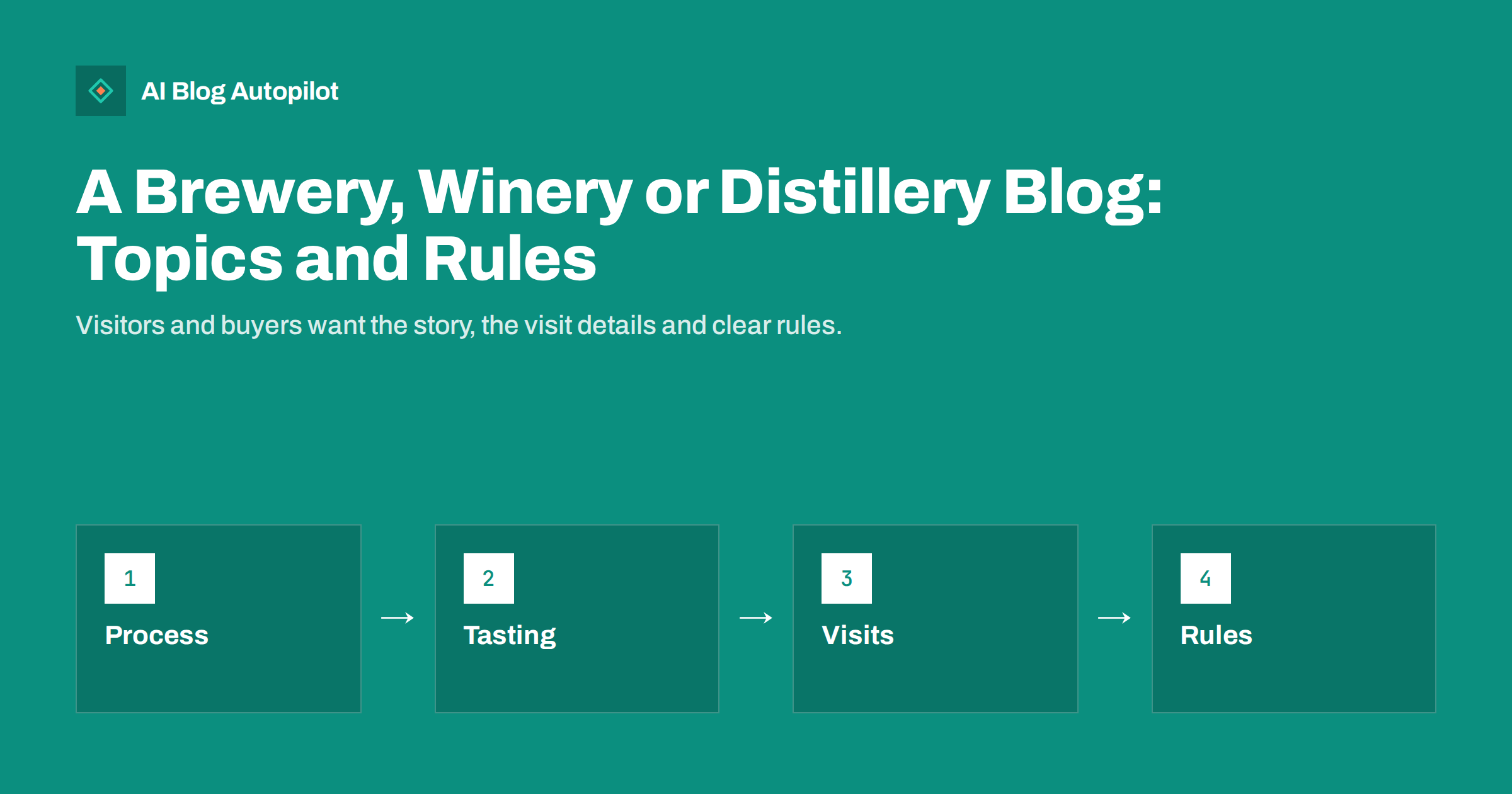
Short answer: a brewery, winery or distillery blog works best when it explains how the drink is made, how to taste and serve it, and how to visit, and when it respects the age and advertising rules that apply to alcohol in each country. Publish process stories, tasting and food notes, seasonal release pages, event and tour information, and keep every claim modest and true.
People who buy craft drinks buy a story as much as a product, and they usually research before they order, travel or book a tour. A blog that explains the work behind each bottle and answers the practical questions about visiting gives search engines and readers something that a shop page cannot. Because alcohol is regulated, it also gives you a place to state your policies clearly.
Tell the process honestly
The craft itself is your strongest material. Explain how the grain, grapes or botanicals are chosen, what happens during fermentation, ageing or distilling, and why each step takes the time it does. Use plain words and define technical terms the first time they appear. Readers enjoy learning, but they leave when an article reads like a brochure.
Use real photographs of your own site, tanks, barrels and people, with names where staff agree. Describe what changes from year to year, such as a poor harvest or a new yeast, because variation is part of the appeal of a craft product and is rarely discussed by large producers. If you made a mistake and learned from it, a short honest account earns more trust than a polished one.
Include the people. Introduce the brewer, winemaker or distiller, explain how they came to the craft and what they enjoy most about the work. A short profile with a good photograph makes a business feel real, and it gives readers a reason to remember the name when they choose a gift or plan a trip. Our guide to the about page a business blog needs explains how to describe a team without clichés.
Write tasting notes that help
A tasting note should help someone decide whether they will enjoy the drink. Describe aroma, body, sweetness, bitterness or tannin in everyday words, compare it with something familiar and say who is likely to like it and who may not. Give the strength and the serving temperature, and say how long a bottle keeps once opened.
Add one page per product that stays at a stable address, and update it when a new batch or vintage is released. Mention the batch or year clearly, so that readers who bought an earlier one understand any difference. Our guide to writing a product comparison explains how to compare your own products fairly, for example a lighter and a stronger version.
Be honest about what a note cannot tell. Taste is personal, and a description that promises that everyone will love a drink is not believable. Say what a drink is not: not sweet, not light, not easy to drink quickly. Readers who know what to expect enjoy the bottle more and are more likely to return, and honesty about the less popular styles builds trust for the popular ones.
Pair drinks with food and occasions
Pairing pages are popular and easy to make useful. Suggest dishes that work with each drink and explain why, using flavours rather than rules. Include simple recipes or cocktail serves if you can test them yourself, with exact quantities, and say clearly when a serve is best for a party and when for a quiet evening.
Think about occasions: a summer gathering, a winter dinner, a gift for someone who enjoys trying new things. These pages return every year, so plan them with the method in our article on seasonal content planning. Refresh them each season instead of writing new ones, and include delivery cut-off dates for gifts.
Consider the full journey of a visitor. Explain where to eat or stay nearby, how long a typical visit takes, what to wear in a cellar or a barn, and how a designated driver or non-drinker is welcomed, for example with a soft drink tasting or a tour with no alcohol. A page that treats every guest well is shared more often and reviewed more kindly.
Keep a separate page for group bookings, private tastings and corporate events, with minimum numbers, prices, food options and deposit rules. These enquiries are valuable, and a clear page lets the visitor decide before writing, which saves your team from long email threads that lead nowhere.
Make visiting easy
Many visitors plan a trip around a producer, and they decide quickly. Publish a visit page with opening hours, tour times and prices, how to book, accessibility, parking, whether children and dogs are welcome and how to reach the site by public transport. Put the essentials at the top and update them whenever they change, including for holidays and harvest or bottling periods.
Use the same details on your business profile, your booking system and the blog. If a tour is cancelled in bad weather or at short notice, say how guests will be informed and what refund applies. Clear information reduces telephone calls and complaints and helps people who are travelling to plan a day around you. See reusing blog posts locally for ways to share new pages on your profile.
Announce releases and events with care
Release days, open weekends, tastings and festivals are good reasons to publish. Write one page per event with the date, place, price, what is included, how to book and what happens if it sells out. After the event, add a short recap with photographs rather than deleting the page, and point readers to the next date, as our guide on event recaps as blog posts describes.
For limited releases, explain how many bottles exist and how they will be sold. Avoid manufactured urgency and say plainly when something has sold out. A calm, accurate page serves loyal customers better than hype, and it protects you from complaints about pressure to buy.
Social sharing needs the same care as the blog. Many platforms have their own rules about alcohol content, including restricted audiences and limits on promotion, and a post that is fine on your site can be refused or removed elsewhere. Read each platform’s policy before you schedule posts, and keep a note of what you may and may not publish in each country so that everyone on the team follows the same rules.
Respect the age and advertising rules
Alcohol marketing is regulated in most countries, and the rules differ widely. They may cover who the content can be aimed at, what health or lifestyle claims may be made, how strength must be shown and whether certain images or words are allowed. Learn the rules for each market where you sell, and ask the relevant authority or an adviser when you are unsure, because a blog is advertising in many legal systems.
Include a clear notice that the content is for adults of legal drinking age, and follow the age-check rules of any shop or booking form you use. Never suggest that the drink improves performance, health or success, and avoid language that encourages heavy drinking. A short responsible-drinking page, with local helpline links where appropriate, is a sensible addition. This is general guidance, not legal advice.
Answer the questions that customers ask about ingredients and methods before they ask them. Do you filter or fine, is the product suitable for vegetarians or vegans, how is it stored in transit and what should a buyer do if a bottle arrives damaged. A short question-and-answer page on these points saves time, and it can be marked up as an FAQ so that search engines and AI assistants can read it.
Build trust with transparency
Craft buyers value honest information: ingredients, allergens where relevant, where the raw materials come from, whether you grow or buy them, and how you use any contract facilities. Publish this once on a stable page and link to it from product pages. If you claim a drink is local, organic or traditional, be sure the claim is accurate and can be shown, and keep any certificates on file.
Keep a simple corrections routine. If a date, price or description is wrong, fix it and say so, in line with our advice on how to handle corrections on a blog. Customers forgive mistakes that are acknowledged quickly and rarely forgive silence.
Keep a list of evergreen topics for the quiet months, such as how to store and open a bottle, how to read a label, how to host a tasting at home and how to choose a gift. These pages are searched all year, they do not expire and they are easy to refresh. They also give you something useful to share when there is no new release to announce.
Keep the schedule realistic
Producers are busiest at harvest, bottling and release times, which are also good moments to publish. Plan the year ahead and write posts before the rush. Aim for one or two useful pages a month and use the quiet season to improve the evergreen guides on visiting, tasting and serving.
Check your pages twice a year. Update hours, prices, product names and links, remove expired events and review every claim. A small, accurate blog supports sales better than a large one that no longer matches the cellar or the shop.
How AI Blog Autopilot helps
AI Blog Autopilot writes full SEO articles for your WordPress blog from the topics, keywords, audience and tone you set, with FAQ sections, tags and SEO meta included, and it shares each one to your social networks. For a producer busy with harvest or bottling, visit guides and tasting pages keep appearing while you work. Approval mode lets you read each article first, which matters for age notices, dates and claims. See the pricing page for plans.
Related reading
- Webinar and Event Recaps as Blog Posts That Earn Search Traffic
- Blog Strategy for a Local Business
- Planning Seasonal Content Without Scrambling Every Year
The bottom line
Publish honest process stories, useful tasting and food pages, clear visit information and release notes, and follow the alcohol advertising and age rules of each market, keeping every claim modest and accurate.
الأسئلة الشائعة
What should a brewery or winery blog about first?
Start with a visit page, a page for each main product and a process story. They answer the questions buyers and visitors ask first.
Are alcohol blogs regulated?
In many countries, yes. Advertising rules can cover audience, claims and imagery, so check the rules for each market and ask an adviser if unsure.
How do I write a good tasting note?
Use everyday words, compare with familiar flavours, give strength and serving advice and say who may or may not enjoy it.
Should I keep old release pages?
Yes, mark them as sold out or finished and link to the current release, so the page keeps its links and history.
How often should a producer publish?
One or two useful posts a month is enough. Plan around harvest, bottling and release dates.