ENEnglish
 LTLietuviškai
 DEDeutsch
 FRFrançais
 RUРусский
 ESEspañol
 PLPolski
 ITItaliano
 UKУкраїнська
 CSČeština
 PTPortuguês
 JA日本語
 LVLatviešu valoda
 ETEesti
 HUMagyar
 IDBahasa Indonesia
 TRTürkçe
 HIहिन्दी
 ELΕλληνικά
 ARالعربية
 THไทย
 VITiếng Việt
 RORomână
 MSBahasa Melayu
 BNবাংলা
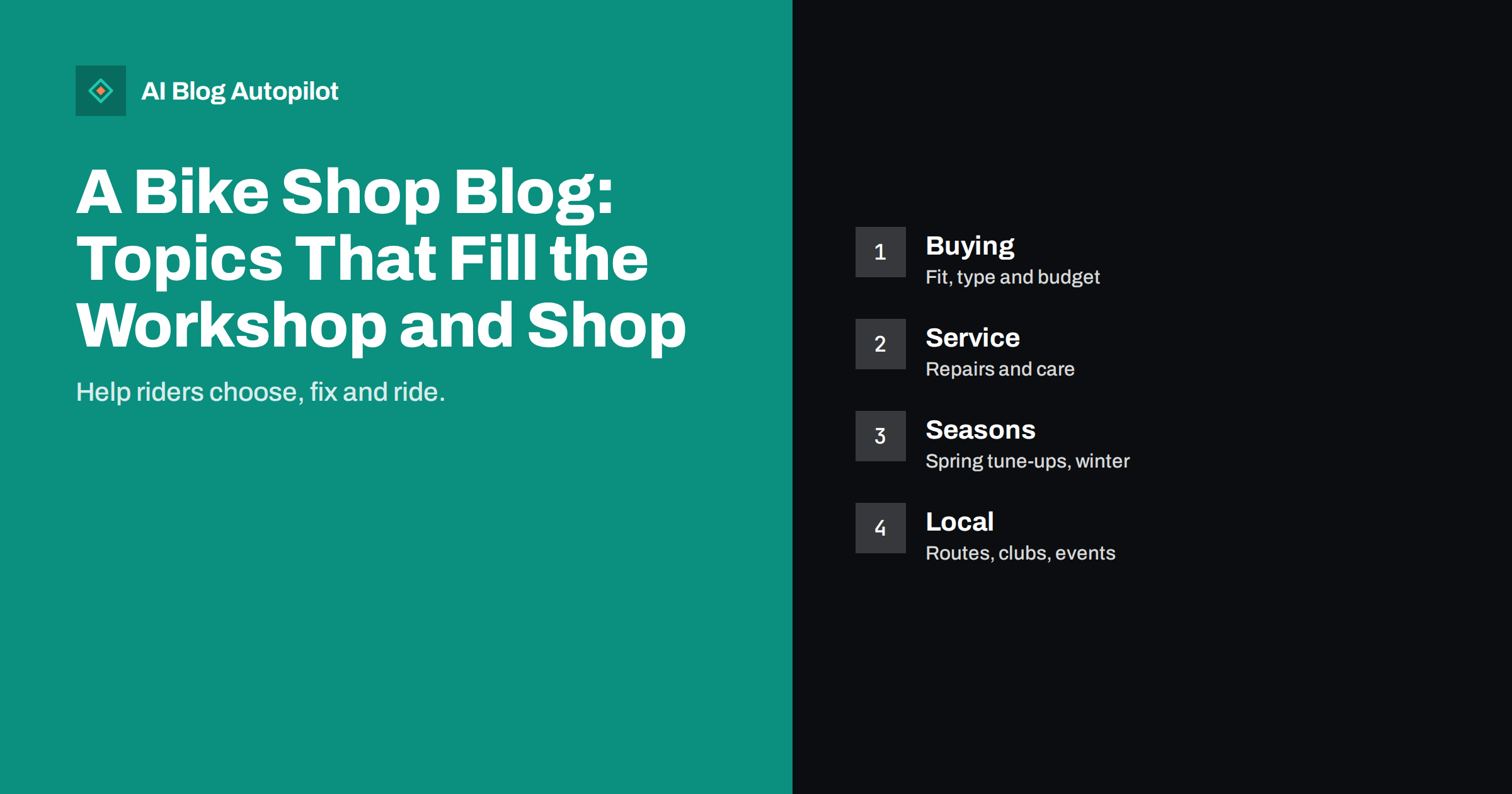
Short answer: a bike shop should blog about what riders ask at the counter: which type of bike suits them, how to get the right size and fit, what a service includes and costs, how to fix small problems, what to carry and wear, where to ride nearby and how to prepare for each season. Write like a friendly mechanic, use real photographs of your own workshop and stock, be honest about prices and limits, and invite readers to visit, book or ask.
A good bike shop is a place where people ask questions without feeling silly. The blog can extend that welcome to the web. Many riders search for answers late in the evening, before they commit to a purchase or after something has started to rattle. A shop that has already explained the topic in plain words is found first and remembered later, when the rider needs a service, a part or a new bike.
This guide lists topic groups for an independent shop, explains how to plan the year around the riding season and shows how to write about prices, brands and repairs without sounding like a catalogue or promising what you cannot guarantee.
Help people choose the right bike
Buying is the biggest question and the one with most searches. Write guides for each rider type: commuter, family, leisure rider, gravel explorer, mountain biker, road rider, cargo and e-bike users. For each, explain what to look for, what to ignore, which features are worth paying for and how much a sensible first budget might be in broad terms.
Explain fit as a topic of its own. Frame size, saddle height, reach and handlebar position decide whether a bike is comfortable, and a short page with photos showing how you check them helps readers understand why a visit is worth it. Say that measurements differ by brand and that a test ride is the only real check.
Write honest comparison pages, such as the difference between a hybrid and a gravel bike, or between hub and mid-drive motors on e-bikes. Name the limits of your own range, and say when another type of shop would serve a rider better. The structure in how to write a product comparison keeps such pages balanced and useful.
Write about e-bikes with extra care, because the questions are different. Riders ask about range, battery life, charging, weight, security and what happens when a battery ages. Give general explanations, say that figures depend on use, terrain and rider weight, and tell readers to check the manufacturer’s documentation. If you service e-bikes, say which brands and systems you are trained for, and which you cannot work on.
Add a page for families: how to choose a child’s first bike, when to move from a balance bike to pedals, how to adjust a bike as a child grows, and what to look for in a second-hand bike. Parents search for this in large numbers, and an honest page that explains when a cheaper option is enough builds long-term loyalty.
Explain servicing, repairs and what they cost
Workshop questions are a gift for a blog. What does a basic service include? How often should a bike be serviced? What is the difference between a service and an overhaul? How long will it take? How do I know if a part is worn? Write a page for each, and show the checklist you really follow.
Be open about prices. List the typical range for common jobs, or at least explain what affects them: the type of bike, the condition of components, parts needed and the time required. Say how you handle extra work found during a service, and that you will ask before going beyond the quote. The guide to writing honest articles about what things cost offers a structure that suits repair pages.
Describe turnaround times and booking. Many shops are busy in spring, and a clear statement of waiting times and how to book in advance saves calls. If you offer collection, a loan bike or express service, explain how it works and what it costs.
Consider a short glossary of workshop words. Cassette, derailleur, headset, bottom bracket and thru-axle are routine for you and confusing for many customers. A page that explains them in one sentence each, with a photograph of the part, helps readers describe a problem on the phone and makes the shop feel approachable. Link to the glossary from repair pages, and add new words when customers ask.
Teach small fixes and care
Riders love simple, safe how-to pages: fixing a puncture, adjusting a saddle, cleaning and lubricating a chain, checking tyre pressure, adjusting brake levers and recognising when brakes need replacing. Use photographs or short video, and write numbered steps with the tools listed at the top. The pattern in how to write a how-to article works well, and short clips can be embedded as described in video in blog posts.
Include a clear line between what a rider can do and what should be left to a workshop. Brakes, steering parts, carbon components and electrical systems on e-bikes carry real safety risks. Say that the guide is general, that products differ and that the manufacturer’s instructions come first. Never tell readers to ignore a warning sign to save money.
Care pages help the shop too. A winter storage checklist, a post-rain cleaning routine or advice on how to wash an e-bike without damaging it keep customers riding and bring them back for the right reasons.
Plan a few evergreen guides that do not depend on the season, such as how to choose a lock, how to carry children or cargo safely, how to cycle to work in ordinary clothes and how to pack for a first multi-day tour. These pages keep attracting readers all year and can be refreshed quietly when products or rules change. Pair each guide with a clear invitation to come in and try the equipment, since many people want to touch and test before they buy.
Follow the seasons and the calendar
Cycling is seasonal. Plan the year in advance: spring tune-up and getting back on the bike, summer holiday preparation and touring, autumn lights and visibility, winter tyres, mudguards and storage. Publish each topic a few weeks before the demand rises, and update the same page each year instead of creating new ones.
Add event-based pages. Local rides, charity events, school cycling weeks, bike-to-work days and sales periods can be announced and followed up. The advice in event announcement posts explains what to include so that a page remains useful after the date. Keep dates, times and meeting points accurate, and mark cancelled events clearly.
Use the calendar to plan stock stories as well. When a new batch of bikes or accessories arrives, write a short post with real photos and the facts: sizes available, who it suits, price and how to reserve. Avoid breathless language, and keep the text accurate when stock changes.
Be local and part of the cycling community
Your strongest advantage over online sellers is place. Write about routes with distance, surface, difficulty, café stops and places to repair a puncture. Ask local riders for suggestions and credit them if they agree. Describe cycle paths, bike parking, theft prevention advice and the best times to avoid traffic.
Write about the community: clubs, group rides, children’s classes, charity events and local campaigns. The ideas in a sports club blog and a fitness studio blog overlap with some of these topics, and linking to partners where it truly helps readers is good practice. Always ask permission before publishing photographs of people, especially children.
Keep your business details consistent: address, opening hours, phone number, booking link and what you do and do not repair. The guide on blog strategy for a local business explains how to match the blog with your local profile and how to measure which pages bring visits and calls.
Think about accessibility and inclusion. Many people ride adapted bikes, trikes, cargo bikes or tandems, and few shops write about them. If you have experience, a guide explaining what is available, how to try it and what support you can offer fills a real gap. Be careful with medical claims, and invite readers to talk to a healthcare professional where it matters.
Keep customer stories honest. A rider who commuted for the first time, a family that bought a cargo bike or a club that renewed its fleet makes a good short feature, but only with written consent, accurate details and no pressure to say more than they wish. Avoid invented testimonials and unverifiable numbers.
Write about safety, theft and insurance with care
Safety pages draw many readers. Explain helmet fit, lights, visibility, safe locks and how to register a bike so that it can be traced. Avoid medical or legal claims; point to official sources for road rules, which differ by country and change from time to time. Date each page and review it each year.
Theft is a common worry. Describe how to choose and use locks, where to park and how to record the frame number and a photograph for insurers. Be clear that no lock is unbreakable, and avoid claiming that a product will prevent theft. If you sell locks or insurance, say so openly, and keep recommendations honest.
Finally, add a short note on returns, warranty and what your guarantee covers, using the same terms as your shop policy. Readers value clarity about what they can expect if something goes wrong, and the same text can be reused in several pages if you keep a single reference version.
How AI Blog Autopilot helps
AI Blog Autopilot can write and publish articles on your chosen topics, with FAQ sections, tags and SEO meta, and share them to your social networks. Give it your services and your area, and check models, sizes, prices, timings and safety statements before each article goes live. See the pricing page for plans and monthly credits.
Related reading
- Blog Strategy for a Local Business
- Blog Strategy for an Online Shop
- Planning Seasonal Content Without Scrambling Every Year
The bottom line
Answer counter questions in writing, show real prices and photos, follow the riding seasons and invite readers to visit, book or ask.
الأسئلة الشائعة
What should a bike shop blog about first?
Start with how to choose a bike, how to check fit, what a service includes and what it costs.
Should I publish repair prices?
Ranges with conditions and a date work well. If not, explain what affects the price and how to request a quote.
Can I teach repairs on my blog?
Yes for simple jobs, with clear steps and warnings. Leave brakes, steering and electrical work to a workshop.
How do I compete with online sellers?
Use local knowledge, fitting advice, service and honest comparisons, which a catalogue page cannot offer.
How often should seasonal pages be refreshed?
Once a year before the season starts, keeping the same address and showing the date of the last review.