ENEnglish
 LTLietuviškai
 DEDeutsch
 FRFrançais
 RUРусский
 ESEspañol
 PLPolski
 ITItaliano
 UKУкраїнська
 CSČeština
 PTPortuguês
 JA日本語
 LVLatviešu valoda
 ETEesti
 HUMagyar
 IDBahasa Indonesia
 TRTürkçe
 HIहिन्दी
 ELΕλληνικά
 ARالعربية
 THไทย
 VITiếng Việt
 RORomână
 MSBahasa Melayu
 BNবাংলা
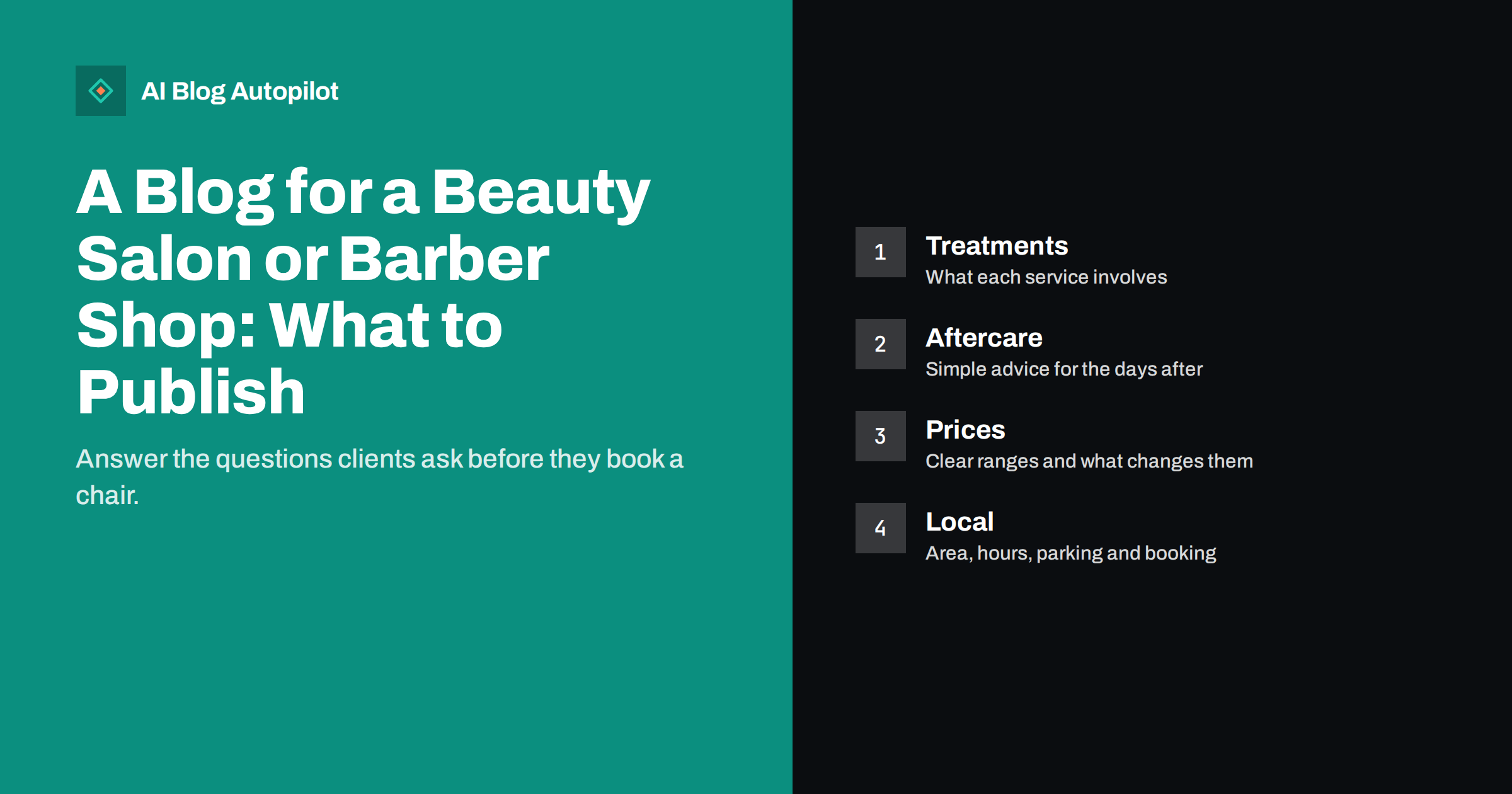
Short answer: a salon or barber shop should publish pages that answer what a nervous new client wants to know: what a treatment involves, how long it takes, what it costs, how to prepare and how to look after the result. Add clear local details and a simple way to book, and the blog starts to bring in bookings from people searching for exactly those things. Show real work with permission, keep claims modest and let the stylists’ own knowledge shape the advice.
Most people choose a salon after a quick search, a look at photos and a glance at reviews. A website that is only a price list and a phone number leaves a lot of those searches to competitors who explain themselves. A blog is not about writing literature. It is a set of useful pages that match the questions your reception already answers every day, written once and found by people who have not yet picked up the phone.
Start with the questions clients ask at the desk
Keep a note for two weeks of every question that comes up on calls, in messages and at the chair. You will probably see the same ones repeat: How long will this take? Do I need a patch test? Can I bring a photo? What if I want to change my mind about the colour? Will this suit my hair type? Each of these is an article or a section of one. The method is the same as in our guide to turning customer questions into blog topics, and it works especially well in services where people feel unsure about what to ask.
Write the answer the way a friendly senior stylist would say it across the counter. Use plain words, avoid trade jargon unless you explain it, and say what you cannot promise. A client who reads that a result depends on hair condition and previous colouring trusts you more than one who is told that anything is possible. Honest limits are a selling point in a business where disappointed expectations are the main source of complaints.
Treatment and service guides
Give each main service its own page. For a haircut, explain the consultation, the time it takes and how to describe the style you want. For colour, explain the stages, the realistic number of visits and the upkeep. For nails, brows, lashes, facials or massage, explain what happens, how long it lasts and who should speak to a professional first. For a barber shop, cover the cut, the beard trim, the hot towel finish and how often regulars come back.
Use the same structure for each page so readers can scan it: what it is, who it suits, what to expect, how long it takes, what it costs and how to book. Put the booking link in the same place on every page. Avoid health claims of any kind, and where a service touches skin, allergies or medication, say that a patch test or a conversation with a professional comes first. Staff can review the pages in ten minutes, and the review is the moment to correct anything that sounds like a promise.
Aftercare and maintenance advice
Aftercare articles are the most useful and the least written. People search for them after the appointment, when they are at home with a new colour or a fresh set of lashes and a question. A page that explains washing, products, timing and what is normal in the first days can prevent complaints and builds loyalty. It also gives you something to link to from the confirmation message and to share in a follow-up.
Think of the weeks after each service. When is the best time for a touch-up? How can the client make the result last? What should they avoid? Which signs mean they should call the salon? Keep the language careful and practical, and add the date you last reviewed the advice. If your suppliers publish instructions for their products, link to them rather than copying them, and tell readers that the information on the product label comes first.
Prices and what changes them
Many salons avoid publishing prices, then lose people who do not want to ask. You do not need an exact tariff for every case, but a clear range with an explanation is far better than silence. Explain what affects the price: hair length, thickness, the stylist’s level, the time needed and any products used. A short page called “how our prices work” is often among the most visited on a service site, and it reduces awkward conversations at the desk.
The same approach is explained in our article about writing honestly about what things cost. Remember to update the page when prices change, and show the date. An old price page that contradicts the till does more harm than no page. If you offer packages, gift cards or loyalty rewards, describe the rules in plain language, including expiry dates.
Local pages and practical details
Clients often search with a place name or a street. Make sure that your site states the address, opening hours, parking, public transport, accessibility and how to cancel or move an appointment. Describe the neighbourhood the way a local would, for example the nearest landmark or the entrance that is hard to spot. If your business also appears in map listings, keep the details consistent, and see our guide to reusing blog posts in a business profile for a simple routine.
Seasonal content works well here. Wedding season, school photos, holiday parties and the return to work each trigger a wave of bookings. Publish the relevant guide about six weeks beforehand so that it has time to be found, and update it the following year instead of writing a new one. This is the same idea as in our piece on planning seasonal content without scrambling every year.
Show real work, with permission
Photographs of finished work are the strongest proof a salon has. Always ask for written permission, make it easy to say no, and never show a face or a name that the person has not agreed to. Before-and-after pairs need the same lighting and angle, or they look misleading. Add a short caption saying what was done, how long it took and what the client wanted. Where the photo shows a result that depends on the individual, say so.
Write file names and alt text that describe what is in the image, as explained in our guide to writing alt text. A page with ten clear photographs and a few honest sentences will usually serve readers and search engines better than a gallery with no explanation.
Reviews, stories and the people behind the chairs
Clients choose people as much as services. A short profile of each stylist, therapist or barber, with their training, specialities and the kind of work they enjoy, helps a visitor pick someone who suits them. Include a line about who they work best with, for example curly hair, first-time clients or children, so the reader can match themselves to a person. Keep the tone friendly and factual, and ask each team member to read their own profile before it goes live.
Reviews deserve a place on the site, but only real ones. Quote short extracts with permission, link to the original listing and never edit the wording. A page that answers a common complaint openly, such as running late or rebooking policy, can be more persuasive than any glowing quote. It tells readers that you take feedback seriously and that the business is run with care.
A simple first-month plan
In the first week, write the pages for your three most booked services using the same structure. In the second week, add a prices page and a first-visit guide that explains arrival, consultation, payment and cancellation. In the third week, write two aftercare pages. In the fourth week, add the local details page and link everything together, with each article pointing to the booking page and to one related guide. That is eight or nine pages, enough to cover most of what new clients ask.
After that, set a calendar reminder for the first day of each season. Review the pages that are most visited, correct anything that has changed and decide on one new topic. Check which pages lead to bookings by asking new clients how they found you. Over time you will see which articles earn their place and which can be shortened or merged, and you can spend your limited time where it pays.
Do not forget the quiet weeks. A salon that is fully booked in December may have empty chairs in February, and a useful page about a service people tend to postpone, such as a restorative treatment or a seasonal refresh, can fill them. Plan these topics ahead and note them in the same calendar, so slow periods are met with content that is already written and waiting.
How AI Blog Autopilot helps
AI Blog Autopilot writes full SEO articles for your WordPress blog from the topics, keywords, audience and tone you set, with FAQ sections, tags and SEO meta included, and it shares each one to your social networks. For a salon, that can mean a steady flow of guides, aftercare notes and seasonal pieces while you are busy with clients. Approval mode lets you read each article before it goes live, which is the right moment to check a price, remove a claim and add a note from your own stylists. See the pricing page for plans.
Related reading
- Blog Strategy for a Local Business
- Turning Customer Questions Into Useful Blog Topics
- Alt Text: How to Write It and Why It Matters
- Google Business Profile Updates: Reusing Blog Posts Locally
The bottom line
A salon blog works when it answers real client questions: what a service involves, what it costs, how to prepare and how to keep the result. Add local details, honest photographs with permission and a clear booking link, review the pages now and then, and the website starts doing some of the work your reception does by phone.
الأسئلة الشائعة
Does a small salon really need a blog?
It is not essential, but a few clear pages on services, prices and aftercare help people find you and decide to book. Quality matters more than volume.
Should I publish my prices?
Yes, at least ranges with an explanation of what changes them. It saves questions and filters out people who would never book anyway.
Can I show client photos?
Only with clear permission, ideally in writing, and never with names or faces that the client has not agreed to share.
How often should I post?
A realistic rhythm is one new page every week or two, plus a quick review of older pages each season so that prices and details stay correct.
Should I make health or skin-care claims?
Avoid them. Describe what the service involves, mention patch tests where relevant and suggest speaking to a professional about any medical concern.