ENEnglish
 LTLietuviškai
 DEDeutsch
 FRFrançais
 RUРусский
 ESEspañol
 PLPolski
 ITItaliano
 UKУкраїнська
 CSČeština
 PTPortuguês
 JA日本語
 LVLatviešu valoda
 ETEesti
 HUMagyar
 IDBahasa Indonesia
 TRTürkçe
 HIहिन्दी
 ELΕλληνικά
 ARالعربية
 THไทย
 VITiếng Việt
 RORomână
 MSBahasa Melayu
 BNবাংলা
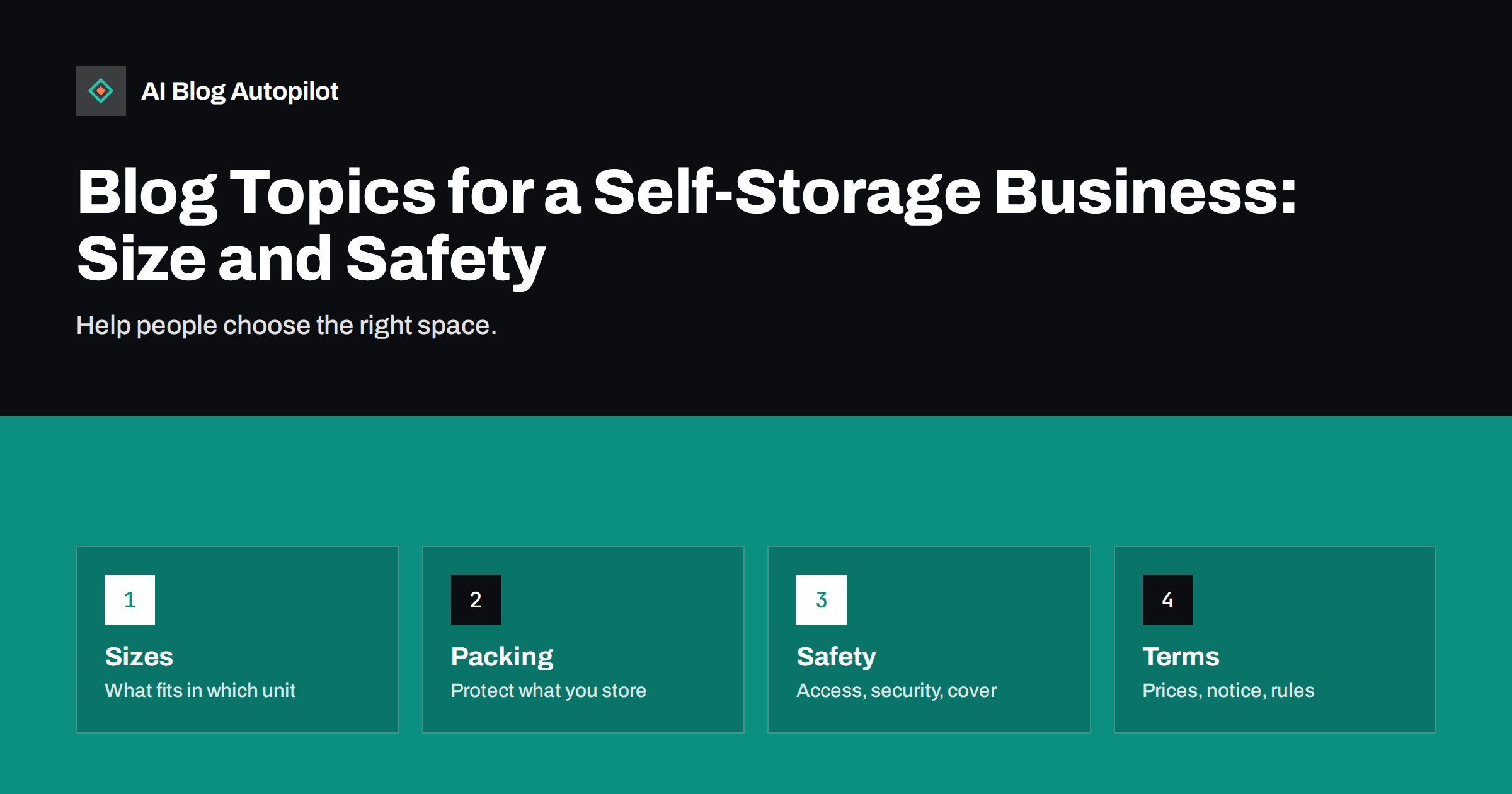
Short answer: a self-storage business should blog about the questions people ask before they rent: how much space they need, what fits in each unit size, how to pack and protect belongings, how security and access work, what insurance and notice terms apply and how to plan a move. Use real photographs of your units, show current price ranges with a date and write for the town you serve.
Most people rent storage at a moment of change: moving house, renovating, downsizing, starting a small business or sorting a relative’s belongings. They are busy, unsure how much space they need and nervous about paying for too much or too little. A blog that helps them decide in advance saves your staff time and often decides which company gets the call.
This guide lists topic groups for a single site or a small group of storage facilities, explains how to turn the questions heard on the phone and at the desk into pages and describes how to keep prices, rules and photographs accurate. It suits indoor units, container storage and vehicle storage, with a few notes on each.
Help readers choose the right size
Size is the first question. Write a guide to unit sizes with real examples: what a small unit holds, how many boxes and which furniture fit in a medium unit, and what a large unit can take. Use photographs of your own units filled in different ways, and add the measurements so that readers can compare with their own belongings.
Offer a simple way to estimate. A checklist of common items with approximate sizes lets a reader add them up and find a match. Explain how stacking, shelves and gaps change the result. Many people overestimate, and a calm, honest page that says a smaller unit may be enough builds goodwill.
Create pages for specific needs: storing furniture during a move, storing a student’s belongings over summer, storing business stock, keeping documents, storing a boat or a caravan and storing items for a renovation. Each page can suggest a typical size, the preparation needed and the likely period, with a link to the right unit type.
Say what you do not accept. Explain the rules about dangerous goods, food, living animals, flammable material and anything illegal. A clear list prevents misunderstandings at the door and shows that you take safety seriously. Update it when your insurer or the law changes.
Add a page about common mistakes: storing items that are damp, packing boxes too heavily, leaving no aisle, forgetting to check the contents list and skipping a cover on furniture. Explain each in a sentence or two and say what to do instead. Short, specific warnings are easy to share and are often what readers remember.
Explain how to prepare appliances, bikes and garden equipment. Draining fuel and water, removing batteries and cleaning surfaces can prevent damage and complaints. These pages may not seem exciting, but they bring steady traffic from people who are preparing to store something specific.
Teach packing and protecting belongings
Packing guides are the most shareable content in this field. Explain how to wrap furniture, pack boxes by weight, protect mattresses, store books and clothes, handle electronics and fragile items and label boxes for easy retrieval. Short step-by-step sections with photographs help more than long paragraphs.
Cover damp, heat and pests. Explain how climate control works if you offer it, what to do if you do not, and how to use covers, pallets, silica gel and good ventilation. Be honest about what a unit can and cannot do. Describe items that are sensitive to temperature, such as wine, instruments, photographs and leather.
Write about seasonal needs: storing garden furniture for winter, bikes and sports gear, caravans and holiday items. Publish these guides shortly before each season, since that is when people search. Link each guide to the type of unit that suits the items, and to the booking page.
Give tips for loading a unit well: heavy items at the bottom, an aisle for access, items you need often near the door and a list of contents. A page that helps readers organise their space makes them better customers, and reduces calls to staff for help finding things.
Explain security, access and insurance
Customers want to know that their belongings are safe. Describe your security in plain words: fencing, lighting, cameras, access codes, locks, staffing hours and alarms. Avoid revealing details that could weaken security, such as exact camera locations, but give enough to reassure.
Explain access: opening hours, 24-hour access if you offer it, how gates work, how to bring a vehicle to the door and what to do if you forget a code. Say whether trolleys, lifts and ramps are available and how long a typical loading visit takes. These practical details matter to readers who are planning a busy day.
Describe insurance honestly. Say whether belongings are covered by your policy, by the customer’s home insurance or by a separate plan, and what is excluded. Link to the official terms and avoid giving personal insurance advice. The guide to disclaimers and notices on a blog helps with the wording of general information.
Explain what happens if something goes wrong: a leak, a break-in attempt or a lost code. Describe how customers should report it and how you respond. A page that shows you have a plan inspires confidence, and being open about risks is more reassuring than pretending that nothing can happen.
Consider a page that compares storage with alternatives, such as a spare room, a garage, a relative’s loft or a shipping container at home. Be fair about the cost and convenience of each, and say when storage with you is not the best option. Readers who trust your comparison are the most likely to rent when it does fit.
Describe short-term and long-term rental differently. Someone who needs a unit for three weeks has different needs from a business that will stay for years. Explain minimum periods, discounts for longer stays and how to extend or shorten a rental, so that nobody is surprised by a bill.
Be clear about prices, terms and notice
Price is the main driver of the decision. Show price ranges for each unit size, say when they were last checked and explain what affects them, such as location within the site, climate control, length of rental and promotions. The guide on writing honest articles about what things cost offers a structure.
Explain the terms in plain language: deposit, minimum period, notice required to leave, how rent is collected, what happens if a payment is missed and how price changes are communicated. A reader who sees the rules in advance feels respected. Avoid small print that contradicts the page, and link to the full contract.
Describe moving out: how to give notice, how to leave the unit, how the deposit is returned and how long it takes. A calm, honest page on leaving shows confidence in your service. It also reduces disputes, since customers know what is expected.
Cover business use. Small traders, online sellers and tradespeople have different needs, such as deliveries, longer access hours and invoices. Write a page for them, with examples of how others use units for stock or tools. This group often rents for a long time and becomes a loyal customer.
Connect storage to moving and life events
Storage is usually part of a bigger plan. Write guides on moving house, decluttering before a sale, downsizing, student moves, renovations and emigration. Each guide can offer a timeline, a checklist and practical tips, and mention storage as one step. These pages attract readers early in their planning, long before they search for a unit.
Work with partners. Removal firms, estate agents, builders and cleaners meet your future customers, and a short joint guide or a page that lists trusted local services is useful to everyone. Only recommend firms you know and disclose any commercial relationship. Keep any joint guide fair, balanced and clearly labelled.
Handle sensitive situations with care. Many people rent storage after a bereavement, a separation or a financial setback. Write kindly, avoid assumptions and offer practical help, such as how to sort a relative’s belongings and how to decide what to keep. A respectful tone is remembered.
Describe options beyond storage when they suit the reader: selling, donating or recycling items. Pointing readers to local charities and recycling centres may reduce rentals in the short term, but it builds goodwill and trust that bring recommendations later.
Make local pages and the next step easy
Most searches are local. Create a page for each site with the address, directions, opening hours, available unit sizes, photographs of the entrance and nearby landmarks. Avoid copying the same text for several towns. The guide to location pages for several branches explains how to make each one distinct.
Offer a clear next step: reserve online, call, visit or request a quote. Say how quickly someone replies, how long a viewing takes and what to bring, such as identification and proof of address. Remove friction wherever possible, and test the booking path on a phone.
Keep the information consistent across your site, your business profile and listings. A mismatch in opening hours or address creates frustration and lost customers. Review the pages every quarter, update prices and photographs and remove outdated promotions.
Measure what the pages bring: calls, reservations and viewings by page. Ask new customers how they found you. A packing guide that brings little traffic but many reservations is worth more than a general post with many readers and no action. Write more of what works.
How AI Blog Autopilot helps
AI Blog Autopilot can write and publish articles on your chosen topics, with FAQ sections, tags and SEO meta, and share them to your social networks. Give it your unit sizes, services and area, and check every price, rule and measurement before each article goes live. See the pricing page for plans and monthly credits.
Related reading
- Blog Topics for Removal and Transport Companies
- Location Pages for Several Branches
- Blog Strategy for a Local Business
The bottom line
Help readers pick a size, pack well and understand security, prices and notice, tie guides to life events and make reserving a unit easy on a phone.
FAQ
What should a self-storage business blog about first?
Start with unit sizes and what fits, packing and protection, security and access and clear price and notice terms.
Should I publish prices?
Yes, as ranges with a date, and explain what affects them. Update them whenever your rates change.
How do I write about insurance?
Describe what your policy covers, what it excludes and what customers should check with their own insurer, and link to the terms.
Can I use photos of customers’ units?
Only with consent and without anything identifiable. Photographing your own demonstration units is safer.
How do I help readers estimate size?
Provide a checklist of common items with approximate sizes and photographs of units filled in different ways.