ENEnglish
 LTLietuviškai
 DEDeutsch
 FRFrançais
 RUРусский
 ESEspañol
 PLPolski
 ITItaliano
 UKУкраїнська
 CSČeština
 PTPortuguês
 JA日本語
 LVLatviešu valoda
 ETEesti
 HUMagyar
 IDBahasa Indonesia
 TRTürkçe
 HIहिन्दी
 ELΕλληνικά
 ARالعربية
 THไทย
 VITiếng Việt
 RORomână
 MSBahasa Melayu
 BNবাংলা
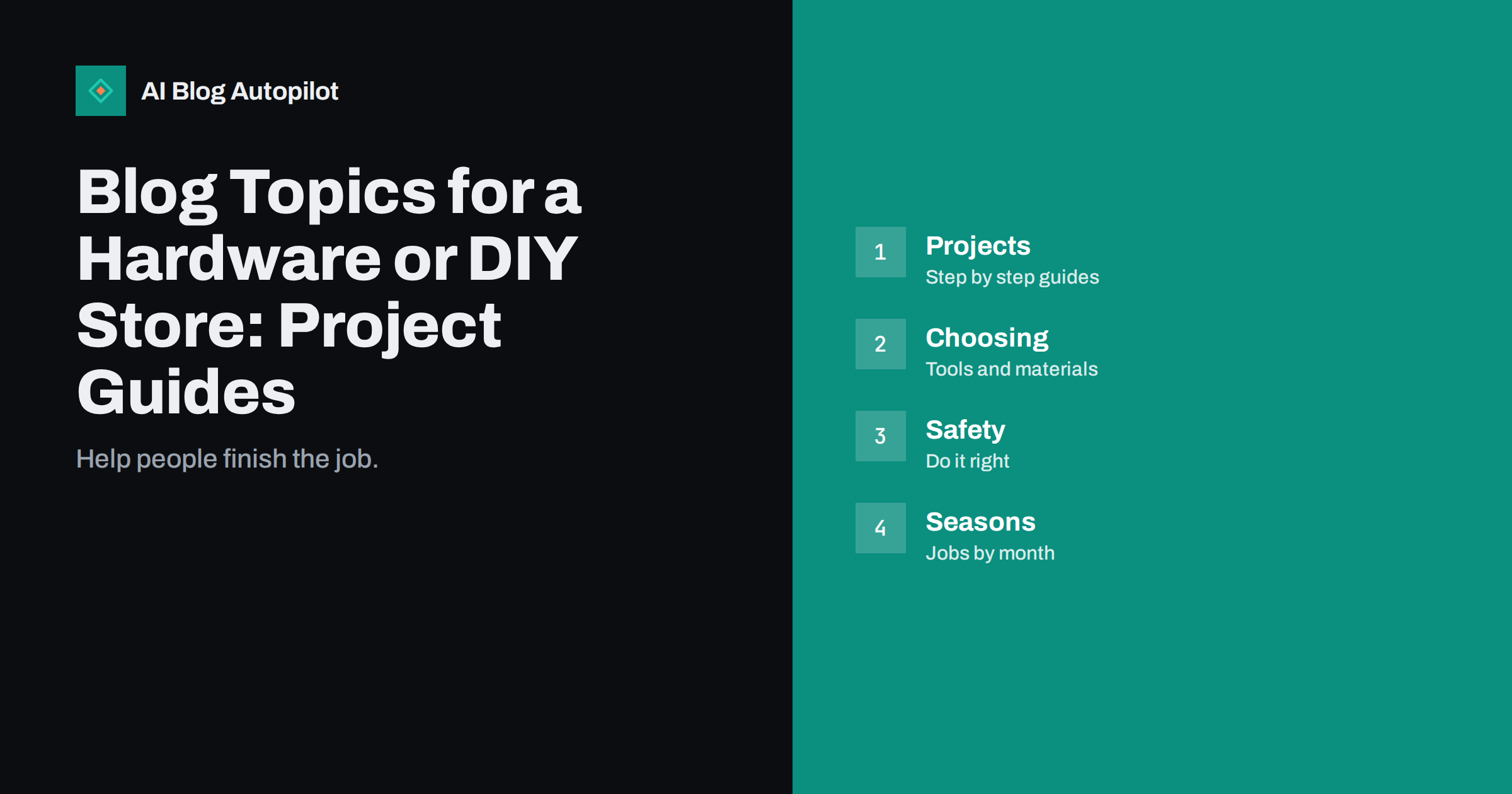
Short answer: a hardware or DIY store should blog about the jobs customers are trying to finish: step-by-step project guides, how to choose tools and materials, what to buy for a specific repair, how to stay safe, which jobs need a professional and what to do each season. Write like the best member of staff at the counter, name the products you actually stock and show the date of every guide.
People rarely come to a hardware store to browse. They arrive with a leaking tap, a squeaking door, a wall to paint or a fence to mend, and often they do not know exactly what they need. The staff who ask the right questions and explain the job are the reason many customers return. A blog can bring that same help to people before they leave the house.
This guide lists topic groups for an independent shop or a small chain, explains how to turn counter questions into pages and shows how to connect the blog to your stock and your local area. It works whether you also sell online or only in the shop.
Write project guides that finish the job
The most useful content is the guide for a specific job: how to fix a dripping tap, how to hang a shelf on plasterboard, how to repair a fence panel, how to seal a bathroom, how to bleed a radiator. Each guide should list the tools and materials, the steps in order, the time it takes and the common mistakes.
Write for the beginner. Explain terms such as stud, rawl plug or flux the first time they appear, and show photographs of the steps. A reader who completes a job with your help will remember where the advice came from and where to buy the supplies next time.
Add a shopping list at the top or the end of each guide, with the products you stock and their quantities. Make it easy to print or save. If you sell online, link each item to the product page, and if not, say which department to visit. A guide that ends with a clear list turns reading into a visit.
Be honest about difficulty. Rate the job as easy, moderate or difficult, say what experience is needed and tell readers when to call a professional. A guide that admits when a job is beyond a beginner earns more trust than one that makes every task look simple.
Write for the expert as well. Tradespeople shop with different needs: bulk quantities, accounts, early opening hours and fast collection. A short page for professionals that explains your trade counter, discounts, delivery and stock of key brands can bring loyal, regular customers who also recommend you to others.
Add a page on common mistakes: buying the wrong size of fixing, skipping the primer, forgetting to turn off the water or measuring once. Explain each in a sentence or two and say what to do instead. Readers appreciate specific warnings, and they are shared among friends who tackle jobs together.
Explain how to choose tools and materials
Choice is where customers feel lost. Write guides on how to choose a drill, a paint, a sandpaper grade, a screw, an adhesive or a lawnmower. Explain the differences, the uses and the price ranges in plain words, and state what you would buy for a typical home user.
Use comparison tables sparingly and keep them simple. A table that shows three types of fixing, what each holds and where it is used can replace several minutes of explaining at the counter. Add a sentence on the cheapest option that will still do the job well, since many readers worry about overspending.
Explain the difference between buying, hiring and borrowing. Many customers need a tool once, and a page that tells them whether to buy or hire builds goodwill. If you offer hire or a tool library, describe how it works, the prices and the deposit. The guide on writing honest articles about what things cost offers a structure for price information.
Cover quality and care: how to clean and store tools, how to sharpen blades, how to look after brushes and when to replace parts. These pages are not exciting, but they attract steady traffic and show real expertise. Add the date of the last review and update them when products change.
Put safety and the rules first
Home improvement involves real risk, so safety should be part of every guide. Write about protective equipment, ladders, electrical safety, gas, asbestos, lead paint and working at height. State clearly which tasks must be left to qualified professionals and what the law requires in your country.
Keep the advice accurate and cite official sources. A mistake in a safety guide can cause injury, and search engines treat such content with care. Show who wrote and reviewed each page, and link to the relevant regulator or standards body. The guide to disclaimers and notices on a blog helps with clear wording about the limits of general advice.
Explain permits and regulations in plain language: when a building permit is needed, what a fence height limit might be, what must be done before removing a wall and who can sign off electrical work. Rules differ by place, so say clearly which country and, where relevant, which area the guide covers.
Write about the safe disposal of paint, chemicals, batteries and old equipment. Describe what you accept, what the local recycling centre takes and what should never go in household waste. This kind of page is valuable to neighbours and shows that the shop cares about its community.
Follow the seasons and the local climate
Hardware demand follows the year. Write checklists for each season: preparing the house for winter, protecting pipes from frost, spring cleaning for the garden, summer jobs outdoors and autumn drainage. Publish them a few weeks before the need arises, so that they are found in time and shared by readers.
Use local knowledge. Advice about damp, salt air, hard water or heavy snow depends on where you are, and a local shop can speak with authority that a national retailer cannot match. Mention real examples from nearby streets or common house types, without naming customers.
Plan around events: the first warm weekend, the start of the holiday season, back to school or a local festival. The guide to planning seasonal content without scrambling every year explains how to keep a calendar and reuse pages each year with updates.
Keep a simple record of which seasonal pages bring visits and sales. After a year or two you will know which jobs matter most to your area, and you can stock and write accordingly. A page that predicts a rush by a week is a quiet advantage.
Do not forget the garden and outdoor jobs. Fences, sheds, decking, pond care, lawn repair and patio cleaning are popular and seasonal. Each can have a guide, a shopping list and a safety note, and they bring visitors from neighbours who are just starting a weekend project.
Include guides for renters and first-time owners. People who have just moved in often need simple help: how to find the stopcock, how to bleed a radiator, how to fill nail holes before returning the keys. A clear starter pack of guides can become a page that new residents find and share.
Answer the questions asked at the counter
Staff hear the same questions daily, and each is a possible page. Ask them to note the questions for a month: what size of screw, why does my paint peel, how do I find a stud, which bulb fits. Sort them by frequency, and write short, direct answers. The guide on turning customer questions into topics shows how.
Add photographs and short videos shot in the shop. A staff member showing how to cut a tile or fit a washer is more convincing than a stock picture. Keep them simple and tidy, and add a text version, since many readers will not play the video.
Include a page on what to bring with you: a photograph of the item, the old part, measurements, the make and model. This small piece of advice saves customers a second trip and your staff a lot of guessing. It also reduces returns, which cost time for everyone.
Show the people. Short profiles of staff with their specialities, such as plumbing, paint or garden, help customers know whom to ask. A local shop is a place with faces, and the blog is a good way to introduce them.
Measure what the pages bring. Count calls, visits and questions that mention a guide, and ask customers whether they read something first. A guide that sends ten people to the shop for a specific product is worth more than one with many views and no effect. Review the results each quarter and write more of what works.
Connect the blog to your shop and your listings
Make sure every guide links to the relevant department, product or service, and that your opening hours, address and phone number are clear. Keep the information identical across your site, your business profile and any directories. Add directions and parking details, since many customers arrive by car with a boot to fill.
Create pages for services you offer beyond sales: key cutting, paint mixing, glass cutting, cylinder gas, delivery and repairs. Describe what each costs and how long it takes. These pages often match searches with real intent, from people who want to visit the same day.
Check the stock and prices mentioned in your guides regularly. A guide that recommends a product you no longer sell frustrates readers. Review the pages each quarter, update the lists and link to alternatives. The guide on blog strategy for a local business explains how to keep local pages accurate.
Share the best guides in the shop as well: a small card with a code that leads to a guide, a poster in the paint department or a link in receipts. The blog should help people in the aisles as much as at home.
How AI Blog Autopilot helps
AI Blog Autopilot can write and publish articles on your chosen topics, with FAQ sections, tags and SEO meta, and share them to your social networks. Give it your product range and your area, and have an experienced member of staff check every step, safety note and product before each article goes live. See the pricing page for plans and monthly credits.
Related reading
- Blog Topics for Plumbers, Electricians and Home Services
- Blog Strategy for a Local Business
- Planning Seasonal Content Without Scrambling Every Year
The bottom line
Write project guides with shopping lists, explain choices plainly, put safety first, follow the seasons and answer the questions your staff hear every day.
FAQ
What should a hardware store blog about first?
Start with the jobs customers ask about most, such as common repairs, painting and fixings, each with a shopping list.
Should guides include safety warnings?
Yes. State the risks, name jobs that need a professional and link to official safety sources for your country.
Can I link guides to products?
Yes, list the products you really stock, link to product pages if you sell online and keep the list current.
How do I plan seasonal content?
Keep a calendar and publish checklists a few weeks before each season, then update the same pages every year.
Do I need videos?
Not at first. Clear photographs and steps work well, and a short video adds value if you also provide a written version.