ENEnglish
 LTLietuviškai
 DEDeutsch
 FRFrançais
 RUРусский
 ESEspañol
 PLPolski
 ITItaliano
 UKУкраїнська
 CSČeština
 PTPortuguês
 JA日本語
 LVLatviešu valoda
 ETEesti
 HUMagyar
 IDBahasa Indonesia
 TRTürkçe
 HIहिन्दी
 ELΕλληνικά
 ARالعربية
 THไทย
 VITiếng Việt
 RORomână
 MSBahasa Melayu
 BNবাংলা
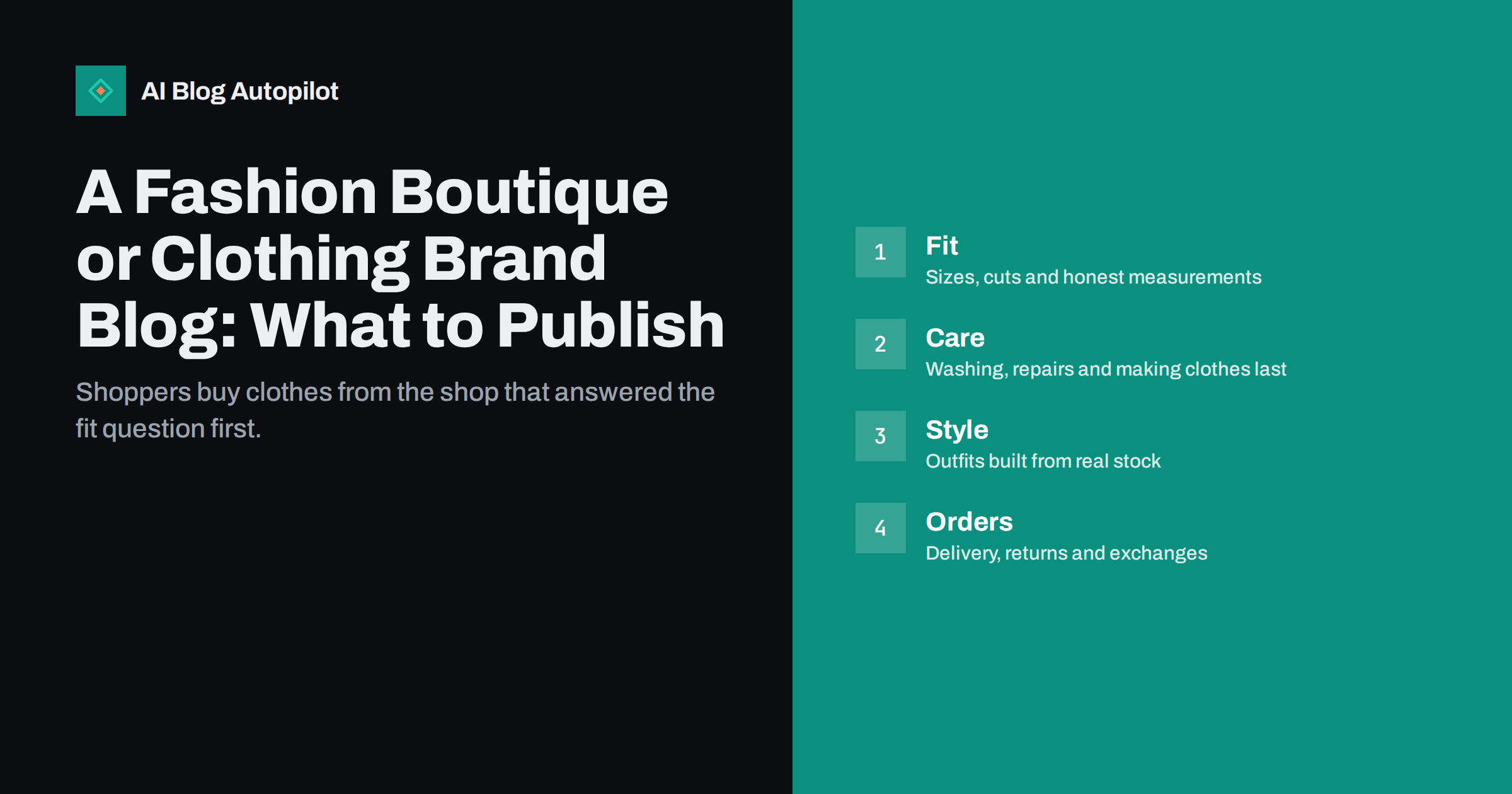
Short answer: a fashion boutique or clothing brand blog works best when it answers the questions that stop people from buying: how an item fits, how to care for it, what to wear it with and how delivery and returns work. Use your own photographs, give real measurements and fabric details, keep seasonal pages at stable addresses and link every guide to the products it mentions.
Clothes are a risky purchase online. The buyer cannot touch the fabric, try the size or see how a garment moves, so doubt is the main reason people leave a page. A small library of clear, honest articles removes that doubt in a way that product descriptions alone rarely can, and it brings in readers who search for advice before they search for a shop.
Start with fit and sizing
The most useful page a clothing business can publish is a plain explanation of fit. Describe how each cut runs, which body measurements each size matches, how the model in the photographs is dressed and what to do between two sizes. Give the measurements in centimetres and inches, and say whether you measure the garment or the body. Customers who understand your sizes order once and keep the item.
Write the page as if you were answering a customer at the counter. Mention the things that regularly cause returns: a shorter sleeve, a stiff fabric that softens, a waistband without stretch. If you collect real feedback, summarise it honestly, as in “most customers order one size up in this style”. Our guide to turning customer questions into topics shows how to collect those questions without extra work.
Keep a short internal list of the questions that arrive about fit: which size the model wears, whether a style shrinks, whether the length suits tall or short customers. Each repeated question is a paragraph waiting to be written, and adding it to the page usually lowers the number of messages and returns the following month.
Explain fabrics and care
Care advice is among the most searched and most saved content a clothing seller can offer. Explain how to wash wool, linen, denim or silk, how to remove common stains, how to store knitwear and how to repair a loose button. These pages are found by people who already own the item, and they build trust with people who are deciding whether to buy.
Be specific and truthful about materials. Say what a fabric is made of, where it comes from if you know, how it feels and how it ages. Avoid vague words such as “premium” unless you explain what they mean. A short table of fibres, their feel and their care needs is one of the few places where a table beats several paragraphs, as described in when a table beats three paragraphs.
Add a short note on how the item changes with washing and wear. Denim softens, linen creases and knitwear can pill, and buyers who know this in advance are rarely disappointed. If you offer repairs, alterations or a care service, mention it here with prices and timings, because it turns a one-time sale into a longer relationship.
Show outfits you can actually buy
Style articles work when readers can follow them. Build outfits from items that are in stock or regularly available, and name each one with a link to its page. Organise the pages around situations rather than trends: clothes for a first week in a new job, for a wedding as a guest, for travel with one bag or for the colder months. These situations return every year and can be updated rather than rewritten.
Use your own photographs and show the clothes on different people where you can. Write alt text that describes the garment and the setting in plain words, and add captions that name the item and the size worn. If you cannot offer a shot of every colour, say which colour is shown. Honest images lead to fewer returns and better reviews.
Give each outfit page a clear structure: the occasion, the pieces with links, the sizes and colours available, and one or two ways to change the look for a different budget or weather. Readers often arrive from a search for a situation rather than a product, so the page should help even if they buy only one piece or buy nothing today.
Check each page every season. Remove items that are no longer sold, replace broken links and update the photographs when the collection changes. A stale styling page with dead product links wastes the trust it earned.
Plan around the fashion calendar
Clothing sales follow seasons, events and weather. Plan the year in advance with the method in our guide to seasonal content planning without the scramble, and decide which pages will be refreshed each year and which will be new. Collections, graduation and wedding seasons, back-to-school, the first cold week and the end-of-season sale each deserve a page that is live before the peak.
Search engines need time to find new pages, so publish six to eight weeks before the busiest date. Keep one address for each recurring topic, update the date and the content, and say what has changed since last year. When a collection sells out, do not delete the page if it earned links. Mark the item as sold out and point to similar current items, following the advice in dealing with expired event, offer and deadline posts.
Do the same for the things that happen at the busy times of year: Black Friday, the winter holidays and the January sales. Publish the last order date for delivery before each holiday, the extended returns window if you offer one and the days when the warehouse is closed. These short, dull pages are among the most visited in the weeks before a peak.
Be clear about delivery, returns and exchanges
For many shoppers the returns page decides the purchase. Write it in plain language: how many days they have, who pays for postage, what condition the item must be in, how long refunds take and how exchanges work. Add the exceptions, such as personalised or final-sale items, near the top rather than at the end of a long page.
Repeat the key points in your product pages and your emails, and keep a single source of truth so that the wording matches everywhere. Conflicting statements generate complaints and bad reviews. Our article on blog strategy for an online shop explains how guides, product pages and policy pages should support one another.
Product pages and the blog should say the same thing. If a garment page lists a fibre blend and the care guide describes another, customers notice, and so do reviewers. Review the wording each season, ask your supplier to confirm the details in writing and keep the paperwork so that you can answer questions quickly.
Talk about sourcing and sustainability carefully
Many buyers care where clothes come from, and many brands say more than they can prove. State only what you can support: where the garment is made, what the fabric is, how long you expect it to last and what you do about repairs or take-backs. If you are still improving, say so plainly instead of using broad terms such as “eco-friendly”.
Check claims against the rules in the countries where you sell, because environmental and origin claims are regulated in many places. Give the source of any figure, and update the page when the facts change. A modest, accurate statement is more convincing than a large claim that a reader can easily challenge.
Do not copy the same shop page for each location if you have several. Describe each shop’s team, stock, services and neighbourhood, and give each its own opening hours and directions. This helps customers choose the right branch and gives search engines distinct pages instead of near-copies.
Keep the blog manageable
A shop in a busy season has no time for long articles, so set a rhythm you can keep. Plan a few pages before each season, write them ahead and schedule them. Ask staff to note the questions they hear on the shop floor and turn the most common ones into pages. Our guide to running a blog in two hours a week describes a routine that fits a small team.
Review the blog twice a year, before the spring and autumn collections. Remove anything out of date, check every size chart, price and link, and note which pages brought orders. A smaller blog that is accurate beats a large one that is stale.
Build local and community content
A boutique with a physical shop has an advantage that online-only sellers lack. Write about the shop, the street, the events you host, the local makers you stock and the styling appointments you offer. Give opening hours, parking and access information on a page of its own, and keep it the same on your business profile. See our notes on reusing blog posts locally for ways to share new pages there.
Invite customers to share how they wear an item, with their permission, and credit them. A page of real customer outfits is more persuasive than any studio photograph, and it gives you fresh content between collections. Keep the rules for submissions simple, and remove any picture if the person asks.
How AI Blog Autopilot helps
AI Blog Autopilot writes full SEO articles for your WordPress blog from the topics, keywords, audience and tone you set, with FAQ sections, tags and SEO meta included, and it shares each one to your social networks. For a shop busy with orders and collections, care guides and styling pages keep appearing while you work. Approval mode lets you read each article first, which matters for measurements, fabric details and return rules. See the pricing page for plans.
Related reading
- Blog Strategy for an Online Shop
- Planning Seasonal Content Without Scrambling Every Year
- Customer Questions Into Blog Topics
The bottom line
A clothing blog earns its place by removing doubt. Publish honest fit and care guides, outfits built from real stock, clear delivery and returns pages and carefully worded sourcing notes, and refresh the seasonal pages each year.
FAQ
What should a fashion boutique blog about first?
Start with fit and sizing, then fabric care and returns. These answer the questions that most often stop a purchase.
How often should a clothing brand publish?
One or two useful pages a month is enough if they are accurate and linked to products. Quality and updates matter more than volume.
Should old collection pages be deleted?
Not if they earned links. Mark the items as sold out and point readers to similar current products.
Can I make sustainability claims on the blog?
Only claims you can support, with sources, and check the rules where you sell. Plain, modest wording is safer and more credible.
Do customer photos help?
Yes, with permission and credit. Real outfits on real people reassure buyers and give you content between collections.