ENEnglish
 LTLietuviškai
 DEDeutsch
 FRFrançais
 RUРусский
 ESEspañol
 PLPolski
 ITItaliano
 UKУкраїнська
 CSČeština
 PTPortuguês
 JA日本語
JA日本語 LVLatviešu valoda
 ETEesti
 HUMagyar
 IDBahasa Indonesia
 TRTürkçe
 HIहिन्दी
 ELΕλληνικά
 ARالعربية
 THไทย
THไทย VITiếng Việt
 RORomână
 MSBahasa Melayu
 BNবাংলা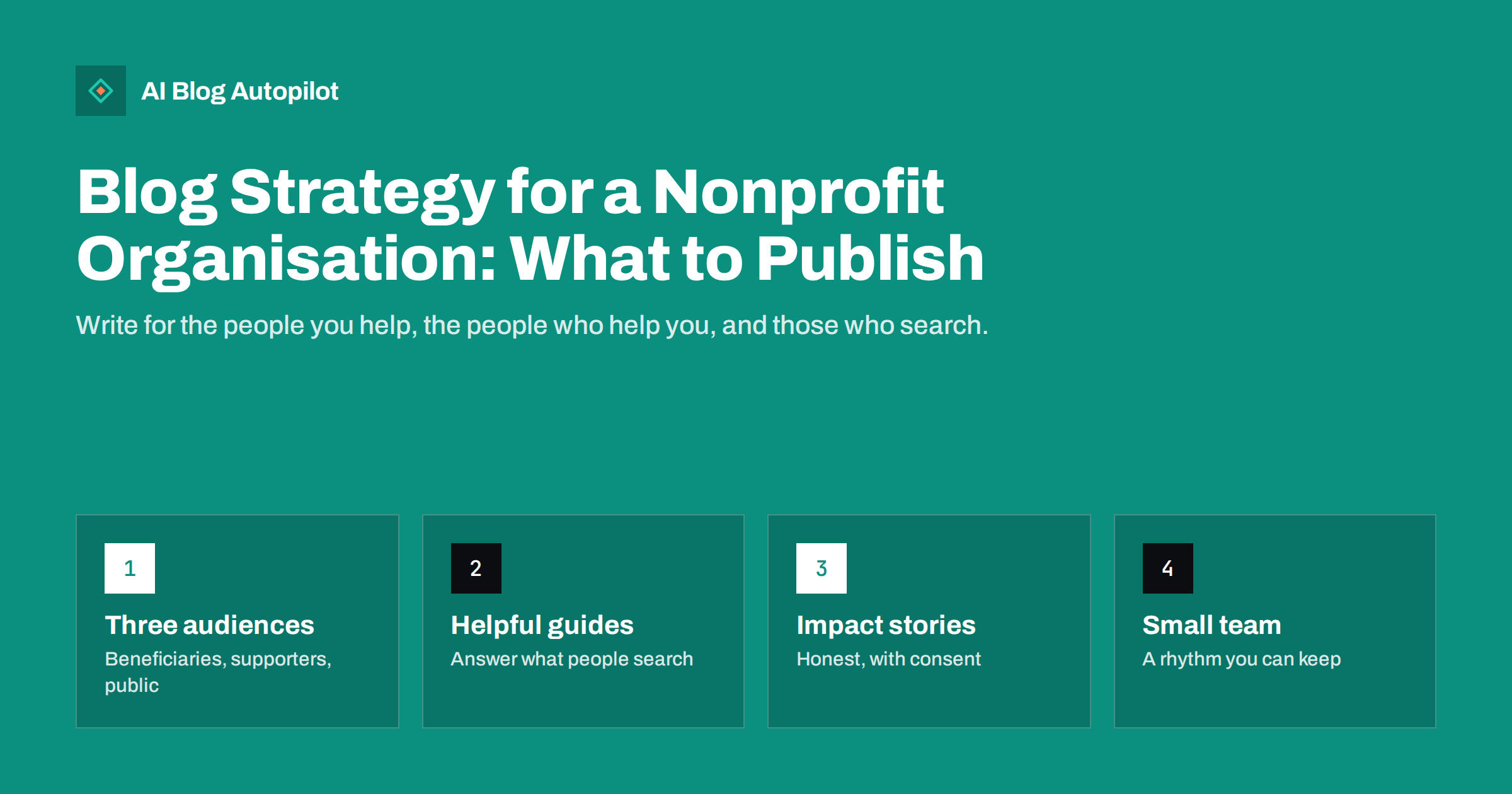
Short answer: a nonprofit blog works best when it serves three groups: the people you help, the people who support you, and the wider public searching for information about your cause. Publish practical guides that answer real questions in your field, honest impact stories told with consent, clear explanations of how support is used, and calls for volunteers and donations that link to the right pages. Keep a realistic schedule, share every article on your social channels and newsletter, and measure enquiries, sign-ups and donations rather than page views alone.
Many nonprofits have a “news” section that lists events, thank-you notes and annual reports. That has its place, but it rarely reaches new people. A blog built around what people search for can bring a steady stream of visitors who need help, want to help or want to understand the issue, and some of them become volunteers, donors or advocates. This guide explains how to plan that kind of blog with the limited time most organisations have.
Start with the three audiences
Most nonprofits write for more than one kind of reader, and each needs something different:
- People you serve. They look for practical help: how to get support, what their rights are, where to go, what to do in a difficult situation. For them, the blog is a service.
- Supporters. Donors, volunteers, members and partners want to know what you do, what difference it makes and how they can contribute. For them, the blog builds trust.
- The wider public. Students, journalists, policymakers and curious people search for explanations of the issue you work on. For them, the blog is a source of knowledge and a way to discover your organisation.
Write down which of these groups matters most for your goals this year. A food bank might put people in need first; an environmental campaign might focus on the public and supporters. The balance shapes everything else.
It also helps to think about where each audience is in their relationship with you. A person in crisis who finds a help article at midnight needs plain language and a clear next step. A long-time donor reading a quarterly update wants detail and honesty. A student writing an essay wants clear explanations and sources. One blog can serve all three, but each article should know which reader it is written for, and its tone, length and call to action should follow from that choice.
Articles that answer real questions
The articles most likely to bring new readers from search are those that answer questions people actually type. Nonprofits are often in an excellent position to write them, because they have real expertise and direct experience.
Good sources of topics include:
- Questions your helpline, front desk or caseworkers hear every week.
- Questions volunteers ask before they sign up.
- Common misunderstandings about your cause that you correct again and again.
- Seasonal needs, such as winter heating support, summer programmes for children or exam-time stress.
- Changes in laws or services that affect the people you work with.
Write each answer clearly and completely, with steps, local details where relevant and links to official resources. An article that helps someone at a difficult moment is valuable in itself, and it shows supporters that your organisation knows its field.
Be careful with topics that touch on health, legal or financial decisions. Make sure a qualified person checks the content, cite official sources and update it when rules change. Readers rely on this kind of information.
Impact stories, told honestly
Stories about the people and places your work affects are what move supporters. They are also where nonprofits most often go wrong, with stories that exaggerate, sensationalise or expose people who did not fully agree to be featured.
Good practice for impact stories:
- Get informed consent, in writing, for names, photos and details, and respect requests to stay anonymous or to be removed later.
- Protect vulnerable people. Change identifying details where needed, and avoid images that strip people of dignity.
- Let people speak for themselves where possible, with their own words and perspective.
- Be specific and modest. Describe what changed and what your organisation actually did, without claiming credit for everything.
- Add context. One story is powerful, but explain how it fits into the wider picture of your work.
Stories about volunteers, staff and partners are often easier to tell and just as engaging. They also help potential volunteers imagine themselves taking part.
Show how support is used
Donors and funders want to know where their money and time go. A blog is a good place to explain this in more human terms than an annual report:
- What a typical month of a programme looks like.
- How a fundraising campaign’s result was spent.
- What volunteers actually do on a shift or project.
- What you learned from something that did not work.
- How decisions are made and who is involved.
Transparency builds trust, and trust is what turns a one-time donor into a regular supporter. Avoid inventing precise impact figures; if you share numbers, use your own verified records and explain how they were counted.
Updates should also cover the unglamorous parts of running an organisation: training volunteers, renewing equipment, the cost of keeping a helpline open. These are often exactly the things that are hard to fund, and explaining them in plain words helps supporters understand why unrestricted donations matter.
Calls to action that fit the article
Every article should make the next step clear, but the step should fit the reader. Someone reading a guide on how to get help needs contact details or an application page, not a donation request. Someone reading an impact story may well want to donate or volunteer.
- Help articles link to services, contact options and official resources.
- Impact stories and updates link to donation, volunteering or membership pages.
- Explainers about the cause link to campaigns, petitions, newsletters or deeper resources.
Make sure the pages you link to work well on mobile and load quickly. A donation form that is hard to use on a phone loses supporters at the last step. Keep calls to action short and friendly; one clear option per article usually works better than four competing buttons.
A schedule a small team can keep
Nonprofit teams are usually stretched. An ambitious plan that stops after two months does more harm than a modest one that continues for years. A realistic rhythm for a small organisation might be:
- Two to four articles a month, mixing help guides, stories and updates.
- A seasonal plan prepared once a quarter, covering campaigns, awareness days and predictable needs.
- One person responsible for the calendar, even if several people write.
- A simple review step, for example a colleague checks facts and consent before publishing.
Volunteers can help with writing, photos or editing, but give them clear guidelines on tone, consent and facts. A one-page editorial guide saves a lot of back-and-forth.
Share every article beyond the blog
A new article on a nonprofit website reaches few people on its own. Distribution is what gets it read:
- Share each article on your social networks, with text written for each platform.
- Include recent articles in your newsletter, which is often the most loyal audience you have.
- Send relevant guides to partner organisations, local services and community groups that might link to or share them.
- Re-share evergreen help articles when they become relevant again, for example at the start of a season.
- Give staff and volunteers simple ways to share articles on their own profiles if they want to.
Links from partner organisations, local councils, universities and media are valuable both for readers and for search visibility. Useful guides earn them far more easily than appeals.
Translations deserve a thought too. If many of the people you serve read another language more comfortably, the most important help articles should be available in that language, written or checked by someone who speaks it well. A partly translated site is still far more useful than one that ignores those readers.
Measuring what matters
Page views are easy to count but say little about whether the blog helps your mission. Track actions instead:
- Requests for help or contact form submissions from help articles.
- Volunteer sign-ups and newsletter subscriptions.
- Donations and membership sign-ups that started on a blog page.
- Searches that bring visitors, which show what people need from you.
- Links and mentions from other organisations.
Review these every quarter and adjust the plan: more of what brings people to act, less of what nobody reads. Be mindful of privacy when you measure, especially on pages about sensitive topics, and keep analytics settings in line with your privacy policy.
How AI Blog Autopilot helps
AI Blog Autopilot plans and writes SEO articles around your topics, keywords, audience and tone, publishes them to your WordPress blog and shares each one to your social networks with separate text for each. You can switch on approval so a staff member reviews every article before it goes live, which suits organisations that need to check facts and sensitive wording. See the pricing page for plans.
Related reading
- Choosing What Your Business Blog Is About
- Customer Stories and Contributions on a Business Blog
- Calls to Action That Fit the Article They Sit In
- Building a Newsletter From Your Blog Posts
The bottom line
A nonprofit blog earns its place when it helps people, builds trust with supporters and explains the cause to the public. Answer the questions your team hears every day, tell impact stories honestly and with consent, show how support is used, and give each article a call to action that fits its reader. Keep a schedule your team can sustain, share every article through social media, newsletters and partners, and measure the actions that move your mission forward.
FAQ
Should a nonprofit have a blog?
Yes, if it can publish regularly. A blog that answers questions people search for brings new visitors who need help, want to help or want to understand the cause, and gives supporters a reason to trust and return.
What should a nonprofit write about?
Practical guides that answer questions your team hears often, honest impact stories told with consent, explanations of how support is used, seasonal topics and clear explainers about the issue you work on.
How often should a nonprofit publish blog posts?
Two to four articles a month is realistic for many small organisations. Consistency over the long term matters more than a burst of activity that stops after a few weeks.
How do we tell beneficiary stories ethically?
Get informed written consent, protect identities where needed, let people speak in their own words, avoid sensational images and be honest about what your organisation actually did.
How can a nonprofit blog bring donations?
Link impact stories and updates to an easy, mobile-friendly donation page, explain how support is used, and build trust over time with useful, transparent content. Help articles should focus on services rather than appeals.