ENEnglish
 LTLietuviškai
 DEDeutsch
 FRFrançais
 RUРусский
 ESEspañol
 PLPolski
 ITItaliano
 UKУкраїнська
 CSČeština
 PTPortuguês
 JA日本語
 LVLatviešu valoda
 ETEesti
 HUMagyar
 IDBahasa Indonesia
 TRTürkçe
 HIहिन्दी
 ELΕλληνικά
 ARالعربية
 THไทย
 VITiếng Việt
 RORomână
 MSBahasa Melayu
 BNবাংলা
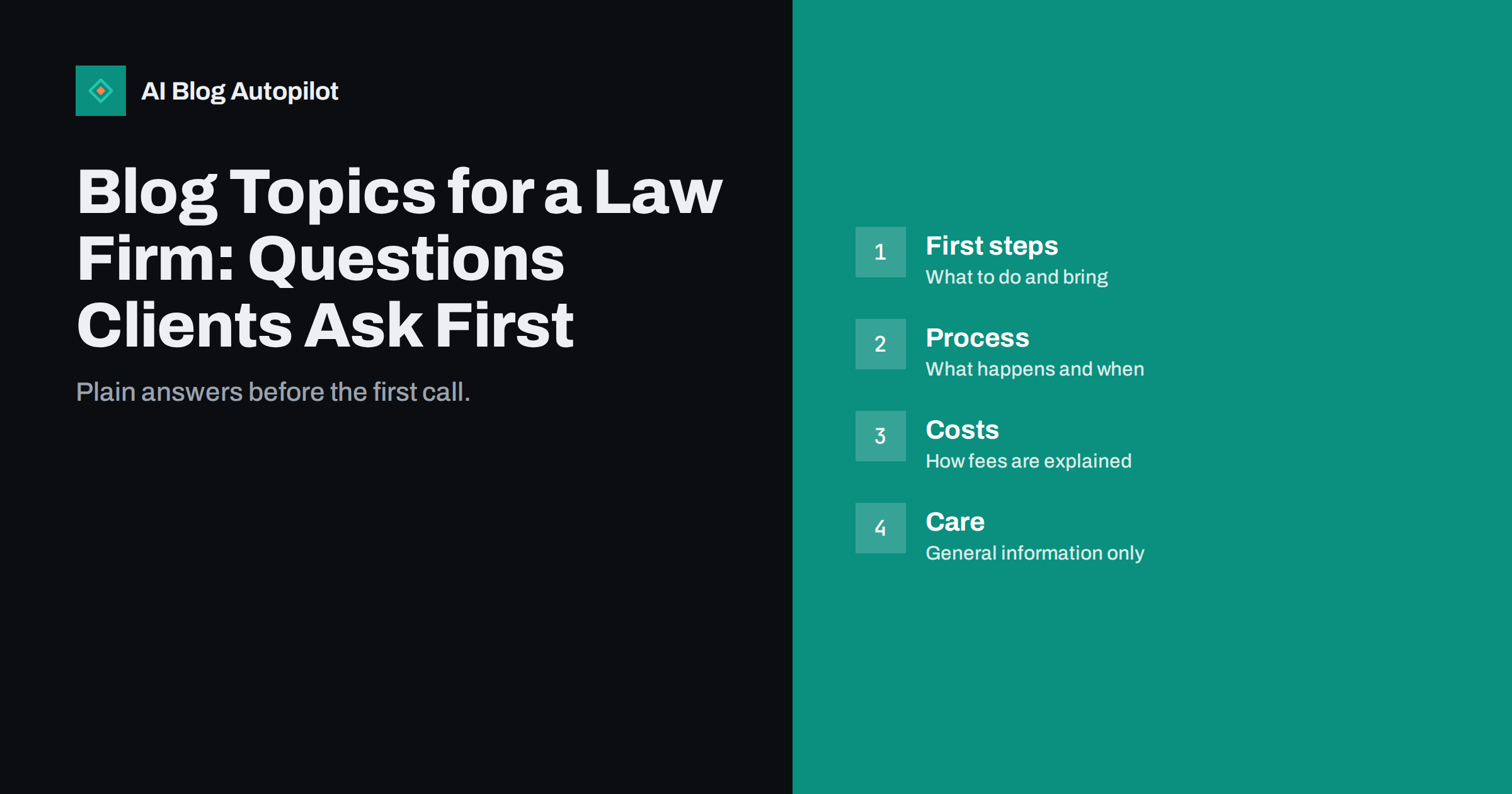
Short answer: a law firm should blog about the questions people ask before they hire a lawyer: what to do first, what documents to gather, how the process works, how long it usually takes, how fees are charged and when to get help. Write in plain words for one country and one area of law, date every page, point to official sources and make clear that a guide is general information, not advice for a personal case.
People rarely search for a lawyer when life is calm. They search after a letter arrives, a contract goes wrong, a family changes or a business faces a dispute. They are worried, short of time and unsure of the words. A firm that has already answered the first questions in calm, clear language is easy to find and easy to trust.
This guide lists topic groups for a small or mid-sized firm, shows how to turn recurring questions from clients into pages, and explains how to keep legal content accurate and responsible. It does not replace the advertising rules that apply to lawyers in your country, which you should always check first.
Start with what to do first
The most useful page for a worried reader is a short list of first steps. For each area you practise, write what to do in the first day, the first week and the first month, what not to do, and which documents to keep. A page called what to do after receiving a court letter, or what to bring to a first meeting about a will, is specific and helpful.
Keep the tone calm. Begin with what can still be done and in which order, and leave the explanations of consequences for later. A long warning about penalties may attract clicks, but a steady first paragraph builds more trust and leads to more enquiries from the right people.
Add a simple checklist of documents. Many first meetings are wasted because the client forgot an identity paper, a contract or a date. A printable list on the page saves time for both sides and shows that the firm is organised.
Choose topics by listening. Ask the receptionist and the lawyers which questions come up on the first call, and write them down for a month. The same ten or twenty questions usually account for most enquiries. Each one can become a short page with a clear title, such as how long a house purchase takes or what happens if a tenant stops paying. The guide on turning customer questions into topics shows how to sort them.
Group pages by area of law and by stage. A reader who is just worried needs a calm overview, a reader who has decided to act needs a checklist, and a reader who is comparing firms needs a page about fees and people. If each page links to the next logical one, a visitor can move from a general question to a first call without searching again.
Explain the process in plain words
Most clients do not know how a legal matter moves. Describe the stages of a typical case: first contact, assessment, written agreement, preparation, negotiation or filing, hearing or signing, and completion. For each stage, say who does what, what the client must provide and how long it often takes. Use ranges and say what can change them.
Replace legal terms with everyday words, or explain them the first time they appear. A short glossary box helps readers who are unfamiliar with the vocabulary. Write for the person who has never been to a lawyer, not for a colleague, and the page will also read well to journalists and referral partners.
Use real, anonymous scenarios. A made-up case such as a tenant who receives a notice, with the steps in order, shows the process better than abstract text. Say clearly that the example is invented and that outcomes differ, so that nobody treats it as a promise.
Do not forget the follow-up. Many matters involve waiting, and clients often feel ignored in that period. A short page that explains what happens while nothing seems to be happening, how often the firm will report and whom to contact reduces anxious calls and shows respect for the client’s time. It is also a rare topic, so competitors have rarely covered it well.
Think about the different kinds of reader. A private person wants reassurance and plain steps. A small business owner wants to know how a dispute affects cash and staff. A manager at a larger company wants to know who will be responsible and how quickly the firm replies. Writing a version of the main guide for each group, with its own examples, doubles the number of useful pages without repeating text.
Be honest about costs and time
Cost is one of the biggest worries, and many firms avoid the topic. Explain how you charge: fixed fee, hourly rate, staged fee or a mix. List what is usually included and what is extra, such as court fees, expert reports, translations and travel. If you cannot publish prices, explain what affects them and how to get a clear estimate.
Describe time honestly. Give typical ranges for stages, explain what depends on courts, authorities or the other side, and avoid promises. A reader who understands why a matter takes months is less likely to feel misled later, and a page that says so builds a reputation for candour.
The guide on writing honest articles about what things cost offers a structure that suits legal fees as well.
Cover deadlines, rights and common mistakes
Many searches are about deadlines: how long to respond, how long to appeal, how long a claim can be brought. These pages are valuable and risky. State the rule only if you can verify it, name the country and the year, link to the official text and tell readers that special cases may differ.
Write about common mistakes in each area, such as signing without reading, missing a notice, deleting messages or discussing a case on social media. Explain each in a sentence or two and say what to do instead. Readers appreciate practical, specific warnings more than general advice to see a lawyer.
Review every legal page at least once a year and whenever a law changes. Show the date of the last review at the top, and keep a short note of what was changed. An outdated page about a repealed rule does more harm than no page at all.
Be careful with headlines. A title such as how to win a dispute implies a result, while a title such as how a dispute usually proceeds does not. The same applies to words like best, leading or guaranteed. Prefer descriptions you can prove, such as years of practice in an area or the languages the team speaks, and keep the evidence on file.
Keep a simple register of the pages: topic, author, reviewer, date published, date reviewed and the official source used. It takes minutes to maintain, and it is the first thing you will want if a regulator, a client or a colleague asks where a statement came from.
Stay inside professional and advertising rules
Lawyers are usually bound by rules on advertising, confidentiality and conflicts of interest. Read them before you publish. Typical points include avoiding promises of results, avoiding comparisons with other firms that cannot be proved, being careful with testimonials and labelling marketing content clearly. Ask your regulator or bar association when in doubt.
Never publish details of a real client matter without written consent, and be careful even with anonymised stories, since small details can identify a person. Prefer composite examples and say so. Add a short notice that the page is general information and that reading it does not create a lawyer and client relationship.
Have a second lawyer check each page before it goes live. The article on using evidence in marketing content shows how to back up every statement before it goes live, and the guide to disclaimers and notices on a blog helps with the wording.
Measure what matters. Count enquiries by page rather than visits alone, and ask new clients how they found the firm. A guide that attracts few visitors but many first calls is more valuable than one with many readers and none who act. Review the numbers every quarter and expand the pages that lead to good matters.
Show the people and make the next step easy
Clients hire people. Write short, honest profiles of the lawyers and staff: areas of work, languages, experience and a sentence on how they work with clients. Use real photographs and avoid empty praise. A page that shows who will answer the phone lowers the barrier to calling.
End every guide with one clear next step: a phone number, a short contact form or a request for a first call. Say what happens next and whether the first conversation is free or paid, so that nobody is surprised. Keep the details identical to your business profile and your contact page.
Think about local searches. People want a lawyer in their town or region, so create pages for the areas you serve, with real addresses, opening hours and directions rather than copied text. The guide on blog strategy for professional services firms explains how to balance local pages and guides.
How AI Blog Autopilot helps
AI Blog Autopilot can write and publish articles on your chosen topics, with FAQ sections, tags and SEO meta, and share them to your social networks. Give it your practice areas and your country, and have a lawyer check every rule, deadline, fee and example before each article goes live. See the pricing page for plans and monthly credits.
Related reading
- Blog Strategy for Professional Services Firms
- Turning Customer Questions Into Useful Blog Topics
- Writing About Money and Health Topics Responsibly
The bottom line
Answer the first questions in plain words, explain process and costs honestly, follow the advertising rules and end every page with one clear next step.
FAQ
What should a law firm blog about first?
Start with first steps, documents to bring, how the process works and how fees are charged in your main area of law.
Can a blog post count as legal advice?
Write it as general information, add a short notice and avoid statements that depend on a reader’s own facts.
Can I publish client stories?
Only with written consent and without details that could identify the person. Composite examples are safer.
How often should legal pages be reviewed?
At least once a year and whenever a law, deadline or fee changes, with the review date shown on the page.
Should I publish prices?
You can, with conditions and a date. If not, explain what affects the fee and how to get an estimate.