ENEnglish
 LTLietuviškai
 DEDeutsch
 FRFrançais
 RUРусский
 ESEspañol
 PLPolski
 ITItaliano
 UKУкраїнська
 CSČeština
 PTPortuguês
 JA日本語
 LVLatviešu valoda
 ETEesti
 HUMagyar
 IDBahasa Indonesia
 TRTürkçe
 HIहिन्दी
 ELΕλληνικά
 ARالعربية
 THไทย
 VITiếng Việt
 RORomână
 MSBahasa Melayu
 BNবাংলা
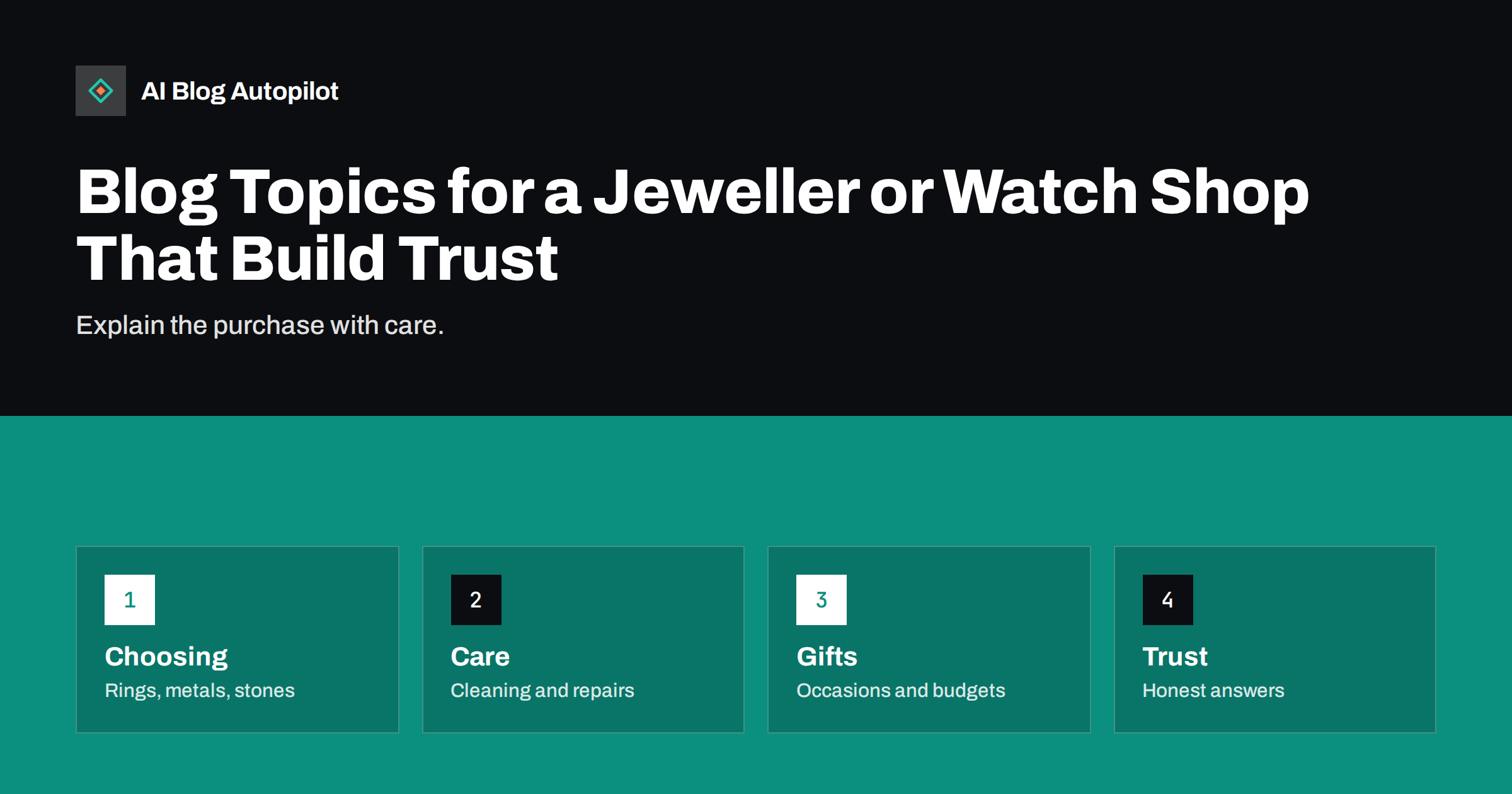
Short answer: a jeweller or watch shop blog works best when it explains how to choose, size, care for and repair pieces in plain language, and helps gift buyers find something suitable within a budget. Be honest about materials, treatments and origin, avoid inflated claims, and show the people and workshop behind the counter.
Jewellery is a purchase made with the heart and checked with the head. Customers worry about quality, value, size and whether the recipient will like the gift. They search for answers before they step into a shop, so an article that explains clearly can bring in the customer long before the first conversation.
This guide suggests topics for independent jewellers, watch retailers, repairers and makers. It covers the buying journey, the after-sale questions and the content that makes a small shop look as careful as it is.
Guides to choosing a piece
Start with the decisions that cause the most worry. For rings, write about choosing a metal, the difference between plain and set designs, how stones are described and what matters in a setting for everyday wear. For watches, explain movements in everyday language, case sizes, straps and what to expect from servicing.
Use plain explanations and avoid jargon unless you define it. When you describe grades or treatments of stones, explain what they mean for the buyer and what questions to ask. Honesty here builds long-term trust, and readers remember a shop that told them the truth when a cheaper option was suitable.
Help readers with their budget by describing what influences price without inventing numbers. Explain that weight, craftsmanship, brand and stones all play a part, and invite readers to visit or call for a quote. The guide to writing honest articles about what things cost offers a useful structure.
Add a short guide to choosing for someone else without asking them. Explain how to find out a ring size discreetly, for example by borrowing a ring they already wear and comparing it to a size chart, or asking a friend. Describe what to do if the guess is wrong and how the exchange works. Surprise gifts are one of the biggest sources of nervousness, so reassurance matters.
Include a note on allergies and sensitive skin. Explain in general terms which metals are commonly chosen by people with sensitivities, and suggest that anyone with a known reaction should ask in the shop. Avoid medical claims, and be clear that you are sharing general information.
Sizing, fitting and measuring
Sizing is one of the most searched topics. Write a clear guide to finding a ring size, with steps a person can follow at home, the reasons size can change through the day and with temperature, and why wider bands often need a different size. Add a note on how sizes differ between countries and offer a printable guide, if you can provide an accurate one.
Do the same for bracelets, necklaces and watch straps. Show how to measure a wrist, how a chain length sits on the body and what to check when buying as a gift. Photographs with a ruler or a model help, and good alt text makes the page useful to everyone, as the guide to alt text describes.
Explain your policy on resizing and exchanges in the same article, so that nervous buyers see the safety net. State the facts exactly as they apply in your shop, and keep them in step with your terms page.
Seasonal care is a good source of titles. Summer brings swimming and sun cream, winter brings gloves and cold hands, and holidays bring packing and travel. Write brief guides on what to take off, what to leave at home and how to carry valuable items safely. Travel insurance and home insurance are connected topics; mention that readers should check their own policies and ask their insurer, without giving advice on specific products.
Many people inherit jewellery and do not know what to do with it. A calm guide on how to look after inherited pieces, how to find out more about them and how to decide whether to keep, repair or sell them is valuable and sensitive. Take care with tone: these items often carry strong feelings, and a respectful voice is more important than a clever one.
Care, cleaning and storage
Care articles bring a steady flow of readers and show that your service continues after the sale. Write about how to clean common metals and stones safely, what to avoid, how to store pieces so they do not scratch each other and when to bring an item in for professional checking.
Be careful with home remedies. Some cleaning methods damage certain stones or finishes, so explain which pieces suit which approach, and recommend a visit for delicate or valuable items. Say clearly that you cannot judge a piece you have not seen, which is also a gentle way to invite readers to come in.
For watches, explain winding, water resistance, magnetism and servicing intervals in general terms, and point readers to the manufacturer’s guidance. Do not make promises about how long a movement will last.
Repairs, restoration and valuations
Many customers come to a jeweller with something old: a family ring, a broken clasp, a watch that has stopped. Write a guide for each common job, such as repairing a chain, replacing a watch battery or glass, re-stringing pearls or reshaping a worn ring. Explain what you do, how long it takes and what the customer can expect.
A story about a restored piece, with permission and photographs, is a strong article. It shows skill and respects the sentimental value of the item. Avoid showing personal details of the owner, and describe the work, not the family.
Explain valuations carefully. Describe the difference between a valuation for insurance and the price a shop might pay for an item, and avoid giving figures in a general article. Explain how to book an appointment and what to bring, such as papers, boxes or receipts. Clear information prevents misunderstandings later.
Write a short piece for first-time buyers of a significant item, such as an engagement ring or a first good watch. Explain the steps in order: understanding the person’s taste, setting a comfortable budget, learning basic terms, visiting a shop and asking questions. A calm, step-by-step guide reduces anxiety, and anxious buyers value a shop that makes the process feel safe.
Keep gift pages up to date. Delivery cut-off dates before holidays, stock levels and prices all change, so add a review date to each page and set a reminder for the weeks before the busy season. A gift guide with the wrong delivery date costs you a customer.
Gift guides that respect the budget
Gift buyers are a big audience, and many are nervous because they do not know the recipient’s taste. Write guides by occasion, such as anniversaries, birthdays, graduations, christenings and retirements, and by budget band, described in words, not exact prices that may go out of date. For each, suggest several styles and explain how to choose among them.
Include practical advice on gift wrapping, delivery times, returns and engraving. Explain how long engraving takes and what limits there are on text. These details decide whether a hurried buyer chooses your shop, and a clear answer prevents disappointment.
Build such pages so that they stay useful from year to year, and update them before each busy season.
Materials, origin and ethics
Buyers increasingly ask where materials come from. If you have information about sourcing, recycled metals, workshop practices or certification, explain it plainly and accurately. If you do not know, say what you can say and avoid vague claims such as ethical or sustainable without detail.
Make sure every claim can be supported by paper from your suppliers. Marketing rules in many countries apply to environmental and quality claims, and a mistake can be costly. The article on using evidence in marketing content explains how to back up what you write.
Explain also the difference between natural, treated and laboratory-made stones in neutral terms, and let readers decide what matters to them. Respectful, factual writing treats customers as adults.
Consider short video clips of a repair in progress. Even thirty seconds of a watchmaker at the bench shows skill better than a paragraph, and a clip can be reused on social networks. Include a written summary and a transcript on the page so that readers who cannot play sound still get the information and search engines can read it.
Answer reviews and questions in articles too. If several customers ask about a certain brand, material or service, write a page that addresses it directly and fairly. Link to it from your shop pages and use it in emails, so that the article is part of how you serve people, not just a marketing task.
People, workshop and local life
Independent shops win on people. Introduce the jeweller, the watchmaker and the person who answers the phone. Show the workshop, the tools and the process of making or repairing, using real photographs. A short story about how you started or why you chose your trade adds personality that large chains cannot copy.
Write about local events and customers, with permission. A piece on a charity you support, a school prize you provided or a local anniversary connects your shop to the community, which helps both readers and local search. Keep your opening hours, address and contact details clear on every page.
Finally, collect questions from your counter. Each question that a customer asks twice is a good title for a new article, and every answer is a page that can work for you while the shop is closed.
How AI Blog Autopilot helps
AI Blog Autopilot can write and publish articles on your topics, with FAQ sections, tags and SEO meta, and share them to your social networks. Check sizes, materials and policies against your shop before each article goes live. See the pricing page for plans.
Related reading
- Blog Strategy for an Online Shop
- Blog Strategy for a Local Business
- A Blog for a Seller of Handmade Goods
The bottom line
Explain choosing, sizing and care honestly, support every material claim with evidence and let the people and workshop behind the shop show through.
SSS
What should a jeweller’s blog write about first?
Ring and wrist sizing, care and cleaning, and gift guides, because they answer the questions buyers ask before visiting.
Should I list prices in articles?
Prefer describing what affects price and inviting readers to ask for a quote, unless you can keep exact prices current.
How do I write about ethical sourcing?
Only state what your suppliers can document, and avoid vague words like sustainable without detail.
Can I show customers’ repaired pieces?
Yes, with permission, describing the work without personal details of the owner.
How can I help gift buyers who are unsure?
Offer guides by occasion and budget, with clear delivery, engraving and return information.