ENEnglish
 LTLietuviškai
 DEDeutsch
 FRFrançais
 RUРусский
 ESEspañol
 PLPolski
 ITItaliano
 UKУкраїнська
 CSČeština
 PTPortuguês
 JA日本語
JA日本語 LVLatviešu valoda
 ETEesti
 HUMagyar
 IDBahasa Indonesia
 TRTürkçe
 HIहिन्दी
 ELΕλληνικά
 ARالعربية
 THไทย
THไทย VITiếng Việt
 RORomână
 MSBahasa Melayu
 BNবাংলা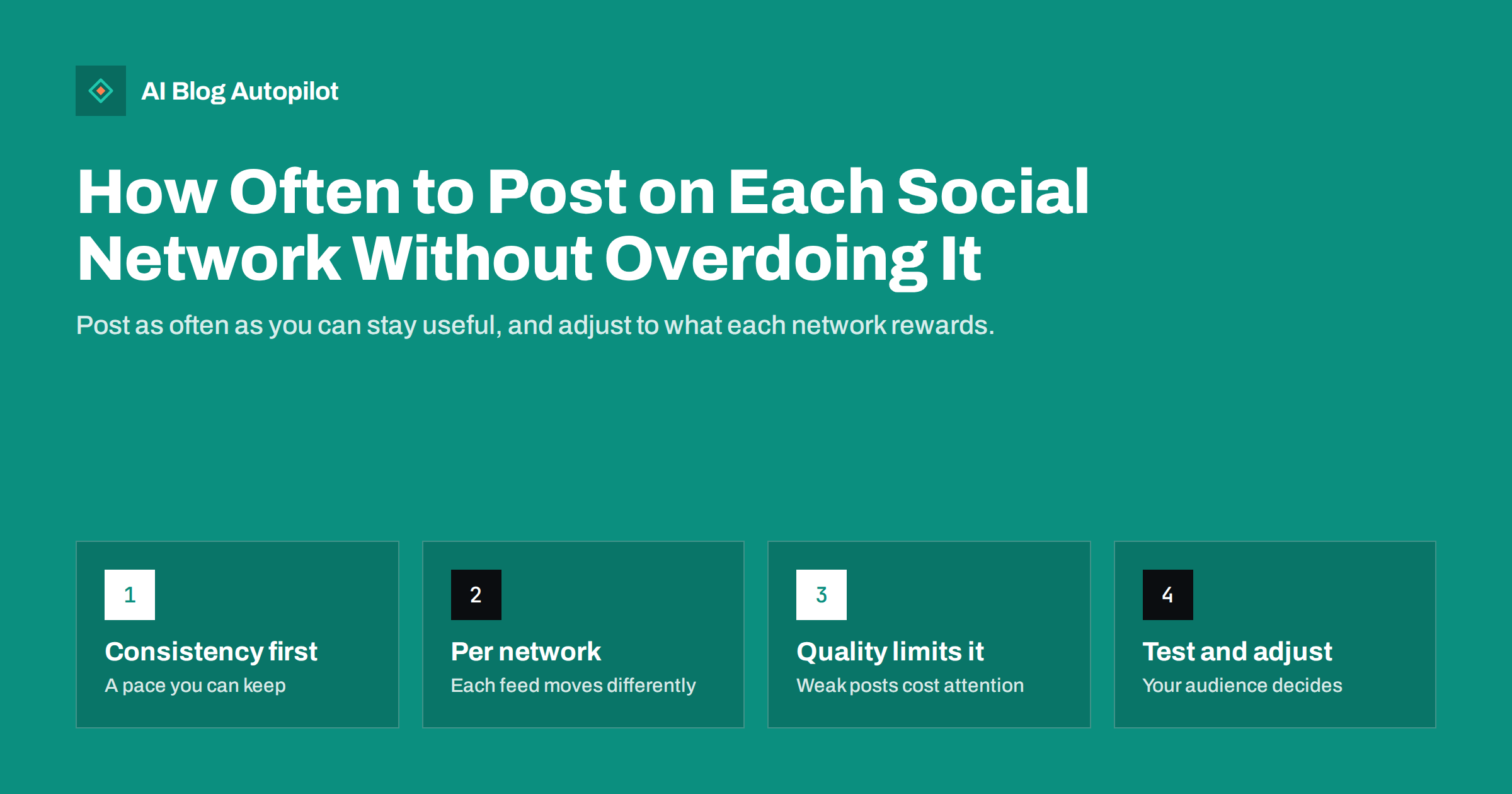
Short answer: there is no single right posting frequency. Fast-moving feeds such as X, Threads or Bluesky handle several posts a day, while LinkedIn and Facebook pages usually do well with a few good posts a week, Instagram with a few posts plus occasional stories, and Pinterest with regular fresh pins spread over time. More important than any number is consistency and quality: post only as often as you can stay useful, keep a steady rhythm, and adjust after a month or two based on how your own audience responds.
“How often should I post?” is one of the first questions anyone asks about social media, and the answers online range from “once a week” to “ten times a day”. Both can be right, for different networks and different accounts. Posting too rarely makes an account look abandoned and gives followers little reason to stay; posting too often with weak content trains people to scroll past you. This guide explains how frequency works on the main networks and how to find a pace that suits your business and your time.
Why frequency matters less than you think
Most networks now show posts based on predicted interest rather than strict time order. A post that people engage with keeps being shown; a post that nobody reacts to quietly disappears. That changes how frequency works:
- More posts do not guarantee more reach. If extra posts are weaker, they can reduce the average engagement of your account.
- Consistency helps. Regular posting keeps your account in front of followers and gives the platform more signals about what your audience likes.
- Each post competes with your others. Two posts within an hour on the same network often split attention.
The practical rule: the right frequency is the highest one at which you can keep every post genuinely useful or interesting.
Time is the real constraint for most small teams. Before choosing a pace, estimate how long a good post takes you on each network, including writing, finding or creating an image and replying to comments. Multiply by the number of posts you are considering. If the result does not fit into your week, lower the pace now rather than letting quality slip later.
Typical starting points by network
These are common starting points, not targets. Platforms change, and your audience may behave differently:
| Network | Common starting pace | Why |
|---|---|---|
| A few posts per week | Posts stay in feeds for days; quality and discussion matter | |
| Facebook page | A few posts per week | Reach depends heavily on engagement per post |
| A few feed posts per week, stories more often | Visual effort per post; stories suit lighter updates | |
| X, Threads, Bluesky, Mastodon | One or more posts per day | Fast feeds where posts fade quickly; replies count |
| Regular fresh pins, spread over the week | Pins are discovered through search for a long time | |
| Telegram or similar channels | When there is real news, often a few per week | Followers get notifications; too many cause unsubscribes |
A small business does not need to be on every network at full pace. Two networks done well are better than six done poorly.
If you are just starting, begin at the lower end of these ranges. It is easier to increase the pace once you have a routine and a stock of ideas than to recover from weeks of rushed posts. A new account that posts steadily twice a week for three months usually learns more about its audience than one that posts daily for two weeks and then stops.
LinkedIn and Facebook: fewer, better posts
On LinkedIn, posts can keep circulating for several days as people comment and react. Posting several times a day rarely helps and can make followers see you as noisy. A few thoughtful posts a week, each with a clear insight, a question or a useful article, usually works better. Comments, especially your replies to them, extend the life of each post.
Facebook pages behave similarly. Reach for business pages depends strongly on how people respond to each post, so a steady rhythm of useful, local or community-oriented posts tends to outperform a stream of links. Groups and events can add value if your audience uses them.
Personal profiles and company pages on LinkedIn can need different rhythms. People often respond more to posts from individuals than from brand pages, so a founder or team member posting once or twice a week can complement a company page that posts a little less often.
Instagram: feed posts, stories and effort
Instagram rewards visual quality, which limits how often most small businesses can post good feed content. A few strong feed posts or carousels a week, plus more frequent stories for lighter updates, is a realistic pattern. Stories suit behind-the-scenes moments, quick tips and reminders without crowding your main grid.
Because links are limited in captions, Instagram works better for building familiarity than for driving immediate blog traffic. Do not judge its frequency only by link clicks.
Fast feeds: X, Threads, Bluesky and Mastodon
On fast-moving feeds, a post is mostly seen within hours, then fades. Accounts that post once a week are easy to miss. One or more posts a day is common, and replies and conversations count as much as original posts.
That does not mean filling the feed with links. Mix short tips, opinions, questions, replies and occasional article shares. On Mastodon and Bluesky especially, community norms favour conversation over broadcasting, and accounts that only post links often get little response.
Pinterest: steady and long-lived
Pinterest works more like a visual search engine than a feed. Pins can be found months or years after posting, so a steady flow of fresh pins spread across the week tends to work better than a large batch on one day. Create new pin designs for important articles over time rather than repinning the same image repeatedly. Evergreen how-to content does particularly well.
Seasons and events change the right pace too. A shop may post more often before holidays, a conference organiser around the event, a tax adviser before deadlines. Plan these busier periods in advance, and allow quieter weeks afterwards rather than keeping the peak pace all year.
Whatever the network, keep a small reserve of ready posts for weeks when there is no new article or news, so the rhythm does not break.
Signs you are posting too often or too rarely
Your own data shows when the pace is wrong:
- Too often: engagement per post falls steadily, unfollows rise, you struggle to find anything worth saying, or posts feel rushed.
- Too rarely: each post performs reasonably, but follower growth is flat, people forget the account exists and the profile looks inactive to visitors.
- About right: engagement per post is stable or improving, you can keep up without strain, and followers respond to most posts.
Watch the replies as well as the numbers. If followers start commenting that they see you everywhere, or if your own team finds it hard to keep up with comments, the pace is probably too high for the value you can offer. Silence after a burst of posts is a similar warning.
Finding your own pace
A simple experiment works better than any general rule:
- Choose a starting pace for each network you use, based on the table above and the time you have.
- Keep it steady for four to six weeks, with similar types of posts.
- Note engagement per post, link clicks, follower change and replies.
- Increase or decrease the pace on one network at a time, and keep the new pace for another four to six weeks.
- Keep the pace that gives the best results per post without lowering quality.
Spread posts across the day and week rather than bunching them. If you publish several articles in a day, stagger their shares across hours or days so each gets attention, and give each network its own timing.
Frequency and your blog schedule
Your blog’s publishing rhythm sets a natural floor for social posts: each new article deserves at least one share per network where it fits. Between articles, the posts come from tips, questions, older articles and news. A blog that publishes several times a week can support a busier social schedule than one that publishes monthly.
Resharing older articles is a good way to fill the calendar without creating new material every time, as long as you change the angle and space reshares out so followers do not see the same post repeatedly.
Whatever pace you choose, write it down in your social media plan so everyone posting for the business follows the same rhythm.
How AI Blog Autopilot helps
AI Blog Autopilot shares every article it publishes to your social networks, with its own text, length and timing for each network: for example, the blog at your hour, LinkedIn 30 minutes later, Facebook after two hours and Pinterest the next day. Plans with evergreen reshares bring older articles back into your feeds over time. See the pricing page for plans.
Related reading
- Best Time to Share a Blog Post on Social Media
- Resharing Old Blog Posts on Social Media Without Spamming
- Using LinkedIn to Distribute a Business Blog
- Automated Social Posting Mistakes That Make Accounts Look Robotic
The bottom line
The right posting frequency depends on the network, your audience and the time you have. Fast feeds handle daily posts, LinkedIn and Facebook usually do best with a few strong posts a week, Instagram balances feed posts with stories, and Pinterest rewards steady fresh pins. Choose a pace you can keep with good quality, hold it for a few weeks, measure engagement per post and adjust one network at a time.
FAQ
How often should a business post on social media?
It depends on the network. A few posts a week is a common starting point for LinkedIn, Facebook and Instagram feed posts, while fast feeds such as X, Threads or Bluesky handle daily posting. Consistency and quality matter more than any number.
Can posting too often hurt reach?
It can. If extra posts are weaker, engagement per post drops and platforms may show your content to fewer people. Followers may also mute or unfollow accounts that post too much.
Is it better to post daily or a few times a week?
Post daily only if you can keep every post useful. For many small businesses, a few strong posts a week on each network beats daily posts that feel rushed.
How many times should I share one blog post?
At least once on each network where it fits when it is published. Evergreen articles can be shared again later with a new angle, spaced out over weeks or months.
How do I find the right posting frequency?
Start with a realistic pace, keep it steady for four to six weeks, track engagement per post and follower change, then adjust one network at a time and keep what works.