ENEnglish
 LTLietuviškai
 DEDeutsch
 FRFrançais
 RUРусский
 ESEspañol
 PLPolski
 ITItaliano
 UKУкраїнська
 CSČeština
 PTPortuguês
 JA日本語
 LVLatviešu valoda
 ETEesti
 HUMagyar
 IDBahasa Indonesia
 TRTürkçe
 HIहिन्दी
 ELΕλληνικά
 ARالعربية
 THไทย
 VITiếng Việt
 RORomână
 MSBahasa Melayu
 BNবাংলা
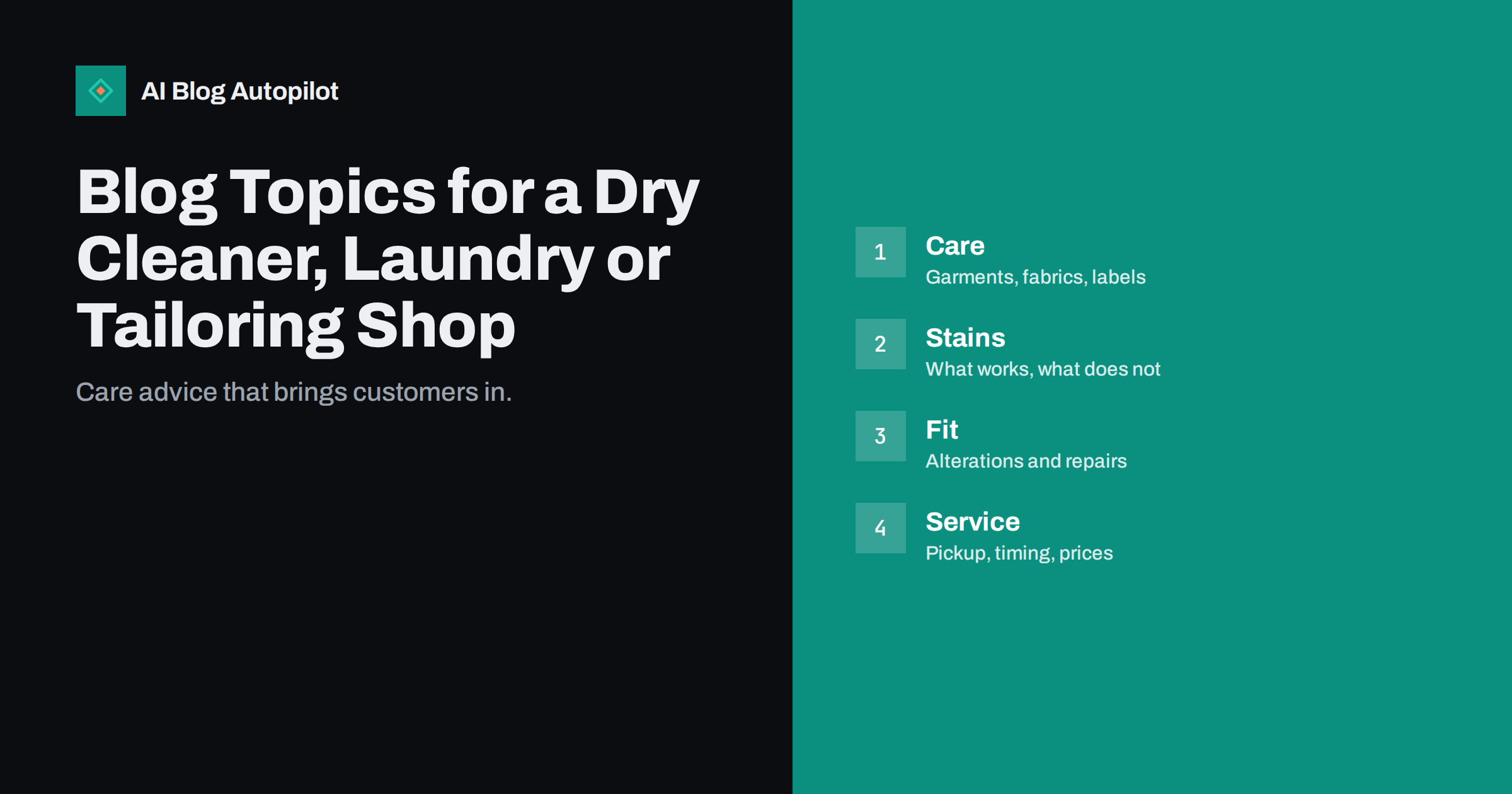
Short answer: a laundry, dry cleaning or tailoring blog works best when it explains garment care in plain language, gives careful stain advice, describes how alterations and repairs work, and makes your services, timing and prices easy to understand. Be honest about what cleaning can and cannot do, and show the skill and people behind the counter.
People bring their clothes to a professional because they worry about damage: a wedding dress, a favourite coat, a suit for an interview. Before they trust you, they search for answers. A blog that explains what you do and how you protect their garments can turn that anxiety into a booking.
This guide offers topic ideas for dry cleaners, launderettes, laundry services, tailors and alteration shops. It covers care advice, stains, fit, special items, services and the human side of a local trade.
Add a guide to what happens to a garment in your shop, step by step: receiving and tagging, inspection for stains and damage, choice of method, cleaning, pressing, quality check and return. Customers imagine the worst when they hand over a favourite item, and a clear picture of the care taken reassures them. Photographs of each stage help, as long as no customer item is identifiable.
Explain what you check before cleaning, such as buttons, trims, linings and colour fastness, and why some items are returned with a note about risk. Customers who understand your caution see it as expertise, not as an excuse.
Garment care in plain language
Start with the questions that customers ask at the counter. What do the symbols on a care label mean? When should something be dry cleaned and when can it be washed? How often should a suit, a coat or a duvet be cleaned? Write one clear guide for each, with simple language and photographs.
Explain fabrics in everyday terms: wool, silk, linen, cotton, leather, suede, synthetics and blends. Describe how each reacts to water, heat and cleaning methods, and what to avoid. Be careful not to promise results, since the outcome depends on the garment, its age and previous treatment.
Offer seasonal guides: preparing winter coats for storage, refreshing summer clothes, caring for school uniforms before term. Seasonal pages bring traffic at predictable times, and you can update them each year at the same address. The guide to seasonal content planning explains how.
Create a quick-reference chart for the most common stains, listing what to do first, what to avoid and when to bring the item in. A table works well here, provided the text beneath it explains the reasons. Keep the chart short enough to print and stick on a fridge, and customers will keep your name on their wall.
Encourage speed. Many stain problems become permanent because people wait. A clear message that you will look at a stain at once, and that the earlier the better, brings customers in promptly and improves your results.
Stains: honest advice
Stain advice is among the most searched topics. Write guides for common stains: red wine, coffee, grease, ink, sweat, make-up and grass. Explain first aid steps that help, such as blotting instead of rubbing, and steps that make things worse, such as heat. Say clearly when to bring the garment in as soon as possible.
Be honest about limits. Some stains cannot be fully removed, particularly if they are old, set by heat or on delicate fabrics. Explaining this in advance sets realistic expectations and protects your reputation. Describe what you will do, such as a test or a warning about risk, before you treat an item.
Avoid recommending risky home remedies without caveats. A method that works on one fabric can ruin another. Encourage readers to test on a hidden area and to contact you for valuable items. The article on saying who a service is not for shows how to write limits gracefully.
Write about repairs as a way of keeping clothes longer. Explain how to mend small tears, replace buttons, rebuild a worn lining, resole shoes if you offer it or refresh a favourite coat. Repair articles resonate with people who want to buy less and keep more, and few businesses explain this well.
Include a guide to altering clothes bought online or second-hand, a growing reason for visits. Describe what can be changed, what cannot, and the usual limits of fabric and seams. Customers appreciate knowing before they buy whether an item can be made to fit.
Alterations, repairs and made-to-measure
Many customers do not know what a tailor can do. Write a guide to common alterations: shortening trousers, taking in a jacket, replacing a zip, adjusting a waist, repairing a lining and mending tears. For each, explain what is possible, how long it takes and what affects the price.
Explain fitting: what to wear to a fitting, how many visits are usually needed, how to tell a good fit and how to describe what you want. Include a guide to preparing for a wedding or event, since customers worry about timing and a calm explanation of the process helps them plan.
If you offer made-to-measure or bespoke work, explain the steps from measurement to final fitting. Describe the choices of cloth and style, and the time frame. Use real photographs of your work, with permission from the wearers, and respect privacy.
Write a short guide to preparing items for cleaning: emptying pockets, closing zips, noting existing damage and pointing out stains. Customers who prepare items help you do a better job. Offer a printable checklist for the counter and for the website, and keep the tone friendly, not instructive.
Special items and large jobs
Customers worry most about special items. Write about wedding dresses, leather and suede, curtains, duvets and pillows, rugs, sportswear, uniforms and workwear. For each, describe how your team handles the item, how long it takes and how it is returned, such as boxed or on hangers.
Explain preservation and storage. Many people want to keep a wedding dress, a christening gown or a family heirloom. Describe how cleaning and storage work, what the process involves and what conditions help the item last. Avoid absolute promises about how long it will survive.
Cover business customers: restaurants, hotels, salons, clinics and offices that need regular laundry or uniform services. Explain collection schedules, quality checks and how to arrange an account. A short guide for businesses is rarely written by competitors and can bring valuable regular work.
Explain peak times, such as before weddings, holidays and the start of school terms, and advise customers how far ahead to bring items. Honest timing advice prevents last-minute disappointment and spreads your workload. Update the page each year, and make sure the dates match what the team can really deliver.
Services, timing and prices
Make the practical details easy to find. Explain how your service works: drop-off, pick-up and delivery, same-day or next-day options, how you notify customers and how payment works. Add opening hours, a map and parking information. A page that answers these questions clearly removes friction.
Describe pricing honestly. You need not publish a full list, but explain what affects prices, such as fabric, size, complexity and urgency. If you do publish prices, mark the date and keep them current. The guide to writing honest articles about what things cost offers a structure.
Explain your policy on damage, loss and claims in plain words. Customers need to know what happens if something goes wrong. A clear, fair statement shows confidence and reduces disputes, and it should match your terms exactly.
Sustainability and fabric care at home
Customers increasingly ask about the environment. If you use particular methods, such as low-temperature washing, efficient machines or alternatives to traditional solvents, explain them accurately. Avoid vague green claims, and make sure you can support what you say. Describe what you do, not what you hope to do.
Share advice that helps garments last longer: washing less often, using the right detergent, drying carefully, storing properly and repairing small damage early. Customers may need your services less often, but they will trust you more, and repair and alteration are a growing part of the trade.
Offer guides to home laundry for those who prefer it, such as sorting loads and reading labels. Even if you sell cleaning, helping people do simple things at home builds goodwill and shows that you are interested in good care, not just income.
Gather stories from customers who have used your service for years: the suit that was altered three times, the coat that was saved. With permission, such stories show reliability better than any slogan. Keep them short and respectful, and let the customer decide how much to share.
Share a day in the life of the shop, from the first delivery to the last pickup. Describe the sounds, the tools and the routines, with photographs where people are happy to appear. A behind-the-scenes post helps customers see that their garments are handled by skilled people, and it shows that the business is a real, local one.
The people and the craft
Introduce your team. Customers trust a tailor or cleaner whose face and story they know. Write about how long you have been in the trade, how you learned your skills and what you enjoy about the work. Use real photographs of the shop and the workshop.
Show the craft in action: a jacket being pressed, a hem being stitched, a stain being treated. A short clip with captions or a series of photographs makes the invisible work visible, and customers appreciate what goes into the service. Ask permission before showing any customer’s item.
Take part in local life: school uniform services, community events and charity clothing drives. Write about them honestly and modestly, and credit your partners. Local involvement supports a reputation for reliability.
How AI Blog Autopilot helps
AI Blog Autopilot can write and publish articles on your chosen topics, with FAQ sections, tags and SEO meta, and share them to your social networks. Check care advice, timings and prices against your own practice before each article goes live. See the pricing page for plans.
Related reading
- Blog Topics for Home Services Businesses
- Blog Strategy for a Local Business
- Blog Topics for a Fashion Boutique
The bottom line
Explain garment care plainly, be honest about stains and limits, describe alterations and services clearly and show the craft and the people.
FAQ
What should a dry cleaner’s blog write about first?
Care label meanings, common stain first aid, and how your drop-off, pickup and pricing work.
Should I give home stain remedies?
Only with caveats, such as testing on a hidden area, and invite readers to bring valuable items to you.
How do I show alterations work?
Use real before-and-after photographs with the wearer’s permission and describe the time and process.
Should I publish prices?
Explain what affects prices and publish a list only if you can keep it current and dated.
Can I make environmental claims?
Only specific, accurate ones that you can support, and avoid vague green wording.