ENEnglish
 LTLietuviškai
 DEDeutsch
 FRFrançais
 RUРусский
 ESEspañol
 PLPolski
 ITItaliano
 UKУкраїнська
 CSČeština
 PTPortuguês
 JA日本語
 LVLatviešu valoda
 ETEesti
 HUMagyar
 IDBahasa Indonesia
 TRTürkçe
 HIहिन्दी
 ELΕλληνικά
 ARالعربية
 THไทย
 VITiếng Việt
 RORomână
 MSBahasa Melayu
 BNবাংলা
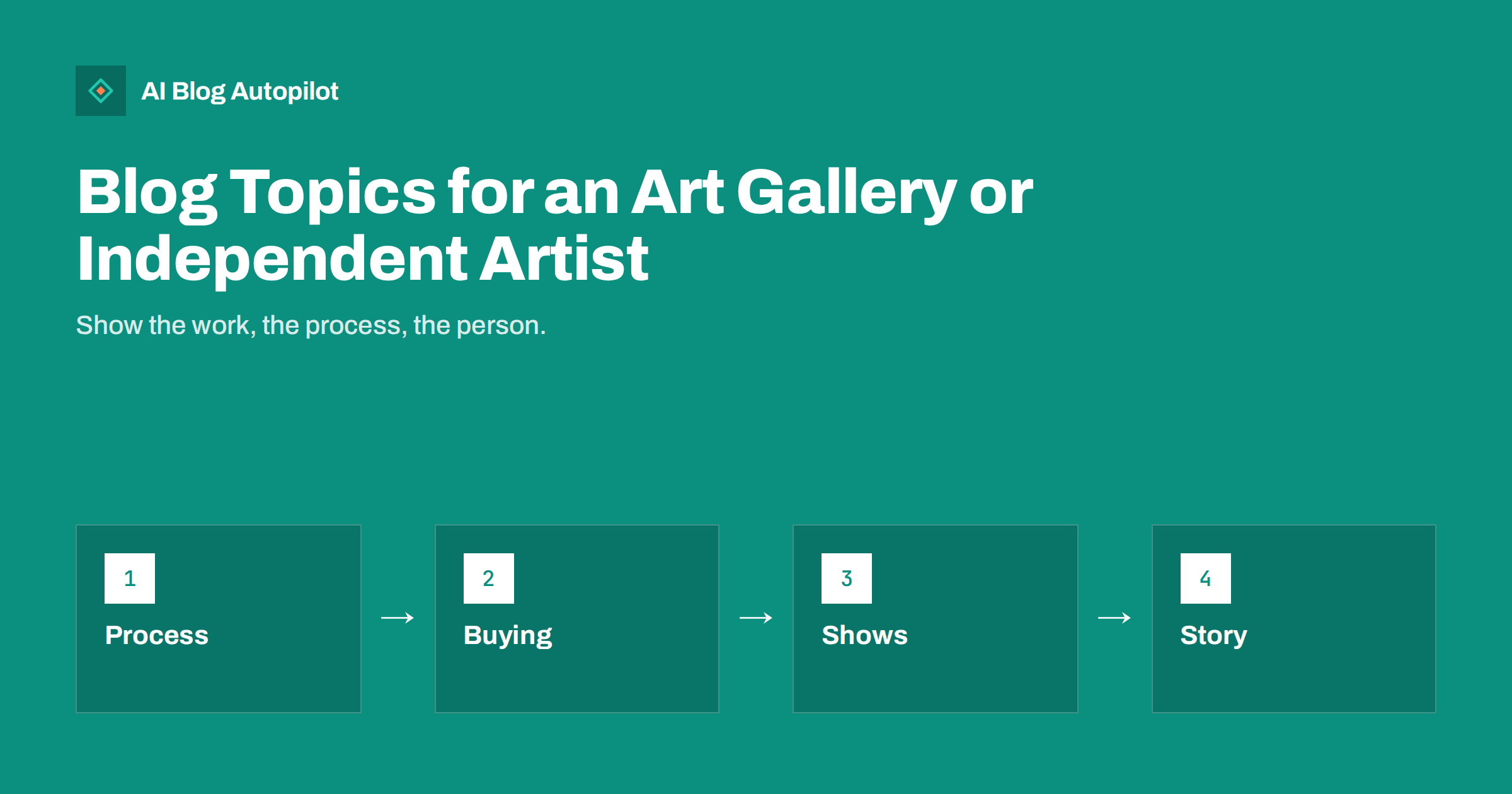
Short answer: an art gallery or artist blog works best when it shows the process behind the work, helps first-time buyers understand how to buy, announces exhibitions with lasting pages and tells the story of the people involved. Be clear about prices, framing, shipping and authenticity, and keep each page useful after the show has ended.
Art is bought slowly. Visitors look, return, compare and think. A blog gives them a place to learn what they cannot see in a single image: how the work is made, what it means to the artist and what to expect when buying. That context builds the confidence people need before spending money.
This guide offers topic ideas for independent artists, small galleries, studios and makers who sell original work and prints. It covers the buying journey, exhibitions, process stories and the practical information that many art websites leave out.
Short videos work well here too: a few seconds of brushwork, a pour of glaze or a press pulling a print show skill that words cannot. If you add video, give it a clear title and a written summary, and add a transcript or captions for readers who cannot play sound. Keep the file size small so the page loads quickly on a phone.
Tell the story of a single work in detail now and then. Explain where the idea came from, how many versions were made, what changed and when it felt finished. A detailed account of one piece often becomes the page that readers share, and it gives a buyer something to talk about once the work is on their wall.
Show the process behind the work
Readers love to see how a piece comes to life. Write about the stages of a painting, a sculpture or a print, from first sketch to finished work. Use photographs from the studio, short captions and plain language about materials and techniques. A series of images in order can tell the story better than a long description.
Explain the choices you made, such as why you chose a certain surface, pigment or method, and what went wrong along the way. Honest accounts of difficulties make the final piece more valuable, since readers see the effort and skill involved. Avoid mystical language that shuts out beginners, and keep sentences clear.
Include a short list of the materials used, with their care needs. This is useful to buyers who want to look after the work, and it is the kind of detail that search engines and AI assistants like to quote.
Add a guide to buying from a gallery compared with buying from the artist directly, written fairly for both. Explain what a gallery does, such as curating, presenting and handling sales, and what buying direct offers. Many readers are unaware of these differences, and a clear explanation builds trust whichever route they choose.
Include a section on buying as a gift. Explain how to choose for someone else, how a gift voucher or a smaller work can be a safe option, and how to arrange a return or exchange if the recipient does not connect with the piece. Gift buyers are anxious, and calm advice wins them over.
Guides for first-time buyers
Many people want to buy art but feel unsure. Write a calm guide to buying your first original: how to decide what you like, how to think about size and wall space, how to ask about condition and provenance, and what a fair process looks like. Answer questions people are shy to ask, such as whether it is acceptable to haggle or to ask for a payment plan.
Explain the difference between originals, limited editions and open prints in plain terms, and say exactly what you offer. Describe what a certificate of authenticity includes and how you provide one. Honest explanations protect buyers and set you apart from sellers who use vague words.
Write about practical matters: how to hang a piece, which light is best, how to protect it from sunlight and damp, and how to insure it. The guide to writing honest articles about what things cost helps with the sections about price and value.
Pricing, framing and shipping explained
Price is the biggest unspoken question. Explain how you set prices, in general terms: size, materials, time, the reputation of the artist and the market. You do not need to reveal a formula, but readers feel respected when they understand that prices are reasoned, not random.
Say what is included. Is the work framed, stretched, signed and ready to hang? Are there extra charges for frames, handling or delivery? State the arrangements for shipping fragile and large pieces, insurance in transit and what happens if something arrives damaged. Add return rules, if any, in plain words.
Keep this information on one clear page and link to it from each work, so that it never differs between pages. Check consumer rules in your country, which often include a cooling-off period for distance sales, and make sure your wording matches the law.
Exhibitions and events that last
An exhibition page often disappears after the show closes, which wastes the links, images and interest it gathered. Create one page for each show with the dates, location, the artists, a short essay, images of the works and, later, a review of what happened. After the show, keep the page and mark it as past, with links to current events and available works.
Publish before the opening, not on the day. Give people time to plan, share and tell friends. Include practical details: opening hours, entry, access for people with limited mobility, parking or public transport, and how to buy. A map and a clear time make a difference.
After the event, write a short report with photographs, thanks to visitors and the artists, and any works still available. This creates a record, offers late buyers a route to purchase and gives you material for newsletters and social posts. The advice on event announcement posts explains how to word them.
Add a regular feature that readers can follow, such as an artist of the month or a work of the week, with a consistent format. A series gives people a reason to return, and each entry becomes a page that can be found by searches for the artist or the work. Keep each entry accurate, dated and linked to the artist’s own page.
Record your interviews and offer the audio or a transcript if the artist agrees. Some people prefer to listen, and a transcript helps readers who cannot, as well as search engines. Edit lightly and keep the artist’s voice.
Artist profiles and interviews
Readers connect with people. Write profiles of the artists you show or interviews with yourself: how they started, what inspires them, what they are working on and what they would tell beginners. Use the artist’s own words where you can, and ask permission before publishing.
Keep a standard structure so that profiles are easy to compare: short biography, main themes, materials, selected works, exhibitions and contact details. Add a recent photograph and links to the artist’s own pages. This helps readers who want to follow the artist and helps journalists and curators who need quick facts.
Include artists at different stages, not just the famous or the established. Emerging artists bring their own audience, and a gallery that champions new work earns a reputation for discovery.
Explain pricing for commissions in general terms: size, materials, complexity and time all play a part, and a deposit is common. Say how many rounds of changes are included and what happens if the client is not happy at the end. Clear expectations on both sides make the experience pleasant, and a happy client is the best source of the next commission.
Offer a short questionnaire or checklist that helps people prepare a brief, such as the room, the size, the colours they like and the feeling they want. A good brief saves time and improves the result, and it shows that you take the client’s ideas seriously.
Commissions and custom work
If you accept commissions, explain how they work. Describe the steps from first conversation to delivery: brief, sketches, agreement, deposit, progress updates, final approval and handover. Give a realistic sense of timing and say what affects it. Readers who understand the process are more likely to start one.
Share examples of past commissions, with permission from the client, and describe what was asked and how it was delivered. Avoid personal details that identify the client unless they have agreed. Explain what is possible and what is not, such as copying another artist’s work, which you should not do.
Be clear about rights. State who owns the physical piece and who keeps the copyright, and whether images of the work may be used by either party. Clear terms prevent disputes, and a short, plain summary on the page helps clients feel at ease.
Think about accessibility and welcome. Many people feel galleries are not for them. Write openly about visiting with children, coming without buying and asking questions, and explain that all are welcome. Describe the space honestly, including steps, lifts and quiet times. A friendly, practical page can change someone from a reader into a visitor.
Collecting, care and community
Collectors are a loyal audience. Write about how to start a collection, how to document purchases, how to care for pieces and how to store works not on display. Explain how to look after paper, canvas, ceramics or glass in general terms, and suggest a professional conservator for valuable or damaged work.
Cover the community around your work: local art walks, open studios, workshops, school visits and charity auctions. Join in and report on them. These stories show that you are part of a living scene, and they attract links from organisers and local media.
Offer a newsletter for people who want to hear about new work before it is shown. A gentle invitation at the end of articles, with a clear promise of how often you will write, builds a list of interested buyers without pressure.
How AI Blog Autopilot helps
AI Blog Autopilot can write and publish articles on your chosen topics, with FAQ sections, tags and SEO meta, and share them to your social networks. Always check titles, dimensions, dates and prices of works against your own records. See the pricing page for plans.
Related reading
- A Blog for a Musician or Band
- A Blog for a Seller of Handmade Goods
- A Photographer’s Blog: Showing Your Work and Winning Bookings
The bottom line
Show the process, guide first-time buyers, state prices and terms clearly and keep exhibition pages alive after the show.
FAQ
What should an artist’s blog write about first?
The process behind the work, a guide for first-time buyers and a clear page on prices, framing and shipping.
Should I publish prices?
If you can keep them current, yes. Otherwise explain how pricing works and invite enquiries.
What happens to exhibition pages after the show?
Keep them, mark them as past and link to current events and available works.
Can I show commissioned work?
Yes, with the client’s permission and without identifying details they have not agreed to share.
How do I explain authenticity to buyers?
Say what a certificate includes, how you provide it and how a work can be verified.