 ENEnglish
 LTLietuviškai
 DEDeutsch
 FRFrançais
 RUРусский
 ESEspañol
 PLPolski
 ITItaliano
 UKУкраїнська
 CSČeština
 PTPortuguês
 JA日本語
JA日本語 LVLatviešu valoda
 ETEesti
 HUMagyar
 IDBahasa Indonesia
 TRTürkçe
 HIहिन्दी
 ELΕλληνικά
 ARالعربية
 THไทย
THไทย VITiếng Việt
 RORomână
 MSBahasa Melayu
 BNবাংলা
#SEO articles
Articles about long-form SEO content: how long a post should be, how to plan it around a real search query and how to structure it so both readers and search engines understand it. We explain why 2,000–3,000 words is the length that usually ranks, and when shorter is better. You will find checklists for titles, meta descriptions, headings and FAQ blocks. We also cover how often to publish and why a steady pace beats bursts. Every tip is something AI Blog Autopilot applies automatically, so you can check it on your own blog.
 Oct 1, 2026 · 8 min read
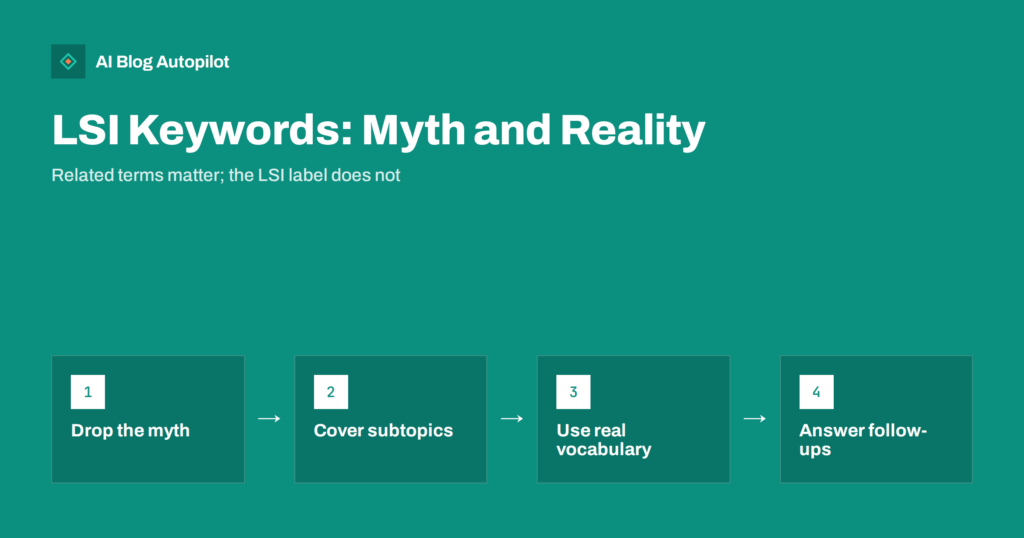
LSI Keywords and Related Terms: What Actually Matters
LSI keywords are a persistent SEO myth, but related terms still matter. What search engines actually use, and how to cover a topic's language…
 Oct 1, 2026 · 8 min read
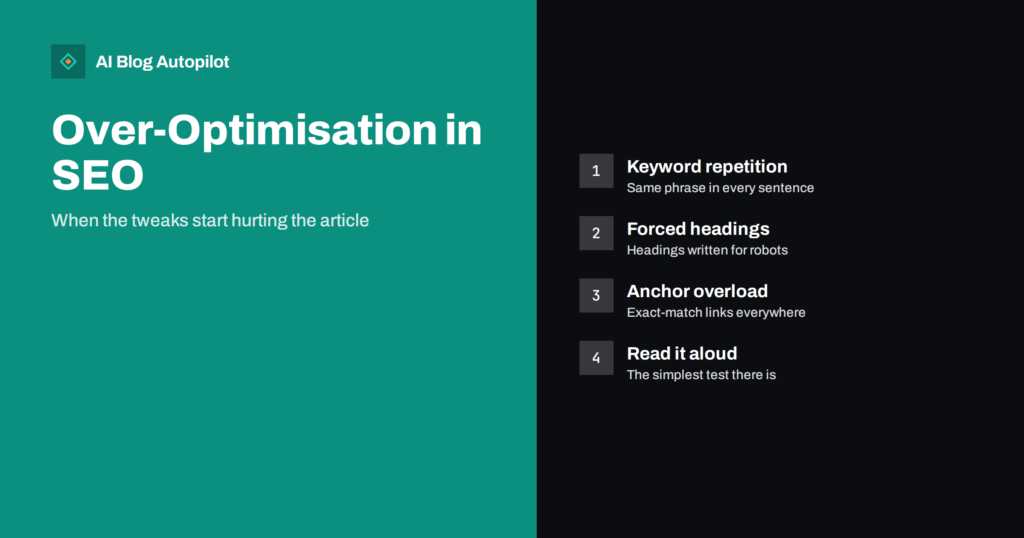
Over-Optimisation: When SEO Tweaks Make an Article Worse
Too much SEO can hurt an article: repeated keywords, forced headings, link overload. How to spot over-optimisation and fix it without losing what works.
 Oct 1, 2026 · 9 min read
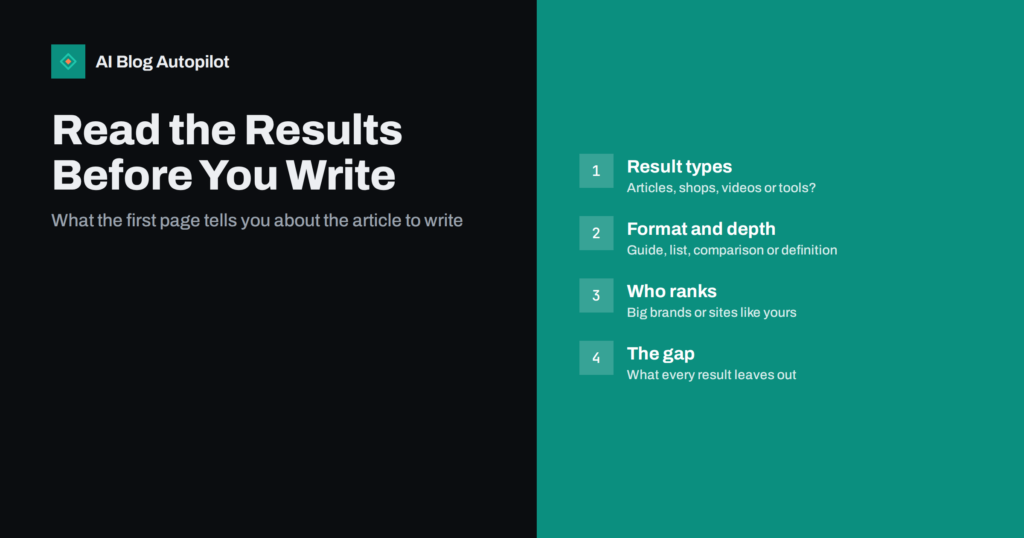
Reading the Search Results Before You Write an Article
Ten minutes on the results page tells you what format, depth and angle an article needs to rank. A practical method for reading search…
 Sep 30, 2026 · 8 min read
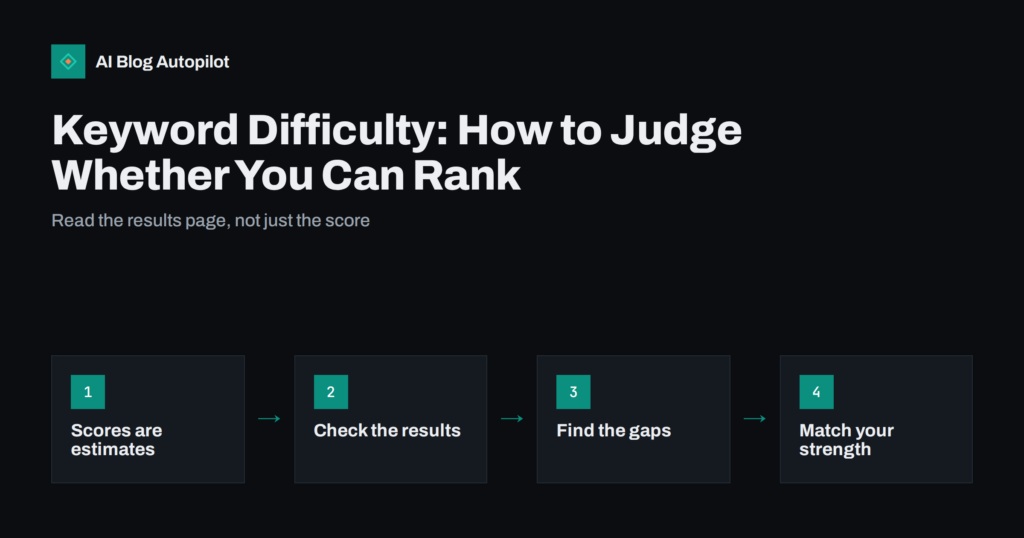
Keyword Difficulty: How to Judge Whether You Can Rank
What keyword difficulty scores measure, why tools disagree, and a practical way to judge from the results page itself whether a blog can realistically…
 Sep 30, 2026 · 9 min read
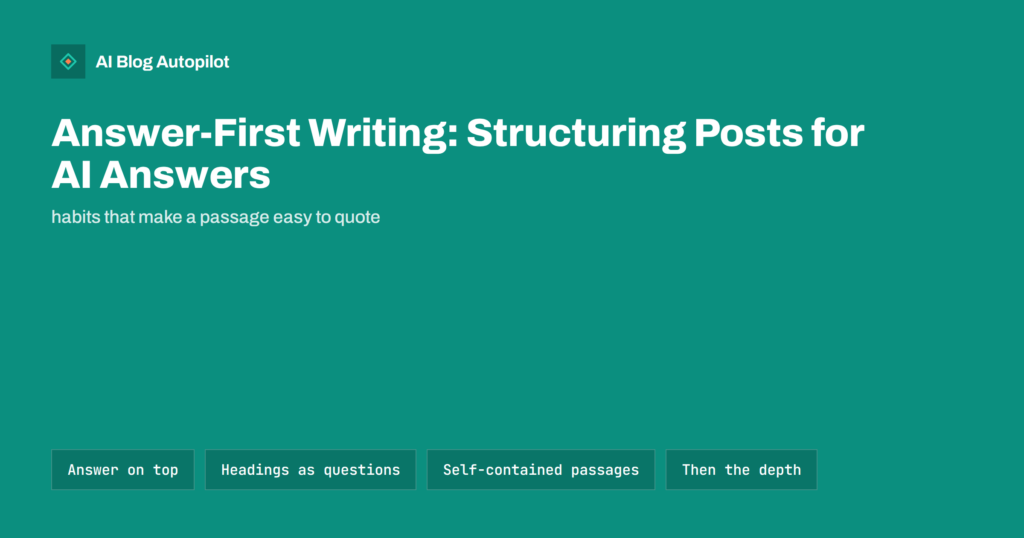
Answer-First Writing: Structuring Posts for AI Answers
Answer-first writing puts the direct answer at the top of a post and each section. How to do it well, why AI answers favour…
 Sep 28, 2026 · 8 min read
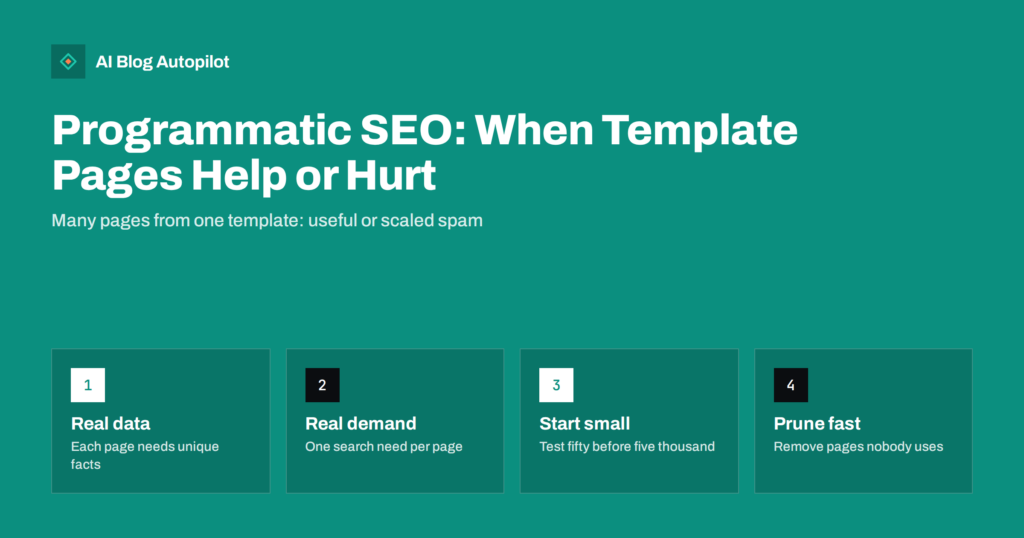
Programmatic SEO: When Template Pages Help or Hurt
Programmatic SEO creates many pages from one template and a dataset. When it serves real searches, when it becomes scaled spam, and how small…
 Sep 26, 2026 · 8 min read
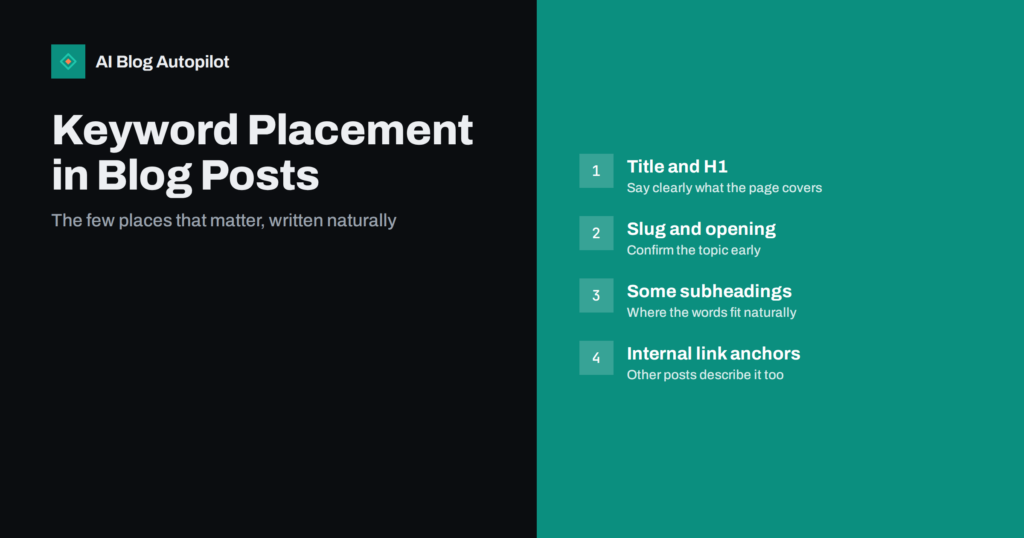
Keyword Placement: Where the Main Phrase Belongs in a Post
Where to use an article's main search phrase: title, H1, slug, opening, headings and links, and where not to force it. A practical guide…
 Sep 26, 2026 · 9 min read
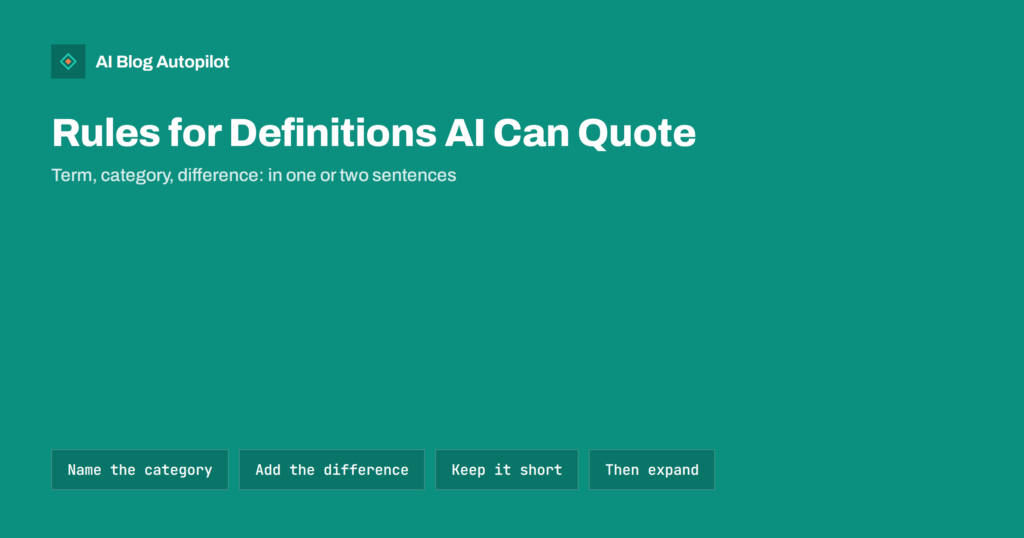
Writing Clear Definitions That AI Answers Can Quote
A good definition names the term, its category and what makes it different. How to write short definitions that readers and AI answers can…
 Sep 20, 2026 · 6 min read
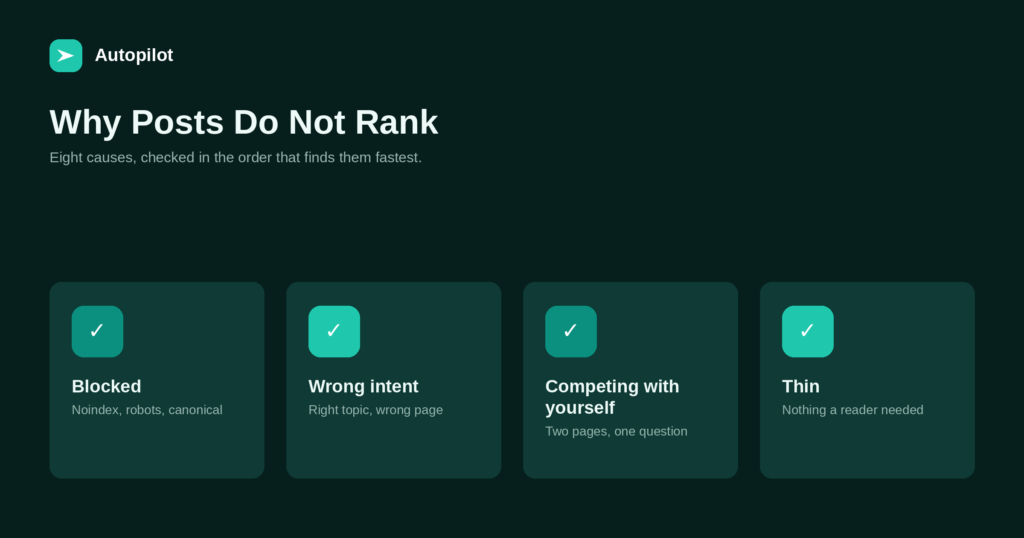
Why Your Blog Posts Aren’t Ranking: Eight Real Causes
Eight causes, checked in the order that finds problems fastest: technical blocks first, then intent mismatch, overlap, thin pages, and finally competition.
 Sep 19, 2026 · 6 min read
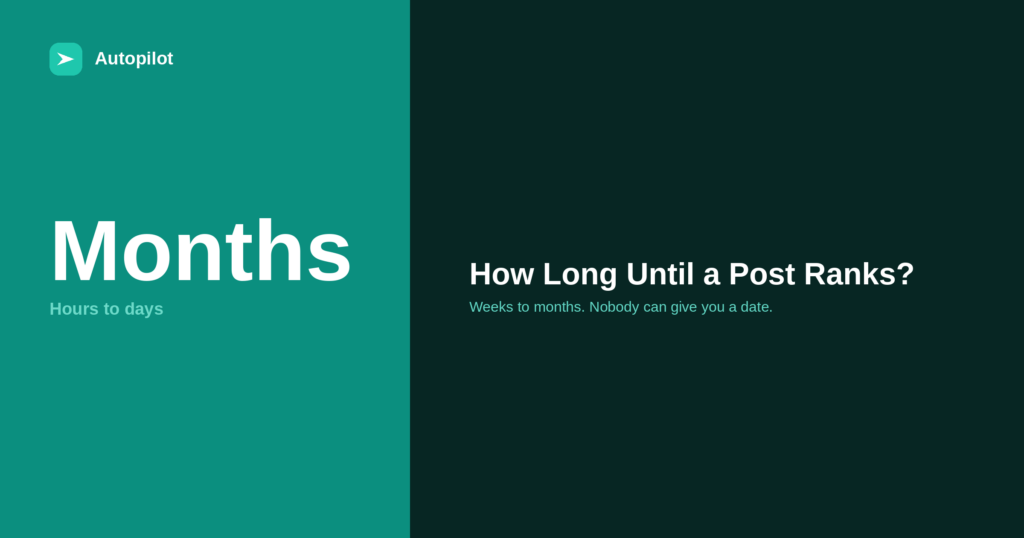
How Long Before a New Blog Post Ranks?
The honest answer is weeks to months, and nobody can give you a date. What happens between publishing and ranking, and what you can…
 Sep 17, 2026 · 6 min read
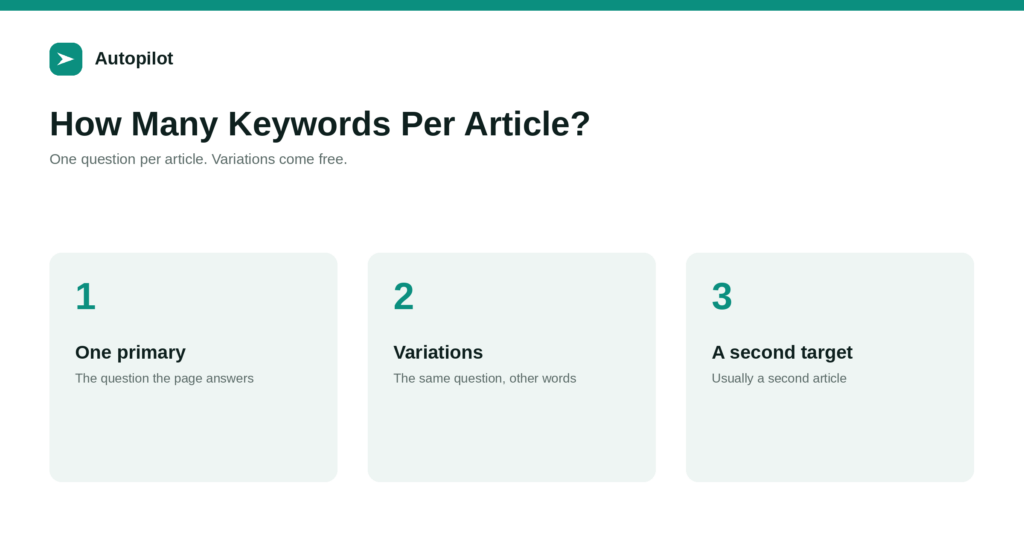
How Many Keywords Should One Article Target?
One article, one question. Why a primary phrase plus the variations people actually type beats a list of ten targets, and how to tell…
 Sep 15, 2026 · 6 min read
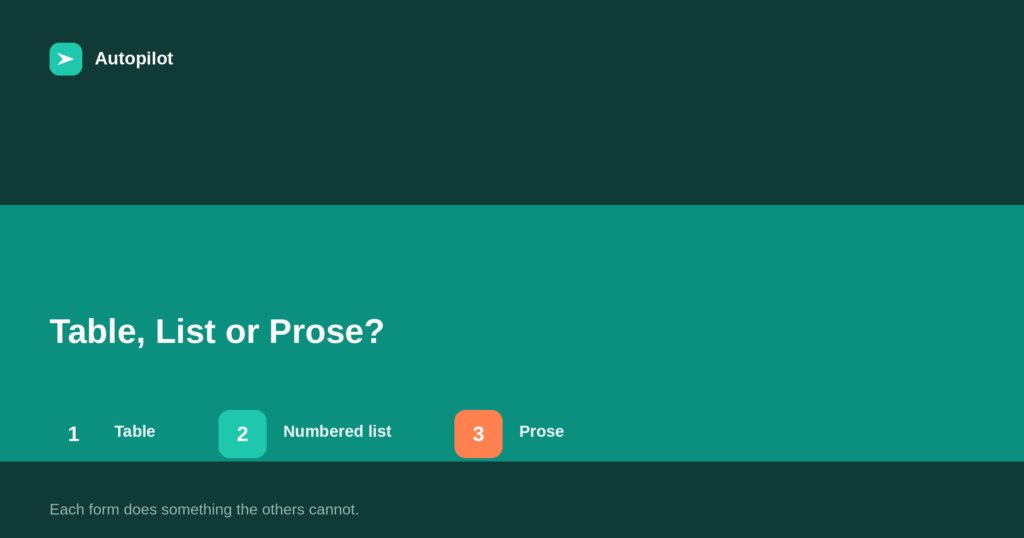
When a Table Beats Three Paragraphs
Tables, numbered lists, bullets and prose each do something the others cannot. Here is how to pick, and the common mistake of bulleting an…