ENEnglish
 LTLietuviškai
 DEDeutsch
 FRFrançais
 RUРусский
 ESEspañol
 PLPolski
 ITItaliano
 UKУкраїнська
 CSČeština
 PTPortuguês
 JA日本語
 LVLatviešu valoda
 ETEesti
 HUMagyar
 IDBahasa Indonesia
 TRTürkçe
 HIहिन्दी
 ELΕλληνικά
 ARالعربية
 THไทย
 VITiếng Việt
 RORomână
 MSBahasa Melayu
 BNবাংলা
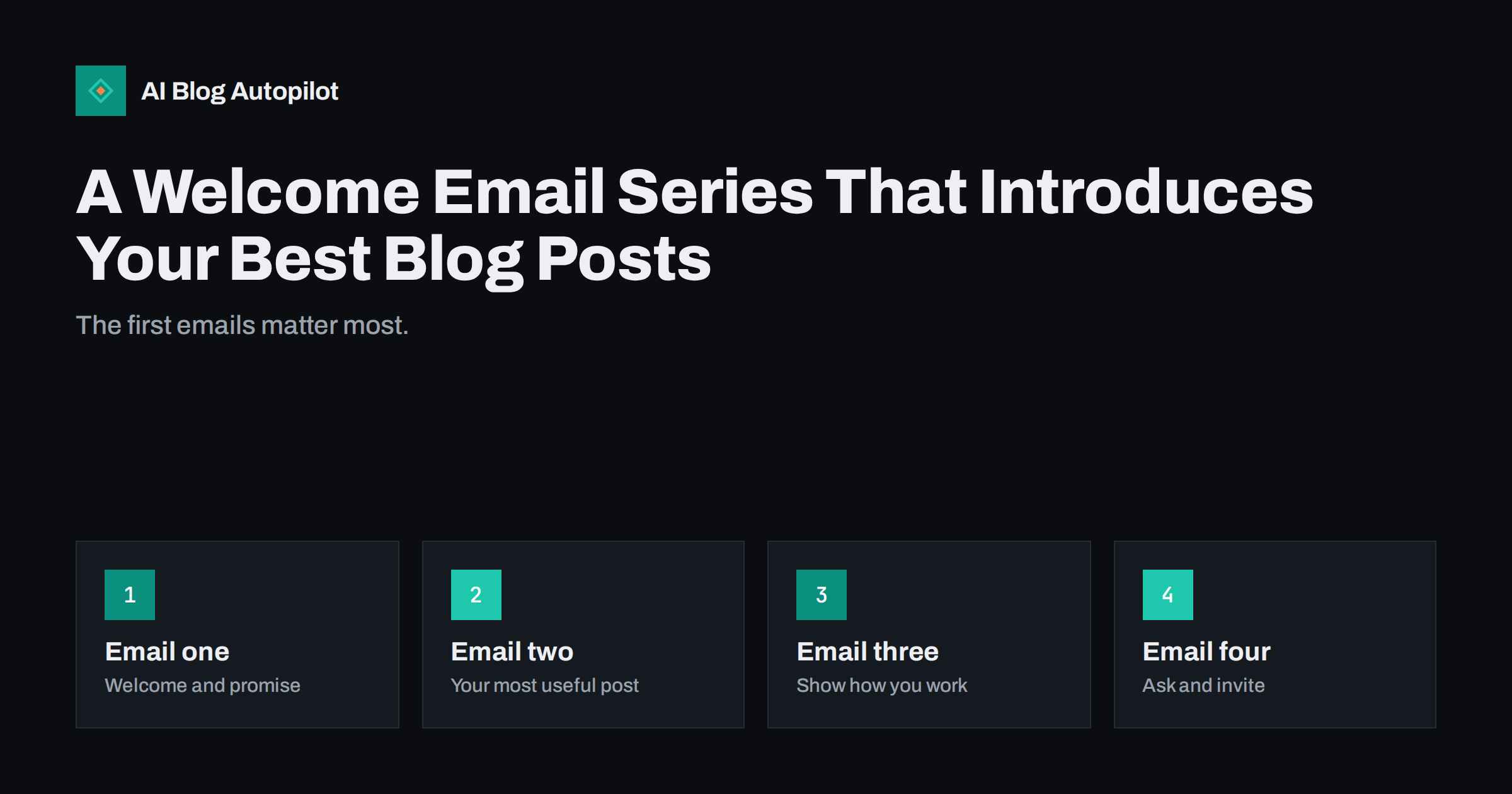
Short answer: a welcome email series is a short sequence of three to five messages sent automatically to a new subscriber. The first confirms what they will receive, the next ones introduce your most useful blog posts and the way you work, and the last asks a simple question or offers one clear next step. Keep each email short, send them over about two weeks and write them for one reader.
New subscribers are the most attentive audience you will ever have. They chose to hear from you a moment ago, they open more messages than at any later time and they are still deciding whether you are worth their attention. Many blogs waste this moment with a single automatic thank-you, and then drop the reader into the regular newsletter with no context.
This guide explains how to plan a welcome series that uses the blog you already have, how long each message should be, what to say and what to avoid. It works for a small business, a consultant or a publisher, and it needs no special design skills or large list.
Decide what the series is for
Start with one goal. Possible goals are to get the reader to open the next newsletter, to read three key articles, to reply with a question, to book a call or to try a product. Choose the one that matters most, because a series that asks for five things achieves none of them. Write the goal in a sentence and keep it in front of you.
Next, describe the subscriber. Think about why they joined: a guide, a checklist, a post they liked or a form in the footer. Their reason shapes the first message. Someone who downloaded a checklist wants the checklist, quickly. Someone who joined from a blog post wants more of the same. Do not treat both in the same way.
Finally, decide how many messages you will send. For most small blogs, four is enough, spread across ten to fourteen days. A shorter series feels abrupt, and a longer one starts to feel like a course the reader did not ask for. You can always add a message later when you see where people lose interest.
Write down what success looks like before you begin. A simple target, such as half of new subscribers opening the first message and one in ten clicking an article, gives you something to compare against. Without a target, every result seems fine, and nothing improves.
Write the first email as a real welcome
The first message should arrive within minutes of signing up. Thank the reader, deliver anything you promised, such as the checklist, and say what to expect: what kind of email you send, how often and when the next one arrives. A clear promise lowers the number of unsubscribes and the number of messages that end up in spam.
Keep the tone personal. Write as one person to one person, use a real sender name and let readers reply. A message from a team address that cannot receive mail sends the wrong signal, and replies are one of the best signs for mailbox providers that your messages are wanted.
Ask for one small action in the first email. It might be to add your address to the contacts list, to click through to the most helpful article or to reply with one sentence about what they hope to learn. Small actions at the start make later messages more likely to be seen.
Keep the design plain. A short text email with one link often outperforms a heavy template, since it looks like a message from a person. If you use a logo or a colour, keep it light and make sure the email reads well on a phone, where most readers will open it.
Introduce your best blog posts
The second and third emails are the place for your most useful articles. Choose posts that answer the questions new readers have most often, that show your way of thinking and that are not tied to a date. For each, write two or three sentences on why it matters and what the reader will be able to do afterwards, then link to it once.
Do not paste the entire article into the email. The goal is to bring readers to the site, where they can see related guides and take the next step. A short teaser with a clear reason to click works better than a long summary that removes the need to visit.
Pick posts for a reason, not by traffic alone. A quiet article that explains your approach may do more for trust than a post that ranks for a broad term. If you are unsure where to begin, look at the pages that readers visit before they contact you, and start there. The guide on building an email newsletter from blog posts offers more ideas for selecting and summarising articles.
Keep a simple list of the posts used in the welcome series, and review it every quarter. Articles change, links break and better pieces appear. A welcome email that sends new readers to an outdated page wastes the best moment you have, so treat the list like a shop window.
Show how you work
By the third or fourth message, the reader is ready to learn who is behind the blog. Explain how you create your content, what you stand for and what makes your advice different. Use real details: how you test ideas, where your examples come from and what you will not write about. Honest limits build more trust than broad claims.
A short story can help. Describe a mistake you made and what you learned, or a client question that changed how you write. Stories are easy to remember and make the series feel like a conversation. Keep them short, true and relevant to the reader’s problem, and avoid anything that would identify a customer without permission.
This is also the right place for a soft mention of what you offer. Say in one or two sentences how you help, and link to the page that explains it. Avoid a hard sell in the middle of a welcome series, because readers are still deciding whether to stay. One clear, calm mention is enough.
If you publish in several languages or for several audiences, say which version the subscriber will receive. Nothing is more frustrating than receiving a message in a language you did not choose, and a short note in the first email can save many unsubscribes later.
Close with a question or one clear next step
The last message should invite a response. Ask what the reader would like to learn, which problem they are working on or which article helped most. Replies teach you what to write next, and they begin a relationship that a one-way newsletter cannot match. Reply to every message, at least for the first months.
If you prefer a different action, make it single and specific: read the guide to getting started, book a short call, try a free tool or follow on one social network. Several calls to action in one email divide attention. Choose the step that matches the goal you wrote at the start.
Tell readers what happens next. Say that the regular newsletter will start, how often it arrives and how to change the frequency or leave. A clear end to the series makes the transition smooth, and an easy exit shows respect, which is also a legal requirement in many countries. Add the required sender details and an unsubscribe link in every message, and check the privacy rules that apply to your readers.
Keep subscribers’ trust in the way you handle their data. Collect only what you need, say clearly what you will send and honour every request to leave or to delete. A clean, honest list of three hundred engaged readers is worth more than ten thousand names collected without clear consent, and it protects your sender reputation as well.
Finally, remember that the series is part of the same story as your blog. The tone, the promises and the examples should match what readers find on the site. When both sides agree, a new subscriber feels they are in the right place, and that feeling is what keeps them reading long after the fourth email.
Measure, test and improve
Look at the numbers after the first month. Opens show whether the subject lines work, clicks show whether the content is useful and replies show whether the tone is right. Unsubscribes after a particular message are a signal that something in it does not match the promise. Compare messages with each other rather than chasing a general benchmark.
Test one change at a time. You might try a different subject line, shorter text or a different article in the second message. Wait until enough people have received each version before drawing a conclusion, and write down what you learned. Small steady changes add up over a year.
Revisit the series every quarter. Check the links, update the examples and replace posts that no longer reflect your best work. If your offer or audience changes, rewrite the series to match. The welcome emails are the part of your email programme that works every day without effort, so a little care repays itself many times.
Also check how the series looks to people who read it without images, on a small screen or with a screen reader. Use real text for links, keep paragraphs short and give every image a text alternative. A message that is easy to read for everyone usually performs better for everyone.
How AI Blog Autopilot helps
A welcome series is only as good as the articles it points to. AI Blog Autopilot can write and publish articles on your chosen topics, with FAQ sections, tags and SEO meta, and share them to your social networks, so you always have fresh, useful posts to introduce. See the pricing page for plans and monthly credits.
Related reading
- Building an Email Newsletter From Your Blog Posts
- Lead Magnets for Content Sites
- Calls to Action That Fit a Blog Post
The bottom line
Send three to five short emails over two weeks, point to your best posts, show how you work and end with one question or one clear next step.
FAQ
How many emails should a welcome series have?
Three to five is enough for most blogs, sent over ten to fourteen days, so the series stays useful without feeling like a course.
When should the first welcome email be sent?
Within minutes of signing up, while the reader still remembers why they joined, with anything you promised included.
Should welcome emails include a sales pitch?
Keep it soft. One calm mention of how you help is enough, while most of the series should be useful content.
Which blog posts should I include?
Choose evergreen posts that answer the questions new readers ask most and show how you think, and review the list every quarter.
What should I measure?
Opens, clicks, replies and unsubscribes per message, compared with each other rather than with general benchmarks.