ENEnglish
 LTLietuviškai
 DEDeutsch
 FRFrançais
 RUРусский
 ESEspañol
 PLPolski
 ITItaliano
 UKУкраїнська
 CSČeština
 PTPortuguês
 JA日本語
JA日本語 LVLatviešu valoda
 ETEesti
 HUMagyar
 IDBahasa Indonesia
 TRTürkçe
 HIहिन्दी
 ELΕλληνικά
 ARالعربية
 THไทย
THไทย VITiếng Việt
 RORomână
 MSBahasa Melayu
 BNবাংলা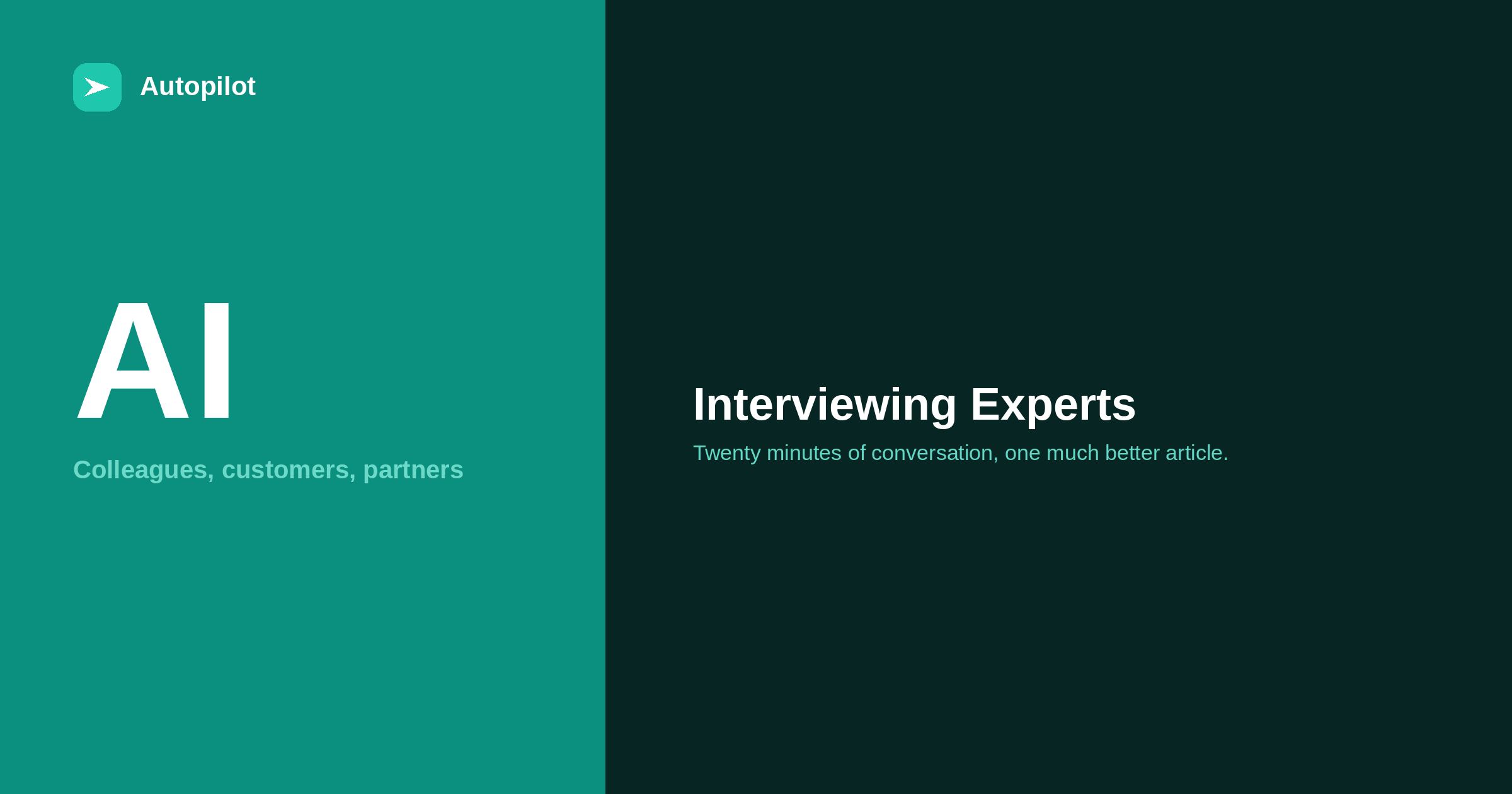
Short answer: the fastest way to add real expertise to an article is a short conversation with someone who has it: a colleague, a customer, a partner, an independent specialist. Prepare a few specific, open questions about the article’s subject, ask for examples and numbers, record with permission, and use accurate quotes with the person’s name and role. Let them check quotes before publication. Twenty minutes of conversation can turn a competent draft into an article with genuine experience.
Research can tell you what is generally known. It cannot tell you what an experienced practitioner has seen, what surprised them, or where the standard advice fails in practice.
A short interview can. It is one of the most effective ways to add first-hand expertise to an article, and one of the most underused.
Who to ask
Experts are often closer than you think.
| Source | What they bring |
|---|---|
| Colleagues | Daily experience of the subject, specific cases |
| Customers | The problem from the buyer’s side |
| Partners and suppliers | A view from elsewhere in the process |
| Independent specialists | Credibility and a wider view |
Your own colleagues in sales, support and delivery are the most accessible and often the most useful, since they know both the subject and your customers.
Preparing
Read the draft or outline first. Identify where the article is generic and where experience would help most: the tricky step, the common mistake, the decision readers struggle with.
Write five or six questions targeting those gaps. Share them in advance so the person can think of examples.
Asking good questions
Open, specific questions produce usable answers.
- What mistake do you see most often with this?
- Can you give me an example from the last few months?
- What does the standard advice get wrong?
- How long does this usually take in practice?
- What would you tell someone doing this for the first time?
Follow up on anything specific: a number, an example, a surprise. Those are what the article needs.
Recording and notes
Ask permission to record, so you can quote accurately. If recording is not possible, take careful notes and read back important quotes during the conversation.
Keep interviews short. Twenty minutes is usually enough for one article, and short requests are easier for busy people to accept.
Using quotes fairly
Quote accurately and in context. Light editing for clarity is normal; changing meaning is not. Name the person and their role, unless they prefer anonymity, in which case describe their role without identifying them.
Send quotes to the person for approval before publication. It prevents misunderstandings and makes people more willing to help again.
Beyond quotes
Not everything from an interview needs to be a quote. Examples, numbers and insights can be woven into the text, attributed where appropriate. The interview’s main value is often in reshaping the article around what the expert said matters most.
adding something original covers other ways to add first-hand material.
Interviews and automated drafts
Interviews pair well with automated drafting. The draft provides structure and general explanation; the interview provides the experience a draft cannot contain. Adding a few quotes and examples from a twenty-minute conversation is one of the most efficient ways to lift an automated article.
An example
Suppose a draft on onboarding new customers says that clear communication in the first week matters. It is true and generic. A twenty-minute call with the person who runs onboarding produces something else: most customers who leave in the first month never completed the second setup step, and a short check-in call on day three halved the number who stalled there.
That single observation, quoted with the person’s name and role, turns a generic section into the most useful part of the article. It is also exactly the kind of detail a reader cannot find elsewhere.
Written interviews
When a live conversation is not possible, send three or four questions by email. Answers are usually shorter than in conversation, but they arrive already written and are easy to quote.
Keep questions specific and ask for an example in each answer. A busy expert will answer three focused questions; an open request to share their thoughts tends to go unanswered.
Independent experts
For subjects where an outside view adds credibility, an independent specialist can be worth approaching: an academic, a consultant, an industry association representative. Explain the article, the questions and how their contribution will be credited.
Some will ask to be paid; decide in advance whether that fits your budget and how it will be disclosed. Unpaid contributions are more common when the article is genuinely useful and the credit is clear.
Keeping a record
Keep interview notes and recordings, with the date and what was agreed about use. They are a source for future articles, and a record if a quote is ever questioned. Delete recordings when they are no longer needed if that was agreed.
Experts in several languages
For multilingual blogs, interviews with experts working in each market add local knowledge that translation cannot supply: local regulations, local customer behaviour, local examples. Even one short interview per language per quarter makes those versions noticeably more specific.
When experts disagree with the draft
Sometimes an interview reveals that the draft is wrong or misleading: the standard advice it repeats does not hold in practice. That is one of the most valuable things an interview can do. Rewrite the relevant section around what the expert said, and consider whether the disagreement deserves its own article.
Drafts built from general knowledge tend to reproduce conventional wisdom; practitioners know where it fails. Articles that capture those differences are the ones readers remember and other writers cite.
Crediting and linking
Credit experts with their name, role and organisation, and link to their profile or company page where they agree. It thanks them, adds credibility to the article, and gives readers a way to check who said what.
For colleagues, link to their author page if they have one — bylines and author pages covers setting them up.
Saying thank you
Send the published article to everyone interviewed, with thanks. They are likely to share it, and more likely to help again.
Building a habit
A monthly routine of short interviews with colleagues produces a steady supply of expertise for articles. Keep a list of who knows what, and rotate through them.
Interviews do not guarantee rankings. They make articles more useful and more credible, which is the part within your control — experience, expertise and trust.
Related reading
If this was useful, these cover the questions that usually come next.
- Adding something original — other sources of first-hand material
- Experience, expertise and trust — why experts matter
- Writing a case study — a related format
The bottom line
Interview colleagues, customers, partners or specialists for twenty minutes, with specific, open questions shared in advance. Ask for examples and numbers, record with permission, quote accurately with name and role, and let people approve their quotes. Use interviews to add the experience a draft cannot contain.
FAQ
Who should I interview for blog articles?
Colleagues with daily experience, customers, partners and independent specialists.
How long should an interview be?
About twenty minutes is usually enough for one article.
What questions work best?
Open, specific ones asking for mistakes, examples, numbers and where standard advice fails.
Should interviewees approve quotes?
Yes. It prevents misunderstandings and builds willingness to help again.
Can I quote someone anonymously?
Yes, if they prefer, describing their role without identifying them.
How do interviews help automated articles?
They add first-hand experience and examples that a draft cannot contain.