ENEnglish
 LTLietuviškai
 DEDeutsch
 FRFrançais
 RUРусский
 ESEspañol
 PLPolski
 ITItaliano
 UKУкраїнська
 CSČeština
 PTPortuguês
 JA日本語
 LVLatviešu valoda
 ETEesti
 HUMagyar
 IDBahasa Indonesia
 TRTürkçe
 HIहिन्दी
 ELΕλληνικά
 ARالعربية
 THไทย
 VITiếng Việt
 RORomână
 MSBahasa Melayu
 BNবাংলা
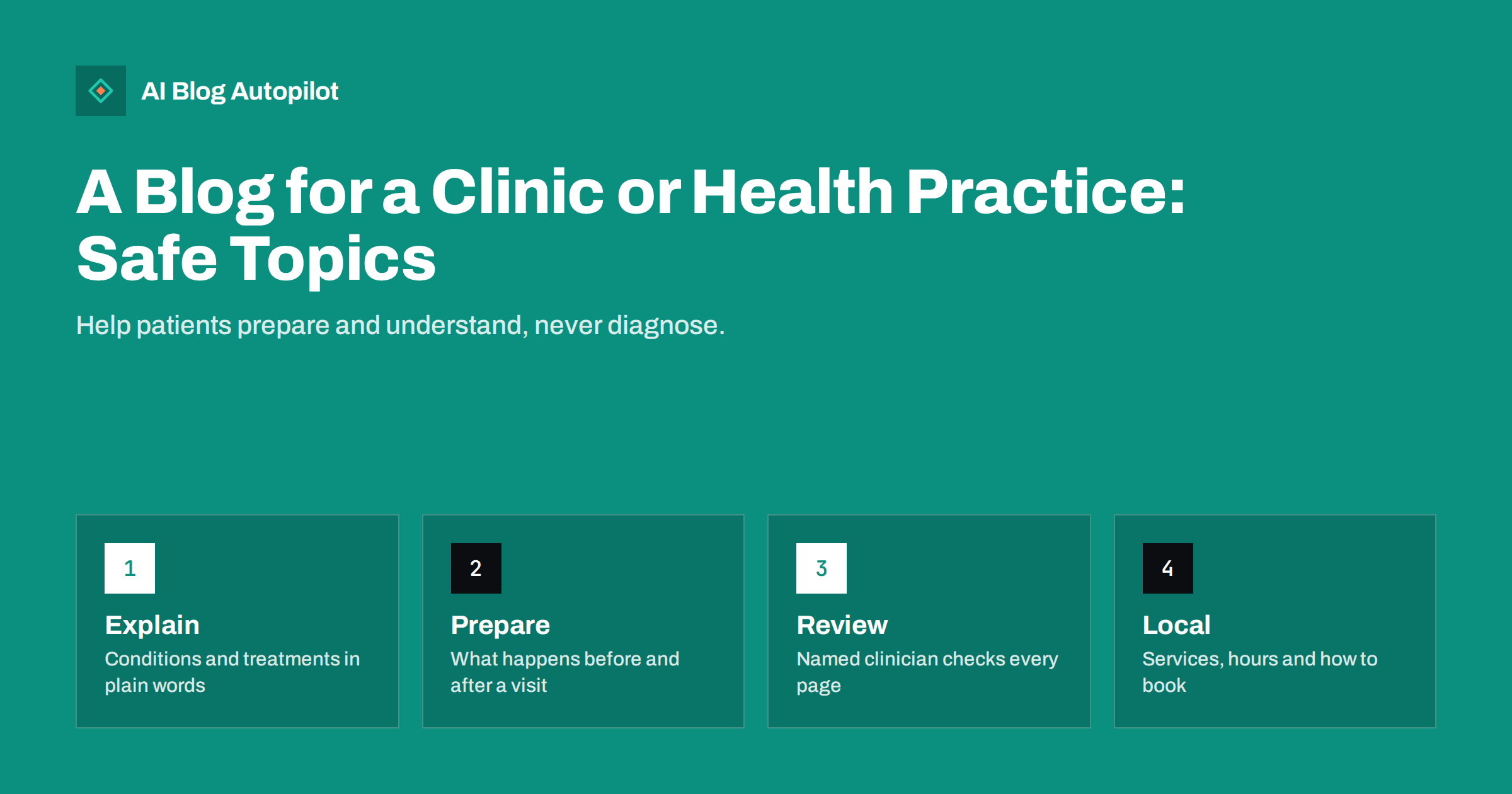
Short answer: a clinic or health practice blog works best when it explains, prepares and reassures rather than diagnoses. Good topics include what a procedure involves, how to prepare for an appointment, what recovery usually looks like, how to choose between common options and where to find the practice. Every page should be written or reviewed by a named, qualified professional, should say clearly when someone needs to speak to a clinician, and should avoid promising results. Health is a sensitive subject area, so trust matters more here than in almost any other kind of blog.
Patients search before they book. They look up a symptom, a treatment name, a worry about cost or a question about what will happen in the room. If your practice has already answered those questions calmly and accurately, they arrive better informed and more willing to call. If you have not, they read whatever else the search results show them. This article sets out what to publish, how to keep it responsible and how to turn careful content into appointments.
Why health content is held to a higher standard
Search engines and AI assistants treat medical and wellbeing content as a topic where mistakes can hurt people, so they look harder for signs of expertise and care. That means named authors, visible qualifications, sources for factual claims and a date showing when the page was last checked. Our guide to health, money and legal posts explains the principle in general terms, and the article on experience and trust signals covers what to put on the page.
It also means you should be modest about what a blog post can do. A post can inform. It cannot examine anyone, and it should never read as if it can. A sentence such as “if you have these symptoms, contact a clinician or your local emergency service” does more for your credibility than a confident paragraph that sounds like a diagnosis.
Topics that work for a practice
Most useful clinic content falls into a handful of types, and each answers a different moment in the patient’s decision.
- Treatment explainers: what the procedure or therapy is, who it is usually for, how long a session lasts and what the stages are.
- Preparation guides: what to bring, whether to eat beforehand, what to wear, how to arrive and what questions are worth asking.
- Recovery and aftercare: typical timelines described in general terms, with a clear note that individual recovery varies and who to contact with concerns.
- Choosing between options: a fair comparison of two common approaches, including the trade-offs, without steering the reader to the more expensive one.
- Practical questions: fees, payment, insurance, referrals, cancellations and accessibility of the building.
- Seasonal and prevention topics: general information that follows the calendar, such as preparing for a particular season, written from public health guidance rather than opinion.
Notice what is missing: self-diagnosis checklists, claims that something cures a condition and lists of “natural remedies” that replace medical care. Those attract clicks and risk harm, and they are exactly the kind of page that damages a practice’s reputation if a reader acts on it.
Think in terms of the patient’s journey. Someone who has just noticed a problem needs general orientation and reassurance about when to seek help. Someone who has been told they need a treatment wants to understand it before they agree. Someone who has booked wants to prepare. Someone who has been treated wants to know what is normal afterwards. If you map your articles to those four moments, you will cover the questions in a sensible order, and you can link each article to the next one so readers move through the sequence without searching again.
Name the professional behind each page
Readers and search systems both want to know who is speaking. Put the name, role and registration or qualification details of the clinician on each article, with a short biography page they can click through to. If the article was drafted by a writer or by software, a professional should still review it before it goes live, and the page can say so honestly: “Reviewed by” followed by the name and the date. Our piece on bylines and author bios shows how to set this up so it stays accurate when staff change.
Keep a simple record of reviews: who checked which page, on what date, against which sources. When guidance changes, the record tells you which pages to revisit first.
Back claims with sources and keep them current
Where a page states a fact about a condition, a risk or a typical outcome, link to a reputable public source such as a national health service, a professional body or a regulator, and describe it in your own words. Do not copy their text. Avoid numbers you cannot trace to a source, and avoid superlatives such as “the best” or “guaranteed”. The article on claims you can back up gives a practical test you can apply to every sentence.
Review the pages on a fixed schedule, for example every six months, and show the date of the last check. A page about preparing for a procedure that describes an outdated process is worse than no page at all.
Know the advertising rules where you work
Health services are usually subject to rules about advertising, patient testimonials, before-and-after images and the use of professional titles. These rules differ between countries and professions, and they change. Before you publish stories, reviews or photographs of results, check the guidance from your professional body or regulator, and ask your own adviser if you are unsure. This article is general information, not legal advice. When in doubt, leave the element out and keep the page informative.
Privacy needs the same care. Never describe a real patient in a way that could identify them, even with their name removed, unless you have clear written permission and have checked what your rules allow.
Local information that helps people book
A practice is a local business, and many searches are local. Make sure the basics are easy to find and consistent everywhere: address, opening hours, how to reach you, parking and transport, languages spoken, how to book and what to do out of hours. Write a short page for each service, and link your explainers to the relevant service page so a reader who has understood the topic can take the next step. The guide to blog strategy for a local business covers the wider approach.
Calls to action should be calm. “Call us to arrange an appointment” or “Ask us a question before you book” works better than urgency or discounts, which can feel out of place in a health setting. If the article is general, say that a consultation is the way to get advice about a personal situation.
Accessibility information deserves its own page: step-free entrances, lifts, accessible toilets, hearing loops, interpreter availability and how to request adjustments. Patients with particular needs often decide where to go based on exactly these details, and few practices publish them. Keep the page short, specific and dated. If you offer remote consultations, explain how they work, what technology is needed and what cannot be done remotely, because uncertainty about the format puts people off booking.
Mistakes to avoid
- Publishing unreviewed content because it was easy to produce.
- Using alarming language to drive clicks, which frightens readers and weakens trust.
- Promising outcomes, timelines or pain levels as if they were certain.
- Leaving old pages untouched when guidance or your own services change.
- Copying text from other health sites, which is poor practice and easy for search engines to spot.
- Hiding the author, so no one can tell who stands behind the advice.
A realistic content plan for a busy practice
Clinicians are short of time, so keep the plan small. In the first month, publish one page for each of your three most requested services, a first-visit guide and a page about fees and booking. In the second month, add four explainers based on the questions reception staff hear most often. In the third month, review everything with the responsible clinician, correct what needs correcting and add review dates. After that, one new article every week or two, plus a scheduled review of older pages, is a sustainable rhythm.
Ask the front desk to keep a simple tally of questions. The most common ones are your best topics, because they are proven demand, and writing the answer once saves staff time every day afterwards. Put the review responsibility in the job description of a named person, so it does not depend on anyone’s goodwill. When a clinician leaves, reassign their pages the same week so no article is left without a reviewer.
How AI Blog Autopilot helps
AI Blog Autopilot writes full SEO articles for your WordPress blog from the topics, keywords, audience and tone you set, with FAQ sections, tags and SEO meta included, and it shares each one to your social networks. For a health practice, the sensible way to use it is with approval mode switched on, so that every article waits for a qualified person to read it before it goes live. You decide the topics, keep the tone cautious and leave medical judgement to your clinicians. See the pricing page for plans.
Related reading
- YMYL Topics on a Business Blog: Health, Money and Legal Posts
- E-E-A-T on a Blog That Publishes Automatically
- Blog Strategy for a Local Business
- How to Fact-Check Content Before You Publish
The bottom line
A clinic blog earns trust by being careful. Explain, prepare and reassure, name the professional behind every page, source your claims, follow the advertising rules that apply to you and keep the content current. Done this way, the blog answers the questions patients have before they call, and it gives search engines and AI assistants good reasons to treat your practice as a reliable source.
FAQ
Can a clinic use AI to help write blog posts?
Yes, as a drafting aid, as long as a qualified professional reviews every page before publication and the content avoids diagnosis, promises and unsupported claims.
Should a health blog give medical advice?
No. It should give general information and explain when to contact a clinician. Advice about a personal situation needs a consultation.
Do I need to show the author on health articles?
It is strongly recommended. A named author or reviewer with visible qualifications helps readers and search systems judge who is responsible for the information.
Can I publish patient reviews or before-and-after photos?
Rules vary by country and profession, and privacy duties apply. Check the guidance from your regulator or professional body first, and leave the element out if you are unsure.
How often should health pages be reviewed?
A fixed cycle such as every six months works for many practices, with extra checks whenever official guidance or your own services change.