ENEnglish
 LTLietuviškai
 DEDeutsch
 FRFrançais
 RUРусский
 ESEspañol
 PLPolski
 ITItaliano
 UKУкраїнська
 CSČeština
 PTPortuguês
 JA日本語
 LVLatviešu valoda
 ETEesti
 HUMagyar
 IDBahasa Indonesia
 TRTürkçe
 HIहिन्दी
 ELΕλληνικά
 ARالعربية
 THไทย
 VITiếng Việt
 RORomână
 MSBahasa Melayu
 BNবাংলা
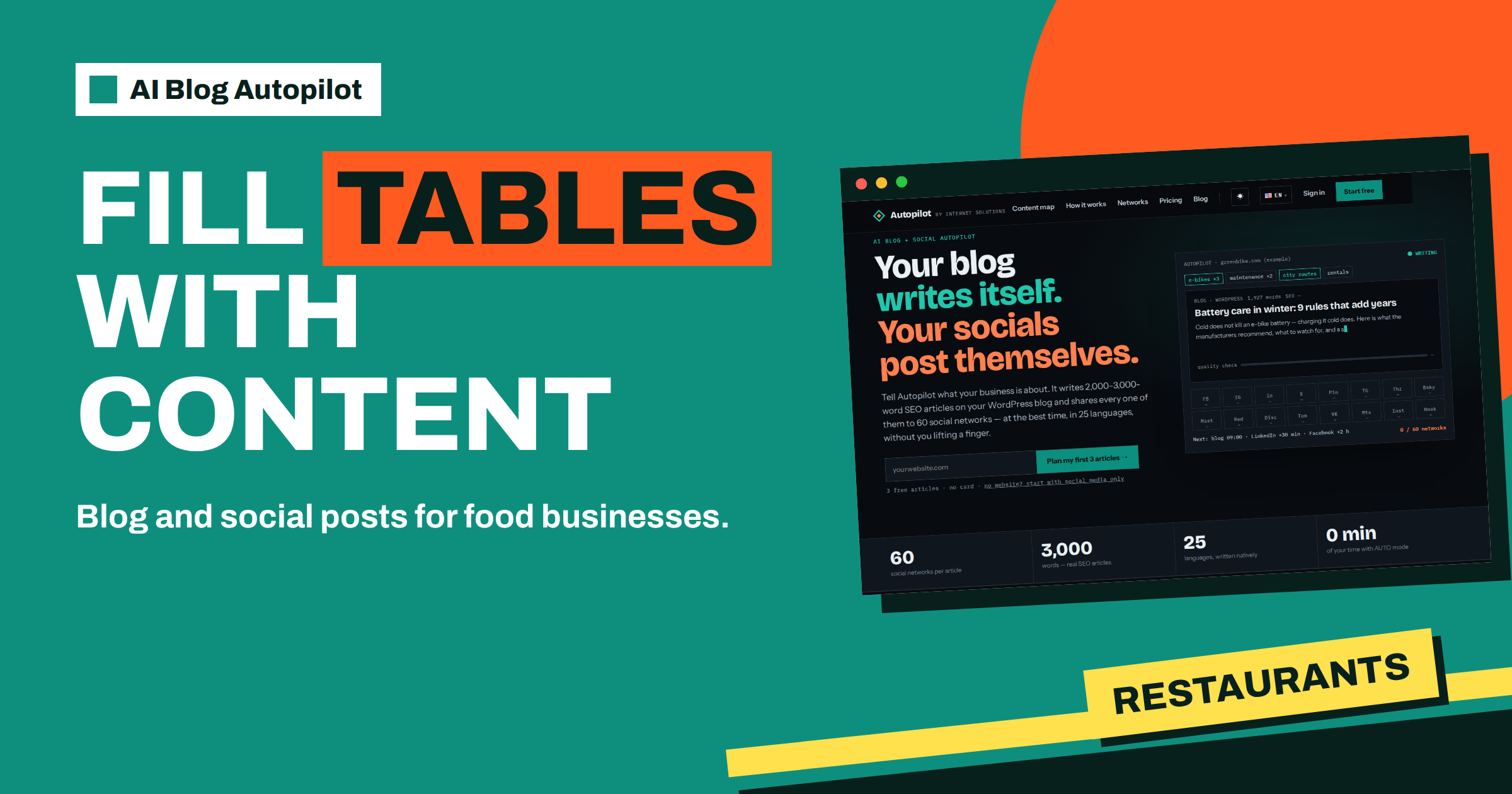
Short answer: A restaurant, café or bakery can use AI Blog Autopilot to publish stories about its food, seasonal guides and local articles, and to share each one on Facebook, Instagram and other networks. Supply the menu, hours and prices yourself, because the writer never invents facts, and keep approval on for anything that mentions them.
Food businesses live on attention that is local, visual and fast-moving. A new dish, a seasonal menu or a Saturday special needs to reach people nearby within days. Yet the kitchen, the front of house and the supplier calls leave little time to write articles or plan posts.
This guide explains how a restaurant, café, bakery or similar business can use AI Blog Autopilot for a blog and social presence. The product facts come from the home page, networks page and pricing page. Details of your menu, opening hours and prices must come from you, because the product cannot know them.
What a food business gains from a blog
People search for food in two ways. Some type a need, such as a place for a birthday dinner or a café with vegan options. Others type a name they have heard. A blog helps with the first kind. An article that answers a real question can reach people who did not know your name.
A blog also gives your social posts something to point to. Instead of a photo with a short caption that vanishes in a day, you can share an article about the story behind a dish or the best week to visit, with the post leading to your site. Over time the blog becomes a record of your menu, your suppliers and your neighbourhood.
The article on a blog for a restaurant, café or hotel covers what to write in general. This guide focuses on how to get it done with Autopilot while the kitchen stays busy.
Topics that suit a restaurant or café
Good topics are close to the food and the place. Write about how a dish is made and why you chose its ingredients, what suits a particular occasion, how to plan a group booking, what changes on the menu with the seasons and what to expect on a first visit. Answer questions that customers ask at the counter, because others are searching for the same answers.
Add local topics. A guide to a street, a market or an event nearby brings readers who are planning a day out. Link to your own pages where it is natural, but keep the article useful on its own. Avoid topics that depend on a fact that may change, such as an exact price, unless you review them before publishing.
For each topic, the home page says to give weight, keywords, audience and tone. A friendly, simple tone usually suits a food business. The article on setting up topics in Autopilot explains how to describe each one.
Facts you must supply
The home page says the writer is instructed never to make up statistics, quotes or sources. That protects you from invented claims, but it also means the product does not know your facts. A menu, a price, an allergen note, a set of opening hours and a booking policy must come from you.
Write a short fact sheet and keep it current. Include the cuisine and style, the address and area, the main dishes, any dietary options you can really offer, the booking method and the policies customers ask about. Update it whenever the menu or hours change.
Be especially careful with allergens and dietary claims. Do not let an article promise that a dish is free from an allergen unless you are sure and the claim is checked by someone responsible. If in doubt, leave it out, and tell readers to ask staff.
A short example shows the idea. A small bakery lists four topics: sourdough and how it is made, which bread suits which meal, the weekend specials and local markets. It gives the first two a high weight and the last two a medium weight. Each month Autopilot plans articles around those topics, and the bakery owner spends a few minutes checking that the facts about flour, opening days and prices are right. Over a quarter, the blog grows into a small library that new customers can browse before they visit.
Social posts for food, not just links
The home page says each network gets its own text, length and time, with native posts that are not just links. For a food business, Facebook suits event news and local community, and Instagram suits pictures and stories. The networks page lists the other networks you can connect, so choose where your customers already are.
Pair articles with your own photographs wherever you can. Real pictures of your dishes and your team beat stock images, and they build recognition. The article on how Autopilot writes for each network explains why each network gets a different text.
Keep a rhythm that your team can sustain. A few well-timed posts each week do more than a burst of posts followed by silence. The article on AUTO timing across networks shows how the blog goes live first and each network follows at its own hour.
Think also about what not to write. Avoid articles that criticise other places, avoid health claims about food and avoid anything that sounds like a promise you cannot keep. A warm, honest and specific voice suits a food business, and readers can tell when text is filled with empty praise.
Seasons, specials and events
Food has natural seasons: spring menus, summer terraces, autumn harvest dishes, winter comfort food and holiday bookings. Plan articles weeks ahead, so that a guide to Christmas bookings appears before diners have chosen a place. Raise the weight of seasonal topics and lower them when the season ends.
Events need extra care. If an article mentions a date, a time or a ticket price, it must be right. Put exact details on a page you control and let the article point to it. After the event, publish a short recap with photographs, because it gives next year’s audience a reason to book early.
The article on planning your blog for the year-end holiday season gives a general calendar for the busiest weeks of the year.
Building local trust beyond the menu
Diners choose a place they trust, and trust comes from small signs: a team that is named, suppliers that are real, answers that are honest. Use articles to show them. Introduce the people behind the counter, explain why you buy from a particular farm or bakery and describe what you do on a busy night to keep service smooth.
Give honest answers to awkward questions too. Why did a dish leave the menu? Why is the kitchen closed on certain days? Why does a group booking need a deposit? Clear, calm answers prevent complaints and show that you respect your customers. Make sure each answer matches your real policy, and update the article when the policy changes.
Do not forget the practical pages. A booking page, a menu page and a contact page should be easy to find from every article. Add a short line at the end of each post that tells readers how to book or where to find the menu. That small step turns reading into visits.
A routine that fits a busy kitchen
Keep the human part short and regular. On a quiet afternoon, spend fifteen minutes opening the content map, checking what was published and what is planned, and reading one article to see that the facts are right. Once a month, update the fact sheet and the topic weights.
The default mode is AUTO, which means planning, writing, quality check, publishing and sharing run without manual steps. Approval is optional. A careful food business can start with approval on, check the first few articles and move to AUTO when it is confident. The article on moving from approval to AUTO sets out a four-week plan.
Name one person as the owner of the blog, even if it takes only a few minutes a week. If nobody owns it, mistakes stay uncorrected. Agree what that person may change alone, such as a typo or a photo, and what needs the owner or chef to approve, such as anything about ingredients, allergens or prices.
Choosing a plan and starting small
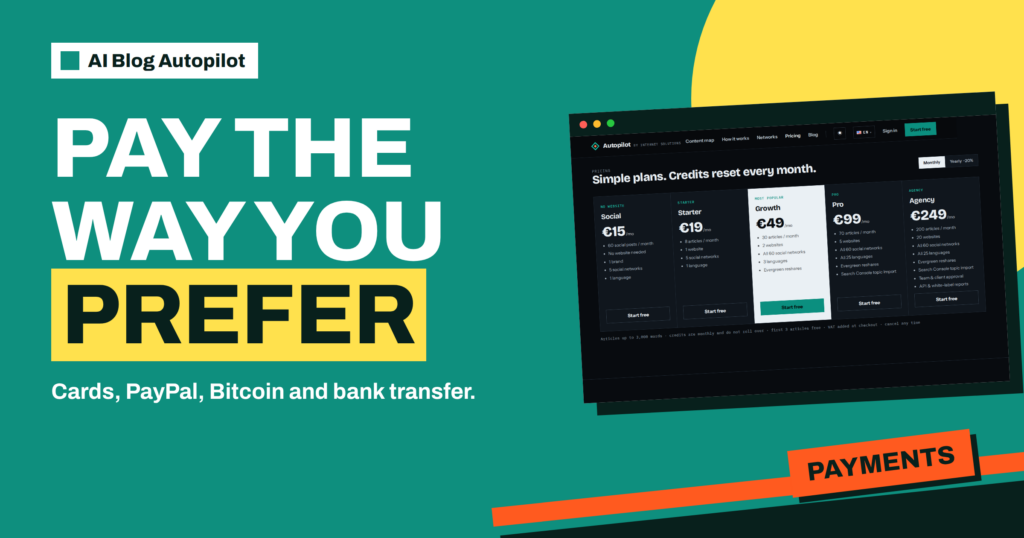
A café that opens one location and has a website can look at Starter, which lists 8 articles a month, 1 website and 5 social networks for 19 euros. A restaurant group with more locations or more languages can look at Growth or Pro. A very small business without a website can start with the Social plan, which lists 60 social posts a month with no website needed, for 15 euros.
Credits are monthly and do not roll over, so choose a number of articles you will really publish. The first three articles are free, which gives you a way to test the style on your own menu before you pay. The article on choosing an AI Blog Autopilot plan compares the plans in detail.
Judge the result after a few months, not a few weeks. Look at visits to the booking or menu page, mentions from customers and growth in followers.
How AI Blog Autopilot helps
You describe the business and its topics once, and Autopilot writes the articles, checks them, publishes them and shares each one on your networks. Try it with three free articles on AI Blog Autopilot, no card needed, and compare the plans on the pricing page.
Related reading
- A Blog for a Restaurant, Café or Hotel: What to Write
- Autopilot for Local Service Businesses: A Month in Practice
- Your First 3 Free Articles in AI Blog Autopilot: A Walkthrough
The bottom line
Write about your food, your place and the questions customers ask, supply every fact yourself, share to the networks where your customers are and keep a short weekly check. Start with the free articles and choose a plan you will use.
FAQ
Will Autopilot know my menu and prices?
No. The writer is instructed not to invent facts, so you must supply the menu, prices and hours and review articles that mention them.
Can a café without a website use it?
Yes. The Social plan lists 60 social posts a month with no website needed, and you can add a blog later.
Which networks suit a restaurant?
Facebook and Instagram often suit local food businesses, but choose the networks where your own customers are. The networks page lists all of them.
Should I approve each article first?
Approval is optional. A careful food business can start with approval on, check the first articles and move to AUTO later.
How many articles does a small restaurant need?
Many start with Starter, which lists 8 articles a month, then judge the results after a few months.