ENEnglish
 LTLietuviškai
 DEDeutsch
 FRFrançais
 RUРусский
 ESEspañol
 PLPolski
 ITItaliano
 UKУкраїнська
 CSČeština
 PTPortuguês
 JA日本語
 LVLatviešu valoda
 ETEesti
 HUMagyar
 IDBahasa Indonesia
 TRTürkçe
 HIहिन्दी
 ELΕλληνικά
 ARالعربية
 THไทย
 VITiếng Việt
 RORomână
 MSBahasa Melayu
 BNবাংলা
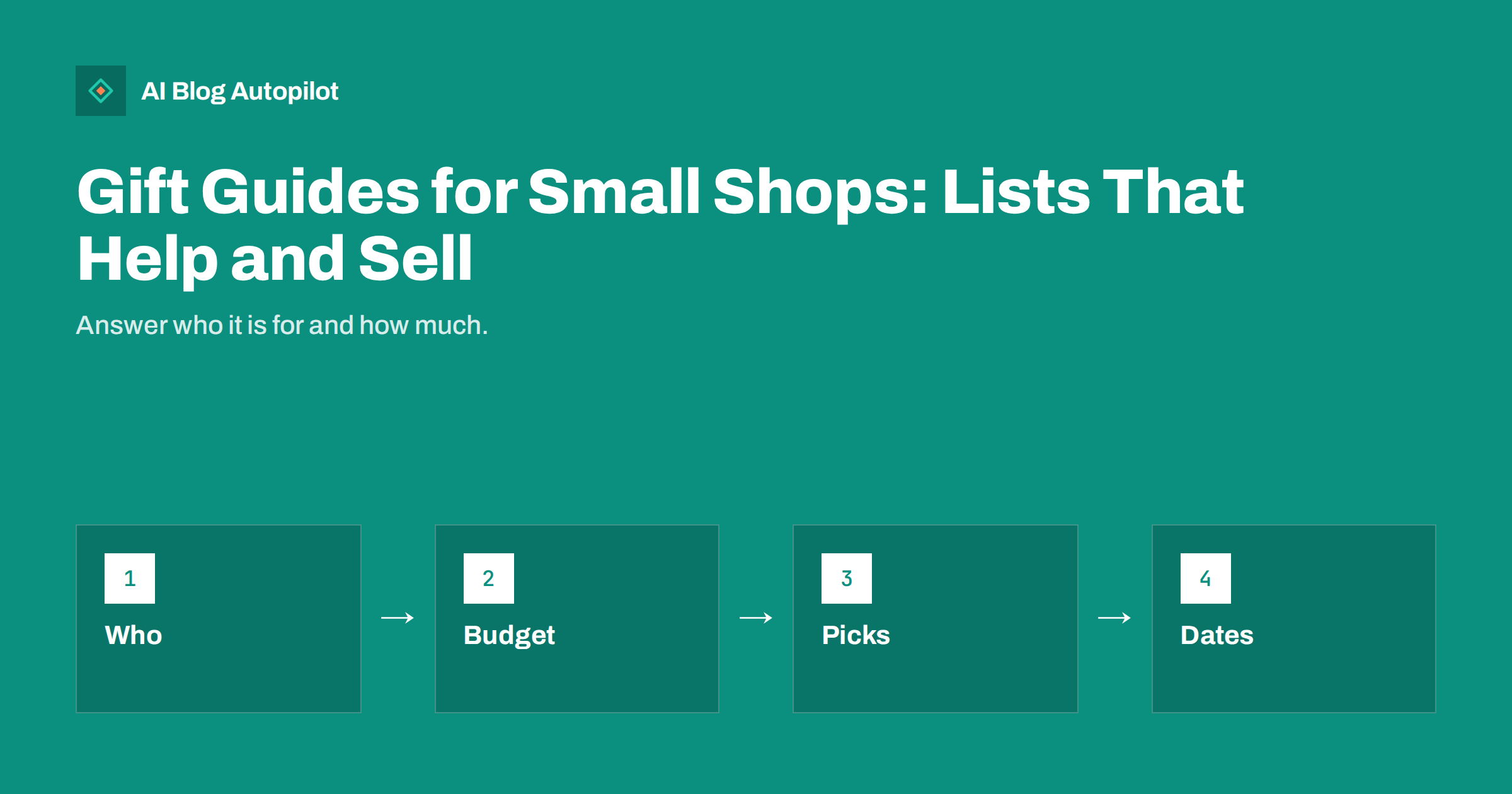
Short answer: a gift guide helps a shopper who knows who the gift is for but not what to choose. Build guides around a person, an interest, an occasion or a price, give a small number of real picks with a sentence on why each suits that person, show prices and stock honestly, state the last order dates for delivery and update the same page every year before the season starts.
Gift buyers are a special audience. They are often not experts in the product, they worry about getting it wrong and they have a deadline. A small shop that can say, in a few clear lines, what makes a good present for a keen gardener or a new baby, and that makes it easy to order in time, wins sales that a big catalogue may lose.
This guide explains how to plan, write and maintain gift guides for a small online or local shop. It covers choosing themes, writing picks that read like advice and not advertising, handling prices and delivery dates, using photographs and keeping the pages useful year after year without starting from scratch each autumn.
Choose themes that match how people think
People rarely search for a product name when they need a gift. They search for the person or the occasion: a present for a new neighbour, a thank-you for a teacher, something for a friend who loves cooking, a small gift for a colleague. Write down these situations that match your range, and make each the title of a guide.
Use four types of theme. Recipient guides, such as gifts for a grandfather. Interest guides, such as gifts for people who bake. Occasion guides, such as a housewarming. Budget guides, such as presents under a set price. Choose a mix, and make sure each guide has a clear audience and a clear reason to exist.
Look at your own sales and questions. Which products are bought as gifts? What do customers say at the till or in messages when they ask for help? Which items come back with a gift receipt? These clues show where your range already works as a gift, and where a guide would help.
Keep the number of guides manageable. Five or six focused guides that you update well are better than thirty thin ones. Choose the themes that bring the most sales and the most searches, and build more only when you can keep them current.
Think about gifts that are not objects. Experiences, subscriptions, vouchers, classes and donations to a cause are often welcome, and a small shop may offer some of them. Explain how they work, how the recipient receives them and what happens if they cannot be used. Clear terms are especially important for anything that is not delivered in a box.
Write for the person who gives as well. Many shoppers want a gift that looks good when opened, travels well and does not need batteries or setup. A line about presentation, wrapping and a handwritten note shows that you have thought about how the moment feels, and it often decides a sale.
Write picks that read like advice
Each pick needs a short reason. Instead of a list of product names, write one or two sentences that explain who it suits and why: a small herb planter that fits a windowsill, a notebook that lies flat when open, a game that works for two players. The reason is what turns a list into a guide.
Limit the number of picks. Eight to twelve is usually enough, ordered in a way that helps the reader, for example by price or by type of person. A long list is tiring, and the reader may leave without choosing. If you have more items, split them into separate guides.
Be honest about suitability. Say when a gift is better for beginners, when it needs space or when it is not suitable for young children. If an item is fragile or has a long lead time, say so. A reader who trusts your advice is more likely to buy and to return.
Add the practical details: size, colour options, what is included, whether gift wrapping is available and how the item arrives. Photographs should be your own, clear and consistent, and each should have a useful text description. The guide on how to write product reviews offers ideas on describing products fairly.
Show prices, stock and delivery dates
Price is a key part of a gift decision. Show the price next to each pick, or group items in price bands, and make sure the figures match the product pages. If prices change, update the guide quickly, since a mismatch at checkout is a common reason for abandoned orders.
State the last order dates for delivery before the main holidays and events, and explain what happens after them. If you offer express delivery, show the cost and the cut-off time. If an item is made to order, say how long it takes. Gift buyers worry most about arriving late, and clear dates remove the worry.
Be careful with stock. Remove or mark items that sell out, and offer a close alternative. A guide that leads to unavailable items wastes the reader’s time. If you cannot check stock daily during busy periods, link to a category page that is automatically updated and use the guide for advice.
Explain returns and exchanges for gifts: gift receipts, exchange periods and who can return an item. These terms matter for people who are unsure of size or taste. Keep the explanation short, and link to the full policy. The guide on writing honest articles about what things cost shows how to present money details with care.
Be open about links, partners and sponsorship
If your guide includes products from other brands, from partners or from affiliate links, say so clearly near the top. Explain that you choose items you would recommend and that links may earn you a commission, if that is the case. Follow the advertising rules of your country, which usually require clear disclosure.
Do not accept payment to feature an item without marking it as sponsored. Readers can usually tell, and search engines and regulators take a dim view of undisclosed paid placement. Keep sponsored items separate, or leave them out of editorial guides.
Avoid inflated claims. Phrases such as the perfect gift or guaranteed to delight are not true for everyone, and they weaken the guide. Describe what the item does well and for whom, and let the reader judge. The guide on using evidence in marketing content explains how to keep statements honest.
If you include other local businesses, check details with them and credit them properly. A guide to local gifts that features neighbouring makers, with their permission, builds relationships and brings visitors from several audiences. Keep the information current, and update it if they change their range.
Plan the timing and reuse the page every year
Gift searches start earlier than most shops expect. For the end-of-year season, readers begin looking weeks before, and for other occasions the pattern is similar. Publish or refresh guides at least six to eight weeks ahead, share them on your channels and send them to your email list as the date approaches.
Use the same address each year and update the content. Search engines treat a page with a long history as more established, and links earned in earlier years carry forward. Change the date, the picks and the prices, and keep a short note of what changed. The guide on how to refresh old blog posts describes the process.
Keep a calendar for the whole year: spring occasions, summer weddings and holidays, back-to-school, autumn celebrations and the year-end rush. Mark the dates when each guide should be reviewed, shared and removed from prominent places. The guide on planning seasonal content without scrambling every year explains the method.
After the season, review the results. Which guides brought visits and orders? Which picks sold well? What did customers ask that the guide did not answer? Write down the lessons while they are fresh, and start the next year with a better plan.
Test the guide with a stranger. Ask someone who does not know your shop to find a present for a described person within five minutes, and watch where they stop. Their hesitations show where the page needs clearer headings, better photographs or a shorter list. A small test before the season is cheaper than losing sales during it.
Make the guide easy to use
Design for a phone. Most gift shoppers browse on mobile, often in short sessions. Use short paragraphs, clear headings, large images and buttons that are easy to tap. Put a quick jump menu at the top for guides with several sections, such as by price or by person.
Link each pick to its product page, and link the guide to related guides, so that a reader who is not satisfied can move on. Add a short note for people who are still unsure, such as an offer to help by phone or message, or a gift card option. Explain how gift cards work, their validity and how to send them.
Add a short set of questions and answers at the end, such as delivery before a date, wrapping, notes and returns, and mark them up properly. These are the questions most gift buyers have, and they often appear in answers from search engines and assistants.
Check accessibility. Provide text descriptions for images, avoid conveying information only by colour and make sure the page works with a keyboard. Gift guides are shared widely, and a page that everyone can use reaches more people and reflects well on the shop.
How AI Blog Autopilot helps
AI Blog Autopilot can write and publish articles on your chosen topics, with FAQ sections, tags and SEO meta, and share them to your social networks. Give it your range and your delivery rules, and check every price, stock level and date before each article goes live. See the pricing page for plans and monthly credits.
Related reading
- Blog Strategy for an Online Store
- Planning Seasonal Content Without Scrambling Every Year
- How to Write Product Reviews That Help Readers
The bottom line
Build guides around people and occasions, give a few honest picks with prices and order dates, disclose links and update the same page every year.
FAQ
How many products should a gift guide include?
Eight to twelve picks is usually enough, each with a sentence on who it suits, ordered by price or recipient.
When should I publish a gift guide?
Six to eight weeks before the occasion, then share it on your channels and in email as the date approaches.
Should I update the guide or write a new one each year?
Update the same page, so that links and authority carry forward, and note what changed.
Do I need to disclose affiliate links in a gift guide?
Yes, in plain words near the top, in line with the advertising rules of your country.
What delivery information should I show?
Last order dates for delivery, express options with cut-off times, lead times for made-to-order items and return terms for gifts.