ENEnglish
 LTLietuviškai
 DEDeutsch
 FRFrançais
 RUРусский
 ESEspañol
 PLPolski
 ITItaliano
 UKУкраїнська
 CSČeština
 PTPortuguês
 JA日本語
 LVLatviešu valoda
 ETEesti
 HUMagyar
 IDBahasa Indonesia
 TRTürkçe
 HIहिन्दी
 ELΕλληνικά
 ARالعربية
 THไทย
 VITiếng Việt
 RORomână
 MSBahasa Melayu
 BNবাংলা
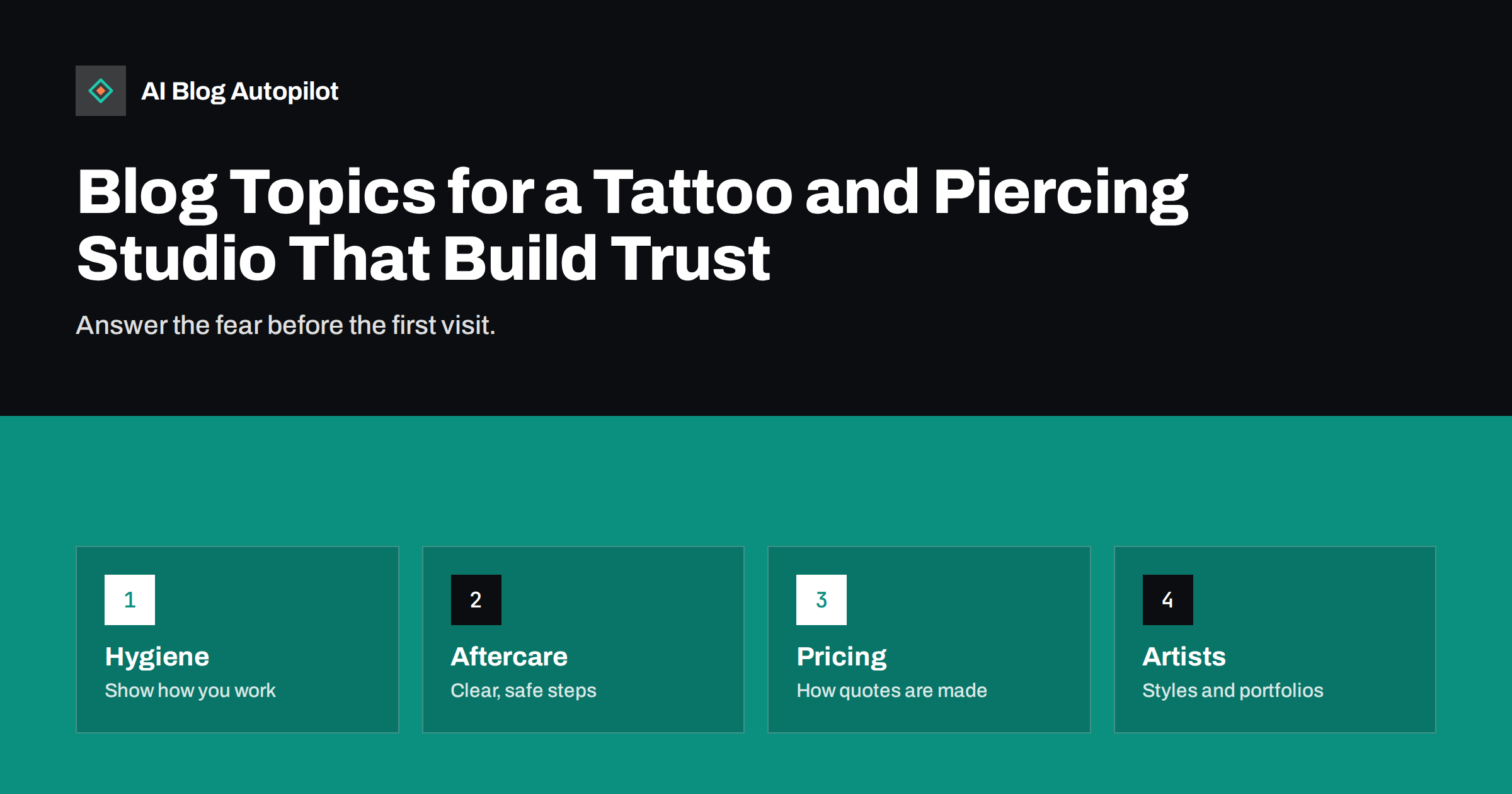
Short answer: a tattoo or piercing studio blog works best when it answers the questions that make people nervous: hygiene, pain, aftercare, pricing, design process and booking. Show your standards openly, describe each artist’s style, give careful aftercare advice and keep health information general, with a note to seek medical help when needed.
Getting a tattoo or piercing is a personal, permanent decision. People research for weeks, compare studios and look for signs that they will be safe, heard and well treated. They also worry about regret, cost and what to say to the artist. A blog can answer all of this before they step into your shop.
This guide offers topic ideas for tattoo studios, piercers and independent artists. It covers the full journey from first idea to healed result, with advice on tone, honesty and the checks that a health-related business should apply to its content.
Show how you keep people safe
Hygiene is the first question for many visitors. Write a calm, specific page about how your studio works: single-use needles, sterilisation, gloves, surface cleaning, waste handling and the checks your local authority requires. Use plain language and describe what clients will see during their appointment.
Mention licences, registrations and training that apply in your country, and keep those details accurate. Do not use vague phrases such as “completely safe”. Explain what you do and let readers judge. A clear checklist of what a clean studio looks like helps people compare you with others.
Include photographs of the actual space: reception, workstations and equipment storage. Avoid showing anything that identifies clients. The guide to contact and trust pages explains how to present such evidence to build confidence.
Offer a guide to bringing references well. Explain that several images showing different aspects, such as line weight, subject and mood, help an artist more than one exact copy. Suggest saving pictures in one folder and writing a few words about what appeals in each. This habit makes consultations faster and more productive.
Help people plan a design
Many visitors have an idea but do not know how to explain it. Write a guide to preparing for a consultation: collect reference images, think about size and placement, consider how the design will age and be ready to describe what it means to you. Explain how your artists turn ideas into original designs.
Cover choices that confuse beginners, such as the difference between line work, shading, colour and realism, how scale affects detail and why some placements are harder than others. Explain what can and cannot be done on different skin areas, always in general terms.
Be clear about originality. State your policy on copying other artists’ work, covering up old tattoos and reproducing logos or characters. Respectful explanations help clients understand why an artist may suggest changes. A page on how to talk to an artist when you are not sure what you want can reduce anxiety.
Be honest about pain and healing
Nearly every first-timer asks how much it will hurt. Write an honest article that explains why pain varies by person, location, size and duration, and what helps: rest, food, hydration and breaks. Avoid promises that nobody will feel anything, and avoid frightening exaggeration.
Describe what healing looks like in stages, from the first days to several weeks, including what is normal and what is not. Be cautious: you can describe general patterns, but you cannot diagnose. Tell readers when to contact a doctor, such as signs of infection or an allergic reaction, and make it easy to reach the studio with questions.
Include a section on people who should check with a doctor first, such as those with certain health conditions or who take some medicines. Keep it general and recommend professional advice. See the article on YMYL topics for why care matters with health information.
Write clear aftercare guides
Aftercare is among the most searched topics, and it is where clear writing counts. Offer a printable, step-by-step guide for each service: tattoos, piercings of different types and touch-ups. State what to do on the first day, the first week and after healing, and what to avoid, such as soaking, tight clothing, sun exposure and picking.
Use short numbered steps and consistent wording. Match the page to what you tell clients in person and on any printed sheet, since contradictory advice causes confusion. If your advice differs from common internet tips, explain why.
Date the page and review it regularly with your artists. Add a note about products you recommend and why, and be open about any commercial link with a supplier. The advice on notices and disclaimers helps with the wording.
Add a page for clients who want to reschedule or cancel, written kindly and clearly. Explain how much notice you need, how deposits are treated and what happens after repeated missed appointments. Fair, visible rules protect your artists’ time and reduce awkward conversations.
Include a short guide on how to prepare for the appointment: sleep well, eat beforehand, avoid alcohol, wear suitable clothing and bring identification. Simple preparation advice helps clients feel in control and improves the session for everyone.
Explain pricing and booking
Price is a delicate question in this trade. Explain how quotes are made: size, detail, placement, time, the artist’s experience and any minimum charges. Say what is included, such as the design consultation, and what is not. If you require deposits, explain why and what happens if a client cancels or reschedules.
Avoid publishing a single price for custom work, which varies widely, but give examples of ranges or hourly rates if you are comfortable doing so. State clearly that quotes are given after a consultation. The guide to writing honest articles about what things cost offers a model.
Describe the booking process step by step: enquiry, consultation, deposit, appointment, aftercare and touch-ups. Include age requirements, identification and consent rules, which are firm in most places. Be polite and direct about what you cannot do, such as work on minors or on someone who is intoxicated.
Think about accessibility and welcome. Many people feel judged in this trade, whether because of age, body, background or past experiences. Write a short statement about who is welcome at your studio and how you treat clients. Describe how you handle sensitive conversations, such as designs connected to loss or recovery, and how you support people who are anxious.
Explain what to expect on the day: how long the appointment lasts, whether friends may come, what to wear, what to eat beforehand and how breaks work. A calm page that walks through the day from arrival to aftercare sheet takes the fear out of the unknown. Include accessibility information, such as steps, lifts and toilets.
Introduce your artists and styles
People choose an artist, not just a studio. Write a profile for each person: their background, training, favourite styles and the kind of work they want to do more of. Show a portfolio that reflects their current skill, and make sure each image is permitted by the client.
Explain which styles each artist specialises in, since a client who wants fine line work should not end up with a traditional specialist. A short guide to styles, with examples from your own studio, helps visitors find the right match. Link every profile to a clear way to book.
Share the stories behind pieces with the client’s consent. A project from first sketch to healed result shows process and care. Keep identifying information out unless the client is happy to be named. See behind-the-scenes posts for a framework.
Address piercings with the same care. Explain the main types, what each involves, typical healing times in general terms, the jewellery materials you use and why quality matters. Say how you check that a client is suitable for a particular piercing, and why you may refuse or suggest a different placement.
Write about jewellery changes and downsizing, and when it is safe to swap items. Clients often ask these questions weeks after the appointment, and a clear page saves repeated messages while showing that your service continues after payment.
Cover regret, cover-ups and removal honestly
Some visitors already have a tattoo they no longer like. Write a calm article about cover-ups, reworks and the basics of removal. Explain what a cover-up can and cannot achieve, how the old tattoo affects the new design and why consultation matters.
If you do not offer removal, say so and explain that it is a separate specialist service. Avoid claims about results, timings or cost that you cannot support. Suggest that readers ask a qualified professional for advice.
An article on choosing a design you will like in ten years, with questions to ask yourself, helps first-timers decide and reduces regrets. It also shows that you care about the person, not only the sale.
Local search and reviews
Most clients choose a studio close to home, so keep your local profile complete: address, opening hours, photos, services and a booking link. Make sure the details match your website. Encourage honest reviews after healed results, and reply to every one in a calm, professional way. The guide to near-me searches explains how local queries work.
Social media is an important showcase for this trade, but a blog gives it a base. Link each portfolio post to a page with details of the style, the artist and how to book. Check images for permission, and avoid posting anything that shows fresh work in unsafe conditions or reveals private details about a client.
How AI Blog Autopilot helps
For a busy studio, finding time to write is hard. AI Blog Autopilot can write articles on your topics and share them to your social networks, with a quality check before anything goes live. For health-related subjects, consider approval mode so you see each article first. See the plans, and try the three free articles.
Related reading
The bottom line
Answer the worries people have before a first visit, show your standards, write careful aftercare, explain pricing and introduce your artists.
BUJ
What should a tattoo studio blog write about?
Hygiene and safety, design planning, pain and healing, aftercare, pricing and booking, artist profiles and cover-ups.
Can I publish aftercare advice online?
Yes, keep it clear, consistent with what you tell clients in person, dated and general, and advise seeing a doctor for signs of infection.
Should a studio publish prices?
Explain how quotes are made and give ranges or hourly rates if you can. Custom work needs a consultation for a firm price.
How do I show hygiene without exaggerating?
Describe what you actually do, such as single-use needles and sterilisation, and show the real space. Avoid claims like completely safe.
Can I show client tattoos in my portfolio?
Only with the client’s permission, and leave out anything that identifies them unless they agree.