 ENEnglish
 LTLietuviškai
 DEDeutsch
 FRFrançais
 RUРусский
 ESEspañol
 PLPolski
 ITItaliano
 UKУкраїнська
 CSČeština
 PTPortuguês
 JA日本語
JA日本語 LVLatviešu valoda
 ETEesti
 HUMagyar
 IDBahasa Indonesia
 TRTürkçe
 HIहिन्दी
 ELΕλληνικά
 ARالعربية
 THไทย
THไทย VITiếng Việt
 RORomână
 MSBahasa Melayu
 BNবাংলা
#Internal linking
Building a link structure while you publish instead of fixing one afterwards. We cover which pages deserve links, how to write anchor text that means something, and why every internal link should return 200 rather than travel through a redirect. You will find how clusters and pillar pages change the shape of a blog, and how to keep older articles connected as new ones appear. We also cover the common mistakes: linking everything to the homepage, repeating one anchor everywhere, and leaving new articles with no route in. You will also find how many links one article can carry before they stop meaning anything. The aim is a habit you apply as you publish, which costs a minute, rather than an audit you dread once a year.
 2026. gada 1. okt. · Lasīšanas laiks: 9 min
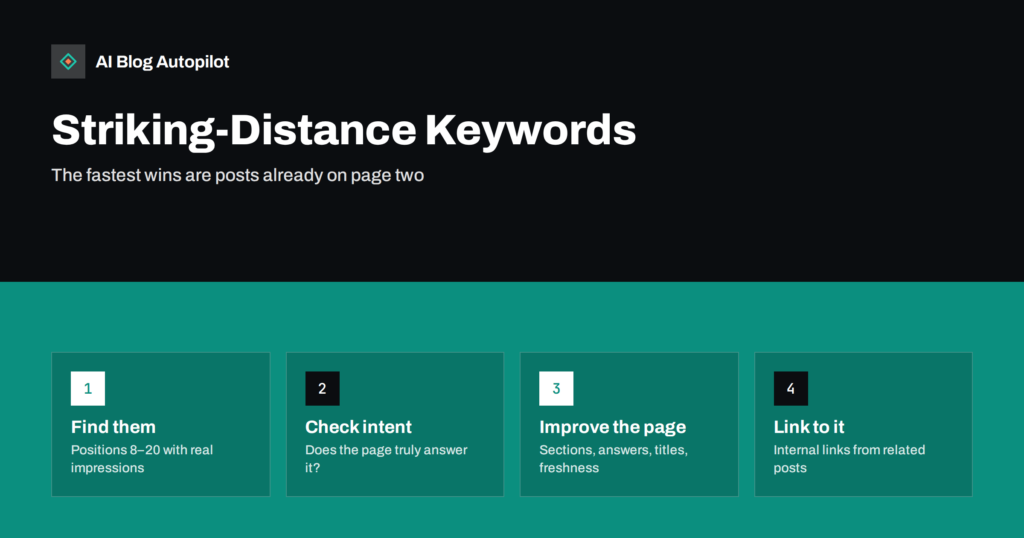
Striking-Distance Keywords: Moving Page-Two Posts Up
Striking-distance keywords are queries where a post already ranks around positions 8 to 20. How to find them in Search Console and improve the…
 2026. gada 30. sept. · Lasīšanas laiks: 8 min
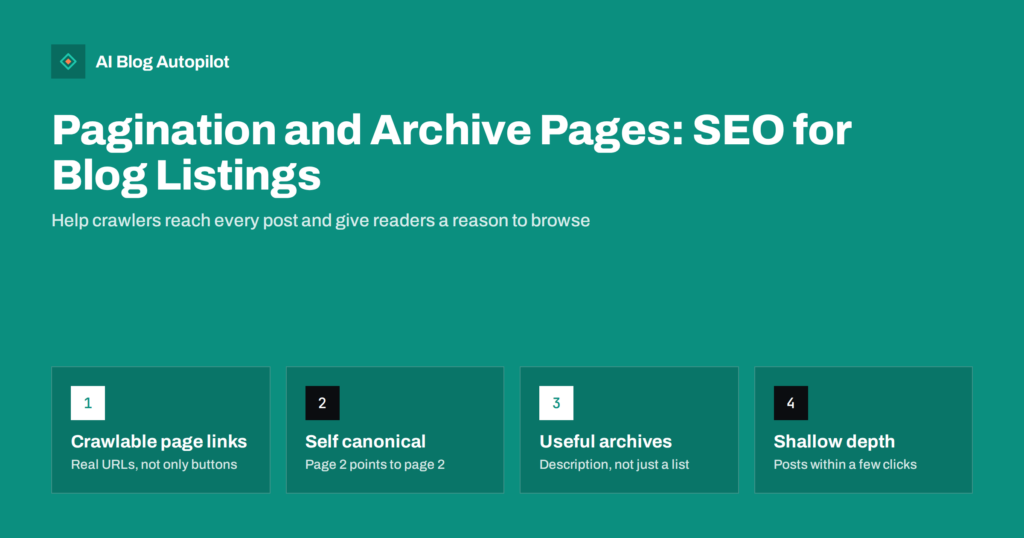
Pagination and Archive Pages: SEO for Blog Listings
How blog archives, category pages and pagination affect crawling and indexing, what to do with page 2 and beyond, and how to make listing…
 2026. gada 30. sept. · Lasīšanas laiks: 8 min
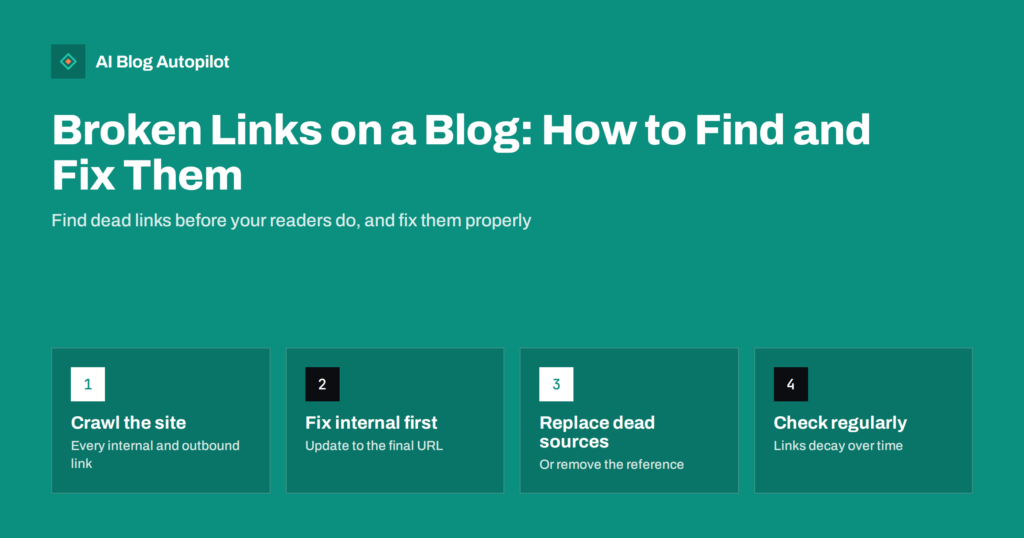
Broken Links on a Blog: How to Find and Fix Them
How broken internal and external links appear on a blog, the free ways to find them, and how to decide between updating, redirecting or…
 2026. gada 30. sept. · Lasīšanas laiks: 9 min
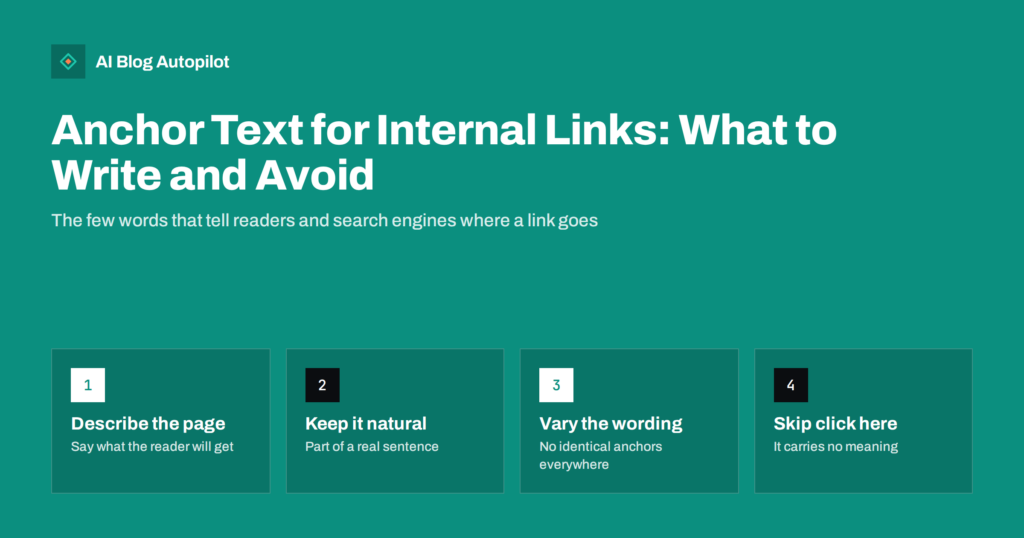
Anchor Text for Internal Links: What to Write and Avoid
How to write anchor text for internal links on a blog: descriptive, varied and honest. Examples, the mistakes to avoid, and a quick way…
 2026. gada 30. sept. · Lasīšanas laiks: 8 min
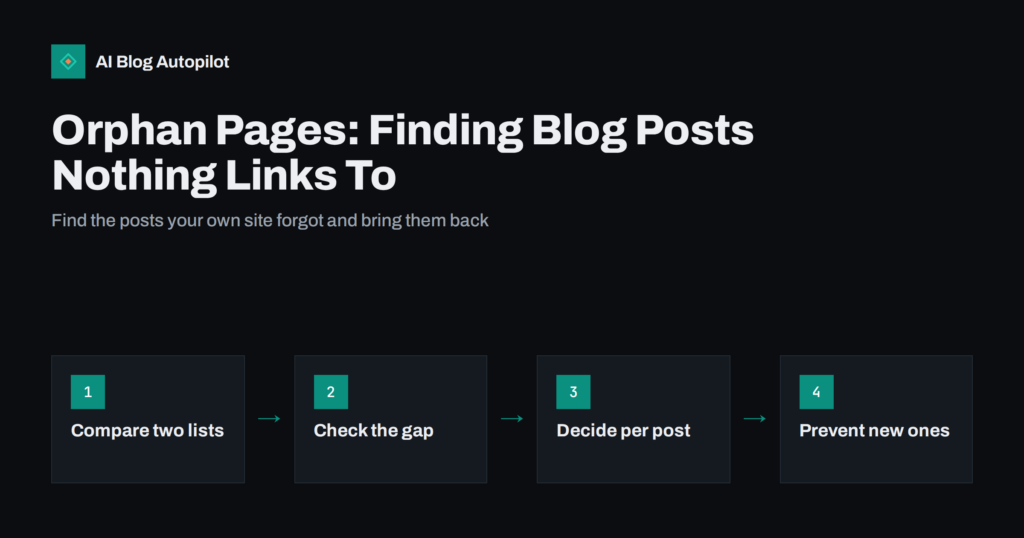
Orphan Pages: Finding Blog Posts Nothing Links To
Orphan pages are posts no other page links to. How they happen on blogs, how to find them with free tools, and whether to…
 2026. gada 29. sept. · Lasīšanas laiks: 8 min
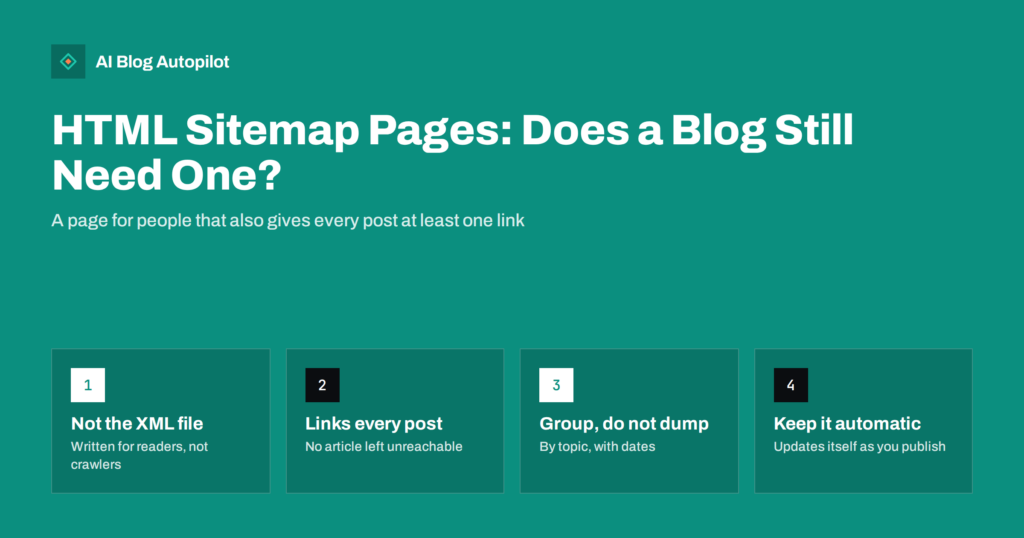
HTML Sitemap Pages: Does a Blog Still Need One?
What an HTML sitemap page does that an XML sitemap does not, when a blog benefits from one, and how to build one that…
 2026. gada 28. sept. · Lasīšanas laiks: 8 min
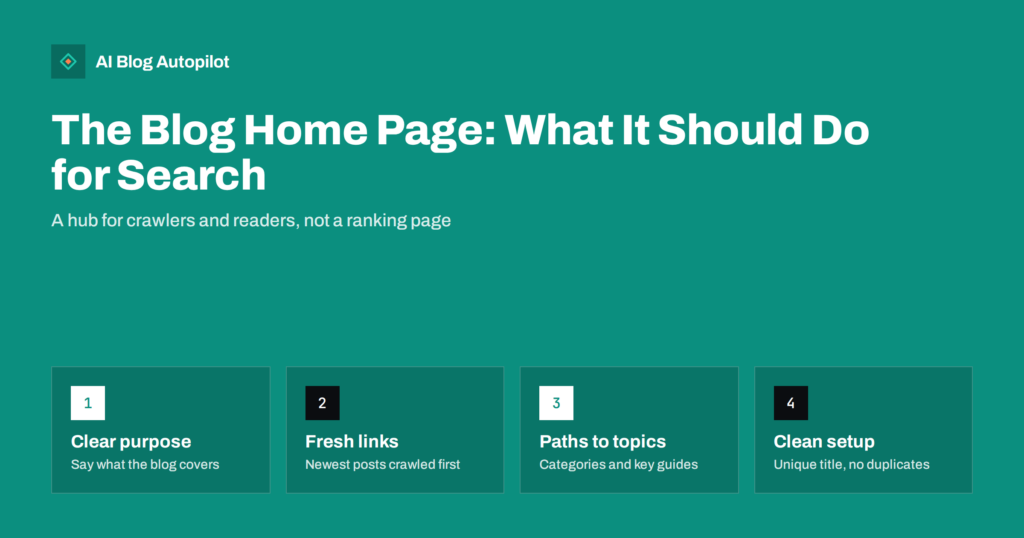
The Blog Home Page: What It Should Do for Search
A blog's main listing page is rarely meant to rank for much, but it shapes crawling, internal links and first impressions. How to set…
 2026. gada 28. sept. · Lasīšanas laiks: 8 min
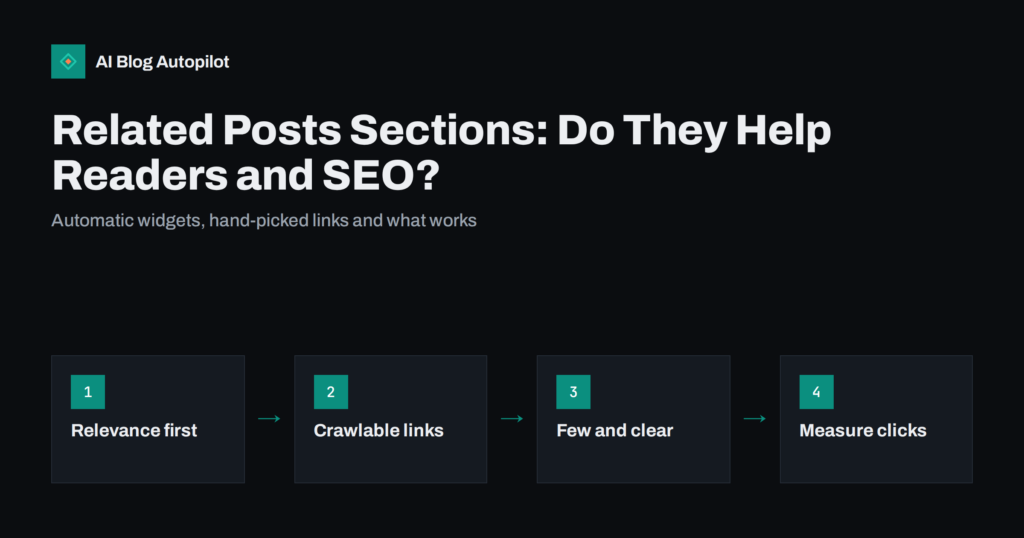
Related Posts Sections: Do They Help Readers and SEO?
Related posts blocks can keep readers moving and spread internal links, or add clutter and slow pages. How to choose, place and build them…
 2026. gada 26. sept. · Lasīšanas laiks: 9 min
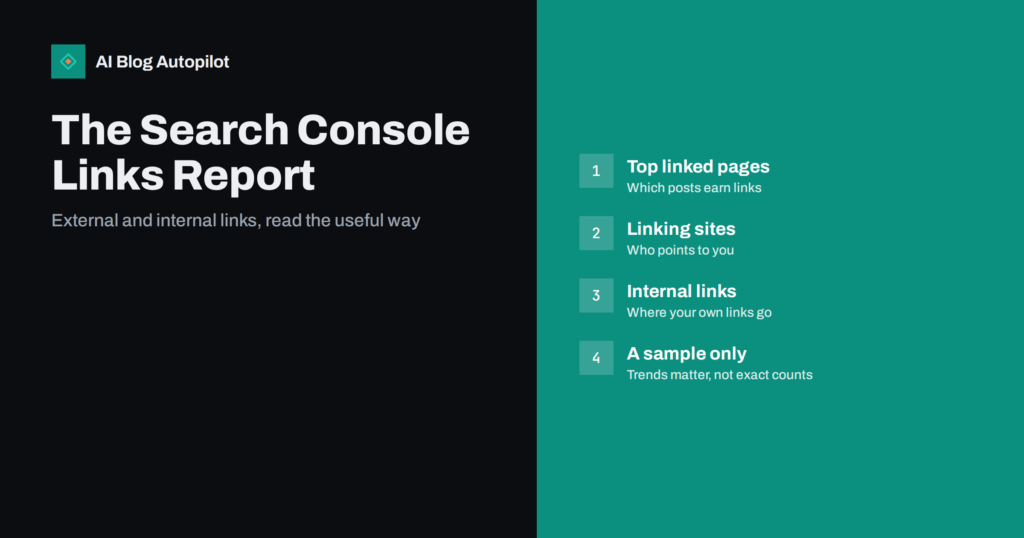
The Search Console Links Report: What to Read in It
The Links report shows which pages earn links, who links to you and how your blog links internally. What each table means, its limits…
 2026. gada 16. sept. · Lasīšanas laiks: 6 min
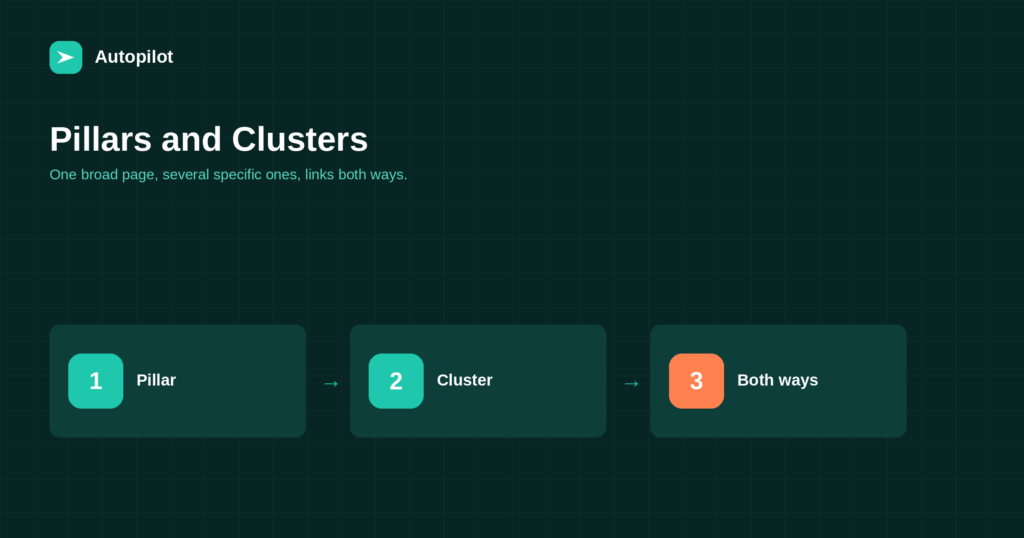
Content Clusters and Pillar Pages, Explained Simply
What a pillar page is, how many supporting articles a cluster needs, how the links should run, and how to retrofit this onto a…
 2026. gada 7. sept. · Lasīšanas laiks: 6 min
Internal Linking on Autopilot: Building Link Structure as You Publish
How to build internal link structure while you publish: which pages to link, how to write anchors, and why every internal link should return…
 2026. gada 14. aug. · Lasīšanas laiks: 6 min
Breadcrumbs and Navigation for a Growing Blog
As a blog grows past a hundred posts, readers and search engines need to see where each page sits. Breadcrumbs, menus, archives and related…