ENEnglish
 LTLietuviškai
 DEDeutsch
 FRFrançais
 RUРусский
 ESEspañol
 PLPolski
 ITItaliano
 UKУкраїнська
 CSČeština
 PTPortuguês
 JA日本語
 LVLatviešu valoda
 ETEesti
 HUMagyar
 IDBahasa Indonesia
 TRTürkçe
 HIहिन्दी
 ELΕλληνικά
 ARالعربية
 THไทย
 VITiếng Việt
 RORomână
 MSBahasa Melayu
 BNবাংলা
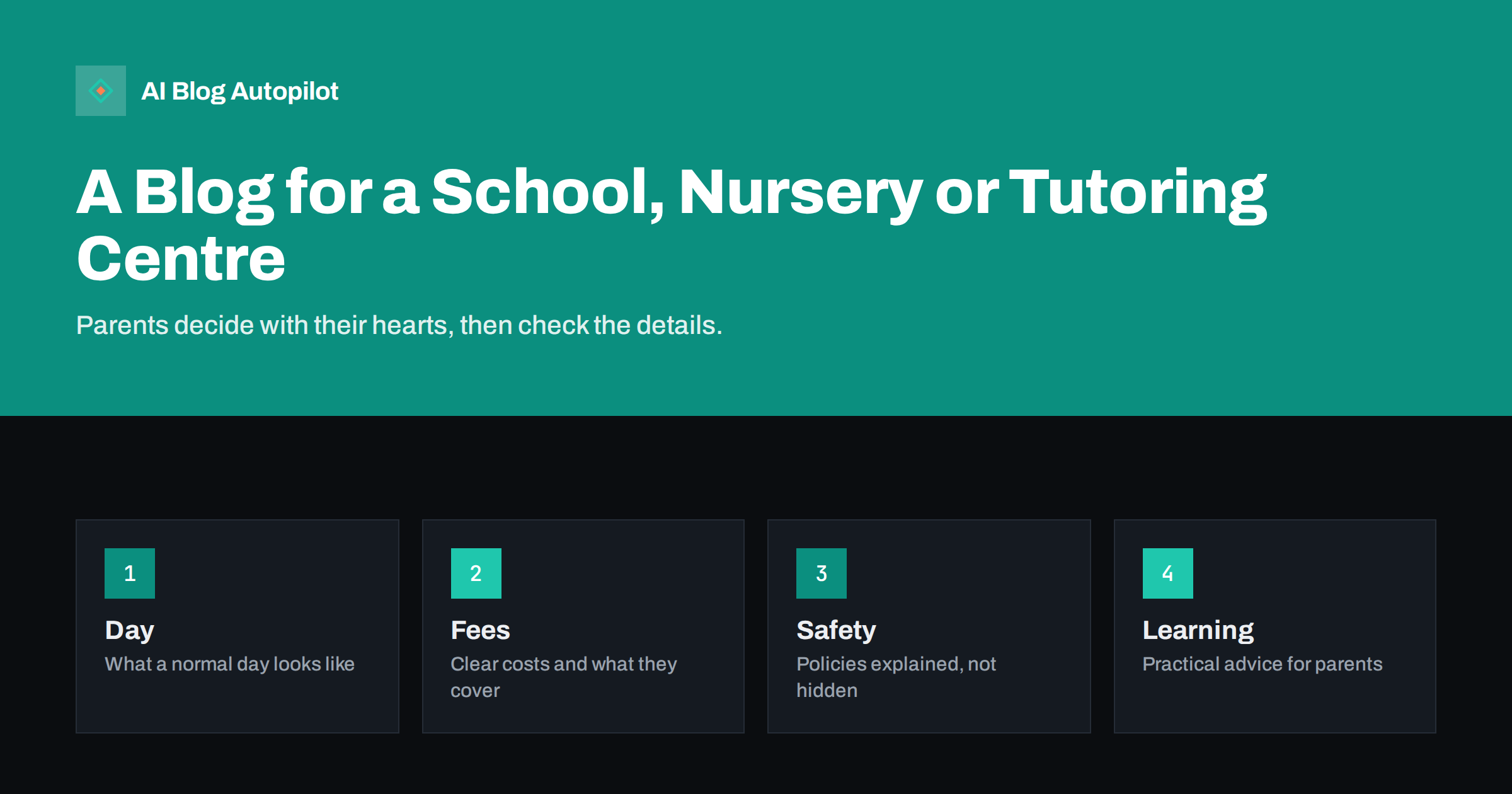
Short answer: an education business should publish what parents need in order to feel confident: what a normal day looks like, how children are looked after, what the fees cover, how progress is shared and how to arrange a visit. Add practical advice that helps families whether or not they enrol with you. Protect children’s privacy, avoid promising results and have a named member of staff approve every page, because trust is the whole product.
Choosing a nursery, a school or a tutor is among the most emotional purchases a family makes. Parents search late in the evening, compare several options and look for signs that the people behind a website are careful, open and competent. A blog gives you a place to show that care in your own words. It also answers questions that would otherwise fill your inbox in the weeks before term starts.
Write for the parent, and for the child where it fits
Your main reader is an adult making a decision, but older pupils sometimes read too, especially in a tutoring or exam-preparation centre. Decide who each article is for and say so in the first paragraph. A page about settling in at nursery speaks to a worried parent. A page about revision methods may be written for a teenager. Mixing the two makes both groups feel that the article is not quite meant for them.
Start by listing the questions that families ask at open days and on the phone. They often include the ratio of staff to children, how problems are handled, what the daily routine looks like, how communication works and what the costs really are. Each answer becomes a page. The method matches our guide to turning customer questions into blog topics, and it keeps the blog grounded in what your community actually wants to know.
A day in the life, without identifying anyone
The most reassuring page is a plain description of an ordinary day. Describe arrival, meals or breaks, lessons or activities, rest times, outdoor time and collection. Mention who is in the room and what training they have. Use a calm tone and concrete details, such as how you greet each child or how you handle a child who is upset. It helps to describe the unglamorous parts too, for example how nappy changes or toilet breaks are handled, because parents are often thinking about them.
Be careful with pictures. Publish photographs of children only where the guardians have given clear, recorded consent that covers the website, and never show names next to faces. Many schools choose images of hands, materials, rooms and outdoor spaces instead. State your photo policy on the page, so parents know what to expect and what they can ask you to change.
Fees, hours and what is included
Few things cause as much frustration as hidden costs. Publish the fees, the hours, the meals and materials that are included, the extras that are not, notice periods, late-collection charges and any discounts for siblings. If prices vary by age or session, show the structure, even if you ask people to contact you for an exact quote. Add the date of the last update and the term or year it applies to.
Use a short table only if it genuinely helps, and write a sentence or two under it explaining the reasoning. A parent who understands why costs are what they are is more likely to accept them. If funding, vouchers or support schemes exist in your country, describe them carefully and link to the official source, because the rules change and you should not guess. Our piece on writing honestly about what things cost covers the principle.
Safeguarding, health and policies in plain language
Policies are usually written for inspectors, not for parents. Keep the formal documents available, but add a short plain-language page for each important topic: how you keep children safe, how you handle accidents and medication, what happens if a child is unwell, how you manage allergies and how concerns can be raised. Name the person responsible and state how to reach them. Do not copy legal text without checking that it matches what actually happens in your setting.
Add a trust page that links to inspection reports, accreditations and registrations that you can actually prove, and keep it up to date. Our article on contact, privacy and terms pages as trust signals explains why this matters for any site that asks people to hand over something valuable.
Learning advice that helps whether or not they enrol
General guidance is where a tutoring centre or school can show expertise. Write about how to support early reading at home, how to plan revision, how to talk about school worries, how to build routines before exams or how to make a calm start to the school year. Keep the advice practical and modest, say what is general and what depends on the child, and avoid presenting your own method as the only way.
Do not claim guaranteed grades, rankings or developmental outcomes. If you quote results, say what they measure, which year they refer to and how many pupils were involved. Parents are quick to notice exaggeration, and a careless statistic can damage a reputation built over many years. Where a topic touches on special needs or health, suggest speaking to a qualified professional and describe how your staff can help in a supporting role.
Term dates, events and community updates
A blog is a good home for news that does not fit anywhere else: term dates, open days, exhibitions, trips, fundraising events and changes to routines. Publish them in a consistent format, with the date, time, place and who the event is for. Avoid leaving an old announcement on the front page for months. Mark past events as finished and link to a short summary with a few photographs, again only where consent exists.
Keep a simple annual calendar of recurring topics, such as applications opening, transition to a new class, exam season and the holidays. Write each guide about six weeks before families need it. Reuse and update the same page every year, rather than creating a new one, so it builds authority and keeps its address. This is the same idea as in our guide to planning seasonal content.
Handling enquiries and open days
A good article ends with a clear next step, and for an education business that is usually a visit or a conversation. Make the route simple: a short enquiry form, a phone number that is answered during stated hours and an honest note about how quickly you reply. Explain what happens at an open day or trial lesson, how long it lasts, who will meet the family and what to bring. Parents who know what to expect are more likely to come, and they arrive with better questions.
After an enquiry, send a short message that links to the two or three pages most relevant to that family, such as the day-in-the-life page and the fees page. This saves staff from repeating themselves and shows the family that the information on the site is the same as what they hear in person. Track the first question that new families ask, and when you see the same one three times, write the page that answers it.
Waiting lists need their own page. Explain how places are allocated, what information you need, how long families typically wait and how to withdraw. Avoid vague promises, and update the page after each intake so that it never describes a situation that has already changed. A page that is honest about limited places builds more goodwill than one that suggests places are always available.
Keep the quality bar high
Because the audience is cautious, it is better to publish fewer pages than to publish careless ones. Ask a teacher or manager to read every article, check the facts against current practice and approve the wording. Add the reviewer’s name and the review date on pages about policies and health. Read the pages on a phone, since most parents browse from one, and make sure that contact details are easy to reach in a single tap.
Finally, remember that your own staff are readers too. Teachers and assistants who see the blog describe their work accurately feel proud of it, and they can point parents to the right page when a question comes up in the corridor. Ask them to flag anything that no longer matches practice. A school or nursery that keeps its public pages in step with daily reality earns the quiet credibility that no advertising can buy, and that credibility is what brings families back to recommend you to others.
It also helps to keep a short log of changes: when a fee changed, when a policy was updated and who approved it. If a parent asks why a page says something different from last year, you can answer in a minute. The log takes almost no time to maintain and gives the blog the discipline of a proper record rather than a loose collection of announcements.
How AI Blog Autopilot helps
AI Blog Autopilot writes full SEO articles for your WordPress blog from the topics, keywords, audience and tone you set, with FAQ sections, tags and SEO meta included, and it shares each one to your social networks. For an education business, the sensible way to use it is with approval mode switched on, so that every article waits for a teacher or manager to read it before it goes live. You decide the topics, keep the tone cautious and add the details that only your own setting can supply. See the pricing page for plans.
Related reading
- Blog Strategy for a Local Business
- Contact, Privacy and Terms Pages: Trust Signals for a Blog
- Writing an Editorial Policy Page for a Business Blog
- Turning Customer Questions Into Useful Blog Topics
The bottom line
Families want to see how an education business works before they trust it with a child. Explain the day, publish the fees, describe safeguarding in plain words, share practical advice and protect privacy. Keep every page reviewed by a named person, and the blog becomes a quiet, reliable part of your admissions work.
BUJ
Can a nursery or school publish photographs of children?
Only with clear, recorded consent from guardians that covers website use. Many settings choose images of rooms, materials and activities without faces.
Should fees be on the website?
Yes. Publish the structure and what is included, and add the date of the last update. Hidden costs are one of the most common reasons parents lose trust.
What can a tutoring centre say about results?
Only what you can prove. State what the figures measure, which period they cover and how many pupils are included, and never promise a particular outcome.
How often should an education blog be updated?
Weekly or fortnightly is plenty. Review policy and fee pages each term, because outdated details cause more harm than a quiet blog.
Who should approve the articles?
A teacher, manager or other responsible person, whose name and review date can appear on pages about policies, health and safety.