ENEnglish
 LTLietuviškai
 DEDeutsch
 FRFrançais
 RUРусский
 ESEspañol
 PLPolski
 ITItaliano
 UKУкраїнська
 CSČeština
 PTPortuguês
 JA日本語
JA日本語 LVLatviešu valoda
 ETEesti
 HUMagyar
 IDBahasa Indonesia
 TRTürkçe
 HIहिन्दी
 ELΕλληνικά
 ARالعربية
 THไทย
THไทย VITiếng Việt
 RORomână
 MSBahasa Melayu
 BNবাংলা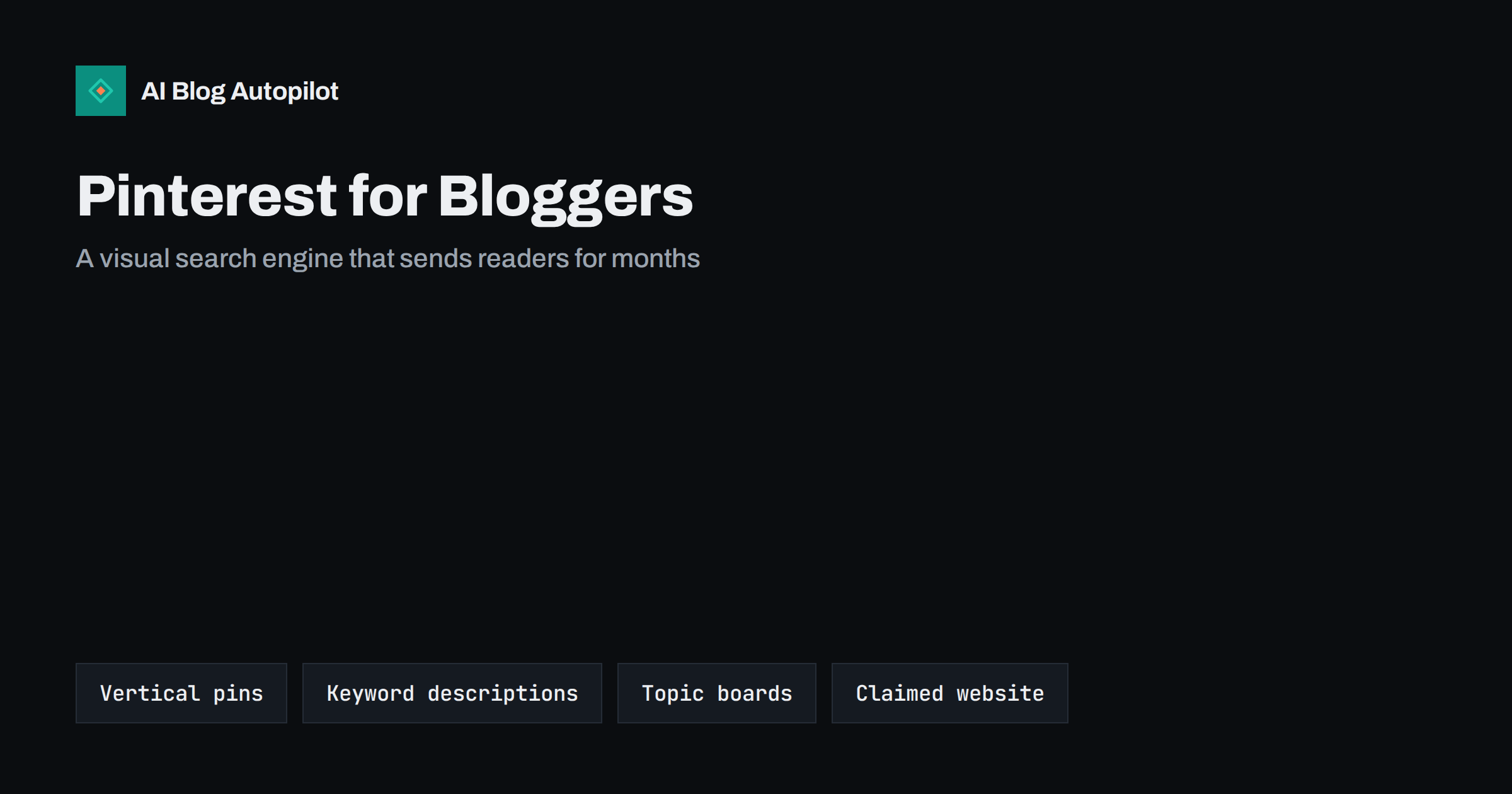
Short answer: Pinterest behaves more like a visual search engine than a social network: people search it for ideas and plans, and pins are found through keywords long after they are posted. For a blog, that means pins can send readers for months rather than hours. To use it well, set up a free business account and claim your website, create vertical images for each article, write pin titles and descriptions with the words people search, organise pins into clear topic boards, and pin new articles consistently. It suits visual and planning topics best.
Most social networks reward what is new. A post is seen for a few hours, maybe a day, and then disappears down the feed. Pinterest works differently, and that difference is why many bloggers find it one of their steadier sources of referral traffic.
This guide explains how Pinterest surfaces content, which blogs it suits, and a practical routine for turning articles into pins that keep working.
Why Pinterest is different from other networks
People use Pinterest to find and save ideas: recipes, home projects, outfits, travel plans, business tips, templates. Much of that activity starts with a search, and the results are pins matched to the words used.
That has three consequences for bloggers:
- Longer lifespan. Because pins are discovered through search and saved to boards, they often keep receiving views and clicks well after they are posted, unlike typical feed posts.
- Keywords matter. Pin titles, descriptions and board names help Pinterest decide which searches a pin should appear for, much as page text does for web search.
- Intent to act. People on Pinterest are often planning something, which makes them receptive to practical, useful articles.
Pinterest is also one of the few social platforms where sending people off-site to a link is the normal, expected behaviour. Pins link to their source by design.
Which blogs Pinterest suits
Pinterest is not equally useful for every topic. It works best where the content is visual, practical or about planning.
- Strong fits: food, home and garden, DIY, crafts, fashion, beauty, weddings, travel, parenting, fitness, education, personal finance, small-business tips, templates and checklists.
- Reasonable fits: marketing, blogging, productivity, design, many local services with visual results, such as renovation or landscaping.
- Weaker fits: highly technical B2B topics, news and commentary, content without a visual angle.
A useful test: search Pinterest for your main topics. If you find active pins linking to articles similar to yours, there is an audience. If results are sparse or unrelated, your effort is probably better spent elsewhere.
Setting up properly
- Create a business account, or convert a personal one. It is free and gives access to analytics and business features.
- Claim your website. This connects your domain to your profile, adds your details to pins from your site and gives you analytics for pins that link to it. Pinterest’s guide to claiming your website explains the options, such as adding a meta tag.
- Enable rich pins for articles. Rich pins pull metadata such as the article title and description from your page automatically, which requires your site to output the relevant metadata. The rich pins help page describes the requirements.
- Write a clear profile: business name, a description containing your main topics and a link to your site.
- Create five to ten boards matching your blog’s main categories, with descriptive names and descriptions.
Most WordPress SEO plugins output the Open Graph metadata that rich pins can use. Featured images for automated posts covers the image side of that metadata.
Designing pins that get clicked
Pinterest is visual first. The image decides whether anyone reads the title.
- Vertical format. Pinterest recommends a 2:3 aspect ratio, such as 1000 by 1500 pixels. Square and landscape images take up less space in the feed.
- A short text overlay stating the benefit or topic in a few words, large enough to read on a phone.
- High contrast and clean layout. Busy images with small text disappear among other pins.
- Consistent branding: the same fonts, colours and a small logo or site name, so regular users recognise your pins.
- Several designs per article. Different images for the same article can reach different searches and audiences. Space them out rather than posting them all at once.
Avoid misleading images or text. A pin that promises something the article does not deliver earns clicks once and damages trust afterwards.
Writing pin titles and descriptions
Treat each pin like a small search result.
- Title: clear and specific, using the words people search. “Weekly meal plan for busy families” beats “My favourite week”.
- Description: one to three natural sentences explaining what the article offers, including a couple of related terms. Avoid lists of hashtags or keyword strings.
- Link: the specific article, never just your homepage.
- Alt text: a brief description of the image, which helps accessibility.
Pinterest’s own search suggestions, which appear as you type in its search bar, are a good source of the phrasing people use, similar to autocomplete in web search. Keyword research without paid tools uses the same approach for articles.
Boards and organisation
Boards help Pinterest understand what your pins are about and help users follow the topics they care about.
- Name boards the way people search: “Small business marketing tips” rather than “Stuff I like”.
- Add a one or two sentence description to each board with relevant terms.
- Pin each article to the most relevant board first; add it to other relevant boards over time if it genuinely fits.
- Keep boards focused. A board that mixes unrelated topics sends a confusing signal.
Some bloggers also save useful pins from other creators to their boards. This keeps boards useful to followers and shows that your account is active, but your own pins should make up a good share of your activity if traffic is the goal.
A sustainable pinning routine
Consistency matters more than volume. A routine many bloggers can keep:
- For each new article, create one or two vertical pin images when you publish.
- Pin the first image on the day of publication to the most relevant board.
- Pin a second design a week or two later, with a different title angle.
- Pin older articles with fresh designs a few times a week, especially seasonal content ahead of its season.
- Check analytics monthly to see which pins and topics bring clicks, and create more for those.
Seasonality matters on Pinterest because people plan ahead. Pin seasonal articles several weeks before the season, not on the day. Seasonal content planning covers the timing.
Common mistakes bloggers make on Pinterest
- Pinning the landscape featured image. The image made for the blog header or for other networks is usually horizontal and looks small on Pinterest. A dedicated vertical design is worth the extra few minutes.
- Linking to the homepage. Someone who clicks a pin about a specific topic expects that topic. Sending them to the homepage loses most of them.
- Treating it like a feed. Posting a burst of pins on one day and nothing for weeks works poorly. Steady, regular pinning suits how Pinterest distributes content.
- Vague board and pin names. Creative names that nobody would search for waste the main advantage Pinterest offers: being found through search.
- Hashtag lists and keyword strings in descriptions. Natural sentences with a few relevant terms read better and are more useful to searchers.
- Giving up too early. The first months are often quiet. Many accounts only see steady clicks once a library of pins has built up.
- Ignoring the article itself. A strong pin sends people to the page; if the page loads slowly on a phone, buries the promised content or bombards visitors with pop-ups, they leave immediately. Pinterest traffic is overwhelmingly mobile, so the article must work well on a small screen.
Most of these come down to the same principle as web search: be specific, be consistent, and make sure the page delivers what the pin promised. A modest number of well-made pins linking to genuinely useful articles will outperform a large number of rushed ones.
Measuring results
Pinterest analytics shows impressions, saves and outbound clicks for your pins. Your website analytics shows visits from Pinterest and what those visitors do.
- Outbound clicks are the key Pinterest metric for bloggers; saves are a good leading indicator.
- Tag pin links with UTM parameters if you want article-level detail in your analytics, as explained in UTM tags for social shares.
- Expect gradual growth. New accounts often see little for the first months while pins accumulate and get distributed.
Judge Pinterest over a quarter, not a week. Its strength is the slow build, not the launch spike.
How AI Blog Autopilot fits in
AI Blog Autopilot shares every published article to your connected social networks, including Pinterest, with its own text and timing for each network; with AUTO timing, Pinterest receives the article the day after the blog post. Its content map shows which networks each article reached. Creating extra pin designs and pinning older articles are additional steps you can take on top. See the AI Blog Autopilot home page for how sharing works.
Related reading
- Turning an Article Into Social Posts That Get Read
- Repurposing an Article: One Piece, Several Formats
- How to Promote a Blog Post After You Publish It
The bottom line
Pinterest is a visual search engine where pins can bring readers for months. It suits visual, practical and planning topics best. Set up a business account, claim your website and enable rich pins, design vertical images with clear text, write pin titles and descriptions in searchers’ language, organise focused boards, and pin new and older articles consistently. Measure outbound clicks over quarters, not days.
BUJ
Is Pinterest good for driving blog traffic?
For visual, practical and planning topics, it can be a steady source of referral traffic, because pins are found through search and often keep receiving clicks long after posting. For highly technical or news topics it is usually less effective.
What size should Pinterest pins be?
Pinterest recommends a vertical 2:3 aspect ratio, for example 1000 by 1500 pixels. Vertical pins take up more space in the feed than square or landscape images.
Do I need a Pinterest business account?
It is strongly recommended and free. A business account gives access to analytics, lets you claim your website and supports rich pins, all of which help bloggers.
How often should a blogger pin?
Consistency matters more than volume. Pinning new articles when they publish and a few fresh pins for older articles each week is a sustainable routine for most blogs.
How long does it take to see results from Pinterest?
Usually several months. Pins need time to be distributed and found through search, so judge results over a quarter and look at outbound clicks rather than early impressions.