ENEnglish
 LTLietuviškai
 DEDeutsch
 FRFrançais
 RUРусский
 ESEspañol
 PLPolski
 ITItaliano
 UKУкраїнська
 CSČeština
 PTPortuguês
 JA日本語
 LVLatviešu valoda
 ETEesti
 HUMagyar
 IDBahasa Indonesia
 TRTürkçe
 HIहिन्दी
 ELΕλληνικά
 ARالعربية
 THไทย
 VITiếng Việt
 RORomână
 MSBahasa Melayu
 BNবাংলা
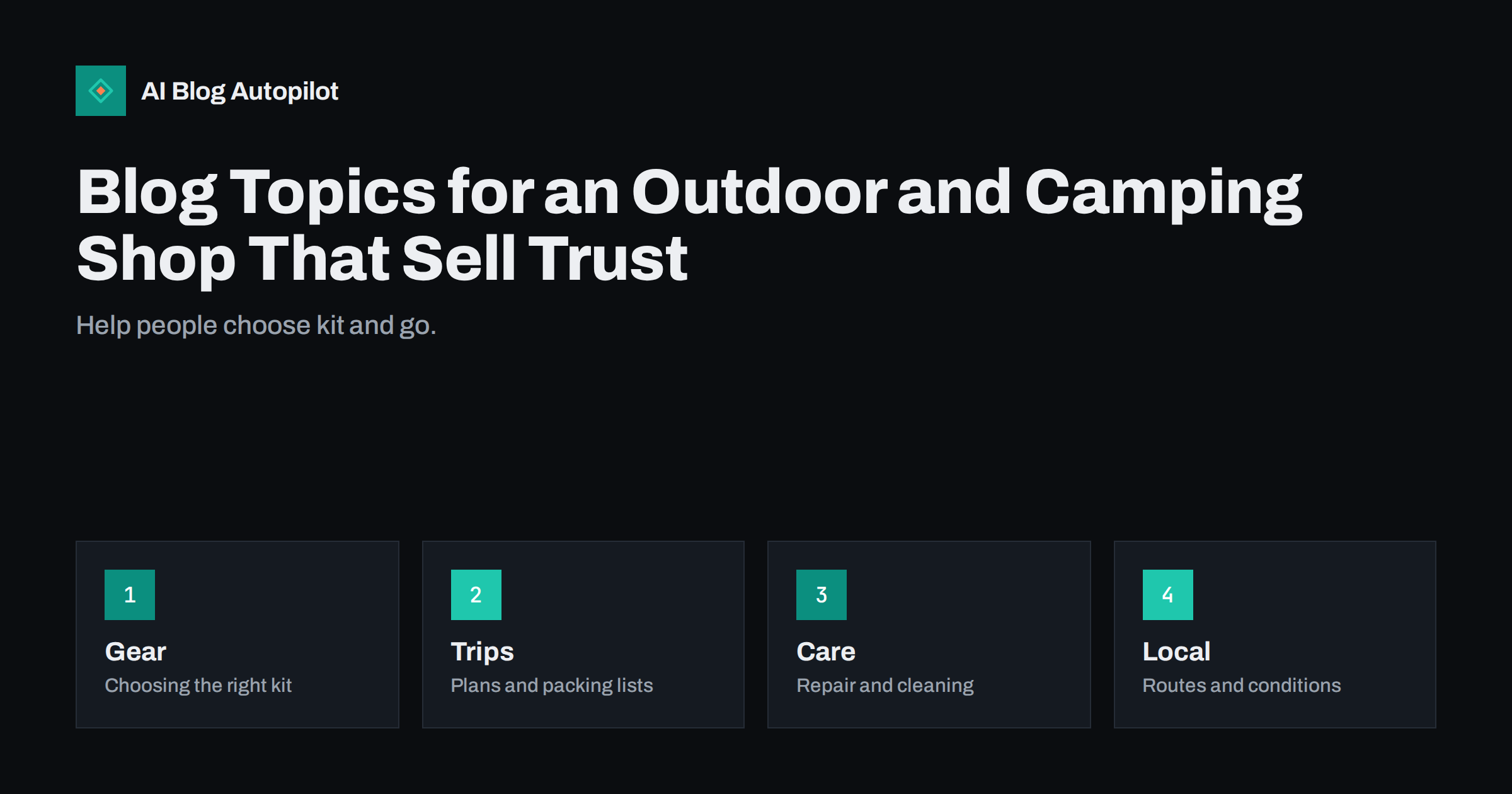
Short answer: an outdoor or camping shop blog works best when it helps people choose the right kit for their own trip, explains how to use and care for it, and shares local knowledge that online-only sellers cannot match. Write from real experience, be frank about what gear is not needed, and keep safety information accurate and cautious.
Customers of outdoor shops are often planning something: a first camping weekend, a long walk, a family holiday or a winter climb. They search for guidance before they buy, and they value advice from people who have used the equipment. A blog lets your team share that experience with people who may never have visited the shop.
This guide offers topic ideas for independent outdoor, camping, hiking, fishing and watersports shops. It covers buying guides, care and repair, trip planning, local knowledge and the stories that make a shop memorable.
Buying guides from real use
The most useful articles explain how to choose between options. Write about how to choose a tent for a given number of people and seasons, what to look for in a sleeping bag or mat, how to pick boots that fit, what makes a rucksack comfortable and how to choose a stove. Explain the trade-offs between weight, price, comfort and durability.
Write from your own experience. Mention what your staff carry, what has failed on a trip and what they would buy again. This honesty is the opposite of a generic product description and is what readers hope to find. Avoid empty phrases such as best in class, and say who the product suits and who should choose something else.
Be fair about price. Explain when a cheaper product is fine, for example for an occasional weekend, and when it is worth paying more, such as for regular winter use. Build each guide around a real question, such as which tent suits two adults and a dog, so that it helps both readers and search.
Trip planning and packing lists
Many readers need help deciding what to bring. Write checklists for a first overnight camp, a day walk in changeable weather, a family trip with young children or a weekend by the water. Group items by purpose, such as shelter, sleep, food, clothing, navigation and safety, and explain why each matters.
Offer a printable list that readers can tick off. Add notes for different seasons and for different levels of experience, so that beginners do not feel overwhelmed. Keep the lists realistic and avoid pushing every item as a purchase; a trusted shop admits that an item from home often does the job.
Include guidance on planning: telling someone where you are going, checking weather and daylight, knowing your limits and turning back in good time. Keep this general and cautious, and point readers to official safety organisations and local rescue services for detailed advice.
Mention how to store kit between seasons. Dry equipment thoroughly before packing it away, keep sleeping bags loosely stored instead of tightly compressed, and keep tents away from damp. Small habits like these add years to the life of equipment, and customers who learn them remember who taught them.
Invite readers to bring problem items to the shop for an opinion. A friendly offer to look at a worn zip or a leaking seam turns an article into a visit, and a visit often turns into a sale or a repair booking.
Care, cleaning and repair
Care articles show that your relationship continues after the sale and save customers money. Explain how to wash and reproof waterproof clothing, how to clean and store a tent, how to dry boots, how to care for a sleeping bag and how to maintain a stove or a knife. Describe the steps clearly and warn about common mistakes.
Write a guide to simple repairs: patching a mat, fixing a zip, replacing a pole section or re-stitching a strap. If your shop offers repairs or sells repair kits, say so. If a repair is beyond a home fix, explain how to judge that and where to take the item.
These pages are searched through the year and tend to stay useful. Review them regularly, because products and methods change, and note the date of the last check. The guide to refreshing old blog posts explains how to update a page without losing its history.
Local routes, conditions and events
Local knowledge is your biggest advantage over large online sellers. Write about routes your staff know well: where to start, how long they take, what the ground is like and what facilities exist. Describe good places to camp or launch a boat, taking care to follow local rules and to encourage leave-no-trace habits.
Keep conditions and access information current, and say when it was last checked. Rules about fires, camping and access can change, and landowners may restrict use. Link to the official source for rules and closures, and avoid giving details you cannot verify. Safety information must always come from a reliable source.
Cover events and clubs too: local walking groups, guided trips, courses, charity walks and festivals. A page listing local events with dates becomes a useful community resource, and the links you earn from clubs and organisers help your site in return.
Seasonal content that follows the calendar
Outdoor shops are seasonal. Plan articles several weeks before each season starts, so that they are indexed and ready when searches rise. In spring, write about getting kit out of the loft and checking it. In summer, write about festival camping, heat and sun. In autumn, write about layering and daylight. In winter, write about cold-weather sleeping, boots and safety.
Keep a simple yearly calendar of topics, with the date by which each article must be live. Reuse and update pages each year at the same address, rather than creating a new page every time. The guide to seasonal content planning explains the method in detail.
Watch the weather. A sudden cold snap or a hot weekend creates a short burst of interest, and a quick, useful article or social post can capture it. Have templates ready so that you can publish quickly without sacrificing accuracy.
Beginners, families and accessibility
Many customers are new to the outdoors and feel unsure. Write welcoming guides: a first camping trip step by step, how to try an activity without buying everything, what to expect on a first guided walk. Use friendly language and avoid assuming knowledge. Welcoming articles bring new customers who grow into regular ones.
Families have their own questions: how to keep children warm, what to pack for a baby, how to choose a tent that is easy to pitch, how to make a trip fun in the rain. Write for parents and carers with practical suggestions and honest warnings about what can go wrong.
Think about accessibility. Write about options for people with limited mobility, adaptive equipment and accessible places to visit, where you have reliable information. Even a short, honest guide, with links to organisations that specialise in this area, will be valued by readers who rarely find such pages.
Ask customers for their tips and photographs, with clear permission. A page of readers’ favourite campsites, kit hacks or lessons from a first trip becomes a community resource and a source of fresh ideas. Credit contributors by first name or the name they choose, and never publish locations that landowners or conservation bodies ask people to keep quiet.
Answer questions in public where you can. A reader’s question on a social post can become a short article that helps everyone, and the answer shows how knowledgeable the team is. Link back to the original question so that the reader feels heard.
Stories, sustainability and community
Share trip reports from staff and customers, with permission and photographs. A story about a first summit, a family weekend or a long walk shows the products in use and the spirit of the shop. Keep them honest, including problems, since readers learn most from what went wrong.
If you talk about sustainability, be specific and accurate: repair services, second-hand kit exchanges, recycling points or product care that extends life. Avoid vague green claims, and make sure you can support what you say. Customers notice when a claim is empty.
Support the community with posts about local clean-ups, conservation groups or volunteer days, where you take part. Describe what you actually did. A modest, truthful post earns more respect than a grand statement.
Fishing, water sports and specialist activities
If your shop serves a specialist activity, give it its own set of articles. Anglers want guides on tackle, bait, licences and local waters. Paddlers want advice on boats, buoyancy aids, launch points and tides. Climbers and runners have their own questions on shoes, ropes, nutrition and training. Each group is loyal to shops that understand them.
For these audiences, accuracy is everything. Experienced readers will notice a mistake immediately and lose trust. Ask the specialist on your team to write or at least check each article, and name them as the author or reviewer. A named expert gives the page weight, as the guide to bylines and author bios describes.
Explain licences, permits and rules in general terms, and link to the official body for the details. These rules differ between places and change, so avoid stating specifics you cannot keep current.
Finally, keep the language of the activity but explain terms for newcomers. A short glossary on the page helps beginners and gives search engines more context.
How AI Blog Autopilot helps
AI Blog Autopilot can write and publish articles on your chosen topics, with FAQ sections, tags and SEO meta, and share them to your social networks. Check every route, safety note and product detail with your team before it goes live. See the pricing page for plans.
Related reading
- Blog Strategy for an Online Shop
- Blog Strategy for a Local Business
- Planning Seasonal Content Without Scrambling Every Year
The bottom line
Share real experience, help people choose and care for kit, keep safety and access details accurate, and let your local knowledge set the shop apart.
BUJ
What should an outdoor shop blog write about first?
Buying guides for the most common kit, packing lists for common trips and care guides for the products you sell.
How do I keep safety advice accurate?
Keep it general and cautious, link to official safety organisations and local services, and show the date you last checked.
Should I recommend cheaper options?
Yes, where they suit the use. Honest advice builds loyalty and repeat business.
How often should seasonal articles be updated?
Once a year before the season, at the same address, with the review date shown.
Can I write about local routes?
Yes, if you know them well, follow local rules and link to official sources for access and closures.