ENEnglish
 LTLietuviškai
 DEDeutsch
 FRFrançais
 RUРусский
 ESEspañol
 PLPolski
 ITItaliano
 UKУкраїнська
 CSČeština
 PTPortuguês
 JA日本語
 LVLatviešu valoda
 ETEesti
 HUMagyar
 IDBahasa Indonesia
 TRTürkçe
 HIहिन्दी
 ELΕλληνικά
 ARالعربية
 THไทย
 VITiếng Việt
 RORomână
 MSBahasa Melayu
 BNবাংলা
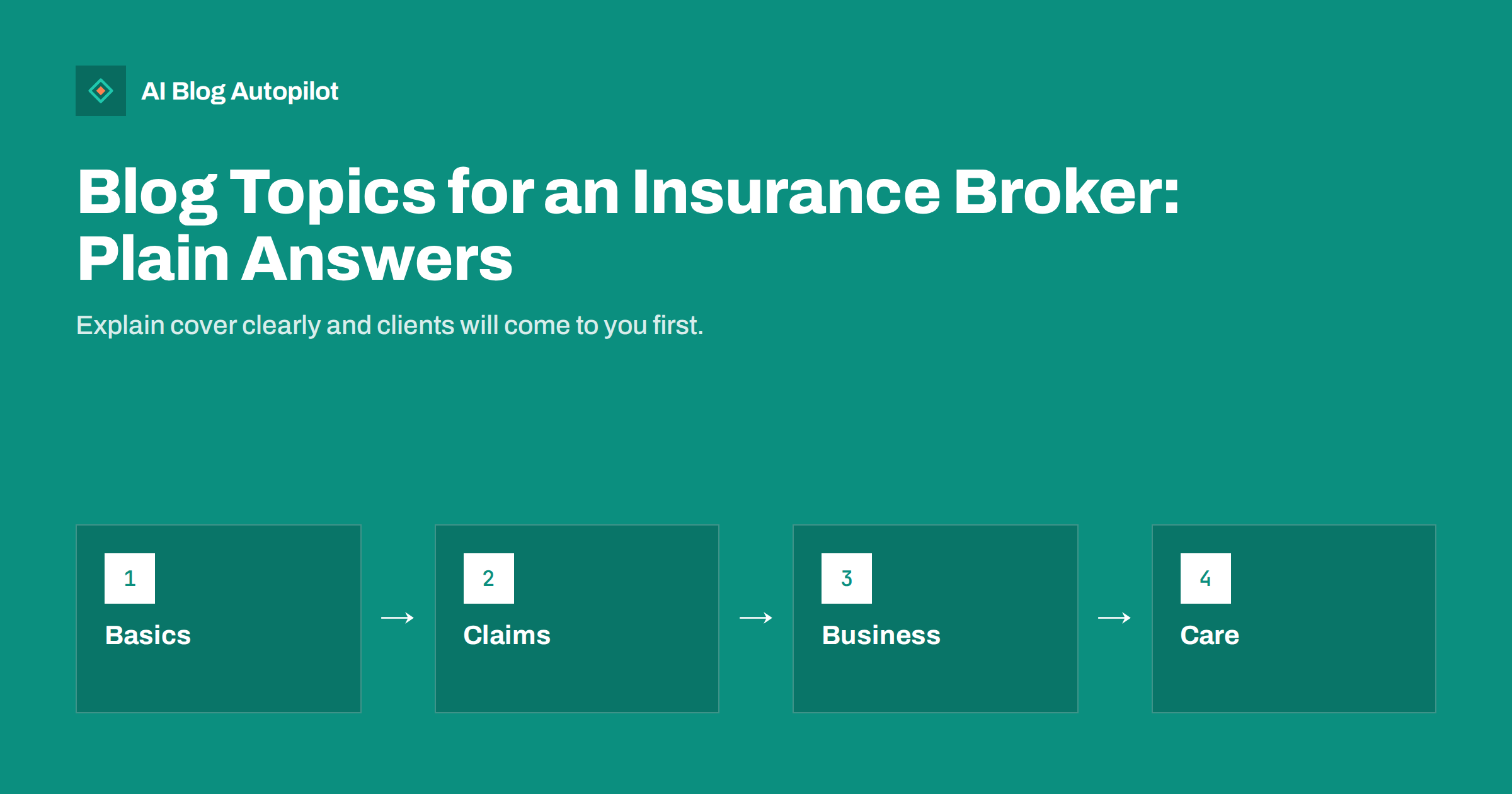
Short answer: an insurance broker should blog about the questions clients ask before and after they buy: what a type of cover includes and excludes, how claims work, what affects the price, how to compare quotes fairly and which risks matter for a given trade. Write in plain words, date every article, avoid promising outcomes and check wording against the rules that apply to your authorisation. Link each guide to the page where a reader can ask for advice.
Insurance is a product that people buy because they must, because they worry or because a lender requires it. Many do not understand what they are buying until they need to claim. A broker who explains things clearly before that moment earns a reputation that advertising cannot buy, and a blog is a natural place to do it.
This guide lists topic groups for personal and business insurance, explains how to handle the care that this field needs and shows how to turn articles into enquiries. It is general guidance. Rules for advertising and advice differ by country and by type of authorisation, so confirm requirements with your compliance contact before you publish.
Why a blog suits an insurance broker
People search before they speak to a broker. They look up what a term means, whether they need a type of cover and what a policy costs. The search results are often filled with comparison sites and large insurers, but those pages rarely give personal or local explanations. A broker who knows the local market, the typical claims and the local risks can offer something different.
A blog also helps with trust, the central issue in this field. Readers want to know that the person who will advise them understands the subject and speaks honestly. Articles that say what a policy does not cover, or when cheaper is not better, show that you put the client first.
Finally, a blog supports long relationships. Clients renew every year, and a broker who sends a helpful article before renewal, about checking sums insured or changes in the market, stays in touch without a sales push. The guide on blog strategy for professional services firms explains how a blog supports firms that sell advice.
Explain the basics of each cover
Start with one guide for each main type of insurance you handle: home, motor, travel, life, health, income protection, business property, liability, professional indemnity, cyber and so on. Each guide should answer the same set of questions: what the cover is for, what it usually includes, common exclusions, how the price is set and what to check before you buy.
Use plain language and short definitions. Terms such as excess, sum insured, underinsurance, exclusion and waiting period are second nature to you and new to your readers. Explain them with a simple example, and add a short glossary page that your articles can link to. The article on glossary pages and definitions shows how to build one.
Be careful to describe cover in general terms and to say that policies differ. A statement such as “home insurance covers flood” is unsafe, because some policies do and some do not. Write “many policies cover flood damage, but some exclude it or limit it, so check the policy wording”, and tell the reader how to check.
Claims: the topic readers care about most
Claims are where trust is won or lost. Write practical guides on what to do after an accident, a theft, a fire or a leak: first steps, what to photograph, who to call, how long the process takes and what the insurer will ask for. A checklist that a stressed person can follow is among the most useful pages you can publish.
Explain how claims are assessed in general terms, why a claim may be reduced or declined and how a broker helps during the process. Avoid promising that a claim will be paid. You can describe how you help to gather evidence, communicate with the insurer and understand the decision, which is real value without any guarantee.
Include honest articles about common reasons for refusal, such as late notice, missing information, wear and tear, unlisted drivers or a change in circumstances that was not reported. These pages help readers avoid mistakes, and they show that you care about outcomes. They also attract people who are searching at an important moment.
Prices and how to compare
People search for price more than any other topic. Explain what affects premiums: the type of risk, location, claims history, sum insured, excess, payment method and the company’s own pricing. Show readers how to compare quotes properly by checking the cover, the exclusions and the excess, not just the price at the bottom.
Do not publish prices unless they are real, current and clear about their conditions. A single example, such as “from a certain amount a month”, can mislead if it applies to only a few clients. If you give examples, state the assumptions, the date and the fact that individual prices vary. The article on writing honest articles about what things cost helps you present figures responsibly.
Explain how a broker is paid, in line with the rules that apply to you. Many readers wonder whether they will pay more by using a broker. A clear page on fees and commission, in plain words, answers that question and builds confidence.
Topics for business clients
Business owners search by trade: insurance for builders, shops, restaurants, consultants, drivers, tradespeople, landlords and online sellers. If you work with a sector, create a guide for it that lists the main risks, the types of cover that are common, the points that are often missed and the questions to ask. Keep each guide specific, and avoid copying the same text for every trade.
Explain the difference between the cover that is required by law or contract and the cover that is wise. Many small businesses buy the minimum and discover gaps later: business interruption, tools in vehicles, cyber incidents, professional liability or cover for employees. Describe these gaps without frightening people, with realistic examples.
Include renewals and reviews. A yearly checklist for business owners, covering changes in turnover, staff, premises, stock and activities, helps them keep the cover accurate and shows a reason to speak to you each year.
Life events and seasonal topics
Many insurance decisions follow life events: buying a home, having a child, starting a business, learning to drive, travelling abroad, retiring or taking a loan. Write one article per event, explaining the cover that people usually consider and the questions to ask. Link each to the contact page, since this is the point when people are ready to talk.
Seasonal topics work as well. Winter weather, summer travel, school holidays, the start of the tax year and storm seasons all prompt searches. The guide on planning seasonal content without scrambling every year shows how to prepare these ahead of time.
Keep a link between local events and your articles. A local flood, a change in regulation or a new law on motor cover are chances to help your readers understand what they mean. Be quick, accurate and calm, and avoid using fear to attract clicks.
Care with accuracy, wording and rules
This is a field where mistakes can cost readers money, so accuracy matters. Date every article and review it at least once a year. When a rule, a law or a market practice changes, update or remove the old page. The article on YMYL topics on a business blog explains why search systems expect extra care for topics that affect money and wellbeing.
Check your wording against the rules that apply to your authorisation. Many countries regulate how insurance is advertised and what must be disclosed. Ask your compliance contact to review a template, and then have a quick process for each new article. Avoid statements that could be read as personal advice to a reader whose circumstances you do not know.
Do not publish client details, claims stories or testimonials without written permission. If you use examples, anonymise them thoroughly. State who wrote or reviewed each article, with their role and qualification, so that readers can see that a real expert stands behind the information.
Think about the moment of renewal. A short article each year that explains how to review a policy, what to ask the broker and which changes to report gives existing clients a reason to get in touch before the renewal date, when you can still compare options. Send the link in an email and share it on your social profiles.
Turn readers into enquiries
Every article should offer a next step: a request-a-quote form, a call-back request or a short checklist to prepare before a conversation. Keep the form short, explain what happens next and say when you will reply. Make the contact route obvious, with a phone number, an address and opening hours.
Use FAQs well. Many insurance questions are short and precise, and a clear answer fits a snippet or an AI answer. The guide on how to write FAQ sections that rank explains how to write them.
Track what works. Look at which articles lead to quote requests, and which topics bring readers who never contact you. Update the first group more often, and consider adding a clearer next step to the second.
How AI Blog Autopilot helps
AI Blog Autopilot can write and publish articles on the topics you choose, with FAQ sections, tags and SEO meta, and share them to your social networks. For a field such as insurance, use the approval option, check every statement against your compliance rules and add dates and reviewer names before publishing. See the pricing page for plans and monthly credits.
Related reading
- Blog Strategy for Professional Services Firms
- YMYL Topics on a Business Blog: Health, Money and Legal Posts
- Writing Honest Articles About What Things Cost
The bottom line
Explain cover, claims and prices in plain words, keep articles dated and compliant, and give every guide a clear route to ask for advice.
BUJ
What should an insurance broker blog about first?
Start with plain guides to the main covers you sell and with claims checklists, since these answer the most common questions.
Can I publish example prices?
Only if they are real, current and shown with their assumptions and date. Say that individual prices vary.
How do I avoid giving personal advice in an article?
Write in general terms, explain that policies differ and invite readers to ask for advice that fits their situation.
How often should articles be reviewed?
At least once a year, and whenever a rule, law or market practice changes.
Do I need approval from compliance?
Rules vary by country and authorisation. Ask your compliance contact to review a template and the process.