ENEnglish
 LTLietuviškai
 DEDeutsch
 FRFrançais
 RUРусский
 ESEspañol
 PLPolski
 ITItaliano
 UKУкраїнська
 CSČeština
 PTPortuguês
 JA日本語
JA日本語 LVLatviešu valoda
 ETEesti
 HUMagyar
 IDBahasa Indonesia
 TRTürkçe
 HIहिन्दी
 ELΕλληνικά
 ARالعربية
 THไทย
THไทย VITiếng Việt
 RORomână
 MSBahasa Melayu
 BNবাংলা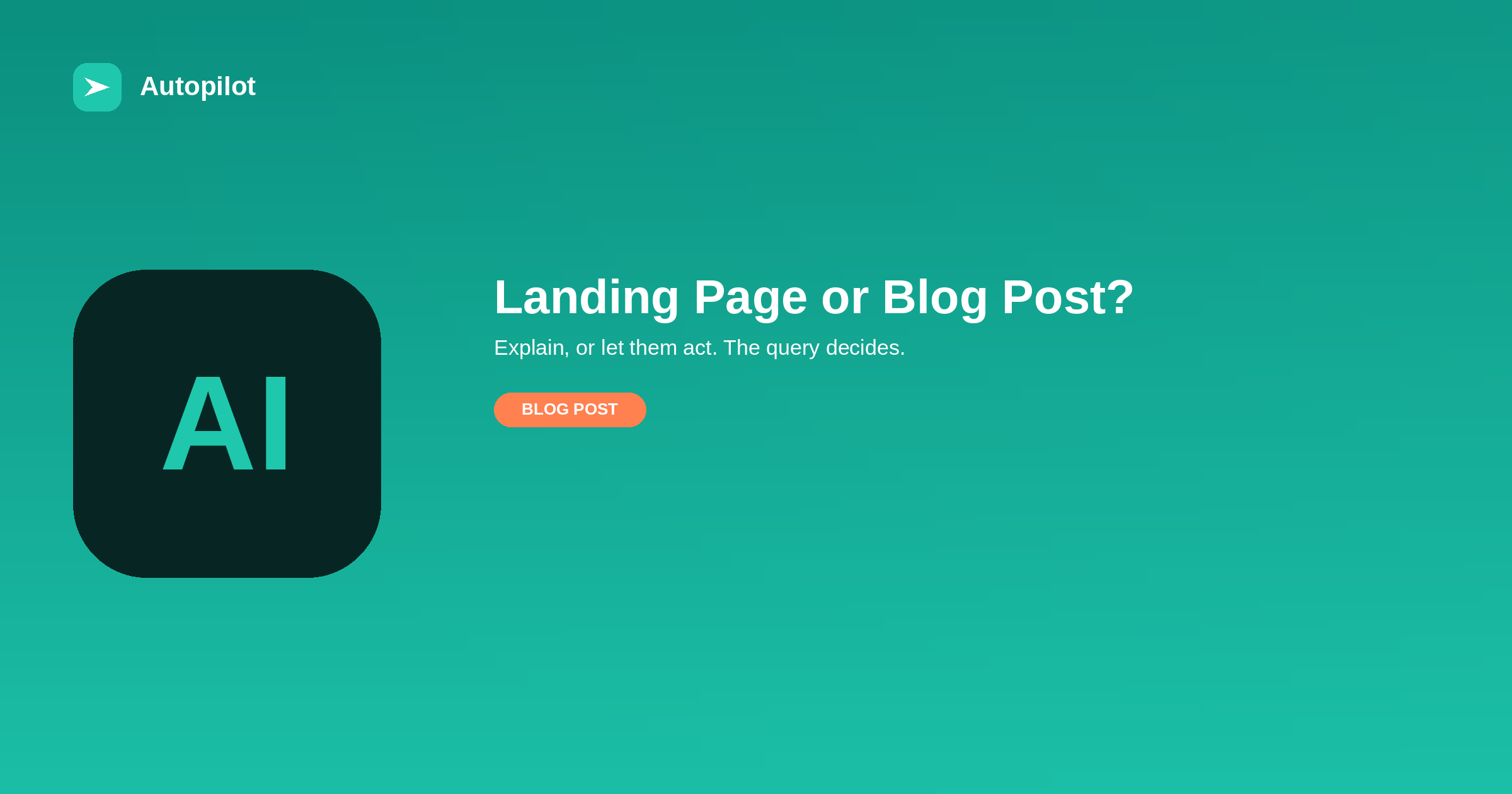
Short answer: the query decides. If the pages ranking for it are articles, guides and comparisons, searchers want to learn or choose, and a blog post is the right format. If they are product, service and pricing pages, searchers want to act, and a landing page is right. Trying to make one page do both usually produces an article that sells too hard or a landing page stuffed with explanation. Build each for its job and link them: articles point to the relevant landing page as the next step, and landing pages link to articles for readers who need more.
Businesses often ask whether to target a phrase with a blog post or a landing page. The question is usually already answered by the search results, which show what format people searching that phrase actually want.
Getting it right matters because the two formats do different jobs, and a page built for the wrong one struggles however good it is.
What each format does
The two formats serve different moments.
| Factor | Blog post | Landing page |
|---|---|---|
| Reader wants to | Understand or choose | Act |
| Main content | Explanation, reasoning, examples | Offer, benefits, proof, price |
| Length | As long as the question needs | As short as the decision allows |
| Next step | Often a related article or soft offer | A clear conversion |
| Tone | Helpful, balanced | Direct, persuasive but honest |
A reader in one mode is poorly served by the other format. Someone wanting to understand a concept does not want a pricing table; someone ready to buy does not want 2,000 words of background.
Let the results decide
Search the phrase and look at what ranks. If the first page is guides, explainers and comparisons, the query is informational or commercial investigation, and a blog post fits. If it is product and service pages, the query is transactional, and a landing page fits.
This is the most reliable method, because it shows what search engines have learned people want — search intent covers reading the results in detail. When the results are mixed, the query has mixed intent, and either format can work if it acknowledges the other.
Why one page cannot do both
The tempting shortcut is a single page that explains and sells. It usually fails at both.
As an article, it is compromised by sales messages that make the explanation feel biased. As a landing page, it is diluted by explanation that pushes the offer below the fold. Readers in either mode have to wade through content meant for the other.
Two focused pages, linked to each other, serve both kinds of reader better — and each can compete properly for the queries that suit it.
How they should link
The connection between the two is where much of a blog’s commercial value lies.
- Articles link to landing pages as the natural next step, placed after the reader has been helped — see calls to action that fit the article.
- Landing pages link to articles for readers who need more understanding before deciding, without making them leave the decision entirely.
- Related articles link to each other, moving readers from learning towards choosing.
This path from explanation to action is the structure described in clusters and pillar pages, with the landing page at the end.
What a good landing page contains
For a business blog’s purposes, the landing page needs to make the decision easy.
A clear statement of what the offer is and who it is for. The main benefits, stated specifically. Evidence: examples, customer situations, specifics you can stand behind. The price, or a clear path to it. One primary action. Answers to the objections people actually raise.
Everything on it should be true and checkable. Inflated claims on a landing page are more damaging than anywhere else, because this is where readers decide whether to trust you with money — the principle in fact-checking before you publish.
Avoiding competition between them
If a blog post and a landing page target the same phrase, they compete, and search engines may show the wrong one or alternate between them.
Give each a distinct target: the landing page targets the action query, such as the product name or service with pricing; the article targets the question, such as how to choose, how it works or what it costs in general. Search Console shows when both appear for the same query — why posts do not rank covers what to do.
On an automated blog
An automated blog naturally produces articles. Landing pages are usually few, built deliberately and maintained by hand, because they carry the offer and the price.
The link from articles to those landing pages is the part to configure carefully: which landing page each category of article should point to, and in what wording. AI Blog Autopilot articles link to relevant internal pages; checking that those links point where you want is worth the time.
Measuring both
Measure articles on whether they bring the right readers and move them towards the landing page. Measure landing pages on whether visitors act.
An article with plenty of readers who never reach the landing page has a path problem. A landing page with visitors who never act has an offer or trust problem. Neither format guarantees results; keeping them distinct makes it clear which one needs work.
Related reading
If this was useful, these cover the questions that usually come next.
- Search intent — reading what a query wants
- Calls to action that fit the article — the link from article to landing page
- Getting more enquiries from existing readers — the path between the two
The bottom line
Let the search results decide the format: articles for queries where people want to learn or choose, landing pages where they want to act. Do not force one page to do both. Give each a distinct target, link articles to the relevant landing page as the next step, and link landing pages back to articles for readers who need more.
DUK
Should I create a blog post or a landing page for a keyword?
Look at what ranks for it. Articles and guides mean a blog post fits; product and service pages mean a landing page fits.
Can one page be both a blog post and a landing page?
It usually fails at both: too salesy as an article, too wordy as a landing page. Two focused, linked pages work better.
How should blog posts and landing pages link together?
Articles link to the relevant landing page as the next step after helping the reader; landing pages link to articles for readers who need more understanding.
What if my blog post and landing page compete for the same query?
Give each a distinct target: the landing page for the action query, the article for the question. Search Console shows when both appear for the same query.
What should a landing page contain?
A clear statement of the offer, specific benefits, evidence you can stand behind, the price or a path to it, one primary action, and answers to common objections.
How do I measure each format?
Articles by whether they attract the right readers and move them towards the landing page; landing pages by whether visitors act.